• Skip to primary navigation
  • Skip to main content
  • Skip to primary sidebar
  • Skip to footer
Ann Arbor Reconstructionist Congregation

Ann Arbor Reconstructionist Congregation

  • Home
  • About
    • Overview
    • Rav Gavrielle Pescador
    • Our History
      • Photo Gallery
    • Our Values and Vision
    • LGBTQ Inclusive
    • Our Board
    • Our Sacred Objects
    • About Reconstructionist Judaism
    • Jewish Ann Arbor
  • Programs
    • Shabbat and Holidays
    • B’nei Mitzvah
    • Tikkun Olam
    • In the (Washtenaw Jewish) News
    • Health and Safety Expectations for In-Person Gatherings
    • Join our Mailing List
  • Religious School
    • About Beit Sefer
    • Teachers
    • Enrollment and Tuition
    • 2025-26 Beit Sefer Calendar
  • Blog
  • Calendar
  • Membership
    • Thinking about joining?
    • Member Area
  • Contact Us
  • Donate

Clare Kinberg

Your Story Adds to our Shofar Service on Rosh Hashanah

September 1, 2016 by Clare Kinberg

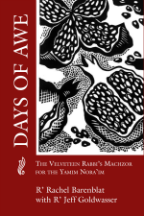
Cover of Rachel Barenblatt's machzor/high holiday prayerbook
Cover of Rachel Barenblatt’s machzor/high holiday prayerbook

Deb Kraus is looking for several people to tell 3-5 minute personal stories as part of the Rosh Hashanah day (October 3, this year) Shofar Service. Deb offers some explanation and background:

The Shofar Service, which happens in the later part of the Rosh Hashanah Service, is divided into three parts:  Malchuyot (majesty/sovereignty), Zichronot (remembrances) and Shofarot (call to action). For the last few years, AARC congregants have offered short 3-5 minute personal stories to introduce each section of prayer. This has been a really meaningful way for our members to participate in communal leadership and share an important part of themselves with the community.  For example, in past years, Kevin Norris shared about a health challenge (Shofarot) , Dina Kurz talked about higher power (Malchuyot), and I talked about hiking in the alps (Malchuyot) and (another year) how my daughter Molly and I shared memories of our old house in an attempt to get it sold (Zichronot).  Last year, this is where Clare called us to welcome Jews of all colors (Shofarot). So,  do you have a story to share? Contact me (drdebkraus@gmail.com) with your story idea, and I’ll try to fit it into the service.

In this blog on her site, the Veleveteen Rabbi, Rabbi Rachel Barenblatt introduces each section of the Shofar Service with a poem, directing our hearts to open to the prayers. Another resource on the Shofar Service is offered by T’ruah: The Rabbinic Call for Human Rights, with these kavanah/intentions for Malchuyot, Zichronot, and Shofarot. These may help you get started on finding your story.

Filed Under: Community Learning Tagged With: High Holidays, Rosh Hashanah

September 11 “B” There: Annual BBQ, Beit Sefer, Book Club

August 25, 2016 by Clare Kinberg

bridge
Footbridge over the Huron River at Island Park

How could our little congregation plan so much for one day? But so be it: on Sunday September 11, there will be something for everyone in the congregation, and our friends, too.

Our annual BBQ picnic is a very nice time for all ages to relax together, introduce new people to the congregation, reconnect after summer travels. AARC will provide drinks, charcoal and paper products. You bring something to grill, a side dish to share, and your summer stories! The BBQ will be at a new location this year at Island Park, with a footbridge over the Huron River, a playground, a nice shelter and lots of exploration space, it’s a terrific place for our picnic. Plus it’s the place we plan to have tashlich this year, so we’ll all know how to get there! September 11, noon to 3pm.

  • First day of Beit Sefer/ Religious School for kindergarten-7th grade, 10-noon at the Island Park. Parents meeting 10:45-11:45.
  • Book Club 9:45-11:00, discussion Wise Aging, at Greg and Audrey’s home. Details here.
  • Annual BBQ: This year at Island Park. noon to 3pm.


Filed Under: Upcoming Activities

Liberty’s Secret, New Film by Andy Kirshner

August 18, 2016 by Clare Kinberg

Jaclene Wilk in Liberty's Secret
Jaclene Wilk in Liberty’s Secret

AARC member Andy Kirshner will premier his new film, the musical Liberty’s Secret, on September 22, at the Michigan Theater, for one night only.  Andy wrote the screenplay, lyrics and score and co-directed the movie with choreographer Debbie Williams. The movie-musical, which has been more than eight years in the making, was shot entirely in Southeast Michigan and over 150 Ann Arborites participated as extras, including a few faces very familiar to AARC.

“I love old musicals — like those by George Gershwin, Meredith Wilson, Leonard Bernstein, and Frank Loesser — but frankly, the gender politics of the musical-theater classics are terrible,” Andy says. “So I wanted to write a musical that would capture some of the same tap-dancing, jazz-inspired joy of an earlier era, but where the women weren’t tamed by men. I wanted to write a traditional musical that was non-traditional.”

Liberty’s Secret might be just the feel-good relief we’re needing in this tension filled presidential election season. Both a charming romantic comedy and a pointed political satire, Liberty’s Secret follows the rise of Liberty Smith, the squeaky-clean daughter of a “family values” preacher who becomes the symbolic centerpiece of a socially conservative presidential campaign.  When ingénue Liberty falls in love with her (female) spin-doctor, the result is a cable news catastrophe.  A kissing video goes viral, and a confused Liberty must choose between the life she knows, and the love she has always dreamed of – while all of America watches.

Advanced tickets are available online at http://bit.ly/2ajGOsg for what is anticipated to be a highly popular event.  Tickets are $10, or $8 for students.

Andy_KirshnerThough we in AARC think of Andy as Eli’s dad and Stephanie’s partner, he is also known as Professor Kirshner, who is jointly appointed by the UM School of Music, Theater, and Design’s innovative Performing Arts Technology Department and by the Stamps School of Art and Design. He is an award-winning composer, theater artist, and filmmaker whose work has been commissioned by the National Endowment for the Arts, Artserve Michigan, Meet the Composer, and many others.  More information about him can be found at www.andykirshner.com

A trailer for the film is available at www.libertysecret.com


Filed Under: Upcoming Activities

AARC 2016 High School Grads

July 27, 2016 by Clare Kinberg

Four AARC members, including my own daughter, graduated high school this year. They will be heading off to college in another month. Myisha, Eli, Jonas and Marley had a variety of high school experiences and are each embarking on their own unique path.

myisha grad 3Myisha Kinberg-Cowan graduated summa cum laude (just let me kvell for a second) from Washtenaw Technical Middle College and Washtenaw Community College with a Liberal Arts Transfer Associates Degree. She’ll be heading out to Portland, OR to attend Lewis & Clark College. She plans on majoring in computer science.
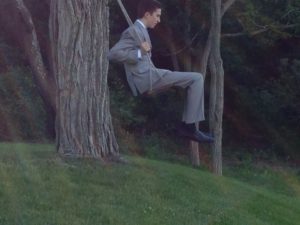
eli kirshnerEli Kirshner graduated from Ann Arbor Skyline. He received the “Equality SLC” award for fair-minded contributions to his school and to the greater Ann Arbor community. He will be attending Oberlin College in Ohio in the
fall.

Marley and Jonas graduated from Washtenaw International High School. Marley will be going to Macalester CollegeIMG_0344 in St. Paul, MN. Jonas will be going to Michigan State University honors program. Jonas will be performing as Jay in “Lost in Yonkers” at Ypsilanti’s Riverside Arts Center, from August 25th to September 3rd. It’s a great theater – come and enjoy! (Why yes, MSU move-in is August 28th…).
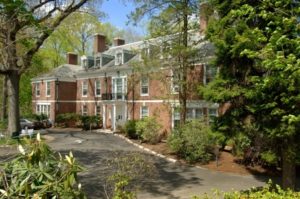
Mazel tov to all of you and your families!


Filed Under: Simchas

Keys to Learning at RRC

July 21, 2016 by Clare Kinberg

Reconstructionist Rabbinical College, Wyncote, PA by Richard Quindry

This weekend, July 22nd-24th, AARC members and friends will be having a Shabbaton (a weekend of prayer services and learning) with Rabbi Ora Nitkin-Kaner, who was ordained this year at the Reconstructionist Rabbinical College (RRC). I thought a little background on RRC might be of interest to folks. For this blog I wrote to several rabbis who were ordained at RRC asking them to comment on the education they received.

RRC, a seminary to train rabbis for Reconstructionist Jewish congregations was founded in 1968 in Philadelphia and moved to its location in Wyncote, PA in 1982. The College’s five to six year program of study for rabbinic ordination has changed since 1968, but is still structured around focusing on a different historical period each year, building a deep understanding of Judaism as an evolving religious civilization. This developmental approach encourages the students to enter into a dialogue with  previous generations of Jews who addressed perennial human issues in the context of their own times.

The Wikipedia article on RRC usefully divides the college’s own history into three periods: the founding in 1968 till 1981 when, headed by Ira Eisenstein, it formed a course of study based on Mordechai Kaplan’s ideas ; 1981-1993 when the movement published its first prayer book and incorporated more study of other religions and spirituality within Judaism; and 1993 to the present during which the college has significantly expanded education in community organizing, leadership and pastoral counseling. Rabbi Mordechai Liebling ( ’85), who is now director of RRC’s Social Justice Organizing Program and attended RRC during the middle period, says, “the combination of Arthur Green, Arthur Waskow, and Zalman Schacter was a wonderful balance of the political and spiritual dimensions of Jewish life.”

Rabbi Rebecca Alpert ( ’76) wrote the entry on RRC for the Jewish Women’s Archive, which includes this section on the ordination of women:

The question of the ordination of women to the rabbinate certainly was in the public consciousness at the time the Reconstructionist Rabbinical College was founded in 1968. The women’s liberation movement was asking questions about women’s complete equality that had not seriously been considered previously. Although none was yet ordained, several women candidates were then studying at the Reform Movement’s Hebrew Union College. Despite the open discussion of this issue, the founders of the Reconstructionist Rabbinical College decided not to create added controversy by recruiting women for its first class. In its second year, however, when the founders advertised for students, they received one inquiry from a woman. Sandy Eisenberg Sasso was accepted without debate or subsequent controversy. For the next several years, only a few women applied, and all were accepted. Women comprised half the class that entered in 1974, the year of Sandy Sasso’s graduation, and that trend has continued ever since. By 2005, twenty-four out of the movement’s 106 synagogues in the United States had women as senior or assistant rabbis. Women lead four of the country’s twelve largest Reconstructionist congregations, which range in size from 237 to one thousand members. The rabbinical college too has had women as part of upper-level administration and full-time faculty since the mid-1970s. It currently houses Kolot: the Center for Jewish Women’s and Gender Studies, a resource center for curricular and liturgical materials.

An interesting note: Rabbi Shelley Goldman, the last candidate AARC interviewed, wound up taking a full time position as Assistant Rabbi at Congregation Beth-El Zedeck in Indianapolis, IN, where Rabbi Sandy Eisenberg Sasso, RRC’s first women graduate, is Senior Rabbi emerita.

A recent graduate, Rabbi Tamara Cohen (’14) has this to say about her education there: “RRC provided me with a feminist, justice-oriented, intellectually rigorous, ritually creative, alive and nurturing Jewish community and learning environment that helped me take the next steps I had long been yearning to take in my leadership, in my spiritual development, in my critical understanding of Jewish history, text, and culture, in my understanding of community organizing and community building, in my personal soul work, and in my ability to be a pastoral presence and support for those in need. It also gave me invaluable teachers and colleagues and keys to continue to study and grow, lead and belong, as a rabbi over the rest of my life.”

Rabbi Nathan Martin, who will be leading our High Holiday services this year and was ordained from RRC in 2006 wrote, “The three most impactful elements of my RRC rabbinical education were: a) the support and guidance I received as I donned my professional ‘kippah’ doing work in the rabbinic field, b) the way in which the community modeled creative access to tradition and sought to live out their values, and c) having a ‘chevre,’ close colleagues, who helped create a container for me to process and live into my emerging rabbinic identity.”

Please RSVP for  Shabbaton events here. You are welcome even if you don’t RSVP, but it sure helps us plan if you do let us know you are coming.

  • Tot Shabbat, Friday 7/22, 5:45 to 6:15 PM, JCC
  • Kabbalat Shabbat & Potluck, Friday 7/22, 6:30 PM, JCC
  • Shabbat Morning Service, Saturday 7/23, 10 am, JCC
  • Family-Friendly Dessert and Havdalah, Saturday 7/23, 8-9:30 pm, home of the Samuel family
  • Adult Learning, Sunday 7/24, 10:00 AM, JCC: (How) Should A Person Pray?


Filed Under: Upcoming Activities

(How) Should A Person Pray? A Study of Berakhot with Rabbi Ora Nitkin-Kaner

July 14, 2016 by Clare Kinberg

Ora-Nitkin-Kaner3The concluding public session of our weekend Shabbaton with Rabbi Ora Nitkin-Kaner, will be an adult (and interested teen!) study session on the topic  of prayer. Rabbi Ora writes, “The rabbis of the Talmud had an uneasy relationship to prayer. They found it to be mysterious, potentially dangerous, and physically and emotionally overwhelming, and they couldn’t decide whether it was better to pray with too much feeling or too little. (The rabbis, unlike Goldilocks, found nothing that was ‘just right.’)”
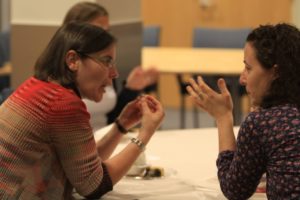
All are welcome to join us as we study from Talmud Berakhot and deepen our understanding of our rabbinic tradition’s relationship to prayer, as well as our own. No Hebrew knowledge or previous Talmud study necessary.

Sunday July 24, 2016 10-12noon at the JCC 2935 Birch Hollow Dr.

Please RSVP for this session and all of the other Shabbaton events here. You are welcome even if you don’t RSVP, but it sure helps us plan if you do let us know you are coming.

  • Tot Shabbat, Friday 7/22, 5:45 to 6:15 PM, JCC
  • Kabbalat Shabbat & Potluck, Friday 7/22, 6:30 PM, JCC
  • Shabbat Morning Service, Saturday 7/23, 10 am, JCC
  • Family-Friendly Dessert and Havdalah, Saturday 7/23, 8-9:30 pm, home of the Samuel family
  • Adult Learning, Sunday 7/24, 10:00 AM, JCC: (How) Should A Person Pray?


Filed Under: Community Learning, Upcoming Activities

Report Back: “Community in Difficult Times”

July 6, 2016 by Clare Kinberg

community in difficult timesReported by Martha Kransdorf and Sallygeorge Wright

“Community in Difficult Times,” was a Jewish community-wide facilitated discussion hosted by the Jewish Community Center (JCC) on Thursday evening June 30th.  The purpose for the meeting, according to convener Karla Goldman (director, UM Jewish Communal Leadership Program), “was to create a space where people come together in community to be able to process recent events.  The catalyst was the Pulse tragedy in Orlando, which just seemed to combine so many different elements of the recent news: hate crime, hate speech, LGBTQ issues, immigration issues, gun violence and gun control, anti-Muslim rhetoric and terrorism issues in ways that cried out for response and yet no one has seemed to know how to respond.” About 65 people attended, taking advantage of this important opportunity to reflect about the tragedy in Orlando and the ongoing issues in this year’s election campaign.

Goldman, JCC President Prue Rosenthal,  and Hillel Director Tilly Shames, got things started.  They reviewed the meeting’s background and guidelines for the small discussions at each table.  Rabbi Kim Blumenthal helped establish the mood for the evening by leading us in “Hinei Ma Tov.”

We were reminded that each table had a facilitator, and needed to choose a note taker.  We were to respect different opinions, and each person’s privacy.  Individual’s remarks were not to be repeated afterward without permission from the person who made them.  And we could say “ouch” if something offended us.  There were three guiding questions for us to consider:

1)  What brought you here?

2)  What’s in your heart and on your mind?

3)  Is there something about this moment that calls upon us as Jews and as a Jewish community?

Report backs noted the need for education and outreach on issues including guns, mental health, and more. The need for concrete measures to show solidarity with LGBTQ and Hispanic populations were pointed out.  Examples included having social activities that would increase awareness of diversity in the community. People suggested an ad in a newspaper to express our outrage and concern about current developments, and publicity for efforts on gun control.  Final remarks focused on further get-togethers to look at where we might go from here.

The invitation to the meeting was issued by almost every part of the organized Jewish Community in Ann Arbor:  the Jewish Community Center of Greater Ann Arbor, the Jewish Communal Leadership Program, U of M’s Hillel, Jewish Federation of Ann Arbor, Ann Arbor Reconstructionist Congregation, Beth Israel Congregation, Temple Beth Emeth, Jewish Cultural Society, Hebrew Day School, Jewish Family Services of  Washtenaw County, and the Orthodox Minyan.  According to AARC member Sallygeorge Wright,  the meeting was an important opportunity for people who had never met before, who were involved in different community groups, to find out what each other are already doing and to exchange ideas. Goldman summed up the outcome, “People at the event were happy that there was a way to come together as Jews for issues that were not centered on Jews but which mattered to us as Jews nevertheless.”

Rabbi Sara Adler closed the meeting with a beautiful Prayer for Peace that she had written. This prayer will be published in the forthcoming book, Not By Might, a publication by Rabbis Against Gun Violence and edited by Rabbi Menachem Creditor.

Prayer for Peace
 
God of our mothers and fathers,
God of tenderness,
God of lovers, teachers and children,
may we see the day when love conquers fear
when compassion overrides judgment
and the echo of gunshot is heard no more.
 
Let a great peace wrap its arms around our country,
and hold us tight.
 
Unite us-- people of all races, religions,
orientations and identities
in a bond of true fellowship.
 
Teach us to respect difference
and take pride in one another.
 
Let us learn that diversity makes us stronger,
that the healthiest forests are filled
with a multitude of species and birdsong.
 
God on High, let us find consolation
and comfort under Your canopy of peace.
 
May the memories of those assaulted by violence
inspire us to mend our broken world.
 
Let us grind guns into garden tools,
bend our weapons into bridges.
 
May we learn war no more.
Come, let us write a new covenant of kindness
an end to the flood of tears.
 
Seal this promise in the sky,
a rainbow to part the clouds.
 

Rabbi Sara O’Donnell Adler is a chaplain at UM Health System. She was ordained by The Jewish Theological Seminary of America in 1999 and received her
Clinical Pastoral Education at Brigham and Women’s Hospital in Boston, MA. Prior to joining the staff of UMHS in 2008, Rabbi Sara worked as one of the rabbis with the
MetroWest Jewish Health and Healing Center in West Orange, NJ.

Filed Under: Event writeups, Poems and Blessings, Posts by Members, Tikkun Olam

Is AARC Beit Sefer/Religious School right for your family?

June 30, 2016 by Clare Kinberg

AARC's Ann Arbor Jewish religious schoolby Clare Kinberg

As Beit Sefer/Religious School director, and with our summer recruitment drive swinging into gear, I’ve been asking myself: What do parents look for when choosing a Jewish religious school? The decision to send a child to religious school is a big one for parents:  it sends a strong message to your child that “Jewish identity is very important to me, and I want it to be important to you.”  Some parents look to repeat their own experience; others are emphatically looking to not repeat their Hebrew school experience; still others are looking for the Jewish education they never had. Parents usually want their kids’ Jewish educational experience to be in a community that reflects them and their values.

And then there are also all the practical matters: Does it fit our family’s schedule? Is it affordable? Experts in the field and my own experience agree that parents have these and many other questions: Who will be teaching my children? How will Hebrew be taught? Will we be expected to attend services with the congregation? Parents are anxious about their children fitting in and about the friendliness of other parents.

So, what can I do to help families decide if our school is right for them? I want to meet individually with each family that might consider enrolling their children in the school and to talk about things like: What are your hopes for your children’s Jewish education? Do you want to be involved by volunteering in the classroom, sometimes learning alongside your kids, participating in holiday celebrations together? Are there particulars of your own family’s beliefs and backgrounds that you want respected?  

I want parents to know that the Beit Sefer teachers and I really celebrate the diversity of experiences of each student and their family and that we will be authentic about our own Jewish practice. I want them to know that we intend for their children to learn Jewish traditions in prayer and practice so that they are prepared to create Jewish practice that is personally meaningful.  With that goal in mind, our curriculum includes instruction on Jewish holidays, history, and values, with an emphasis on social justice. We also teach modern Hebrew and the decoding skills that will prepare children to engage with liturgical texts.

A current Beit Sefer parent says:

As someone who got his fair share of Jewish education (little of it very rewarding, let alone enjoyable, and some of it literally scary), I really like that the Beit Sefer and AARC have led my son to developing an enthusiastic, proud Jewish identity that’s not tribal or elitist.  I think the real sign that we’re on the right track is that my kids are excited to go to Beit Sefer and AARC events, and were bummed when Beit Sefer wrapped up for the summer.

Most of all, I want families to know that our religious school provides a warm, nurturing, welcoming environment for children and for parents. A central goal of the AARC Beit Sefer is to build and sustain community. While the time commitment for AARC Beit Sefer is minimal–one Sunday morning each week during the school year–students and their families are warmly invited to participate in and help to create Shabbat and holiday observances with the AARC community. All children are welcome to attend the Beit Sefer, and to participate with their families in AARC observances, regardless of their family’s formal religious affiliation or membership in the congregation.

From another parent, new to our religious school this year:

We were looking for a place where our son could learn about Jewish history, culture, and language, while being taught enough about the underlying beliefs to allow him to make an informed spiritual decision when he is older. The AARC Beit Sefer was welcoming to our interfaith household, and provided just the sort of nurturing-yet-fun learning environment we were looking for, and our son loves attending.

The AARC Beit Sefer teachers and I are very proud of what we accomplished in our Hebrew school last year. I am excited to share this experience and our plans for next year by meeting personally this summer with prospective families.

  • Contact director Clare Kinberg to ask questions or set up time to meet
  • Read more about our religious school
  • Details on how to enroll your child

Filed Under: Beit Sefer (Religious School)

Orlando, Adrienne Rich, Ethel Rosenberg, and Julia de Burgos

June 18, 2016 by Clare Kinberg

adrienneIt started last evening. I was watching (on facebook) the first “livestream” kabbalat shabbat service from Congregation Beit Simchat Torah (CBST), one of the oldest and largest LGBTQ synagogues in the world. The just-ordained (from the Reconstructionist seminary) Rabbi Marisa Elana James, who had interned at CBST, was introduced and congratulated. Rabbi James chose, in this gay pride week, and the first shabbat after the Orlando massacre of 49 at a gay dance club during Latinx night, to read a poem written by Adrienne Rich. Since I was sitting at the computer, I could quickly search on “Adrienne Rich” and the two words I remembered from the poem: “unleavened bread.” Ahh, yes, of course, from Sources (1983), which I could pull off my bookshelf:

from Sources XV

It’s an oldfashioned, an outrageous thing
To believe one has a “destiny”

— a thought often peculiar to those
who possess privilege—
 
but there is something else:   the faith
of those despised and endangered
 
that they are not merely the sum
of damages done to them:
 
have kept beyond violence the knowledge
arranged in patterns like kente-cloth
 
unexpected as in batik
recurrent as bitter herbs and unleavened bread
 
of being a connective link
in a long, continuous way
 
of ordering hunger, weather, death, desire
and the nearness of chaos.

My google search led, of course, to other poems. One which I felt I should immediately post to facebook because it spoke so directly to this moment:

What Kind of Times Are These

BY ADRIENNE RICH

There's a place between two stands of trees where the grass grows
     uphill
and the old revolutionary road breaks off into shadows
near a meeting-house abandoned by the persecuted
who disappeared into those shadows.

I've walked there picking mushrooms at the edge of dread, but 
     don't be fooled
this isn't a Russian poem, this is not somewhere else but here,
our country moving closer to its own truth and dread,
its own ways of making people disappear.

I won't tell you where the place is, the dark mesh of the woods
meeting the unmarked strip of light—
ghost-ridden crossroads, leafmold paradise:
I know already who wants to buy it, sell it, make it disappear.

And I won't tell you where it is, so why do I tell you
anything? Because you still listen, because in times like these
to have you listen at all, it's necessary
to talk about trees.

from  Dark Fields of the Republic: Poems 1991-1995 (W. W. Norton and Company Inc., 1995) and also published in The Fact of a Doorframe: Selected Poems 1950-2001  (2002).

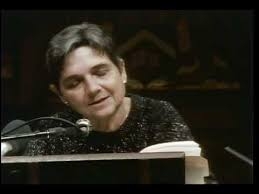
This led me to thinking about another of Adrienne’s poems…but I couldn’t remember the title. All I could remember last night was a poem that mentioned Ethel Rosenberg, a window, a barn and had been published in the early 1990s when I worked with Adrienne on the journal Bridges.  My google search turned up a poem I knew it wasn’t (because it was published earlier, in 1981). But somehow, this too, was meaningful: I was reminded that tomorrow, June 19, 2016 , is the 63rd anniversary of the execution of Julius and Ethel Rosenberg. Adrienne wrote this 1981 poem, “For Ethel Rosenberg,” remembering that the date in 1953 of their execution was a week before her marriage. After you read this post, take a moment and watch/listen to Adrienne read this poem.

Still searching for the window, the barn, I came across another of Adrienne’s poems, not the one I was looking for, but at this moment, right.  North American Time, written in 1983, was published in 1986 in Your Native Land, Your Life, the final stanza reads:

IX

In North America time stumbles on
without moving, only releasing
a certain North American pain.
Julia de Burgos wrote:
That my grandfather was a slave
is my grief; had he been a master
that would have been my shame.
A poet's words, hung over a door
in North America, in the year
nineteen-eighty-three. The almost-full moon rises
timeless speaking of change
out of the Bronx, the Harlem River
the drowned towns of the Quabbin
the pilfered burial mounds
the toxic swamps, the testing-grounds
and I start to speak again.

1983

In this youtube of Adrienne reading the poem, she tells us that Julia de Burgos was a Puerto Rican poet who died on the streets of New York in 1953. A little research and I find she died in early July, just weeks after the Rosenberg execution. I’m reminded that the Jewish Puerto Rican poet Aurora Levins Morales wrote  on facebook this week:

“Hardly anyone is talking about the fact that at least 23 of the people who died at the Pulse were Puerto Rican. That Central Florida is receiving 1000 Puerto Ricans a week fleeing from the disaster colonialism has wrought on us. That these beloved, mostly young people were not only targeted by homophobia. The man who killed them was a regular at that bar and he chose Latinx night. I will not stand for the racist aspect of this hate crime being whitewashed away. This was my familia. They were all doubly my cousins. Yes, everybody reach out to queer communities. Yes, everybody reach out to Muslim communities. But reach out to Latinx and specifically Puerto Rican communities, too. They were our children.”

JBMural-207x300You can find more of Julia de Burgos’ poetry in this bilingual edition. All of these connections across generations, places. I had to get them all down in one place. Thus this blog. I finally found the poem that sent me on this journey. It was hard to find online, but published in Dark Fields of the Republic: Poems 1991-1995, which I have on my bookshelf (I tell you this because I am happy to lend books):

Revolution in Permanence

(1953, 1993)

Through a barn window, three-quartered
the profile of Ethel Rosenberg
stares down past a shattered apple-orchard
into speechless firs.
Speechless this evening.   Last night
the whole countryside thrashed in lowgrade fever
under low swollen clouds
the mist advanced and the wind
tore into one thing then another
--you could think random but you know
the patterns are there—
a sick time, and the human body
feeling it, a loss of pressure,
an agitation without purpose . . .
Purpose?   Do you believe
all agitation has an outcome
like revolt, like Bread and Freedom?
—or do you hang on to the picture
of the State as a human body
—some people being heads or hearts
and others only hands or guts or legs?
But she—how did she end up here
in this of all places?
What she is seeing I cannot see,
what I see has her shape.
There’s an old scythe propped
in an upper window of the barn—
—does it call up marches of peasants?
what is it with you and this barn?
And, no, it’s not an old scythe,
it’s an old rag, you see how it twitches.
And Ethel Rosenberg? I’ve worried about her
through the liquid window in that damp place.
I’ve thought she was coughing, like me,
but her profile stayed still watching
what held her in that position.

1993

Finally, as I go to post this, I find out that on Monday June 20th, 2016, two days from now, The New Yorker magazine will publish a review of Rich’s just out Collected Poems 1950-2012 (WW Norton, June 2016). If only I’d had the new collection when I started writing this, I wouldn’t have had to spend the night searching google.

Filed Under: Poems and Blessings, Posts by Members

D’var on Behar by bat mitzvah Rose Basch

June 14, 2016 by Clare Kinberg

Rose and Rabbi Alana Alpert

Shabbat Shalom!

First of all I want to start by explaining what I will be chanting from the Torah. I had no idea what it all meant until I looked into it, so I am going to assume that nobody else does either. Just so you know, when I refer to God I’m going to use female pronouns.  Something Rabbi Alana taught me…

My portion, Behar, talks about shmita. Shmita is the rule or practice that says that you must let the land rest every seven years. Last year, Jewish year 5775, was actually a shmita year.  To celebrate it our congregation did text study and planned many shmita events which I attended, including Farm Education Day. While at Farm Education Day I got to be part of a small shmita simulation game, which was a great learning experience. We controlled parts of it, like how we grew our food, but there were other parts of the simulation that were not in our control. For example, when the director decided to simulate a drought, we didn’t have enough food to make it through the shmita year. The simulation gave an example of when we must really put our trust in God that She will make everything run smoothly.

One of my favorite parts of shmita is that it creates empathy among wealthy people for the poor. Both the wealthy and the poor have to undergo the experience of not knowing if there will be enough to eat.  My portion also mentions the bigger occasion, the Jubilee, which happens every 49 years; actually in the 50th year. So every 50 years during the jubilee we don’t sow, we don’t reap and we don’t harvest the fields.  Everyone basically gets to start over:  slaves get released, debts are dropped and as with the usual shmita, the land gets to rest. [Read more…] about D’var on Behar by bat mitzvah Rose Basch

Filed Under: Divrei Torah, Simchas

  • « Go to Previous Page
  • Page 1
  • Interim pages omitted …
  • Page 13
  • Page 14
  • Page 15
  • Page 16
  • Page 17
  • Interim pages omitted …
  • Page 24
  • Go to Next Page »

Primary Sidebar

Search

Join Our Mailing List

Sign up for our twice a week newsletter to get details on upcoming events and catch up on our latest news.

This field is required.

Check your inbox or spam folder to confirm your subscription.

Upcoming Events

  • 9:00 am – 10:00 am, April 17, 2026 – Rosh Chodesh Minyan Iyar [ZOOM]
  • All day, April 19, 2026 – Beit Sefer
  • 6:30 pm – 8:00 pm, April 24, 2026 – Fourth Friday Kabbalat Shabbat
  • All day, April 26, 2026 – Beit Sefer
  • 12:00 pm – 3:00 pm, April 26, 2026 – “Lesson of the Homeland” and the Stories We Tell: A Conversation with Anat Zeltser

Latest News

  • RSVP to “Lesson of the Homeland” and the Stories We Tell: A Conversation with Anat Zeltser April 16, 2026
  • Climate Action Shabbat article in the April 2026 Washtenaw Jewish News April 3, 2026
  • Reimagining Torah Study: Moving from Zoom to In Person by Rabbi Gabrielle Pescador April 1, 2026
  • Creative Spirit at the AARC Beit Sefer March 27, 2026
  • When Is a Killer Not a Murderer? by Elizabeth Brindley March 19, 2026

Footer

Affiliated with

Copyright © 2026 Ann Arbor Reconstructionist Congregation