• Skip to primary navigation
  • Skip to main content
  • Skip to primary sidebar
  • Skip to footer
Ann Arbor Reconstructionist Congregation

Ann Arbor Reconstructionist Congregation

  • Home
  • About
    • Overview
    • Rav Gavrielle Pescador
    • Our History
      • Photo Gallery
    • Our Values and Vision
    • LGBTQ Inclusive
    • Our Board
    • Our Sacred Objects
    • About Reconstructionist Judaism
    • Jewish Ann Arbor
  • Programs
    • Shabbat and Holidays
    • B’nei Mitzvah
    • Tikkun Olam
    • In the (Washtenaw Jewish) News
    • Health and Safety Expectations for In-Person Gatherings
    • Join our Mailing List
  • Religious School
    • About Beit Sefer
    • Teachers
    • Enrollment and Tuition
    • 2025-26 Beit Sefer Calendar
  • Blog
  • Calendar
  • Membership
    • Thinking about joining?
    • Member Area
  • Contact Us
  • Donate

Tikkun Olam

When Is a Killer Not a Murderer? by Elizabeth Brindley

March 19, 2026 by efbrindley

**Update: It came to my attention that I edited out a line that provides some really important context. I know the FBI has since stated that the Temple Israel attacker killed himself, while initial reports stated the guard on duty fired the lethal shot. I don’t trust Kash Patel, so I made a deliberate choice to stick with the initial narrative. You are allowed to feel how you feel about this choice.


It’s no light thing to take a life, even when it is your duty in a dangerous situation, or for a justified cause.  Killing another person is complex, and throughout Torah we see that the legal and social consequences can be as nuanced as the cause of the crime.  The Torah does not say “you shall not kill”.  It says “you shall not murder”.  So what’s the difference?  Do we know anymore? 

The difference seems to be based on intent:

  • Murder (retzach) is intentional – you lay in wait for a victim, or plan their demise, or otherwise plan the act of violence.  We’re told to punish murderers by court execution.  
  • Manslaughter (shegagah) is accidental – you didn’t mean to kill the person, but you’re still directly responsible for their death.  Say you’re chopping wood and the head flies off and kills someone – that’s all you, my guy.  You’ve got to flee to a sanctuary city now! You can’t come back until the High Priest dies.  

I also learned the situations in which killing another person is permitted or at times even required, which are probably as unsurprising to you as they are to me: 

  • Self-defense – You are permitted and at times even obligated to stop a violent attacker (“rodef”, meaning pursuer).  “If someone comes to kill you, rise early and kill them first” is from Sanhedrin 72a, and it’s probably the most metal one-liner I’ve ever heard in any of my decades.  
  • Immediate threats – If a burglar breaks in in the middle of the night, you can assume he’ll kill you if you interrupt him, and kill him first.  That kind of thing.  
  • Court Executions – Also not murder, but the bar for evidence to justify the action is very high.  Under modern rabbinic law, it pretty much can never happen, if I’m understanding right.  
  • War – Also not murder, but it does carry weight and can only be done under strict approval.  Apparently King David was denied rebuilding the temple because he had “spilled too much blood.”  

While researching this I found one of the most metal quotes I’ve ever heard, and was shocked to find out it came from the Talmud! Senhedrin 72: “If you someone comes to kill you, rise up and kill him first.”

The Golem & The Guard

When I was in my undergrad, I wrote an essay linking the story of the golem with the criminology theory of violentization, and the roving packs of young Jewish men that patrolled the streets of Jewish neighborhoods in Chicago around Prohibition and World War II.  They did this to protect the neighborhoods and residents from outsiders with ill intent.  I’m not talking organized neighborhood watches – I’m talking teen thugs taking matters into their own hands.  I imagine a Gangs of New York or Many Saints of Newark situation, but with more garlic and lox. 

(Note: It has been almost 10 years since I wrote this paper.  I may be paraphrasing and approximating quite a bit.) 

These gangs formed in response to violent actions from non-Jews and hostile governments.  A Russian pogrom around 1920 started a wave of antisemitic attacks across the world, and the first of these teen gangs started to defend against the threat of local antisemites getting funny ideas.  A similar wave of antisemitism rose during World War II, with a similar response from teenage Jewish boys in the ethnic neighborhoods.  

Violentization is a criminology theory developed by Lonnie Athens, and describes a multistage process by which people transform from being nonviolent citizens to violent offenders. Athens poses that it occurs in five stages: 

  • Brutalization, or violent subjugation, wherein authority figures coerce the subject or there’s an element of personal horrification (like maybe watching your neighborhood get bombed or your friends and neighbors put in camps.)
  • Defiance, when the subject realizes they are being brutalized, and try to seek help for their crises 
  • Violent Dominative Engagements, where the subject begins using aggression, intimidation, or superiority to establish dominance
  • Virulency, which is a marked willingness to use violence to attack another with minimal provocation
  • Violent Predation is the most intense stage of this process, and is marked by a lack of remorse and focused intent to harm the target.  Personality disorders with violent behaviors can fall into this.  

It seems kind of obvious to me to have the stages laid out like this.  You witness repeated violence against yourself or your community, you start acting out to try and ease your suffering in other ways and when it doesn’t work, you escalate to more aggressive means.  The longer that those means are ineffective, or the brutalization continues, your violent anger increases and increases, and eventually you’re desensitized to it.  

So how does the golem come in?  It was a creature made specifically to do violence – a Jewish construct that wasn’t a Jew.  In a way the Jewish gangs, violentized as they were by the antisemitic policies and actions, were golems. The golem wasn’t a murderer, because it only harmed those who would harm the Jews.  I’m sure they were not considered the most adherent of Jewish boys, likely giving up Jewish values or observances, maybe in order to do the work of protecting their neighborhoods when the police would not. 

The guard who killed the Temple Israel attacker was not a murderer.  At that moment, he was obligated to protect the staff.  But that does not mean the act was without weight – I sincerely doubt the guard is a sociopath.  He was likely traumatized just as the staff and students and community were. But perhaps he was a bit like a golem – not Jewish, per se, but an instrument of our protection, and a damn fine one.  The act was appropriate  – he did what the Sanhedrin quote suggested and shot first to avoid having himself or the people in his charge killed.  Lives were saved by this violent act, as much as we abhor it.  

A very important figure in our story was also a killer – Moses! This year while reading the portion, there was a line that struck me – right before he kills the taskmaster, he looks around.  He checks for witnesses.  That’s an element of premeditation.  It’s literally murder.  But it does not stop him from being a powerful instrument of G-d’s power and presence.  It doesn’t stop him from being a leader that the entire community turns to for guidance.  It doesn’t stop G-d from explicitly choosing him for a great task that would lead an entire people out of slavery.  But maybe it did stop him from being permitted into the Promised Land.  While paying your debt to society may mean that you lose certain privileges, like dying in the Promised Land for Moses, or being separated from your family and community for a prison stay – it should not also mean that you are only ever seen as your crime.  

The Inmates

All this brought me back to the men housed where I work.  We definitely house many people who premeditated their crimes.  We also house people that have long, long histories of crimes of increasing violence. But we also have people who didn’t have good options at all, and who were victimized in many ways themselves.

I had a library clerk for a few months who told me that when he was young, around 8, his mother taught him to use a hand gun.  She worked two jobs and could not afford childcare, and was forced to leave him alone with his 3 younger siblings, in a neighborhood where break-ins and drive-by shootings were commonplace.  He grew up with pressure to join gangs because it was often the only form of safety for young folks in a community that was targeted by police, who ostensibly are meant to protect us, and at risk of victimization by older kids in equally desperate circumstances.  

They had nights where there was no food.  Or nights where their mother bought two large McDonalds and split it among the four kids, but eat none herself.  So when my clerk was old enough (around 11 or 12, he said) he started running for local drug dealers to help pay for groceries and school clothes.  By fifteen he was selling the drugs himself.  He entered the prison system at seventeen when he killed a member of a rival gang in a drive-by shooting.  My clerk told me that that gang had been driving through neighborhoods and menacing them for some time before it escalated to this level.  

I don’t pretend to understand the finer points of growing up in that kind of existence, where violence is constant and expected, and it would be foolish to think that people don’t leave out some incriminating details when telling you their life’s story.  But it really makes me wonder: What kind of choices do people really have, when we allow members of our community to live in neighborhoods that are overpoliced, bombed, or underfunded?  When you need to feed your children, but there are no jobs in your area since the factory closed or relocated to Mexico, sometimes selling drugs is your best bet.  What about when they’ve watched their friends and families and places of worship be repeatedly firebombed or used like human shields? 

As Much of a Conclusion as is Possible

What I like about Parasha Vayikra is that the Torah does not say “if someone transgresses” it says “when.”  It just knows it’s going to happen, because of course it’s going to.  We’re human! Some of our mistakes are very bad and very ugly, but we are going to make them.  At one point in Vayikra we are told that people who cannot afford to bring an offering of animal can bring an offering of a choice flour.  It takes into account the circumstances of the transgressor when deciding the punishment or reparation, and I believe that a merciful justice system would do the same.  

Prisons now do not treat inmates like humans have made mistakes.  We treat them like meat to be warehoused, whose only label is the crime they committed.  Through funding and political avenues, social-emotional education and programming opportunities are regularly denied to high level offenders due to being “the worst behaved” – and they are.  Believe me.  It’s like working in a warzone some days – but they are also statistically more likely to be illiterate, to be from tumultuous homes, to have behavior health concerns, to be outright mentally ill, or to just never have had a trusted authority or adult figure in their life to teach them better skills.  To provide a truly just system, one that made people better and actually equipped them with skills to make their lives better for themselves, instead of traumatizing them in the name of punishment, our duty as society has to shift to recognize that prisons are used as a threat for social control – it can’t actually be a place that helps you under the social structure we have now, which is essentially conform or we’ll throw you in this hell hole.  You’ll eat slop.  You’ll get raped by your bunk mate.  The officers will degrade you and abuse you.  You won’t have any privacy. The minute the cell door slams behind you, you stop being a human in many ways.  

What would happen to our justice system if the attitude shifted to “you have acted poorly – what caused it?  What support can you be given long term that prevents this from happening again?” What could happen to the world if we shifted from viewing one another as enemies, and started to think about what might be causing the bad behavior – and how we can remove that hindrance.

Filed Under: Posts by Members, Tikkun Olam

AARC to Join the 5th Annual Fair Housing Awareness Bikeathon in Detroit! – From Robin Wagner

March 5, 2026 by efbrindley

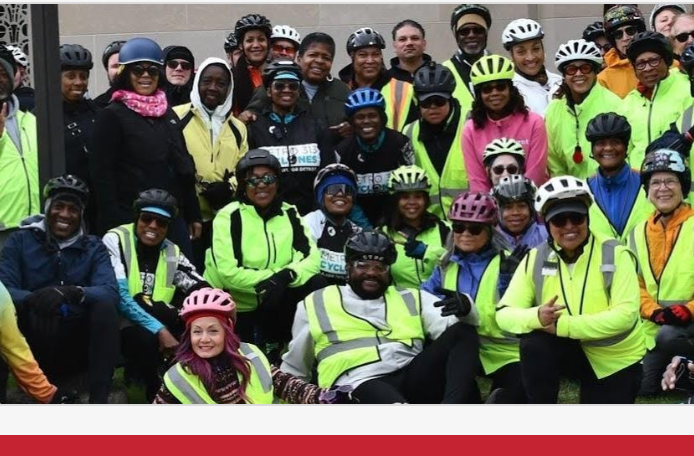
On Saturday, April 25, 2026, we will have the unique opportunity to grab our bikes, head to Detroit, and take a ride through some civil rights history as a sponsoring organization of the Fair Housing Center of Metropolitan Detroit’s annual Bikeathon!

Sharon and I have participated in this event several times and can assure you that it is a great event! Each year features a new route that takes the 100+ riders to various landmarks and sites important to the history of Detroit and the civil rights movement. In 2024, we started off at the Virginia Park Shopping Plaza, built in the 1960’s by the community’s residents who wanted to create positive change after the unrest of 1967. Next to the plaza is the 12th Street Memorial and Gordon Park, which commemorates the family and friends who lost their lives during the Detroit uprising of 1967 in protest of racist abuses by the city’s police department. A docent was there to share that history with us.

Other sites over the years have included the apartment where Rosa and Raymond Parks lived from 1961-1988, the New Bethel Baptist Church, Congregation Shaarey Zedek (with a tour and talk), the Ruth Ellis Community Center for formerly homeless and at-risk LGBTQ+ youth, the Detroit Association of Women’s Clubs, which fought racial zoning restrictions to build a home for 70 Black women’s clubs with over 3,000 member to focus on community development work, and an amazing Veteran’s Housing building that has become a national model for housing with supportive services.

This year’s ride will begin with a tour of the Ossian Sweet home. Dr. Ossian Sweet, https://ohsweetfoundation.org/, earned his medical degree at Howard University and then moved to Detroit to practice medicine in the Black Bottom neighborhood. In the early 1920s,he and his wife Gladys bought a home on the east side of the city. They were met bys ome 500 white men, women and children who surrounded the home and hurled stones at the house, smashing windows. The Sweets, with their family and friends, feared the escalating violence by the mob and fired warning shots into the crowd. When the dust had cleared, one man was dead and another injured. All eleven people inside the Sweet home were charged with murder. In 1925, Clarence Darrow defended the Sweets in a landmark trial followed by the entire country. The not-guilty verdict is seen as a turning point in our justice system.

Our ride this year—a leisurely 14 miles over several hours—will also take us through interesting stops in Grosse Pointe. The entire ride is escorted by the wonderful members of the 313 Cylones, a Detroit bicycle club that is part of a national association of bike clubs named for Marshall “Major” Taylor, who was the first Black track cycling champion in 1899.

AARC to Join the 5th Annual Fair Housing Awareness Bikeathon in Detroit.docxKey Details:

Saturday, April 25, 2026, from 10 am to 1:30 pm, kick off at the Fair Housing Center’s office in Detroit:

5555 Conner Street, Detroit 48213.

(allow an hour+to get thereand unload yourbike.)

RAIN OR SHINE–so dress for the weather!

HELMETS ARE MANDATORY!

How do I sign up?

So glad you asked!

It’s a great family event, so consider bringing the whole mishpocha!

(I will be bringing my little dog Casper, who sits in a basked on the front of my bike.)

A member of the congregation has already provided the rider fees to cover 20 AARC riders.But times are tough for civil rights organizations like the Fair Housing Center of Metropolitan Detroit. Their federal funding has been severely curtailed, with significant limits placed on their core activity of systemic enforcement of housing rights. So, we ask that each AARC member also make a donation to the Fair Housing Center to participate in the ride.

To Sign Up:

1.Head to this web page to sign up as a rider. You do not need to follow the link to pay the rider fee, since your fee has already been paid.

2. Instead, go to this web page to make an additional donation to the Fair Housing Center. We suggest a donation of at least double-chai ($36) for each adult rider and chai($18) for each child. In the notes section indicate that you are part of the AARC group.

3.Email me at robin.b.wagner@gmail.com to let me know how many you signed up so that we can keep track of our group size and help coordinate carpooling to Detroit for the bike ride.

Let’s help the Fair Housing Center build back up their resources to investigate complaints of housing discrimination and help victims get justice and equal opportunities for housing.

Filed Under: Congregation News, Highlight, Posts by Members, Tikkun Olam

Walk a Mile… fundraiser success

September 29, 2025 by Jon Engelbert

By Kevin Norris

A big thank you to the many members who contributed to help the AARC team donate over $2,000 (and still counting) to support refugees and other immigrants through Jewish Family Services’ “Walk a Mile in My Shoes” fundraiser. Not only did we overachieve our “chai” goal of $1,800, a group of us was able to come together with other supporters and new American families to celebrate our success and our ongoing commitment through a fun walk around Burns Park. 

Filed Under: Tikkun Olam Tagged With: JFS

Walk a Mile in My Shoes 2025

September 5, 2025 by Jon Engelbert

By Kevin Norris

AARC is offering an opportunity for members to put our money (and our feet) where our values are. By sponsoring a team for Walk a Mile in My Shoes, we are raising funds and awareness for immigrant support projects provided by Jewish Family Services of Washtenaw County. JFS has helped resettle refugees of all religious backgrounds from literally hundreds of countries. However, cuts in federal funding and divisive rhetoric have now left these neighbors vulnerable and isolated. Please join the many AARC members who are giving and walking for and with them on Sunday, September 28, 2025, from 2:00–5:00 p.m. at Burns Park Elementary in Ann Arbor. We’ve set a “chai” fundraising goal for AARC’s support of JFS, so please contribute what you can. Every dollar helps someone in need.

Walk a Mile in My Shoes 2025 is both a fundraiser and a show of personal support. Walking side by side, we affirm: we see you, we welcome you, and we will walk with you as you begin again. In this High Holy Day season, when we pledge ourselves anew to acts of tzedakah, participation is an opportunity to make our commitments tangible. Together, we can bridge the gap for those who need us most.

Funds raised will sustain Jewish Family Services’ essential work: arrival assistance and placement, health and behavioral health services, youth and women’s empowerment programs, nutrition support, job readiness, and entrepreneurial training. JFS continues walking with families long after the initial resettlement period, helping them establish stability and thrive in their new home. In addition to supporting recent immigrants, JFS provides comprehensive services to the aging in our community through its Wise programs, and the Nourish food pantry. Nourish combats hunger not only with conventional groceries and produce, but also culturally specific (e.g., halal, kosher) and medically customized (e.g., allergy friendly, gluten free, low sodium) options. In short, it’s a great organization that we can trust with our support.

That arc of the moral universe won’t bend itself. What better way to step into 5786 than by showing up for people in need? Join us, give what you can, and walk with us, and let’s begin the year with footsteps of solidarity.
Give and join the team to walk here. If you have questions, contact Kevin Norris.

Filed Under: Tikkun Olam

Erica Ackerman, Climate Activist

March 1, 2025 by Emily Eisbruch

This Q&A with Erica Ackerman was written for the April 2025 Washtenaw Jewish News, as part of climate outreach coordinated by A2J Climate Circle initiative.

A member of the Ann Arbor Reconstructionist Congregation, Erica is a climate activist who serves on the Executive Committee of the Sierra Club Huron Valley Group.

Erica, tell us about the origins of your climate activism

I became a climate activist leading up to the 2008 election. Working with the groups “Obama for America” and then “Organizing for Action,” I developed presentations to raise climate change awareness. We coordinated climate change symposiums in Dexter, Jackson, Canton, and Ypsilanti. 

How did you become a leader with the Sierra Club?

In 2018, longtime Washtenaw County activist Dan Ezekiel asked me to run for the Sierra Club of Huron Valley executive committee, and I was honored to step up.  At the time, funding for climate initiatives in the city of Ann Arbor was in doubt. The Sierra Club mobilized our community to attend city council meetings and to make their voices heard.  These efforts were impactful, and in 2019 the Ann Arbor city council passed the A2ZERO plan.  A key goal of A2ZERO is to realize community-wide carbon neutrality by 2030.

Have Jewish values played a part in your climate activism work?

Yes, for me it all seems integral; Jewish values lead to wanting to protect our environment, and advocating for the earth leads to appreciation of Jewish values, especially around Tikkun Olam (repairing the world).

Regarding activism in the Jewish community, prompted by our rabbi, I recently participated in lobbying through Jewish Earth Alliance, where we pushed our US Senators to defend our progress on climate action. 

Advice for others who want to get involved?

The Sierra Club could definitely use more people who are active and interested in taking action.  Start by attending the monthly Sierra Club program meetings, held on the third Tuesday of the month, 6pm to 7:30pm, in-person at the downtown branch of the Ann Arbor District Library. The programs offer a mix of nature talks and environmental activism.

In addition, Sierra Club Executive Committee meetings are open to the public.  They are held on Zoom, the first Thursday of every month at 7pm. If you are interested in the Sierra Club Executive Committee Zoom link, text me (Erica) at 734-330-0163.

Filed Under: Member Profiles, Tikkun Olam, Uncategorized

High Holidays Call For Volunteers and Participation!

August 23, 2023 by Gillian Jackson

By Deb Kraus

Long before the Ann Arbor Reconstructionist Congregation became a congregation, we were a very participatory and leaderless Havurah.  And as we entered our own rabbinic era, it was with the mindset that we would continue to be participatory, not only singing along, creating music and reading poetry, but in creating ritual and kavannot (intentions for prayers).

In the past year when we once again didn’t have our own rabbi to rely on, we all stepped up in amazing and fascinating ways, and as we enter into this new period with Rav Gavrielle at the helm, we are committed to continuing to offer opportunities for many voices, not only leader voices, to be heard.

I am once again recruiting volunteers for this year’s High Holiday services.  The slots range from candle lighting and ark openings/closings to reading pre-picked out poetry to writing your own drash for a part of the service.  

When people don’t volunteer I tend to choose people I know, which is a large percentage of the kahal, but by no means all of it.  So, before I go and do that, and risk leaving great people out, I want to put out this call for volunteers.  What I am hoping for is to hear from the people who don’t generally volunteer!  Almost all the opportunities can be shared with others, like a partner or a friend, or some sort of affinity group, like maybe your mishpacha.

SO here goes!

First, here is the call for kavannot/drashes:

  • The shofar service on Rosh Hashanah is made up of three sections:  Malchuyot (kingship/majesty), Zichronot (remembrance) and Shofarot (awakenings).  We want a drash for at least the Malchuyot section and would consider one for each other other two.  These are short, no more than 3 minutes (Other than our Yizkor service, this is where I have learned more about people in our congregation than just about anywhere else.  You get to tell a short story about something very meaningful to you).
  • On Yom Kippur day, Rav Gabrielle would like someone to share on the topic of “Gratitude In a difficult time.”  This can be a personal difficult time or ,you know, just the apocalyptic one we are living in.  Up to you.

Second, I need lots and lots of readers for poetry.  If you want to do this, send me the following info:

  • When you will for sure be at services
  • Do you want to read something more political?  More emotional?  More edgy?  More intellectual?  More meditative?  We even have an almost irreverent one on Kol Nidrei….

Third, here are the opportunities for other honors:

  • Candle lighting for Erev Rosh Hashanah
  • Candle lighting for Erev Yom Kippur
  • Lighting of memorial candle for Yom Kippur (if you have had a significant loss this year, this might feel like the place for you)
  • Ark openings for Rosh Hashanah day (2 in total)
  • Ark opening for Kol Nidrei (also if you want to hold the torah during the singing of the prayer, LMK)
  • Ark openings for Yom Kippur day (one still unassigned)
  • Ark openings for Neillah
  • Hagba (lifting torah) and G’lilah (dressing torah) for both RH and YK days
  • For havdallah at the end of Nei’llah, we need three volunteers, one to hold the candle, one to hold/pass the spices and one to raise the kiddish cup.  

Fourth, does anyone want to lead an afternoon workshop on Yom Kippur on the topic of Jonah?  This is what is the traditional haftarah for mincha, the afternoon service, and every now and then we like to revisit and reconstruct it.  If not Jonah, does anyone want to present on something else?  Keep in mind that we want to stay in a contemplative space, wrestling with a topic but not with each other.

Last, if anyone (who already knows how) wants to read 4 lines of Torah on Rosh Hashanah, because things are broken up differently due to it being on Shabbat, there is one portion unclaimed.  It’s part of what I do on non-Shabbats, so I can do it, but I thought I’d offer it up to someone else.

I seriously think that’s it.  I hope so anyway.  

If you are interested in one of these honors, please do let me know.  Each week I will let you know what’s still open, but wouldn’t it be less tedious for all of us if everyone volunteered by next MONDAY, August 28?  Please contact me via email at drdebkraus@gmail.com.

In addition to opportunities for service participation, we have a big signup sheet for behind the scenes helpers and greeters. We need everyone to sign up for at least one slot to make the High Holidays a success! Sign up Here!

Thanks in advance!

Filed Under: Tikkun Olam Tagged With: High Holidays 2023

Happy Pride Month AARC!

June 6, 2023 by Gillian Jackson

As Keshet’s opening Pride Month page says, ‘Welcome, You Are a Blessing!’ Happy Pride to the AARC LGBTQ community and its allies! Pride Month reminds us of the importance of welcoming everyone to the table and celebrating all that they are. This month also gives us the opportunity to shine a light on the LGBTQ community, advocate for them, and honor them. Jewish tradition specifically teaches that the infinite variety and diversity of humanity is a mark of Divine artistry and creativity (Mishnah Sanhedrin 4:5). So we honor you, our LGBTQ community and celebrate you during this very special month!

If you would like to get out and celebrate Pride Month, check out the following events here:

Keshet has a calendar of in person and online Jewish Pride Events.

There are pride events happening all month in Ann Arbor, see the full calendar here!

Here are some resources on some interesting Jewish Perspectives on Pride:

  • Read Rabbi Debra Waxman PhD’s wonderful speech about the history of LGBTQ movement, Reconstructionism, and Israel.
  • Rabbi Rachel Weiss’ essay on Pride and Acceptance
  • Rabbi Lauren Grabelle Hermann’s essay titled “Pride Month: Resisting Anti-Trans Pharaohs.

Filed Under: Tikkun Olam Tagged With: inclusivity, pride

Isaac Meadow Presents Benefit Concert for Ukraine  

May 15, 2023 by Emily Eisbruch

   Isaac Meadow, of the Ann Arbor Reconstructionist Congregation, will present a humanitarian aid benefit concert for Ukraine on Thursday, June 15, at Zion Lutheran Church in Ann Arbor, at 6:00 p.m. The concert will feature music by multiple composers, played upon the piano and the organ in the church’s main sanctuary. Admission will be by free-will donation.

      The concert will be performed as a “mitzvah project” ― a community service associated with Isaac’s Bar Mitzvah.  Isaac was inspired to take on this particular effort by the confluence of compassion, love of music, and familial ties to Ukraine. 

      At the age of five, when Isaac first received money as a present, he wanted to give it away to a beggar he met in the streets.  In the following years, he has remained empathetic to people in distress, particularly the homeless. When Isaac started following the news of the Russian invasion of Ukraine, he knew he wanted to act. “I was horrified,” he said, “particularly by the violence against children ― children being killed, or forced from their homes.” A benefit concert, he thought, might be a way for him to raise money to help.

      Isaac has a long-standing love of music. He has studied the piano since the age of five under the tutelage of Renée Robbins, and recently has started to study the organ with Carol Muehlig. He is looking forward to an intensive organ study at Interlochen fine arts camp later this summer. He has played piano for the Ann Arbor Reconstructionist Congregation’s High Holidays services, and looks forward to serving the congregation musically again in the future. The concert will feature pieces that Isaac has learned especially for the occasion, as well as several pieces that he has been playing for longer. The concert will also include a brief demonstration of the types of sounds and musical techniques achievable on the piano and organ.

      Isaac’s family has a current connection to Ukraine because Isaac’s grandmother befriended Vladimir Sayenko, now a Ukrainian lawyer, when he was studying at the University of Michigan in 1993 and 1994. Sayenko later hosted Isaac’s grandmother, and mother on a visit to Goroshina (alternatively, Horoshyne), the Ukrainian village Isaac’s great-great-grandfather fled in the early 1900s to come to the United States.

      All proceeds will go to “Breathe” (Ukrainian: “Dyhai”), a charity originally founded in 2020 to provide equipment for hospitals in response to the COVID-19 pandemic. Since Sayenko is an associate of one of Breathe’s founders, Isaac looks forward to keeping a close conversation going about the charity, and to seeing the good that the benefit concert proceeds will be able to accomplish. Thus far, Breathe has provided supplies to Ukrainian hospitals, winter clothing for the elderly, and electronic chargers and other equipment to families, for lighting, communication and for continuing children’s education in the wake of wartime disruptions. Isaac said, “It’s really good to be able to help people – even from so far away!”

Filed Under: Articles/Ads, Posts by Members, Tikkun Olam, Upcoming Activities Tagged With: Mitzvah Project, Tikkun Olam

Announcing Jewish Congregations Organized for Resettlement (JCOR)

June 22, 2022 by Rena Basch

Most of our family histories include stories of caring people who stepped up to help our great-grandparents, grandparents, or parents resettle in this country.  Today we are challenged to step up and help another generation of refugees.

You have seen the news:  The United States initially expected to admit 125,000 refugees this year.  Then 80,000 more arrived from Afghanistan. Now, an additional 100,000 Ukrainian refugees are expected.

Jewish Family Services (JFS) is working tirelessly to do its share here in Washtenaw County and is requesting OUR help.  

To this end, representatives from Beth Israel Congregation, Temple Beth Emeth, the Jewish Cultural Society, the Ann Arbor Reconstructionist Congregation, Pardes Hannah, and the Ann Arbor Orthodox Minyan have come together to form Jewish Congregations Organized for Resettlement (JCOR), whose purpose is to support resettlement of a refugee family.  Also, the Jewish Federation of Greater Ann Arbor will provide fiduciary oversight for all funds donated and disbursed in support of this purpose.  And now we need YOU!

Volunteers are needed for committees that will work in partnership with JFS staff to help refugee family members reestablish their independent lives here and orient to American culture.  With training from JFS staff, we will do this by helping refugees with:  housing, transportation, and employment; healthcare and financial planning; and childcare, schooling, and adult ESL classes as necessary.  We also need a cadre of on-call volunteers to help with short-notice critical needs, like last-minute transportation or child care coverage. 

Altogether, we are seeking 30 to 50 volunteers, who can be available up to three hours per week during the first two months after the family’s arrival. The time commitments will decrease gradually as the family members become more independent during their first year in the United States.

Of course, we need help with fundraising.  JFS recommends collecting $7,000 to $20,000 over the course of the family’s first year.  Of this, $4,000 should be available upon the family’s arrival to help cover initial costs. 

No one congregation will be singularly responsible or individually committed to provide a specific number of volunteers or a specific amount of funding.  But we believe that collectively our Jewish Community can make a difference for our new arrivals and help JFS meet its decades-long dedication to resettlement.

Click here to access JCOR’s on-line volunteer sign-up form, where you will find more information about the volunteer committees and choose the one in which your expertise, your experience, and your passion for Tikkun Olam will have the greatest impact.  

Additionally, all JCOR volunteers will complete the JFS volunteer form which will facilitate the required background check for all JCOR volunteers. Please complete the JFS form now. 

Click here to access the secure Federation/JCOR donation website.

Thank you!  The family members we help resettle today will be the grandparents of tomorrow.  As a volunteer in this effort, YOU will make a difference to their future generations!

For more information, please contact our AARC lead on JCOR: Alice Mishkin at alice.mishkin@gmail.com

Filed Under: Tikkun Olam, Upcoming Activities Tagged With: community, Tikkun Olam

Opportunity for AARC co-sponsorship of refugee family

March 23, 2022 by Rena Basch

Co-Sponsorship Program for resettlement and support of refugees – initial call for AARC volunteer(s)!   

We have the opportunity to participate with Beth Israel Congregation (BIC), Temple Beth Emeth, Jewish Cultural Society (JCS) and Pardes Hannah to sponsor a refugee family through Jewish Family Services’ (JFS) Co-Sponsorship Program.

JFS was established to support community resettlement efforts, and since 1993 they have resettled more than 1,000 refugees and other types of immigrants from all over the world.  JFS is the only resettlement agency in Washtenaw County.  It is one of very few resettlement agencies that provide a continuum of services from pre-arrival all the way through naturalization. The JFS services are holistic and focused on addressing all critical needs and long-term success of each client.

The Co-Sponsorship Program matches community sponsor groups with newly arriving Special Immigrant Visa (SIV) holders, refugees, and humanitarian parolees.  Community sponsor groups will provide resettlement services in partnership with JFS with the goal of establishing a robust community of volunteers and a mechanism for refugees to develop long-term (12-month) supportive co-sponsor relationships.

Committed co-sponsoring groups will provide reception and placement services to new arrivals, which include: securing and furnishing housing, welcoming families upon arrival and ensuring basic needs, finding employment, conducting cultural orientation, and more.  Upwards of 30 volunteers will be needed for the first 2 months of the family’s arrival.

Organizing for this co-sponsorship is just beginning, and at this time we are looking for one or two AARC members to serve on the initial organizing committee.  If you are interested in serving as a point person for AARC, please contact Rena Basch (rena.h.basch@gmail.com).  Also, please note if you are interested but not able to serve on this initial organizing committee there will be many other ways to get involved, many support committees and volunteer roles to fill.

Today the words of the Haggadah are as poignant and vital as ever. “In every generation, a person is obligated to see themselves as though they came forth from Egypt.”  

Image from Antoine Merour

Filed Under: Tikkun Olam, Upcoming Activities

  • Page 1
  • Page 2
  • Page 3
  • Interim pages omitted …
  • Page 9
  • Go to Next Page »

Primary Sidebar

Search

Join Our Mailing List

Sign up for our twice a week newsletter to get details on upcoming events and catch up on our latest news.

This field is required.

Check your inbox or spam folder to confirm your subscription.

Upcoming Events

  • 9:00 am – 10:00 am, April 17, 2026 – Rosh Chodesh Minyan Iyar [ZOOM]
  • All day, April 19, 2026 – Beit Sefer
  • 6:30 pm – 8:00 pm, April 24, 2026 – Fourth Friday Kabbalat Shabbat
  • All day, April 26, 2026 – Beit Sefer
  • 12:00 pm – 3:00 pm, April 26, 2026 – “Lesson of the Homeland” and the Stories We Tell: A Conversation with Anat Zeltser

Latest News

  • RSVP to “Lesson of the Homeland” and the Stories We Tell: A Conversation with Anat Zeltser April 16, 2026
  • Climate Action Shabbat article in the April 2026 Washtenaw Jewish News April 3, 2026
  • Reimagining Torah Study: Moving from Zoom to In Person by Rabbi Gabrielle Pescador April 1, 2026
  • Creative Spirit at the AARC Beit Sefer March 27, 2026
  • When Is a Killer Not a Murderer? by Elizabeth Brindley March 19, 2026

Footer

Affiliated with

Copyright © 2026 Ann Arbor Reconstructionist Congregation