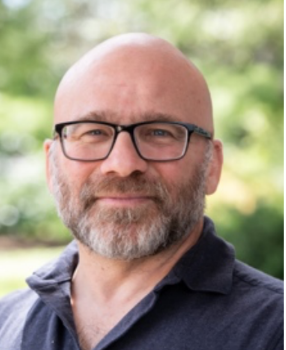
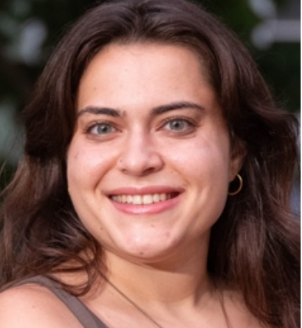
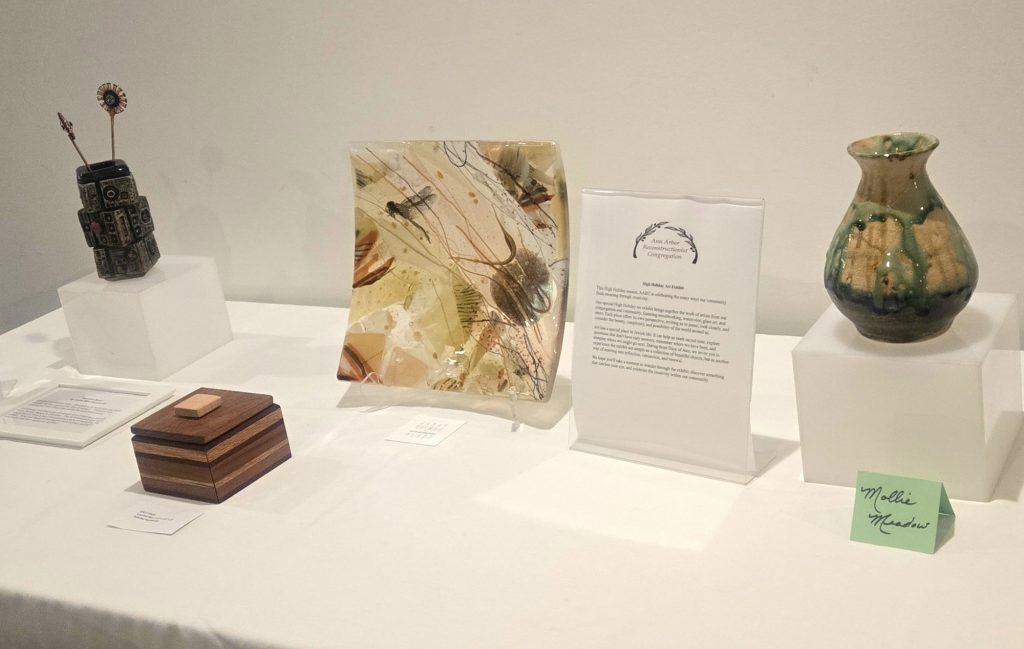
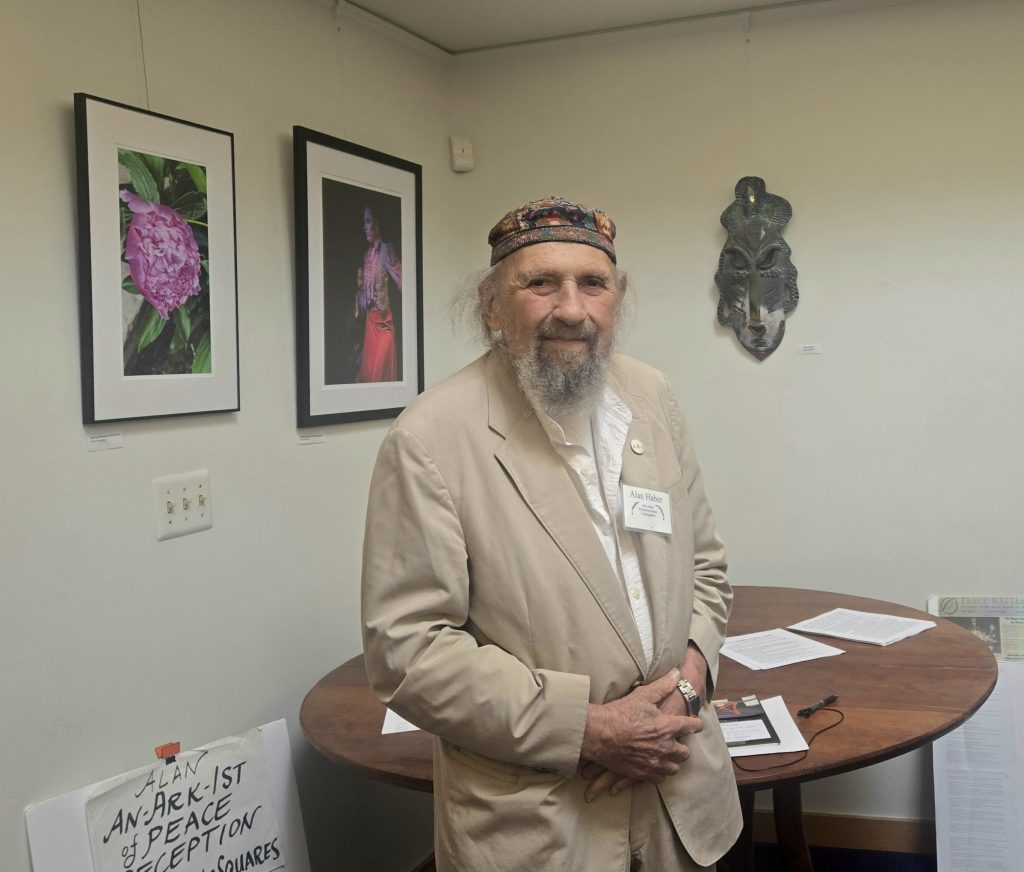
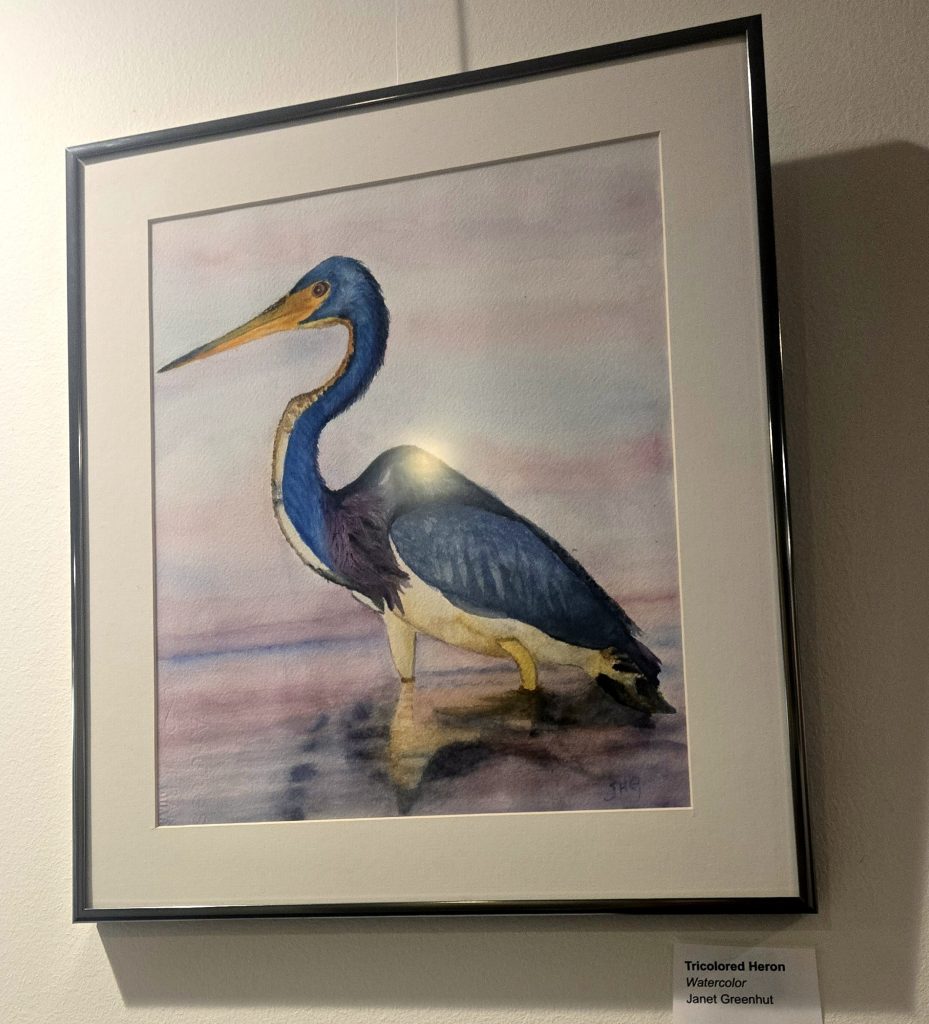
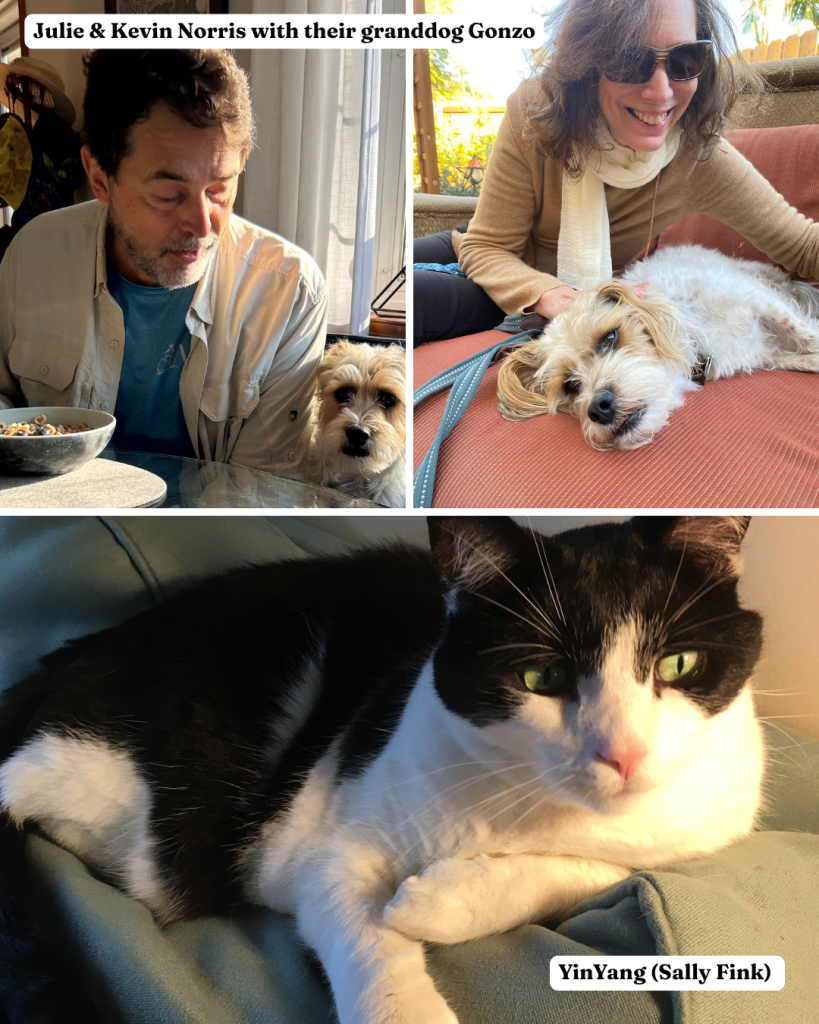
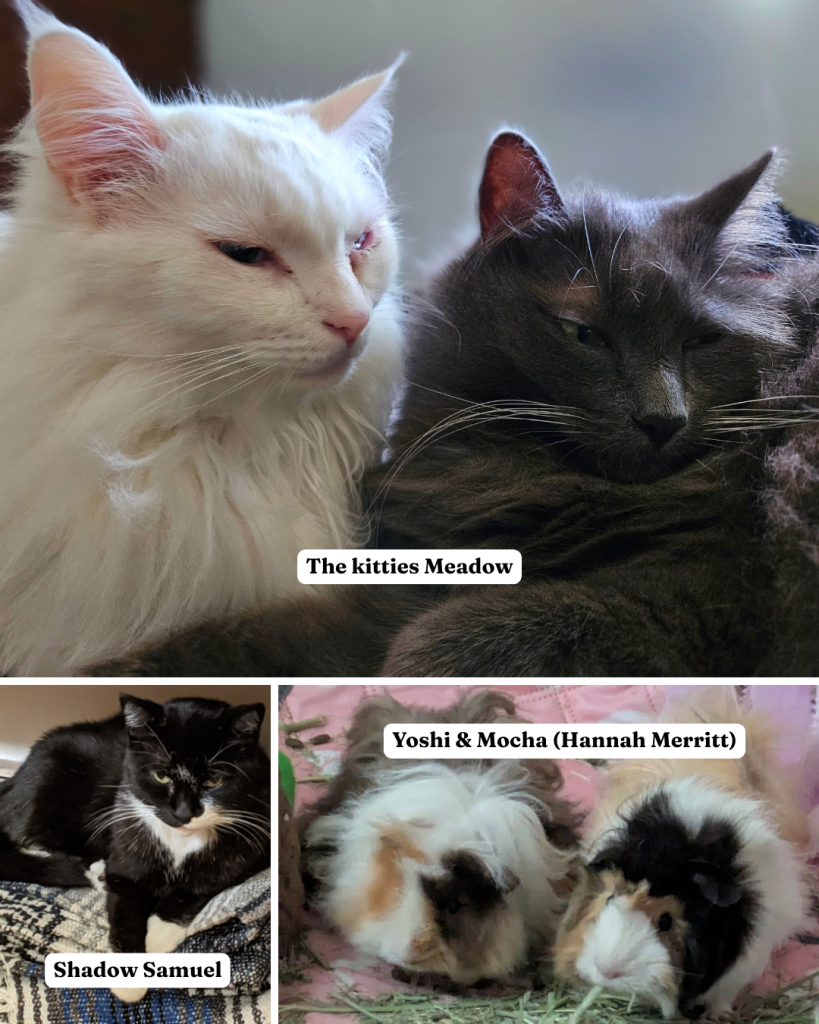
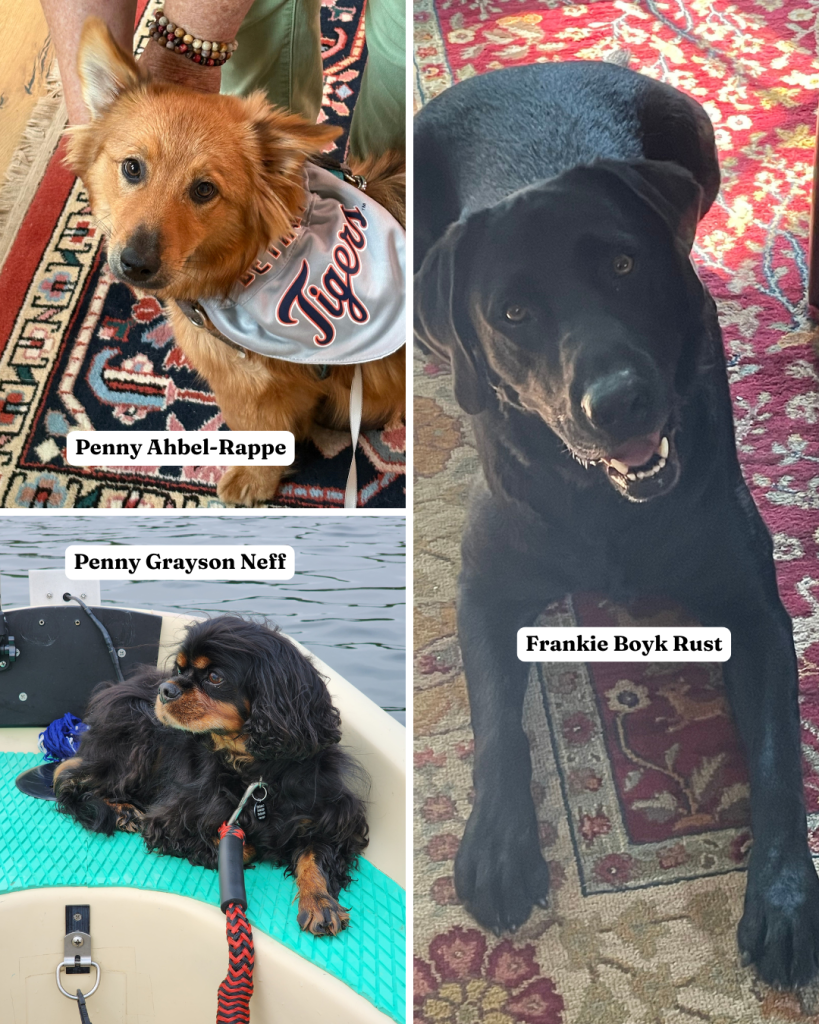
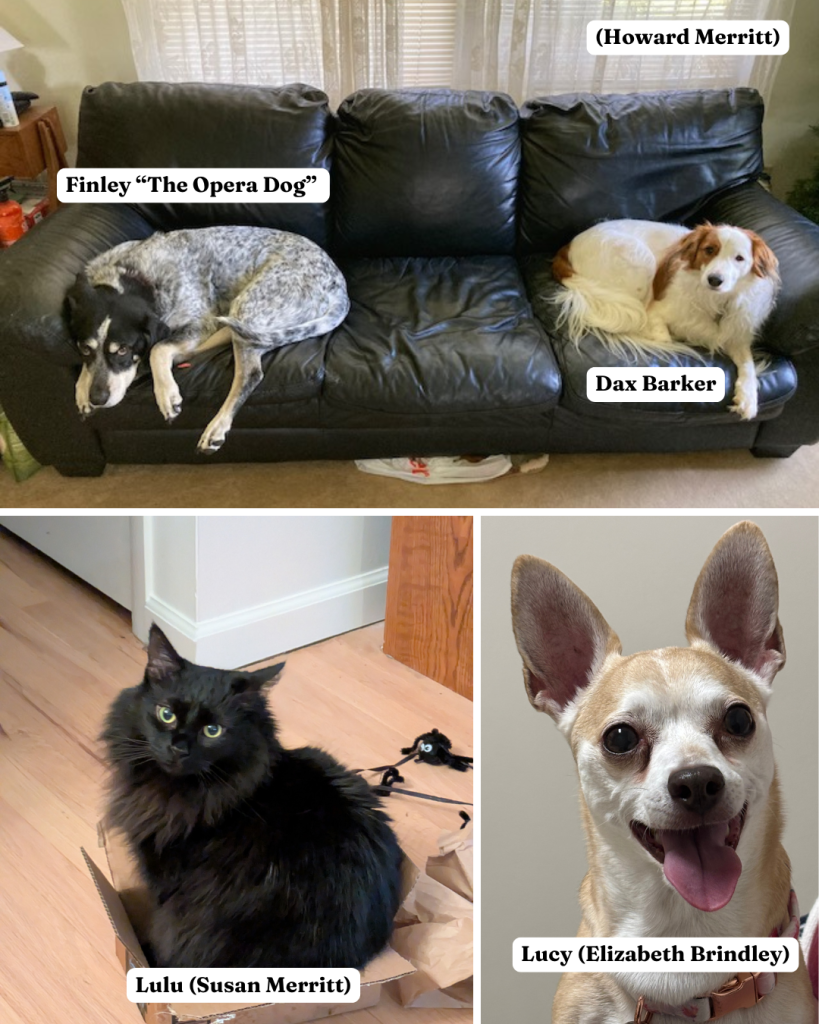
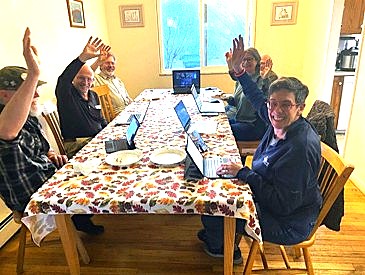
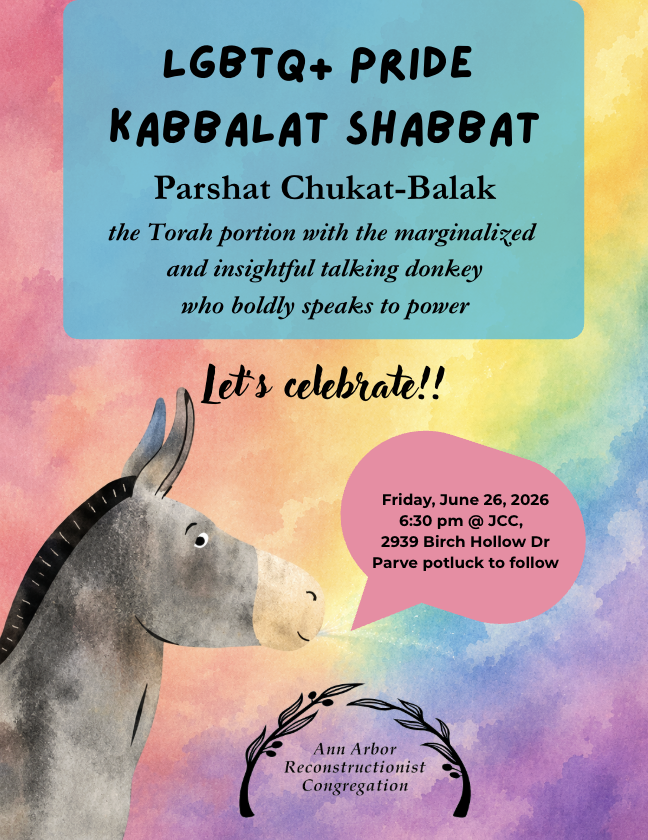
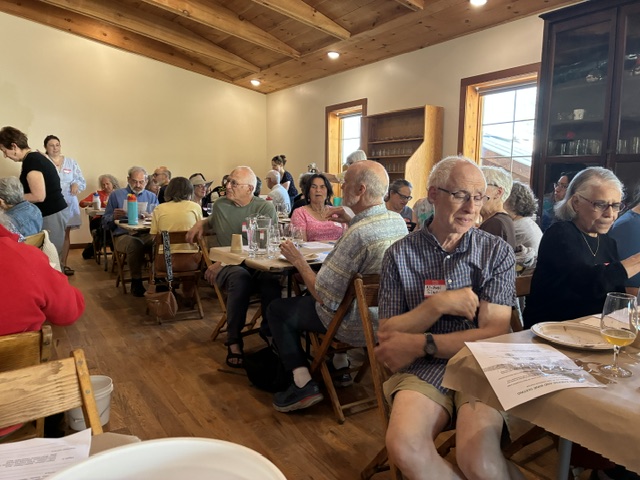
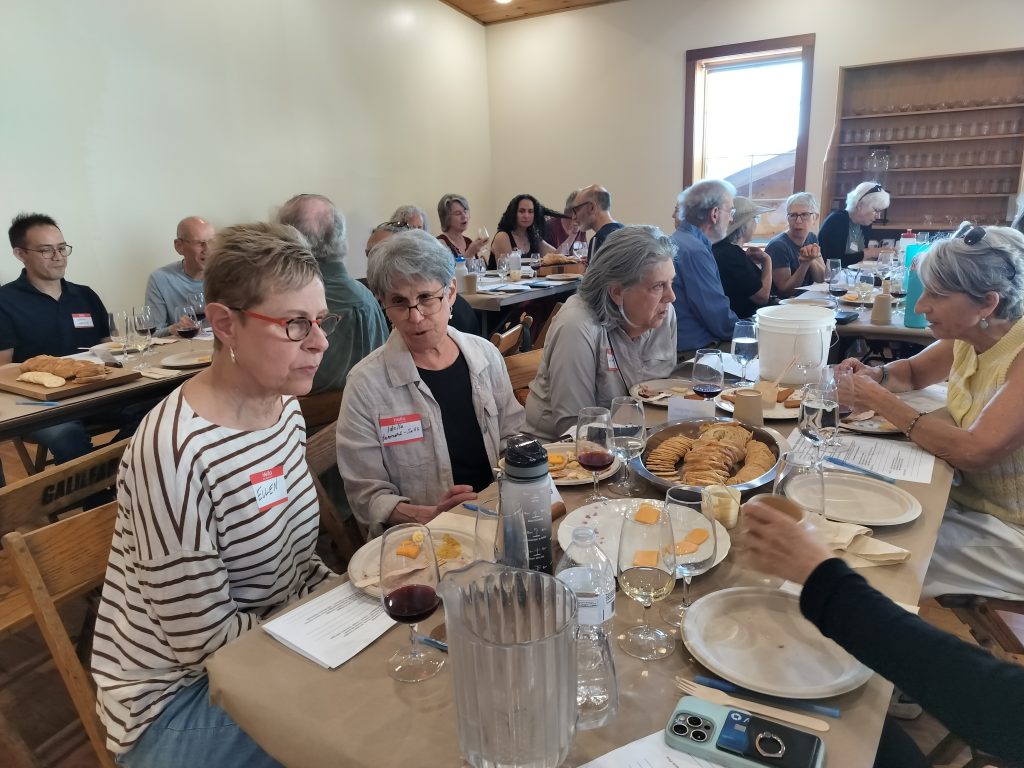
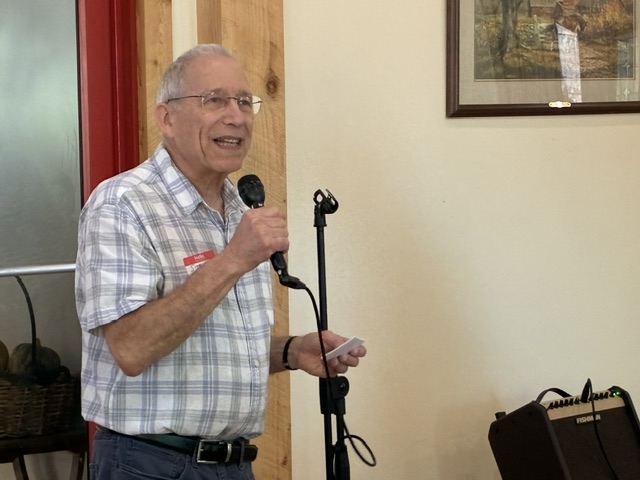
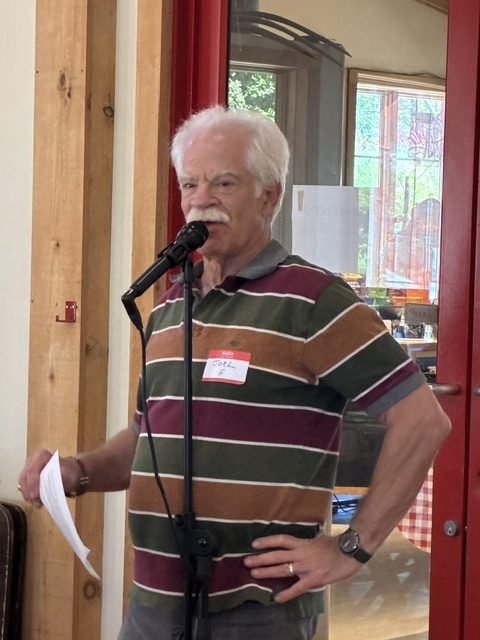
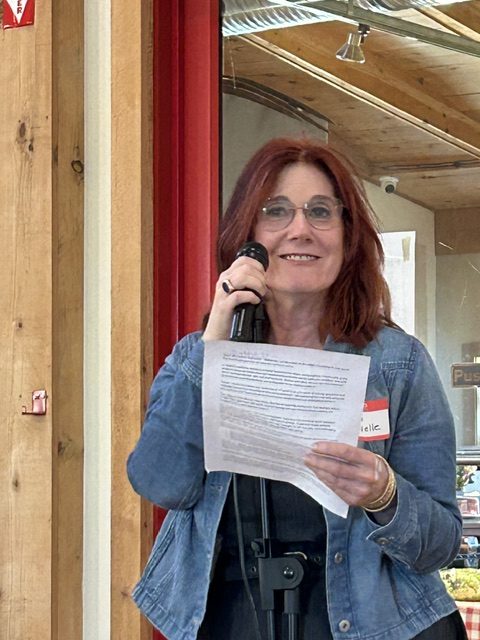
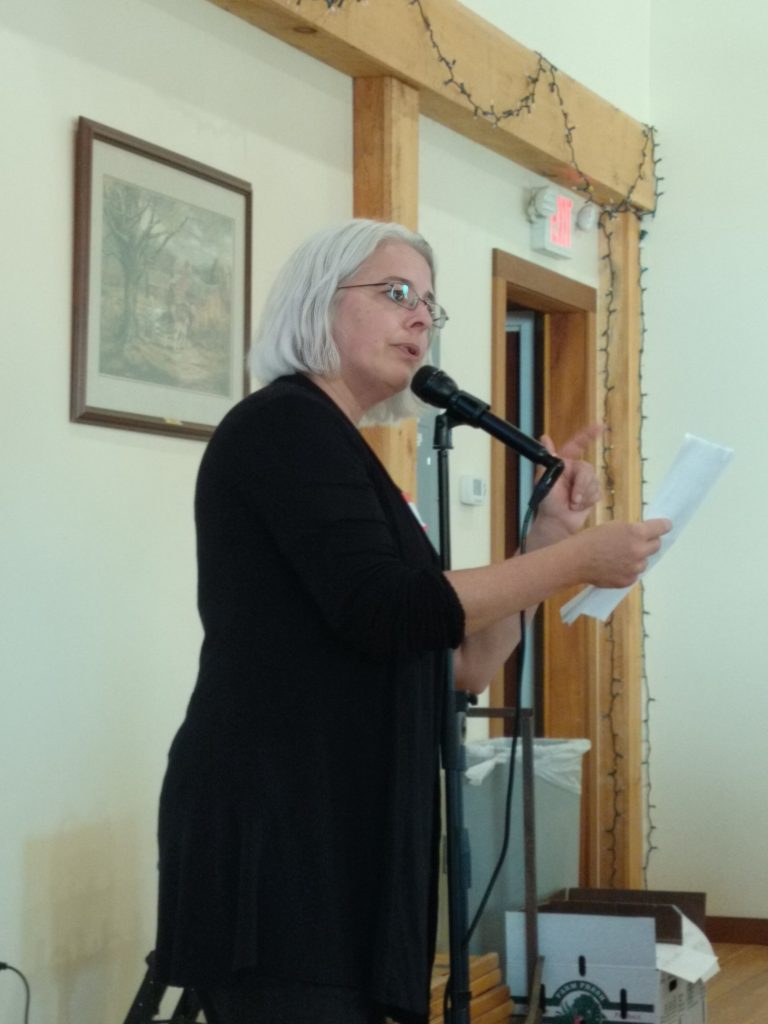
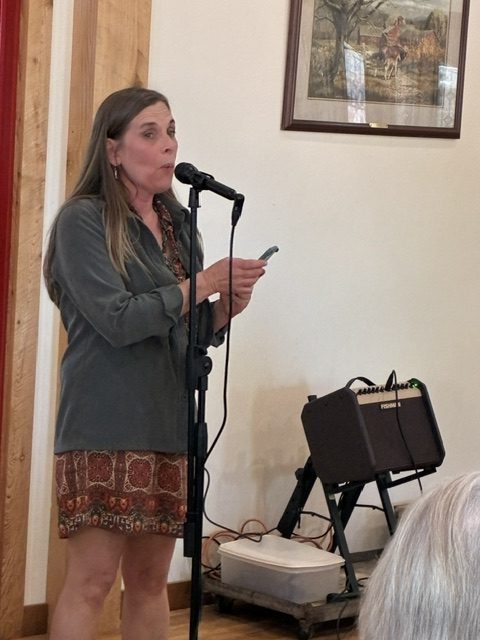
Thanks to all the organizers of the AARC’s recent Purim celebrations and to everyone who participated.
Now is a chance to savor a few photos.


Thanks to all the organizers of the AARC’s recent Purim celebrations and to everyone who participated.
Now is a chance to savor a few photos.


by efbrindley
This past Sunday I had the pleasure of participating in my first ever seder. AARC joined Pardes Hannah for their second Tu Bishvat Seder at the Leslie Science Center, where we explored the four mystical worlds of the Kabbalists. Rav Gav and Rabbis Elliott Ginsburg and Aura Ahuvia led us on a winding path through these worlds, using delicious fruits a grape juice to illustrate their meaning.

Before this I had never had much interaction with Jewish Renewal. In fact, this may have been the first. But Rabbi Elliott and Rabbi Aura were warm and knowledgeable, and their community members friendly and welcoming. I learned too that Rabbi Elliott had been a teach of Rav Gav’s at ALEPH, and they remained friends after her ordination. I can’t imagine how proud a teacher must be to work alongside a pupil like that. It was beautiful.
The first world we explored was Assiyah, the physical world, is represented by the element of Earth, the winter season, and the physical aspect of ourselves. Oranges, pistachios, pomegranates and walnuts are eaten with a glass of pure white wine (or, in our case because insurance, white grape juice.).
Brief aside here: I am glad that my first Seder was one where we use grape juice instead of wine. I had absolutely no clue that this was a thing at seders, and I don’t think anybody would have thought to tell me about it ahead of time because why would it occur to them that I would not also know this? Also, the juice seems like it just would taste better mixed together later in the seder being juice rather than wine, but maybe that’s just me. Anyway.
After Assiyah, we meandered through Yetzirah, the realm of water and spring, of emotions and creativity, are represented by foods with edible outsides and inedible centers. Dates (my favorite!), olives (my second favorite!), cherries, carob, apricots and plums all represent this realm.
B’riyah represents the third world, of air and summer and the intellectual. For this we ate the entirely edible — berries, berries, and more berries for me. I’m sort of a berry crazy, and it was only because I was around basic strangers that I didn’t use my little goblin hands to just scoop all of them from the seder plate straight to my mouth.
We ate nothing as we spoke about the fourth world, the world of Atzilut. Fire and the fall season represent Atzilut, which is the realm of the spiritual and the mysterious.
The moon was full and bright and silver, and we could see it through the window behind the rabbis as we sang and danced and prayed together. As we learned together. As I surreptitiously stuffed more and more berries, pistachios and dates into my mouth. I will not forget my first seder, and thanks to my heads up about the cups of wine, I will remember future ones too.
I’m so pleased to have had this first experience with you all.
בָּרוּךְ אַתָּה ה’ אֱ-לֹהֵינוּ מֶלֶךְ הָעוֹלָם, שֶׁהֶחֱיָנוּ וְקִיְּמָנוּ וְהִגִיעָנוּ לַזְּמַן הַזֶּה.
Baruch atah, Adonai Eloheinu, Melech haolam, shehecheyanu, v’kiy’manu, v’higiyanu laz’man hazeh.
Blessed are You, Adonai our G-d, Sovereign of all, who has kept us alive, sustained us, and brought us to this moment.
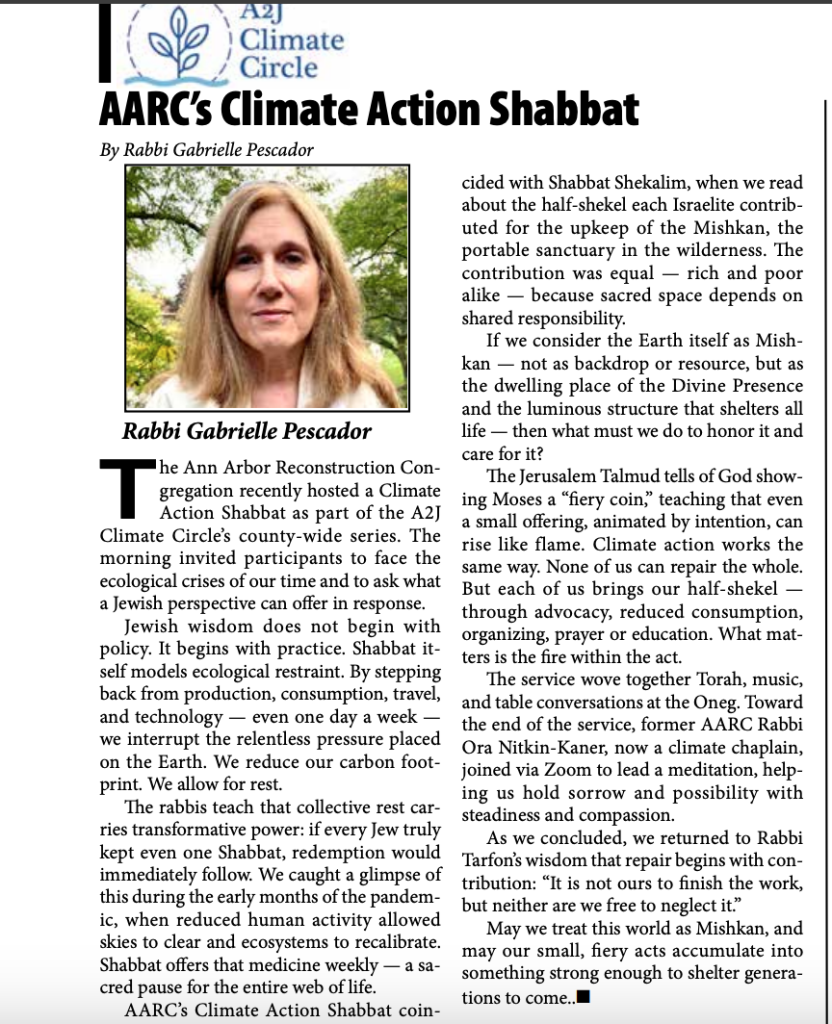
This article was written by Rav Gavrielle Pescador for the Feburary 2026 Washtenaw Jewish news.

At a time when many Jews feel fractured—by politics, by ideology, or by communal boundaries—Tu B’Shevat offers a powerful counter-narrative. Known as the “New Year of the Trees,” this holiday invites us to slow down, notice what is growing, and remember our shared roots. More than a seasonal marker, Tu B’Shevat centers values that are urgently needed right now: interdependence, renewal, gratitude, and care for the earth and for one another.
This year in Ann Arbor, Tu B’Shevat is being celebrated not by any one congregation alone, but through collaboration across the local Jewish community. On Sunday, February 1, 2026, community members of all ages will gather at the JCC from 10am to noon for a daytime Tu B’Shevat celebration that brings together multiple organizations and perspectives. There will be a variety of arts/craft/planting activities in the JCC Newman Lounge. Shlomit Cohen, the director of the Ann Arbor Reconstructionist Congregation (AARC) Beit Sefer (religious school), is part of the community-wide programming for Tu Bishvat. “One of the activities that we are excited to offer is bringing the different colors from nature and making colorful fun tie-dye with the children,” comments Shlomit.
Later that evening of February 1, at 7:00pm, a different kind of collaboration will unfold. Clergy and members from the Ann Arbor Reconstructionist and Jewish Renewal communities will come together to lead a joint Tu B’Shevat seder. Drawing on traditional ritual structures while inviting creativity, song, and reflection.
What makes this collaboration especially meaningful is Jewish Renewal and Reconstructing Judaism have a lot of affinity. Both are deeply engaged with tradition, yet embrace the opportunity to reinterpret it in light of modern life. Both emphasize ethical responsibility, spiritual depth, inclusivity, and a Judaism that speaks to the heart as well as the mind.
At the same time, their differences add texture to the collaboration. Jewish Renewal often foregrounds embodied spirituality, music, mysticism, and ecstatic prayer while Reconstructing Judaism emphasizes historical consciousness, democratic process, and thoughtful engagement with evolving Jewish civilization. When these approaches meet, and they often do, the result is not dilution, but enrichment providing multiple doorways into shared Jewish life.
Rabbi Elliot Ginsburg of Pardes Hannah, Ann Arbor’s Jewish Renewal chevre, notes “the Seder for Tu Bishvat invites us to experience an expansive understanding of the divine life-force while helping us appreciate the deep ecology of our own lives. The Seder Tu Bishvat historically draws on kabbalistic understandings of divinity as a Tree of Life with its roots in the Infinite. In this model, earthly life may be seen as leaves and fruit on the tree, energetically connected to the Source. From an ecological perspective,Tu B’Shevat, with its imagery of roots and branches, soil and fruit, reminds us that healthy ecosystems depend on diversity. So do healthy communities. When Jews gather across lines of denomination and ideology, we model a Judaism that is resilient, relational, and alive.“
In a season when public discourse so often pushes us toward division, these Tu B’Shevat gatherings invite something else: to come together, to plant seeds of connection, and to celebrate what can grow when we choose collaboration over separation. |
Rabbi Aura Ahuvia, who has strong roots in Ann Arbor’s Reconstructionist and Jewish Renewal communities, states: “I’ve felt a rising need for community with every passing month. The news, social media…it all feels oppressive and manipulative. I’ve been seeking the salve of simple connection, to be reminded that when we come together, in-person, as ourselves, we’re capable of enjoying each other’s company and even solving our problems together. Celebrating life as it reawakens within and between us feels like exactly the right thing to do right now.”

Winter is a fantastic time for enjoying the snow and then curling up on the sofa with tea and a good book.
All are welcome to join the AARC Book Group for its upcoming winter 2026 meetings. Participating in the AARC book group is a great way to get to know terrific people while discussing interesting topics and sharing delicious food.
Here are the dates and books:
All three meetings will begin with in-person lunches at Audrey’s and Greg’s house, with lunch prepared by Audrey, from 12:20-1 PM. Lunch will be followed by a hybrid in-person/Zoom book discussion from 1-2 PM. Many thanks to Audrey and Greg for their coordination, cooking and generous hosting! To learn more or RSVP, please contact Greg Saltzman, gsaltzman@albion.edu.

Sunday, January 11 we will discuss
The World That We Knew, by Alice Hoffman, (fiction, 2019, 398 pages).

Sunday, February 8 we will discuss
Hotel on the Corner of Bitter and Sweet, by Jamie Ford (fiction, 2009, 306 pages).

Sunday, March 15 we will discuss
God Is Here: Reimagining the Divine, by Toba Spitzer (nonfiction, 2022, 287 pages). Rav Gavrielle will join us and lead the discussion of this book. Thanks to the AARC’s Executive Director, Elizabeth Brindley, who recommended this book in her blog HERE.
The AARC book group is friendly and welcoming, and we look forward to seeing you! For more on the AARC book group, see this article from October 2025 and this blog from 2021.

The photo shows the December 2025 AARC book group enjoying an excellent lunch and a stimulating discussion on By the Waters of Paradise, by Clare Kinberg. We were delighted that Clare joined the discussion by Zoom from her home in St. Louis.
All are invited to join the AARC Creatives on Thursday, October 23, 2025 at 7pm. Seth Kopald will lead the group, which will be hosted at the home of Debbie Zivan. Contact Debbie djzivan@gmail.com to RSVP and receive directions to her home.
Seth will lead an activity about exploring ourselves through intuitive art making. Please bring some of your favorite art materials like markers or pencils, etc. If not, we will have some extra.
More info from Seth:
| Hello everyone. I’m looking forward to our experience together! In addition to your favorite pens, markers, pencils, etc, please bring an art pad if you have one. They have quality ones at the 5 and Below ($5 or less) store near Plum Market on Maple. They also have really nice art supplies, surprisingly. Below is a picture of the mixed media pad I like. But if you don’t have time, don’t worry because I’ll bring a pad (and art supplies) and we can tear a piece out for you. Regarding the topic of Exploring Ourselves through Intuitive Art Making, and if you like having processing time, you can begin to think about areas of your life where you want a shift or more clarity. This could be in relationship to others or a topic you wrestle with internally. But pick something that does not create a strong activation and lots of emotion. We can keep this light. Perhaps you simply want to get to know yourself better, like: “Why do I do this or that?” Also, you do not have to disclose anything personal to the group to do this activity. You may want to, if you feel called. To be witnessed can be very healing. And you will be witnessed, just by showing your work (also optional). Please let me know if you have any questions Warmly, Seth |

Mixed Media Pad
For more on the AARC Creatives, please check out THIS BLOG from July 2025.
We hope to see you on Thursday, October 23!

AARC Creatives in August 2025

AARC Creatives in April 2025
This article on the AARC Year of Water appeared in the August 2025 Washtenaw Jewish News. You can read the article on page 9 in this PDF.

We had gorgeous weather, and participants expressed joy and gratitude for the opportunity to deepen bonds and make new connections.
Thanks to Leora Druckman, our amazing coordinator for the 2024 and 2025 AARC retreats. Kudos to everyone who contributed to a fantastic AARC retreat at Camp Tamarack’s Butzel Center the weekend of May 9-11, 2025.


We look forward to seeing you at the next AARC retreat, either in 2026 or 2027.
by Emily Ohl

This past Sunday morning, AARC members gathered at the JCC to meet and discuss the state of our congregation and what it means to them.
The first half of the meeting was spent discussing business matters, such as departing (Erica Ackerman, Deborah Fisch, Debbie Gombert, Rebecca Kanner, Keith Kurz) and incoming members of the board (Dave Nelson, Josh Samuel, Robin Wagner), the budget, and other highlights from the past year.
The final half of the meeting was spent on an activity planned by Lisa Wexler, Julie Norris, and Debbie Gombert. Members made pairs, and eventually foursomes and octets, where they discussed what AARC means to them, and notice the themes that came up. Finally, the groups were tasked with making a short poem, song, or human sculpture, that conveyed these themes and ideas.
Near the end of the meeting, each group shared what they had worked on. The results were all unique, and yet each was filled with joy, heart, as well as themes of togetherness, justice, and diversity.
Thank you to all of those who were able to attend and participate!
by Emily Ohl

On Tuesday evening, community members gathered in close around Massachusetts based artists Rena Branson and Molly Bajgot. The pair had arrived in Ann Arbor the day before, the first stop on their Midwest tour.
Over the hour and a half of their performance, Molly and Rena created a sacred and healing space, in which all voices were celebrated and uplifted. The two went back and forth playing their original songs, Molly on guitar playing from her album Revelry and Rena strumming ukulele to tunes from their album Love is the Ground.
Before playing each song, the artists shared their kavanot. They then taught the audience the melody and niggun, allowing us to participate as the song and its harmonies unraveled. As each song came to a close, we were given space to sit and breathe in what we had just experienced.
By the end of the evening, I felt bonded with everyone in the room. The power of not only singing together, but facing one another and singing songs of hope, love, and peace, created a resounding closeness.
Many thanks to Rena and Molly for sharing their music and to Etta for bringing them to our community!