
My dear community,
By now, I’m sure you’ve heard the devastating news of the Islamophobic terror attacks in Christchurch, New Zealand.
This morning, I sat down with community rabbis to write the following letter, which we sent to Imam Abdullah Al-Mahmudi of the Islamic Center of Ann Arbor:
“Our hearts are breaking. When we woke this morning to the news of the terror attacks against Muslim worshippers in New Zealand, the first thing we thought of was the Ann Arbor Muslim Community. White supremacy, whether in Christchurch, Ann Arbor, or anywhere else in this world is a threat to us all. The murder of innocents, especially in prayer, is a terrible affront to humanity.
“As a Jewish community, we express our grief and moral outrage over this Islamophobic act of terror in New Zealand—the murder of 49 innocents in prayer.
“Both the Muslim and Jewish traditions believe that whoever destroys a single life is considered to have destroyed the entire world; and whoever saves a single life is considered to have saved the entire world. (Surah 5:32, Mishnah Sanhedrin 4:5)
“We recognize that last night, whole worlds were lost. We hold you in our hearts, and grieve alongside you.”
In response to the news of the shootings, a colleague of mine, Rafael Shimunov, wrote: ‘When you kill someone praying, you are killing them at the moment they closed their eyes, turned their back to the door, tuned out every sound and decided that this will be the moment they will trust the rest of humanity the most.’
This afternoon, I will be standing outside the Islamic Center of Ann Arbor as our Muslim brothers and sisters attend Jumu’ah, Friday prayer, along with Rabbi Josh Whinston, Rav Nadav Caine, Reb Elliot Ginsburg, and members of their communities. Please: if you’re able, join us, to remind those grieving that they can continue to trust the rest of humanity.
Holding you, and holding onto hope for a Shabbat of shalom,
Rabbi Ora


 Ayeka Café began meeting in January 2018 as a time for AARC members to gather together, ask each other and themselves the question ‘How are you?’ and listen to what emerged. After a good run, our last Ayeka Café meeting was October 4.
 It amazes me that we know so little about birth until we become parents and how little we know about dying until we watch someone close to us reach the end of his or her life. It is as if we are protected from our impermanence. The fact that we were once not here and someday we won’t be is veiled, keeping us unaware that life is truly a gift that should be celebrated. There are many distractions to life. Of course there are the electronics and screens, but more than that, we often forget to live in the now. We spend our time worrying about the future or vexed in the past. By doing so, we overlook what is right in front of us – our children, our friends, our family, the beauty of the earth. So I wrote this poem hoping to inspire you to live now and be here for yourself and for those around you. L’chaim! To Life!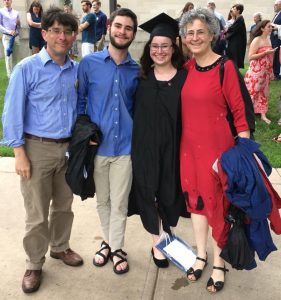
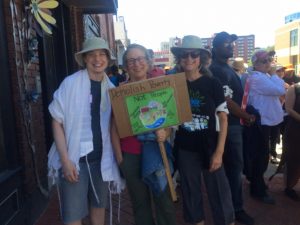 Dear AARC,
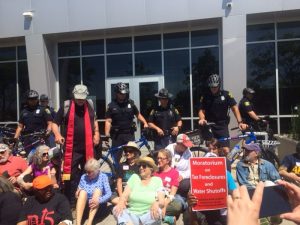 I was trained for the civil disobedience action and volunteered to be one of those to be arrested. There is personal and legal support teams for those who volunteer for an action. The movement is well organized and spirits are kept lifted through chant and song. I am writing this to encourage anyone with the inclination and availability to participate
