
 by Marcy Epstein
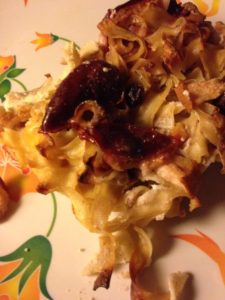
This is a no-holds-barred, creamy sweet kugel (noodle pudding) that necessitates a good amount of improvisation. In other words, I made this up. There are two conventional kugels Ashkenazim have turned to for over a century– the sweet apple and raisin variety, and the even more common starch-salty kugel of matzah meal, potato, leek or just plain cream sort that serves as accompaniment to a main course.
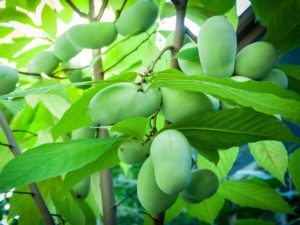
Because I made this kugel toward the end of Yom Kippur, I aimed for the happy fusion between the two, the dessert you eat as an entree, something to fill a stomach after ten servings of contrition. I combined a salty, creamy starchiness with many eggs and the earthy tang of sweet and earthy fruits. I reconstructed the tradition of eating new fruit of the fall harvest, taking t’shuvah to mean the literal turning of the spoon, I prepared noodles, ricotta cheese custard, and a great combination of fruits I doubt can be exactly replicated: this year’s extra sweet fresh Italian plums, some Bartlett pears, and (learning from Nancy and Drake Meadow how to set up jars and jars of local fruit) fresh raspberries, strawberries from Tantre Farm, serviceberries gleaned from outside a hospice, and Lodi apples gathered from a wild edge of Thoreson Farm (ironically, this farm was first to cultivate cherries in Michigan, but I only had dried cherries about, and dried fruit Kugel is a whole ’nuther casserole.) As I mentioned, improvise. Look to this recipe with open invention, an invitation into the sweet coherence of a signature on baker’s parchment in life’s divine cook book. The secret of kugel is in its ingredients and coherence.
As for coherence, I had a spiritual and practical problem. Homemade noodles would have made this recipe sound that much more home grown, true to humble roots. But practically, it was already torture not to taste the kugel while fasting– to make homemade noodles would have done me in and tripped me up. (I read the al Chet while the kugel cooked.) Wide store bought egg noodles were used instead.
One more note: this is not the kugel of my humble roots–that is a fantastic suburban pineapple kugel that I used to make with my mother, Ruth. Among the many things I turned over with the spoon was how I missed making this kugel with her. Mind you, I did most of the making, and she would talk with me, take or make calls to people from our JCC, or tell me about her hayday of hosting Hadassah meetings with this and that. Those are the missing ingredients of my own kugel, the kavanah of turning and folding, the awkward but satisfying slops where the cream and salt hit the fruit. It is in the spirit of lost-ness and return that I dedicate this little kugel to my mother and to Karen, Debbie Zivan’s mother, whom we lost this past month. I was lucky enough to share the holy days with her, to eat kugel with her, and to feel her Jewish motherliness when I could not be with my mom. So this recipe is for them and for yours.
Ingredients:
Salt, one big pinch
Butter, salted, two pats
1/4 cup Olive oil
1 bag of wide egg noodles
1 healthy cup sour cream
1 healthy cup ricotta cheese
3 tbsp of strawberry cream cheese
3 tbsp of regular cream cheese
1/2 cup milk
6 eggs
Two pears, diced
8-10 Italian (prune) plums
One pint jar of preserved fruit: mine was apples with raspberries and serviceberries. Apple sauce can work in a pinch.
Honey to taste.
Directions:
Preheat oven to 400 degrees. Set a couple of quarts of water with pinch of salt to boil. Add egg noodles when water is just at a boil, watch for 4-5 minutes, turn off heat and let sit. In a large mixing bowl, add cream cheese and microwave 1 minute till soft. To this, add and turn over a little milk, sour cream, a pat or two of salted butter, olive oil, eggs, vanilla, ricotta cheese, salt, and honey and cinnamon to taste. This mixture should prove to be nearly the mass of the noodles. Strain but do not rinse noodles. Add to a large casserole dish and have another smaller dish nearby in case you can make an extra for someone special. Core and chop pears. Pit and chop half the plums, leaving several halves intact. Fold cheese mixture into pan of noodles and turn. Fold canned fruit into the pan and turn. Fold chopped fruit into the pan and turn. Don’t worry about a topping for this kugel, the starch and oil in the recipe keep it from sticking (as long as you don’t over oil it), and it should have crunchy, pliant noodles on top. Bake for 40 minutes. Check to see if the custard has formed by putting in a knife and seeing it come out relatively clear of batter. Let the kugel sit a little before serving. It is best served luke warm.
Ideas for kugel are most welcome here on the AARC blog, and I can use suggestions before I expand this entry for my little Tumblr blog, New Jew Food.
 Adapted by Rena Basch from Cooking Light magazine June 2010
 Shabbat shalom.
  On Sunday, September 25 the Interfaith Council for Peace & Justice (ICPJ) is hosting the 42nd Annual Washtenaw/Ann Arbor CROP Hunger. ICPJ has organized this 5k charitable walk since 1974, raising a total of $3.2 million over the decades. Last year Washtenaw County walkers raised $48,500, with about 300 walkers participating.


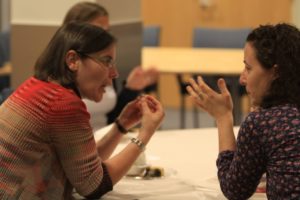 Reported by Martha Kransdorf and Sallygeorge Wright
 It started last evening. I was watching (on facebook) the first “
 You can find more of
 This year, I helped Morah Sharon Alvandi with the Beit Sefer G’dolim class. The class had eight kids, ages 10-12. We did a lot of things over the year: learning about Jewish communal responsibilities and communities around the world, improving Hebrew skills, and mastering the core Shabbat morning prayers.

