Len and Marilyn Kirsch recently moved from Long Island, New York to Ann Arbor to be near their daughter Jennifer, her husband Peter, and their grandchild Jacob. Len is a semi-retired aviation and seaport attorney and Marilyn is a retired elementary school teacher. Jennifer is a psychologist in town, and Peter is a dentist working in South Lyons and Milan. Jacob is 19 months and attends the JCC three days a week. They reside near the Briarwood Mall, but will be moving to a Toll Brothers Town House on Scio Church Road in the Spring. Len and Marilyn belonged to a Conservative Synagogue in Syosset, New York and Len was an elected member of the Syosset School Board for 11 years. They are excited to be part of a dynamic congregation and hope to help the congregation grow in size.
Blog
Welcome Jeff Siegfried!

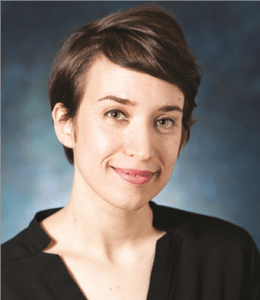
Hi! I’m Jeff. I’ve lived in Ann Arbor for a few years now and perhaps like many others I’ve been attending High Holy Days services at AARC only to disappear for the rest of the year. At Yom Kippur this year I realized that I am seeking a deeper sense of nourishment and community and I chose to become a member and to make Shabbat services a steadier practice for me.
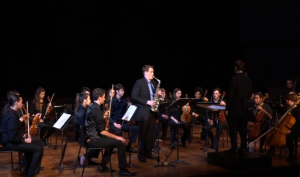
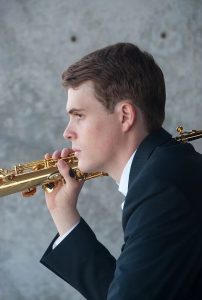
I am a doctoral student in saxophone at UM and I live near campus. I grew up in Bellingham, Washington. Prior to my coming to Ann Arbor, I lived in Tucson and Chicago.
I am drawn to the progressive, inquisitive, and welcoming atmosphere at AARC and I look forward to getting to know all of you more. My partner, Ione, was also able to come to a Rosh Hashanah service and wants to come to more events as her schedule allows as well. As the occasion arises, I’d love to be involved in making music in and around AARC events.
My hobbies include cooking, bicycling, reading, and dancing. I can’t wait to get to know all of you better!
Resources for Responding to Pittsburgh Tragedy

Last Saturday evening, in the hours after the attack at the Tree of Life synagogue in Pittsburgh, I tried to prepare myself for facing our Beit Sefer students on Sunday morning. After consulting many other Jewish professionals and teachers of young children, I determined that the best way forward was to check in with the teachers, be prepared to reassure and comfort, and to let the students be the guide to how much information to share, by answering questions but not going into extra detail.
As it turned out, none of the younger kids brought it up and so we went on with our planned lessons. The oldest class did have a discussion about anti-Semitism, not really focused on Pittsburgh. I arranged for a room for parents to talk to each other, and I invited Laurie White to lead the school in song for the closing half hour.
All in all, I was over-prepared for last Sunday. But now, going on a week later, I have a sense that more of the Beit Sefer students will have heard about the massacre and may have further questions and reactions. I’m glad I began my preparation immediately.
I would really appreciate hearing from any of you who have questions, advice, or anecdotes to share from your family’s experiences in dealing with this tragedy. I saw many of you at the community vigil at TBE on Sunday evening, which I found to be moving and strengthening.

I have received many helpful resources for responding to the tragic attack at the Tree of Life synagogue in Pittsburgh and I want to share just a few of them here.
From Rabbi Joshua Lesser, “THE TREE OF LIFE: Navigating Conversations With Our Children After Acts of Violence and Anti-Semitism.”
From Moving Traditions and Rabbi Tamara Cohen, “Guidance for Jewish educators and parents: Helping Teens in the wake of Pittsburgh.”
Resources for Interfaith families on anti-Semitism.
An article by Jewish activist Dove Kent and AME Reverend Jennifer Bailey, “Charleston to Tree of Life: White Nationalism is a Threat to Us All,” reminds us that this week’s shooting in a synagogue is part of continuing terrorism, and that we have foundations of solidarity to build on.
A video from the Pittsburgh protest of Trump’s visit, organized by Bend the Arc, is balm.
And finally, the Jewish community worldwide is calling for Nov 2-3 to be a #ShowUpforShabbat shabbat. This article from The Forward reminds us that “this Shabbat is a good time to remember that racial profiling has zero place in Judaism and Jewish spaces.” AARC does not have shabbat services this Friday or Saturday, but our congregants are welcome at any of the area’s services, a list of which will be sent to you soon.
by Yehuda Amichai, translated by Chana Bloch:
“Poem Without an End”
Inside the brand-new museum
there’s an old synagogue.
Inside the synagogue
is me.
Inside me
my heart.
Inside my heart
a museum.
Inside the museum
a synagogue,
inside it
me,
inside me
my heart,
inside my heart
a museum
Recap of Ayeka Café
Ayeka Café began meeting in January 2018 as a time for AARC members to gather together, ask each other and themselves the question ‘How are you?’ and listen to what emerged. After a good run, our last Ayeka Café meeting was October 4.
Rabbi Ora asked one of Ayeka Café’s regulars, Judith Jacobs, to write about her experiences over the past 10 months.
“The monthly Ayeka Café meetings, facilitated by Rabbi Ora, were an opportunity for Recon members to meet in a less formal setting. I attended these meetings since they began. I found that they offered me opportunities to explore different parts of me. There were three types of activities in which I engaged. The first involved dyads in which we took turns at being a listener and a talker. Not only did these experiences let me learn about someone else, they let me explore some of my own feelings. A second experience that I enjoyed was a more artistic one. In this I used a drawing pad and colored markers to represent my world, including my two cats – Sonya and Amber. This was just for me and not shared with anyone else. Lastly, one evening I had a rush of words filling my head and took the opportunity to journal these ideas. Again, this was just for me. Each person who attended an Ayeka Café took from it an amplified version of what they brought to the meeting.”
—Judith Jacobs
Thanks to all who participated and shared of themselves.
Stay tuned for an announcement in the coming weeks about “Ritual Lab & Learning,” a new AARC program launching January 2019.
Making a Habit of Tenderness

Yom Kippur 5779 Sermon
by Rabbi Ora Nitkin-Kaner
Making a Habit of Tenderness
Some of you know that before I moved to Ann Arbor to serve as rabbi of this holy community, I worked as a chaplain at a hospital in New Orleans. I was assigned to the oncology ward, so my weekdays, 8 to 5, were spent with cancer patients and their families. But at least once a week I would also work an overnight shift, which meant covering any death that happened in the hospital over a 24-hour period.
I ended up witnessing a lot of deaths – sometimes one per shift, occasionally as many as three. I rarely had time in the immediate aftermath of each death to grieve or process. But it was my job to show up, fully present, each time I walked into a hospital room. So I developed a ritual for myself: After each death, once the family had left the room and the body was taken away, I would take a few moments, alone, to wash my hands twice; first with soap and water, and then again, just water. It felt like this small ritual helped wash away some of the emotional residue that clung to me, so that I could show up for the next patient and family, with an open heart.
One patient who I remember vividly, in life and in death, was a man called Mikal (pseudonym) in his early 60s. He was the proud patriarch of a large, loud, Armenian Orthodox family. He’d emigrated to New Orleans in the 1970s, raised a son and daughter there, and established a successful jewelry business.
During the two months Mikal spent coming in and out of the hospital for treatment, I could always tell when he’d been admitted because there would a stream of visitors – family, friends, customers – spilling out of his hospital room into the hallway, laughing and talking animatedly and bothering the nurses for more fridge space in the lounge to store dishes of homemade food they’d brought.
Mikal had an aggressive form of cancer, but he was a dedicated optimist. He never admitted, at least to me, that he was dying. But he passed quickly, within a few months of his diagnosis.
The morning that Mikal passed away, I’d just started my shift when I got a call from the head nurse telling me that Mikal had just died, surrounded by his family. When I walked into the hospital room, I saw Mikal’s 32-year-old daughter Tamar lying in bed next to her father’s body. Her right arm spanned her father’s chest, and she was kissing his cheek again and again and crying.
One thing I discovered in my work as a chaplain is that the length of time family will stay with the body of a loved one varies tremendously from family to family and culture to culture.
Most families will leave within an hour of their loved one being pronounced dead. Tamar stayed with her father’s body, cradling him and crying, for more than four hours.
And I stayed with them in that room the whole time, because that was my job, to be there, to witness, to comfort. But I was uncomfortable. Because as a Jew, that kind of clinging to a dead body felt foreign and unsettling to me.
The Torah cautions us repeatedly not to touch a dead body, because it makes the living ritually impure. Many passages in Leviticus and Numbers warn against any contact with a corpse, and then outline how to cleanse oneself if contact does accidentally happen. But beyond these biblical, archaic prohibitions, even contemporary Jewish practices around death seem to communicate a hands-off feeling.
When someone dies, we bury their body as quickly as possible. After a funeral, all those who’ve attended are supposed to wash their hands as they leave the cemetery. And when Jews walk through a cemetery, we’re supposed to take care not to walk across any graves. So it seems like as Jews, we’re supposed to avoid contact with the dead.
But: this attitude doesn’t reflect the fullness of our traditions around death and mourning. Judaism also has a number of rituals that demonstrate deep tenderness towards the dead – rituals that seem to encourage care and physical closeness. I want to highlight four of these.
The first is the custom of the shomer – guard, watchman. After a Jewish person dies, their body is taken to a funeral home, where a relative, or a volunteer, or an employee of the funeral home sits with the body overnight and reads poetry out loud to it – usually Psalms. This ancient tradition came about because of the belief that a soul could become lost and confused right after death, and hover around the body until it was buried. The presence of the shomer was meant to be a comfort to the soul. And there is always a shomer until the funeral – the body is never left alone.
The second custom also takes place before burial, and involves a group called the chevrah kedisha, a community of volunteers that prepares bodies for burial. The preparation, known as tahara, is fixed, slow, and careful. First the body is ritually washed. As it’s washed, care is taken to preserve its modesty; only one small section of the body is uncovered at any given time. Then the body is dressed in white garments, wrapped in a tallit, and laid in a casket. At the conclusion of the tahara, the members of chevrah kedisha silently ask forgiveness from the soul for any indignity the body may have suffered during the ritual. They then ask God to gently receive the soul of the body they’ve just washed and dressed and tucked in.
The third custom I want to highlight is a more public-facing one: how relatives recite Mourner’s Kaddish for a year after a loved one’s death. This tradition dates back almost 2,000 years. The early rabbis believed that when a person died, their soul would go down to Gehinnom, a temporary purgatory. There, the soul would review their life’s actions and do teshuva. The more sins a person had accumulated in life, the longer their soul would stay in Gehinnom, with the maximum time being 12 months before the soul could finally ascend to heaven.
It was believed that having living relatives recite Kaddish could help speed up the soul’s process of teshuva. Some rabbis recommended that relatives stop reciting Kaddish after 11 months – to assume that their loved one had already ascended to heaven, and had not been so sinful as to have needed the full 12 months.
The final custom I want to share with you is that of visiting the graves of loved ones on yahrzeits and before holidays. Many Jewish families will take a yearly trip to the cemetery before Rosh HaShana and spend some time at each family member’s grave. At the end of the visit they’ll place a small rock on each gravestone, a way of marking ‘I was here’.
All of these rituals fall under the umbrella term ‘chesed shel emet.’ Chesed – meaning lovingkindess. And Shel Emet – meaning truth. Our tradition teaches us, with this name, that these acts of loving care for the dead are the truest form of compassion. Why? It’s simple: The dead will never be able to do the same for us in return. Chesed shel emet is considered true altruism.
What does all this have to do with Yom Kippur? Well, last night and this morning, we’ve been repeating the Vidui and Al Chet, doing teshuvah for this past year. And, as Dave said so eloquently last night, even as we reflect on the past, we’re also meant to be thinking about the future.
Audre Lorde once wrote: ‘We have to consciously study how to be tender with each other until it becomes habit.’ I’m wondering what it would be like, in the coming year, for us to reach for the delicacy and tenderness of chesed shel emet. Not, God forbid, treating the living as though they’re dead. But seeing if we can be so tender with one another, and without waiting for our gentleness to be returned.
So what would our day-to-day look like, guided by the tenderness of the rituals I just described?
Well: The shomer serves a comforting presence to a soul that may be lost, disoriented, or afraid. And of course being a shomer isn’t easy, or joyful; sitting up at night, alone with a dead body is hard. But what if, similar to a shomer, we challenge ourselves to radical accompaniment: to sitting with friends and strangers and family, even when their vulnerability or their need makes us uncomfortable. Can we show up and stay there in the messiness, even if it makes us afraid? Can we show up knowing we might not be thanked or appreciated?
And the chevra kedisha, performing tahara, the ritual of cleansing the body, with so much gentleness and respect. We could treat each other with the most delicate of touches, knowing how easy it is to cause shame or embarrassment. Knowing that sometimes we’ll still need to apologize even when we’ve done our best.
And, guided by Mourner’s Kaddish? We would assume positive intent in others. We’d believe that if a person hurt us, that they’d been doing the best they could at that moment. We’d limit how long we held grudges, held onto hurt. And we’d try to believe that even if the apology never came, that the person who hurt us was, on some level, sorry.
And finally, graveyard visits: Literally, visiting people where they’re at. What if we showed up, from time to time, uninvited, on each other’s doorsteps, bringing a gift, leaving a note, reminding someone we care about: Hey. I’ve been thinking about you.
It’s so freeing to act out of love without needing it to be returned. This kind of chesed, tender loving kindness, can transform the person who loves and the person who is loved.
This new year, 5779, can we love like this? Can we take up Audre Lorde’s challenge to reach for tenderness until it becomes habit?
On Erev Rosh HaShana, I said to you: ‘If we choose life then we are obligated to remember that although daily acts of love do not win headlines love has always existed, it does exist, and it will continue to exist. Love is an endlessly renewing resource.’
And, this afternoon, I want to add: More than just a resource like water, more than that which flows from us and to us and through us, love – chesed – is the foundation of this world. Love is the ground that we build and rebuild with each gesture, with every small act.
One of my favourite Hebrew songs is called Olam Chesed Yibaneh. The lyrics are just these three words, repeated. Olam Chesed Yibaneh. Meaning: we will build this world from love.
Let’s hold onto this possibility for ourselves, and for one another. Olam chesed yibaneh – we can build this world out of love.
Join me.
Come Meet Us and Learn about Reconstructionist Judaism

On Sunday afternoon October 21st, AARC Rabbi Ora Nitkin-Kaner, Beit Sefer director Clare Kinberg, membership chair Marcy Epstein, and board chair Debbie Field will lead an introductory session on Reconstructionist Judaism.
“Come Meet Us” will be an excellent opportunity for individuals and families who want to learn more about our congregation. At the same time our members can deepen their understanding of Reconstructionist values and conception of creative, participatory Judaism.
Come meet us!
October 21, 2018
2-4pm at the JCC
Beeswax Candles by Karyn Schoem
By Sarai Brachman Shoup, AARC Community Chuppah project coordinator.
Karyn Schoem is a Beth Israel member with quilting experience who has volunteered to put our community chuppah together. An artist, she also makes beeswax Shabbat candles – Or Haneshama (“Light of the Soul”). I bought some and thought they were really nice. They also smell great!
The candles are 100% beeswax from Lesser Farms in Dexter. They burn cleanly with no dripping and have an approximate burn time of 3 hours. No toxins are emitted while burning. She melts the wax in her kosher kitchen or in a solar box. She uses silicone molds. The wicks are 100% cotton and lead-free.
Since Karyn is contributing to our community through her volunteer work, I thought it might be nice to let people in the congregation know about her candles (It is OK with her). They are $5 for a pair and $14 for a pack of six. She can be reached at karynschoem@gmail.com.

Beit Sefer Gets Close in for Simchat Torah


L’chaim, Rosh Hashanah poem
by Seth Kopald
It amazes me that we know so little about birth until we become parents and how little we know about dying until we watch someone close to us reach the end of his or her life. It is as if we are protected from our impermanence. The fact that we were once not here and someday we won’t be is veiled, keeping us unaware that life is truly a gift that should be celebrated. There are many distractions to life. Of course there are the electronics and screens, but more than that, we often forget to live in the now. We spend our time worrying about the future or vexed in the past. By doing so, we overlook what is right in front of us – our children, our friends, our family, the beauty of the earth. So I wrote this poem hoping to inspire you to live now and be here for yourself and for those around you. L’chaim! To Life!
L’chaim!
Choose living
over distraction
consumption
hiding
numbing
running awayChoose living
over protection
anger
irritation
worry
fearBe engaged
Pick life goals that align with your values
what you see as your purpose.
Goals without agendas:
like needing to be being perceived a certain way
Release the burden of assuming people’s expectationsDo you want to be rich?
First become enriched through your work and service to others.At times we are not our best selves
we say and do hurtful thingsIt’s bound to happen
being human and all
We can count on our flaws
old friends, part of who we are.Flawed
like a crystal has inclusions
Crystal clear is stunning for a moment
but inclusions are much more interesting
Imperfection is our beauty
and provides richness to our storyI’m sorry I hurt you
I’m sorry I was a jerk to you
I’m sorry I wasn’t there for you when you needed me
But I’m here now
reaching toward you
knowing that human connection
family connection
is a powerful earthly forceWhen we hurt others
invite in curiosity
humility
patience
Invite in 2 minutes of courage
apologize showing your precious vulnerabilityWhen we lean in to life
Lean in
to our family
Lean in
to those that unintentionally hurt us
We release sparks of kindness
that season negative climatesYou are the most important person
you standing in front of me
family, friends, coworkers, congregants
the one that might look like an other
You are the most important person
my attention present as if we are all that the I can seeThere is no life
in what we think of as the future or the past
Life is only nowTime moves quickly
when we don’t embrace the present
We live in our next meeting
wrestling with self judgement in the past.Time was extended in childhood
Living fully in the presentAs we age
we need intention
Reminders
look through the eyes of a child
embrace our happiness and pain
be willing to show it, like a child, with freedom
See the extraordinary in the ordinary
Beit Sefer Builds a Sukkah 2018
This year, 2018, our Beit Sefer tried something new: A Beit Sefer Sukkah Building Sleepover. Beit Sefer families and a few prospective member families were welcomed by Carole Caplan and Michael Sosin to build our traditional sukkah, and then to sleep over under the stars at The Farm on Jennings. Five families, nine kids set up tents and spent the night. Then early Sunday morning had breakfast and welcomed the rest of Beit Sefer for learning about the four species in the lulav and other Sukkot traditions. Tremedous thanks to Matt McLane for many lessons in campout cooking, to Carol Ullmann for shopping, setting up my tent, creating the beautiful etrog suncatchers, and many other things. and to all the parents for making the Sukkot Sleepover happen. Hope the pictures convey the fun!


ushpizin/honored guests.