• Skip to primary navigation
  • Skip to main content
  • Skip to footer
Ann Arbor Reconstructionist Congregation

Ann Arbor Reconstructionist Congregation

  • Home
  • About
    • Overview
    • Rav Gavrielle Pescador
    • Our History
      • Photo Gallery
    • Our Values and Vision
    • LGBTQ Inclusive
    • Our Board
    • Our Sacred Objects
    • About Reconstructionist Judaism
    • Jewish Ann Arbor
  • Programs
    • Shabbat and Holidays
    • B’nei Mitzvah
    • Tikkun Olam
    • In the (Washtenaw Jewish) News
    • Health and Safety Expectations for In-Person Gatherings
    • Join our Mailing List
  • Religious School
    • About Beit Sefer
    • Teachers
    • Enrollment and Tuition
    • 2025-26 Beit Sefer Calendar
  • Blog
  • Calendar
  • Membership
    • Thinking about joining?
    • Member Area
  • Contact Us
  • Donate
You are here: Home / Blog

Blog

Flourishing Outdoors at the AARC, in the October 2021 Washtenaw Jewish News

September 28, 2021 by Emily Eisbruch

This article appeared in the October 2021 Washtenaw Jewish News

Filed Under: Articles/Ads

Carrying Our Imperfections Gently In Our Hearts

September 19, 2021 by Gillian Jackson

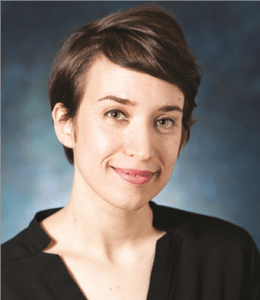
By Rabbi Ora Nitkin-Kaner

Rabbi Ora Nitkin-Kaner

Kol Nidrei 5782/September 15, 2021

“I regret any offence that may have been caused.”

“I’m sorry you had your feelings hurt.”

“If there’s been a mistake, I do apologize. But you must know it was never my intention to cause anyone any pain.”

“Look, I’m sorry I snapped at you, but to be fair, you were being really annoying.”

How often have you heard these sorts of terrible apologies? Saying sorry is one of the most important speech acts we have as human beings. But on average, bad apologies, also known as ‘fauxpologies,’ happen way more often than good ones.  

There are so many fauxpologies out there that two social scientists created a website to keep track of them back in 2012. This website, called Sorrywatch.com, analyzes current and historical public apologies made by celebrities, politicians, and CEOs.

If you read just one of the hundreds of terrible apologies compiled on Sorrywatch, you might come away thinking, ‘wow, that person is a jerk.’ If you read another, you might think, ‘oh, that person is a jerk too.’ But the more fauxpologies you read, the more you’d realize: This isn’t just a couple of jerks. This is widespread problem, and people really need help figuring out how to apologize better.

The founders of Sorrywatch agreed. So a few years ago, they published a list on their website: ‘The Six Steps to a Good Apology.’

According to Sorrywatch, these are the six steps to a full apology:

  1. Use the words “I’m sorry” or “I apologize.” “Regret” is not apology! Regret is how you feel. Apology is about how the other person feels.
  2. Say specifically what you’re sorry for.
  3. Show you understand why the thing you said or did was bad.
  4. Be very careful if you want to provide explanation; don’t let it shade into excuse. This could mean just erring on the side of listening.
  5. Explain the actions you’re taking to ensure this won’t happen again.
  6. If you can make reparations, make reparations.

Although SorryWatch feels like a distinctly 21st century phenomenon, its founders – one of whom is Jewish – were partly inspired by Jewish wisdom from 900 years ago: the writings of Maimonides, also known as Rambam. Rambam’s Mishneh Torah devotes 10 chapters to the art of repentance, and includes the original ‘how to apologize’ list. Rambam also engages with broad range of related questions, including whether you should bother apologizing if you’ll probably commit the same sin again (hot tip: it’s the moral equivalent of dunking in a mikvah while holding a lizard carcass – very not kosher!).

If we took all the medieval wisdom of the Mishneh Torah and all the contemporary wisdom of Sorrywatch and boiled it down to one sentence, it’s this: saying sorry is hard. 

And it’s not because some people are jerks. It’s not because we don’t always have the wisdom of Sorrywatch or Rambam at our fingertips. It’s because saying sorry can be painful—to the person saying sorry! It can hurt the person who’s apologizing. Or at least it can feel that way. 

This is because at its heart, an apology is an acknowledgment of imperfection. 

It can be hard for many of us to admit that we’re not perfect. So instead of saying ‘I see how I hurt you,’ our apologies become complex verbal pretzels to help us avoid looking in a moral mirror, to wrap our ego in layers of self-defense, to widen the gap between what we did and how we want to think of ourselves. We want to avoid the pain of seeing ourselves as the villain in someone else’s story.

But it’s a fact; a fact that’s true regardless of how often we’re the hero or the villain in someone else’s story. The fact is: I am not perfect. You are not perfect. We, collectively, are not perfect.

I’m going to say that again. I am not perfect. You are not perfect. We are not perfect.

Our adult minds know what do with this statement. We say to ourselves heartily, ‘Of course I’m not perfect!’ Intellectually, we know perfection is impossible. But under that vigorous acknowledgement of reality and that cool adult rationality, there’s often still a voice that whispers frantically, ‘But I have to be perfect! That’s the only option!’

The little voice that tells us we have to be perfect—where does it come from? For some of us, it’s the voice of our parents and caregivers from when we were children, socializing us, teaching us to be good, and maybe also injuring us a little in the process. For some of us, it’s our history as a people. For centuries, Jews have strived for goodness and success, partly because we imagined that if we were without flaw, we would be less hated by the world. Perfection became our hope for mitigating or avoiding anti-Semitism and anti-Semitic violence. 

If that’s where the little voice comes from, what makes it louder? Well, our tradition, for one. For some of us, compulsory perfection can feel like it’s commanded by our High Holy Days. The fasting, the beating on our chests, the communal reciting of sins can all combine to make us feel like we’re failing some ideal. These holidays can highlight the gap between who we are and who we think we should be.

What happens when the voice that whispers ‘I have to be perfect!’ runs us? We are harsh with ourselves, criticizing our bodies, our accomplishments, our career paths, our relationships. And often, when we cannot hold our own perceived imperfections with lightness or acceptance, we push away weakness and vulnerability and failure in others. When we cannot sit with our own imperfections, it’s harder to sit with others in theirs.

Why does this matter so much? Of course, it’s damaging to empathy and compassion, and those are fundamental to a good life. But I wanted to talk with you about perfection on Kol Nidrei because perfection is the opposite of change. And change is what the High Holy Days are all about. 

When we prayed, on Rosh HaShanah, to be written in the Book of Life—when we pray, tonight and tomorrow, to be sealed in the Book of Life—it’s not a negotiation with God-as-Santa Claus, checking a list of naughty and nice to see whether we’ll get the present of life in the new year. It’s not a simple equation of if we’ve been good, we’ll live, and if we’ve been bad, we’ll die. Being written into the Book of Life simply means that we’ll have the chance to keep making mistakes in the coming year. 

For life to exist, there needs to be imperfection. If something is perfect, that means it can’t change. And the essence of life—the only condition that makes life possible—is change. 

We understand this implicitly when we look at the natural world, but it takes a little more time for it to sink in when it comes to us. If we were perfect, it would mean we wouldn’t—couldn’t—change. 

And our tradition knows this. This is one of the foundations of our faith: That the world was not created as perfect, and that we were not created to be perfect. There’s a midrash I love that speaks to this. In the Talmud (Pesachim), we read that before creating our world, before anything else was created, God created teshuvah. Repentance existed before anything else. Back when there was nothing, the possibility of moving towards healing and repair was set into the foundations of our world. And then God created our fallible world, and us within it, with the acceptance that we could never be anything but beautifully imperfect.

How do we repair our relationships with others? We can start by releasing our expectations that they will be perfect. How do we repair our relationship with ourselves? We can start by understanding that imperfection is our nature and our heritage, our past and our future. When we let in the truth that we were never created to be perfect, we start to quiet the little voice with its fearsome whisper. 

If imperfection is our nature, and teshuvah is our sacred heritage, the work of our hearts is to hold all this vulnerability tenderly. To hold our past and present, full of missteps, with as much warmth as we welcome our futures. Because our failures and our missteps, our selfishnesses and our egos, our heartbreaks and our dark moments of despair—we’re not meant to ignore them or throw them away. They are part of who we are. They give us knowledge of ourselves. And if we are lucky, and we put in the work, they can become signposts on the path forward.

I want to share one final midrash, one final bit of Torah to carry us into our soul-work, this Yom Kippur:

In Exodus, we learn that Moshe ascended Mount Sinai to receive the two stone tablets of the Ten Commandments. When he came down the mountain, he found the Israelites worshipping an idol, a calf made of gold. Enraged, Moshe smashed the tablets. And eventually, he had to go back up the mountain to receive a new set from God.

What happened to the stone tablets, the unbroken set, and the broken ones? The Talmud (Berachot) teaches that when the Israelites built the mishkan, the traveling tabernacle for God, they placed both sets of tablets, the broken and the unbroken, side by side into the holy of holies. They placed what was broken and unbroken at the heart of their community. That was where God dwelled.

We are meant to treat what was broken with as much reverence as what is still whole. To embrace the rough with the smooth, the past with the present, the losses and the failures with the joys and successes of our lives. We cannot cast anything away. We must carry our imperfections gently in our hearts, nestled alongside our highest hopes for ourselves, our communities, our world. Only in that way can we achieve wholeness. When we carry both in our hearts.

I’ll close with the priestly blessing—a blessing of shalom, peace, and shlemut, wholeness, for us all:

May the Source bless you and keep you;

May the One turn towards you with light and grace;

May the Eternal face toward you with uplift, and grant you peace.

Amen.

Filed Under: Rabbi's Posts Tagged With: High Holidays 2021, Rabbi Ora Nitkin-Kaner, Yom Kippur

Leaving Behind the Idol Shop; Or, Enthroning An Orientation Towards Love

September 8, 2021 by Gillian Jackson

By: Rabbi Ora Nitkin Kaner

Rosh HaShanah 5782/September 7 2021

Rabbi Ora Nitkin-Kaner

I want to start with a story—maybe one you’ve heard before. It’s a story about Abraham, back when he was known as Avram, and his father, Terach, and how Abraham smashed the idols. The story goes like this: 

Abraham’s father Terach sold idols for a living. Occasionally, he would go out of town, and when he did, he’d leave young Abraham in charge of the idol shop. 

One day, when Abraham was minding the shop, a woman came in with a plateful of food and said to Abraham, “I want to give this food to the idols.” As soon as the woman left, Abraham took a large stick and smashed all the idols except the largest one, and then placed the stick in its hands. When Terach returned, he was shocked to find the contents of his shop smashed to smithereens. 

“What happened here?” he demanded of his son. 

“Well,” said young Abraham, “a woman came with an offering for the idols. One idol announced, ‘I must eat first,’ but then another insisted, ‘No, I must eat first.’ Then the largest idol rose up, took that stick, and broke them all.” 

“Don’t be absurd!” said Terach angrily. “Idols can’t move or speak!” 

“Did you hear what you just said!?” Abraham asked. “If they can’t move or speak, how much power can they really have? How could we worship them?”

Then Terach, silenced and enraged, sent his son away.

This story—from Bereshit Rabbah—is an origin story of the first Jew; how Abraham started on his journey toward the idea of one God. The story makes it clear that even as a youngster, Abraham could see that believing in idols was silly; and we, from our 21st century vantage point, agree. So naturally we think of Abraham as the hero of this story, and Terach as the misguided villain. But lately, I’ve been less curious about Abraham’s iconoclasm and more curious about his father’s experience: how it must have felt for Terach to come home and find his livelihood and his faith shattered by his own son.

I’ve been thinking about Terach lately because I believe we’re living through a time of our own idols being smashed. Don’t get me wrong: I don’t think anyone in this kahal actually has figurines of Baal or Asherah in their homes. But I do believe that as a society, we’re experiencing what it’s like to believe in something, to invest emotionally in that thing, to consider it sacred, and then have it shattered.

What am I talking about? 

I’m talking about the delight we took in Bill Cosby, America’s most loveable dad, and then finding out he sexually assaulted dozens if not hundreds of people throughout his long career. I’m talking about Andrew Cuomo, and Louis CK, and Michael Douglas, and Kevin Spacey, and Junot Diaz, and Sherman Alexie, and on and on.

I’m talking about growing up trusting police, and then watching George Floyd be murdered while calling out for his mother, and hearing about how Breonna Taylor was killed in a raid of her home. I’m talking about memorizing Tamir Rice’s 12-year-old grin, his wide cheekbones and his mischievous eyes, from his obituary photo.

I’m talking about growing up with the idea of Israel as the homeland of the Jewish people, or the Israeli Defense Forces as the ‘most moral army in the world.’ And then coming to learn that hundreds of thousands of Palestinians were deliberately displaced in the founding of the Jewish state, or that Israel is a flawed country like any other. I’m talking about living through May of this year as Israeli rockets killed 67 children in Gaza.

I’m talking about learning to feel pride in America as a democratic ideal, with trust in the basic decency of our government leaders—and then witnessing endless wars in Vietnam, Afghanistan, Iraq. I’m talking about half the country electing an abhorrent abuser in 2016. I’m talking about living through January of this year, watching his mob break into the Capitol, wearing t-shirts that said ‘6 million wasn’t enough.’ I’m talking about this past week’s abortion ban in Texas.

I’m talking about growing up with a basic sense of trust in one’s fellow citizens, and then seeing people refuse to wear masks, refuse to do the minimum to keep one another safe during a pandemic.

I’m talking about faith, and the loss of faith; I’m talking about trust, and the loss of trust; I’m talking about belief, and the loss of belief.

It’s human nature to believe in goodness. It’s human nature to believe in the goodness and stability of the systems we create and the people we put in charge of those systems. So what happens when those systems are revealed to be fundamentally damaged or damaging? What happens when we find ourselves surrounded by the shattered remnants of the idols we once believed in?

Or, to ask this question differently: What have you been feeling these last weeks, months, years? Anxiety, sorrow, despair? Outrage, disgust? Alienation, mistrust? Bitterness, confusion, shame?

These are these emotions that accompany the psychological state of ‘moral injury.’ 

Moral injury is a reaction to a traumatic experience—a traumatic experience that violates our sense of how the world should work. It happens when our meaning systems confront something chaotic or disastrous; when we witness events that shatter our deeply held values. But moral injury doesn’t only occur when we are witnesses. It also happens when we come to understand that we are the perpetrators or perpetuators of an unjust system; it happens when we find ourselves complicit in things that we don’t want to be complicit in. Like as Jews, when we find ourselves defending some of the more immoral decisions of the Israeli government. Like as people with white privilege, when we come to understand how we benefit from systemic racism. Like as Americans, when we see how our taxes feed the American war machine. And how helpless we feel to change any of these realities. 

What’s wounded in moral injury is our sense of the world, and our place in it. 

We have a fundamental need to engage with the world in a moral way. When we feel like we’ve lost our ability to do that, it’s disorienting. It’s painful. And it’s also isolating. Moral injury messes with our ability to connect to other people. Or, to put a Jewish spin on it: it leaves us in a state of alienation from goodness—which is what we call sin. 

In Judaism, sin is the opposite of a mitzvah. The word ‘mitzvah,’ or ‘commandment,’ comes from the Aramaic root ‘tzavta,’ meaning ‘to bind together, to connect.’ If a mitzvah is something that connects us—to God, to our past, to family and community, to others in need, to our own deepest values—then sin is something that leads to a disruption of these connections.

Judaism teaches that idol worship is perhaps the greatest possible sin, from our second commandment (not to create idols or worship them) to the rabbinic saying: “Whoever endorses idolatry, rejects the entire Torah.” (Sifre Deuteronomy 28)

Why is idol worship such a focus of our tradition? Why is it such a sin, to guard against? Coming back to the smashing of idols and how painfully disorienting it is to live through such devastation: maybe we were taught that idol worship is a sin not because God is a jealous God, but because our tradition contains deep wisdom: the wisdom that it is hard to live when we place our faith in fallible things. Because inevitably, our idols will be smashed, and that will be devastating to us. 

We need our gods to be immutable. We need our gods to be eternal. This is the deep truth of our tradition. 

Only an hour ago, as part of the Rosh HaShana morning liturgy, we read a kavanah for ‘HaMelech,’ the liturgical moment of divine enthronement. The kavanah stated: “We have a need to re-enthrone meaning in the face of the chaos of our lives” (Kol HaNeshama Machzor, 269). We do. Perhaps never more so than today. Because we cannot survive as modern-day Terachs. We cannot abandon ourselves and one another to this present-day idol shop, surrounded by smithereens and turning the stick on one another and on ourselves. We need an act of re-enthronement. We need a God that cannot break, a world that will not keep shattering.

With so many of our idols destroyed at this point, how do we trust again? How do we figure out what to believe in?

Recovering a sense of trust, in our world, in our leaders, in one another, isn’t easy. We’ve lost a lot. And losses create suffering. And fear. And doubt that we actually know how to do this, that we’ll know how to make the right choices this time around.

But we do know how to do this. This power of discernment is deep in our ancestral DNA. We inherited it from Abraham, from the very first Jew: the ability to differentiate between what is eternal and what is temporary; between what is sacred and what is not. And to enthrone what is eternal, what is fundamental, and what is the deepest truth of life. Which is: Love.

What’s the first thing we know when we come into the world? Love. We are created out of love, and it is what sustains us, literally keeps us alive when we are infants. Love creates life. Love sustains life. 

And love is embedded in the heart of our tradition. What’s the most important prayer in Judaism? The Shma. The Shma is at the core of Jewish belief. On the surface, the Shma seems like a simple declaration of monotheism: Listen, Israel, Adonai is our God, Adonai is One. But if God is One, if God is Oneness, if we all contain that sacred, unified wholeness, then the only possible imperative is to love: Ve’Ahavta. When we really integrate the awareness that we are one, then we have nothing else to do but love one another by receiving, resting in, and transmitting abundant love. Our God becomes a God of love, and our life’s work simplifies into seeing love, receiving love, integrating love, and extending love outwards.

Ve’Ahavta: And we will love. On this first day of a new year, we have the chance to acknowledge our old idols, even honor what they gave us. We can gather up the broken pieces, bury them with care, and enthrone an eternal truth—Ve’Ahavta—a truth that will not break, no matter the challenges of the year to come. 

Committing to a new enthronement in the face of chaos is an invitation to believe again. But in this process, how do we make sure that we’re not just setting new idols on the throne?

The way to do this is actually relatively simple. We ask ourselves one question: Is this oriented towards love? This is the question we have to ask ourselves, in every relationship, inside every belief: ‘Does this idea, this person, this leader, this system, orient towards love? Does this maintain and promote a field of care?’ And if the answer is no, then it may well turn out to be another idol. Which means it’s not right for us, and for our tender, yearning hearts. 

Just think of what is possible for us, if we enter the new year holding up the banner of this question for ourselves: Is this oriented towards love? This email I’m about to send my coworker: Is it oriented towards love? This text I’m about to send my friend: Is it oriented towards love? This politician’s platform: Is it oriented towards love? This non-profit I’m donating to: Is it oriented towards love? This community I’m joining: Is it oriented towards love?

We are deserving of a world that doesn’t shatter, and break our hearts along with it. We are deserving of, worthy of, capable of building a world that merits our trust. We are deserving of a world built on love.

Filed Under: Rabbi's Posts Tagged With: High Holidays, High Holidays 2021, Rosh Hashanah

Get Inspired For the High Holidays By Reading Rabbi Ora’s Sermons!

September 1, 2021 by Gillian Jackson

Rabbi Ora Nitkin-Kaner

Those of you who have recently attended High Holidays services at AARC know that one of the highlights are Rabbi Ora’s sermons. Each year, Rabbi Ora conjures up mind-blowing topics that gives everyone food for thought for the year to come. As a teaser for this year, I thought I’d collect some sermon highlights to look back at some of the incredible teachings of the last few years. Whether you will be at our services this year in person or online, you’re guaranteed richly meaningful learning. Just make sure you register to attend as soon as possible!

  • 5779 Kol Nidre Sermon: Making a Habit of Tenderness
  • 5780 Kol Nidre Sermon: Erring on the Side of Love
  • 5780 Rosh Hashanah Sermon: Remembering For Life, Being Remembered for Life
  • 5781 Kol Nidrei Sermon: The Whole World is a Brief Bridge
  • 5781 Rosh HaShanah Sermon: Breaking and Birthing

We look forward to seeing everyone over the chagim. As always, please let us know if you have any questions.

Filed Under: Rabbi's Posts Tagged With: High Holidays, Rabbi Ora

Renew Your Membership at AARC!

August 23, 2021 by Gillian Jackson

August 2021

Elul 5781

Chevre,

At this time of year, as our membership cycle begins anew and we contemplate the Jewish new year, we ask you to please reaffirm your commitment and connection to the Ann Arbor Reconstructionist Congregation by renewing your membership. 

We are entering this new year of 5782 with both hope and anticipation after more than a year of upheaval and unprecedented physical, emotional, financial, and spiritual stress. As the landscape of the pandemic shifts, there is a lot we still do not know. But there is a lot we do know. We know that our community has continued to stay connected. We know that as individuals and as a congregation we have been strengthened by our connections. And we know that we will continue to be a caring and connected community.

AARC has worked hard to ensure that we continue to be a source of strength and support for our community. Our Rabbi, our staff, our Board, and our many many committee members, volunteers, and lay leaders have stepped up to keep us connected and growing. We have all responded to COVID-19 with changes to our individual and communal lives, and we enter this year with a strong commitment to continue our work to keep our community healthy, safe, and vibrant. With every Shabbat service, every mishpacha meet-up, every class, every workshop, every song and niggun we sing, we have a chance to connect more richly to one another.

We trust that you find these connections meaningful, and we hope that you will choose to renew your membership. If there are ways that our congregation can better serve you, or ways you would like to become more involved, please reach out to us at info@aarecon.org. If you have financial concerns about renewing your membership this year, please contact treasurer@aarecon.org. 

We are committed to staying connected. Your support makes all this possible.

We look forward to being with you, whether in person or online, during the High Holiday season and throughout the year.

B’Shalom and wishes for a sweet new year,

Rebecca Kanner & Rena Basch

Co-Chairs of the Board of Directors


Connections, by Marge Piercy
Connections are made slowly, sometimes they grow underground.
You cannot always tell by looking at what is happening
More than half a tree is spread out in the soil under your feet.
Penetrate quietly as the earthworm that blows no trumpet.
Fight persistently as the creeper that brings down the tree.
Spread like the squash plant that overruns the garden
Gnaw in the dark, and use the sun to make sugar.
Weave real connections, create real nodes, build real houses.
Live a life you can endure: make life that is loving
Keep tangling and interweaving and taking more in, a thicket and bramble
wilderness to the outside but to us it is interconnected with rabbit runs and burrows and lairs.
This is how we are going to live for a long time: not always.
For every gardener knows that after the digging, after the planting, after the long season of tending and growth, the harvest comes.

Filed Under: Posts by Members Tagged With: membership

Bass Dieve’s Dvar Torah

August 13, 2021 by Gillian Jackson

Hello, I’m Bass and I have a few subjects to touch upon in this speech. I’ll also have you know, I have many pages of notes so this might take a few minutes :-). I’ll be going over all sorts of things, like: questions about god, what the different darknesses man, the perception of idols, and even some loopholes I found in the Torah about them.

Just real quick, a summary of my parasha is: The people of Israel get to mount Sinai, we
receive the 10 commandments from god, and god tell us all of the things were not allowed to worship. 

Now that I’ve summarized the Parasha, I want to ask, why does God have as much power as God does? Well because God is God, because God is powerful, I do agree that God has a lot, but I feel like a bit of that Power comes from the mystery we experience.  For example, how we don’t have a gender for god, or a physical form and that God is beyond human understanding. Humans can’t comprehend things without physical form, so your guess could be as good as mine. Does God’s  power come from the Mystery in and of itself? Or does it come from our human limitations? We remain in a constant wonder about God’s mysterious Power. That is the nature of human “unknowing”. 

My tutor Sarah has encouraged me to ask another key question. Is it possible to feel close to and in awe of God at the same time? I would say yes because, I’m sure there are people who are far away that many of us look up to, for example a musician, but you may feel close to them because you may resonate with their music, or they might have some of the same experiences as you. An even better example is your parents, most of you look up to them with awe, while having a close connection with them as well. That is why I think you can feel close to and in awe of god at the same time.

Now about idolatry – a central theme in my Parsha.  Idolatry is basically the worship of a physical object as a god. Judaism also prevents worshipping an artistic representation of god. What about other religions that have deities like Hinduism and Buddhism? We have many statues in our house of Ganesh and Buddha. Does this mean we are worshipping idols? I don’t think so because we have them just to appreciate the teachings they represent, but others may disagree. You can appreciate an object without worshipping it. Like my books. I love them and admire them on my shelf, but they are not gods and deserving of worship.
 
And from that idea I want to talk about, how does idolatry help or hurt us? As for helping, I think that having a higher being to look up to is reassuring in a way. Because you feel like someone’s there for you, helping you, encouraging you, with everything you want to do. As for cons, some people take it too far, saying that “god wants me to do this, so cooperate or be punished”. So I think that it helps you as long as you don’t use it to oppress others. Idolatry is mistaking the creation of God for the Creator, and elevating a part of creation to a Divinity.

And what about polytheism? The Torah emphasizes one God only but  why is having multiple gods bad? On the one hand, gods are worshipped since they seem to sponsor or create bad things, like gods of war, or gods of famine, that ravage the land, but on the other hand, there are gods like gods of seasons, and gods of harvest as well. In one way polytheism makes sense because there is a deity who is in charge of all different aspects of the world. But the early Israelites rejected that and said that one God is in charge.

And if God is One, can God also be Many, including many aspects of the Universe? Including male and female? Can we refer to God as “they” rather than “He” “She” or other names? Does that make sense even when the Shma emphasizes “Ehad” or “one” One? In my conversation with My rabbi, we discussed the pluses and minuses of using “They” for God as a non-binary Being, but I’ll get back to that very soon.

Something I would like to quickly touch up upon is how all is one yet separate at the same time. We are all separate because we are all different from each other, in our own unique ways, yet we all end up being one because, we all trace back to 1 place, like this person was born from this person and this person was born from this person, and so on. But we’re all connected in ways, even if it’s small, like, we have brown hair, it can all be traced back to the same origin. It’s really cool if you think about it.

Now about the Shma – here is the famous verse in the Torah that signals that there is really only One God, And here we’re also getting back to the they /them theme. The translation is: Hear, O Israel: The lord is our god, the lord is one. But on the note of the lord is one, that’s singular, but so are they/them pronouns, I prefer to think of god as androgynous, but people like to genderize god, but saying they can still mean 1 person, for example if someone goes by they/them, that does doesn’t mean that they are multiple people, they just don’t identify as male or female. There are also different perspectives in the shma. The first part, here o Israel can be thought of being said from 1) the whole world, 2) The People of Israel, or 3) God. The second part is, the lord is our god. That would be from the perspective of the people of Israel. And the final part is the lord is one, which i would say, is in the perspective of god, saying it to the land.

One of the most amazing sections of my Parsha included a description of the Revelation of God’s word coming from Mt. Sinai but with an emphasis on Darkness. This interested me. In the very first section, it says: And the mountain burned up with fire up to the heavens, with darkness, a cloud, and opaque darkness. I find it very interesting how they list off different types of darkness, i think that’s because they don’t want to exclude any type of darkness, like for example it can be dark, but that darkness can be very dark, like midnight is a lot darker than 9 oclock, so you can see how those are different types of darkness, so something could happen in one type of darkness but not the other, so that’s why I think they listed off multiple types.

Now finally, the loopholes! I found two in my Torah portion, the first one is in verse 16, which states: Lest you become corrupt and make for YOURSELF a graven image. Which i found very interesting, they easily could have just taken out yourself, or substituted it, but they chose not to, so technically you could make it for someone else. The second one in verse 18 says: The likeness of anything that CRAWLS (it’s saying what you can’t make statues of Btw) which can be up for loose translation. You could easily say, well, anything that walks crawls the earth, but that’s not our definition of it. We think of it as anything that walks on four legs, mainly bugs or insects, but they could have said, anything that’s on the ground in general, so technically you could make an image of a kangaroo or a Monkey.

Now for the very last thing, I promise. I would really like to thank each and every one of you for going out of your way to be here and celebrate with me in these difficult times. It means so much to me. On top of the bar mitzvah, we’re moving to Switzerland in 6 days. It’s been really stressful to have both of these big life events happen at once. I’ve been working for the past year on this, and it’s been really hard, yet fun and rewarding. I’ve learned how to read Hebrew, sing and decipher prayers, and think critically about religion and torah, as well as just have a good time being a Jew. 

This concludes my speech, thank you all for listening and being a part of my bar mitzvah day.

Filed Under: Divrei Torah

Capturing Learnings as the AARC enters the High Holiday Season

August 11, 2021 by Gillian Jackson

Written by Rebecca Kanner and Emily Eisbruch for the Washtenaw Jewish News

Hybrid Shabbat, July 2021

Lots changed during the COVID 19 pandemic, including, for many of us, how we worshiped and how we socialized.  What a joy to experience the happy reconnections in the summer of 2021, as vaccines enabled the resumption of many in-person events.  Now, on the brink of the New Year 5782, the Ann Arbor Reconstructionist Congregation (AARC) is taking stock of lessons learned during the pandemic and taking steps to capture and continue some of the positive innovations.

Aziza celebrating Tu B’Shvat

As one example, the pandemic inspired an increase in creative outdoor activities for the AARC Beit Sefer (religious school).  A Tu B’Shvat program centered on Ann Arbor’s champion trees and a bike/hike relay experience connecting Beit Sefer families are two examples.  “The healthy connection with the outdoors, and focus on Jewish environmental education is an emphasis we plan to continue,”  says Beit Sefer director Clare Kinberg. “For the upcoming school year we have plans for a monthly Beit Sefer program at The Farm on Jennings, a farm providing a diverse selection of certified naturally grown produce and flowers, owned and operated by AARC member Carole Caplan.”    

At the congregational worship level, we recently invested in state-of-the-art equipment to deliver hybrid worship experiences that are meaningful both for in-person and online participants.  According to Seth Kopald, who is a Board member and part of the AARC’s Tech Committee, “We bought quality equipment so everyone will hear and see things clearly, and hopefully it will help those on Zoom engage on a deeper level. We really want people to feel a part of the services and other events. We are together even when we are apart.”  In July, the AARC was pleased to convene an outdoor Kabbalat Shabbat service and to kick off using the new sound system, with the event streamed live on Facebook.  

In another innovation, color-coded name tags (using green, yellow or red circle stickers) were offered for those in-person at the July Kabbalat Shabbat. The colorful stickers were applied on name tags to indicate an individual’s comfort with hugs versus handshakes versus socially distanced smiles.  The stickers provide an easy mechanism for people to signal their level of readiness (or not) for friendly physical connection.   The congregation will decide whether to continue offering the stickers moving forward. 

Mishpocha groups, formed during COVID to facilitate AARC members keeping in touch, have proved highly successful.   AARC members serve as hosts for small groups that meet weekly or biweekly on Zoom, providing a cohort for check-in, support, and even sometimes for sharing music, poetry and short stories.  The friendships and new bonds continue as we emerge from the pandemic, and the Zoom check-ins may also continue.

Here’s a friendly reminder that High Holiday services are a great time to check out the Ann Arbor Reconstructionist Congregation. Our live-streamed services are open to all.   For more details, we invite you to visit the AARC website at https://aarecon.org/ or reach out to Gillian Jackson at aarcgillian@gmail.com. 

To see this article in the September 2021 Washtenaw Jewish News, scroll to Page 8 here.
https://washtenawjewishnews.org/PDFs/WJN-09-21-web.pdf

Filed Under: Articles/Ads, Posts by Members, Uncategorized Tagged With: community, covid-19, hybrid services, mishpocha, shabbat

Update on AARC’s Beit Sefer Religious School From Director, Clare Kinberg.

August 4, 2021 by Gillian Jackson

This is my seventh year as Beit Sefer director and I’m very excited to let the curriculum of the past years take a rest (it’s a shmita year after all) and plant some seeds of a new program that centers outdoor, environmental and experiential learning. 

The Beit Sefer will still meet weekly on Sunday mornings, but one Sunday each month will meet out at Carole Caplan-Sosin’s farm on Jennings where we will learn Torah straight from nature. On the other Sundays we will focus on Hebrew, t’fila (prayer) and finishing our monthly creative projects begun out at the farm. Of course, stories and songs will round out each of our gatherings. 

We will return to meeting at the JCC when we aren’t at the farm, but we will learn outside under the tents as long as possible, and in the spring, as soon as possible we’ll be outside again. At all times we will follow COVID safety measures, including wearing masks.

Last year, the AARC Beit Sefer/religious school spent a good deal of time learning on Zoom, but we also did many activities outdoors. It was inspiring to break down the walls. The contemporary movement for outdoor Jewish learning has created many resources: books, lesson plans, and curricula. “Hazon: The Jewish Lab for Sustainability” website has over 500 excellent lesson plans that use Jewish traditions, rituals, and texts to teach compassion for all life on earth and environmental responsibility. While our AARC Beit Sefer will not be inventing the wheel of Jewish environmental education, we will be creating a dynamic new program.

Over the course of the school year, we will visit The Farm on Jennings nine times, on the second Sunday of each month. Each month will have a different theme based on the yearly cycle of trees as taught in Rabbi Jill Hammer’s The Book of Days: A Companion for All Seasons. The themes of our Sundays at the farm will include “Seeds,” “Roots,” “Branches,” “Leaves,” “Flowers” and “Fruit” and each will include learning from a song, psalm or blessing, exploring fields, trees and crops on the land, and a creative craft or project. 

Our Beit Sefer year will begin with a trip on August 29 to the Barn Sanctuary in Chelsea, a refuge for abused and neglected farm animals. Last year we did a virtual tour, and this year we will start off the year with an in person visit to celebrate, a bit late, Alef Elul, the first of Elul, which is the Jewish New Year for Animals where we learn deeper and deeper compassion for all creatures. 

The full schedule for the AARC Beit Sefer will be available soon, as will an enrollment page on the AARC website. Please contact Clare Kinberg ckinberg@gmail.com with any questions.

Filed Under: Beit Sefer (Religious School) Tagged With: Beit Sefer, environmental jewish learning, farm on jennings, outdoor eduction

Joey Weisenberg Concert in the August 2021 Washtenaw Jewish News

August 1, 2021 by Emily Eisbruch

Thanks to Leora Druckman for this article in the August 2021 Washtenaw Jewish News.

Filed Under: Articles/Ads, Event writeups, Upcoming Activities

Elul Events and Resources 2021 (5782)

July 28, 2021 by Gillian Jackson

Throughout history we as Jews have leaned on our traditions to lead us back to ourselves in times of trouble or uncertainty. The month of Elul is one of those traditions: a time of cheshbon hanefesh or an accounting of the soul.

Elul has come at a perfect time this year; many of us are carrying a heavy emotional load due to the current state of affairs. Elul encourages us to take time to look inward and prepare for what’s to come. In this spirit, we are offering a multi-modal Elul experience:

LEARN: “How Do We Emerge from A Long, Dark Time? Or, What the Book of Jonah Can Teach Us About This Moment,” Sunday August 15, 4-5:30 pm. ON ZOOM.

Many of us know how Jonah came to be swallowed by the whale, but what was it like inside the whale, and how was Jonah changed once he emerged from his period of isolation? Join Rabbi Ora for a close read of the book of Jonah, a snappy and surprisingly funny prophetic text that can help us navigate this latter stage of the pandemic with a little more ease, lightness, and hope. Zoom link will be emailed to members the week before the event. If you would like to attend and do not receive our mailers, email aarcgillian@gmail.com

LISTEN: Songs of Return, A High Holiday Community Playlist

Our community playlist features gorgeous niggunim, new melodies, and High Holiday favorites to get us in the teshuvah mood. Listen and enjoy, and add your favorites tunes so we can all hear them. To listen, all you need is a free Spotify account. To add music, you’ll need to open the Spotify app on your phone, tablet, or desktop.

BREATHE: Elul Meditation Offerings

A series of pre-recorded meditations from Rabbi Ora and members are now available to stream, below. These themed meditations vary in length and style, and can be listened to on your schedule as many times as you like.

Blessing This Moment (16 min)

Hineini: A Meditation & Chant for Presence (18 min)

Sitting in Divine Light (10+ min)

A Mind-Body-Spirit Integration (6 min)

Gam Zeh Kadosh/This, Too, Is Holy (9+ min)

WRITE: Daily Reflection Prompts

Sign up to receive daily reflection and journaling prompts for the entire month of Elul (August 8-September 6). Created by Rabbi Jordan Braunig, these prompts may serve as “a little more space than we are used to to dig in and do the work of cheshbon nefesh/soul-accounting.” 

SING:

Elul Concert with Joey Weisenberg, Sunday August 8, 3-4 pm

AARC’s Elul programming begins with a musical-spiritual Zoom concert with Joey Weisenberg, prolific composer, author, and director of Hadar’s Rising Song Institute. Between participatory niggunim, Joey will dip into his book The Torah of Music, showing how singing is a spiritual practice accessible for all. Join the song circle to draw strength from our collective voice and lift you into the High Holiday season. This event is co-sponsored by the Ann Arbor Orthodox Minyan and Beth Israel.

Selichot Services, Saturday August 28, 8-9 pm. IN PERSON AT THE JCC.

Our selichot services will ease us into the High Holy Days with beautiful melodies led by Rabbi Ora and members. We’ll lean into some soulful niggunim that will form the aural backdrop to our Rosh haShana and Yom Kippur services, then end Shabbat together with Havdallah. Sign up to attend HERE.

Gather: Annual Summertime Potluck Picnic, August 22nd, 11am-1pm. 

Come spend time with our community and bring some canned goods to contribute supplies to our local food pantry. Bring a dish to pass. Sign up here, COVID guidelines here.

If you have any questions about any of these Elul offerings, please email Gillian.

Filed Under: Upcoming Activities Tagged With: High Holidays 2021

  • « Go to Previous Page
  • Page 1
  • Interim pages omitted …
  • Page 24
  • Page 25
  • Page 26
  • Page 27
  • Page 28
  • Interim pages omitted …
  • Page 75
  • Go to Next Page »

Footer

Affiliated with

Copyright © 2026 Ann Arbor Reconstructionist Congregation