• Skip to primary navigation
  • Skip to main content
  • Skip to footer
Ann Arbor Reconstructionist Congregation

Ann Arbor Reconstructionist Congregation

  • Home
  • About
    • Overview
    • Rav Gavrielle Pescador
    • Our History
      • Photo Gallery
    • Our Values and Vision
    • LGBTQ Inclusive
    • Our Board
    • Our Sacred Objects
    • About Reconstructionist Judaism
    • Jewish Ann Arbor
  • Programs
    • Shabbat and Holidays
    • B’nei Mitzvah
    • Tikkun Olam
    • In the (Washtenaw Jewish) News
    • Health and Safety Expectations for In-Person Gatherings
    • Join our Mailing List
  • Religious School
    • About Beit Sefer
    • Teachers
    • Enrollment and Tuition
    • 2026-27 Beit Sefer Calendar
  • Blog
  • Calendar
  • Membership
    • Thinking about joining?
    • Member Area
  • Contact Us
  • Donate
You are here: Home / Blog

Blog

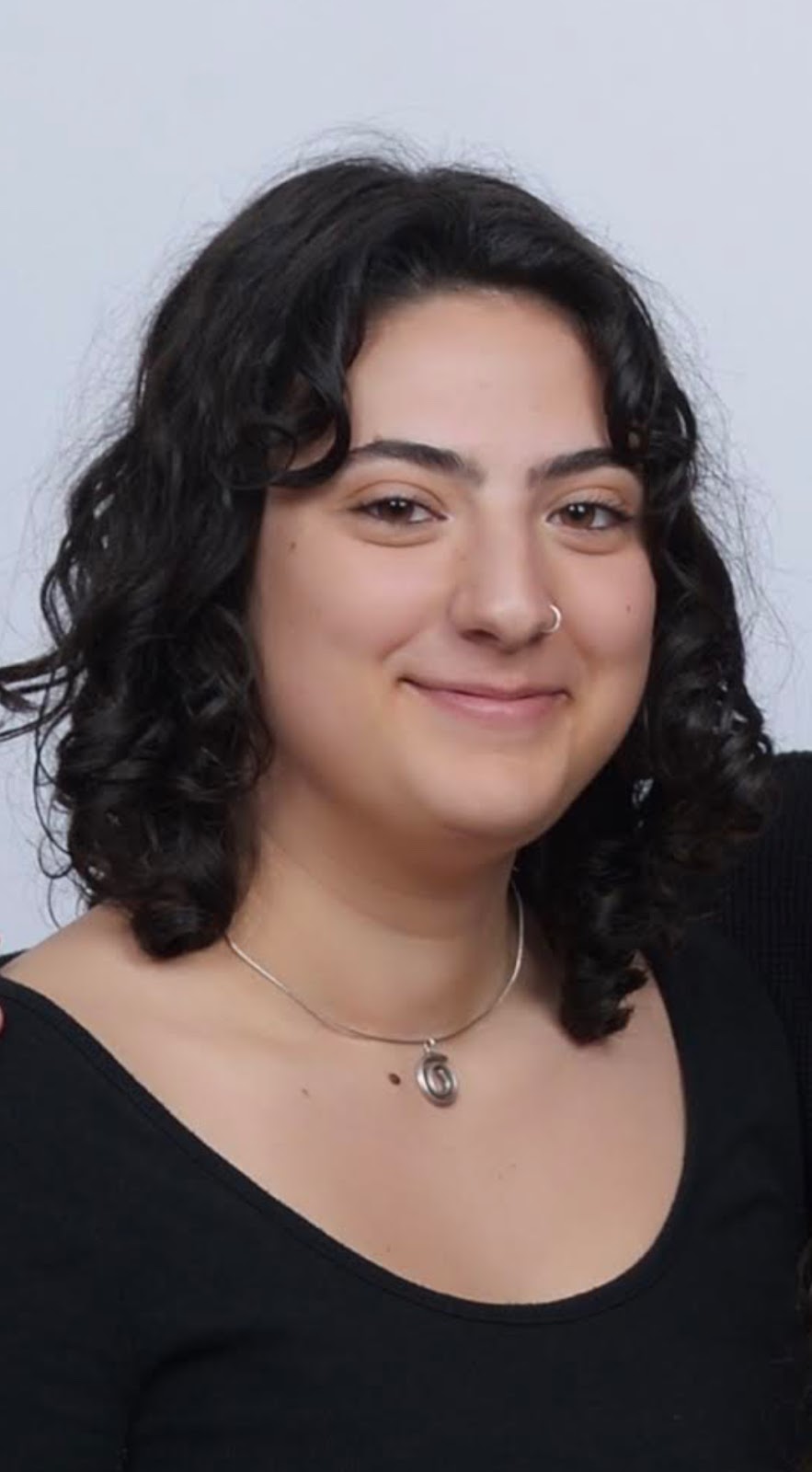
Welcoming Emma Shimovich, Beit Sefer’s New Head Teacher

September 5, 2024 by Emily Ohl

Hi, My name is Emma! I’m from Skokie, Illinois and am a senior at the University of Michigan where I am majoring in Social Theory and Practice and minoring in Judaic studies. Growing up, I spent my summers in Oconomowoc, WI at Olin Sang Ruby Union Institute (URJ OSRUI) where I have been a counselor and songleader for the past four summers! This year, I am also working at The Hebrew Day School of Ann Arbor as the music teacher. I have a passion for Jewish music and love playing guitar and singing which I plan to incorporate into our classroom at Beit Sefer! I frequently lead Shabbat services on campus and have also taken Hebrew courses throughout high school and college. 

I am so excited to join the AARC community because I can already feel the warmth and kindness that  this community has to offer. Although I grew up in the Reform community, Reconstructionist Judaism greatly appeals to me as  it allows one to make Judaism their own and gives one the opportunity to engage in practices and rituals that are meaningful to them. Additionally, as an outdoor lover, I am beyond excited to have several classes on the farm and talk about teva and Earth based Judaism. Please feel free to reach out to me if you have any questions or would like to connect: emmashim@umich.edu.

Filed Under: Beit Sefer (Religious School) Tagged With: Beit Sefer

AA Reconstrutionists Year in Review, in the September 2024 Washtenaw Jewish News

August 28, 2024 by Emily Eisbruch

Thanks to AARC board chair Rebecca Kanner for this article in the September 2024 Washtenaw Jewish News. You can read the article HERE on page 11

Filed Under: Articles/Ads, Uncategorized

Tu B’Av: Jewish Festival of (Self) Love

August 22, 2024 by Emily Ohl

This past Monday, as the Sturgeon Moon rose high in the sky, Jewish people around the world celebrated the love-focused festival of Tu B’Av.

Taking place a little less than a week after Tisha B’Av, a day of mourning and fasting, Tu B’Av provides an opportunity for lightness, catharsis, and celebrating the love in our lives.

Contemporary observances include anything from singles mixers to donning white clothing and dancing and singing around a fire.

This year, my observance was more subdued. I attended an intimate yoga class called “Release and Breathe,” and release and breathe we did. In tending to my own mind and body, and in feeling held by my teacher and classmate, I was able to hold myself in a space of true self love. I have grown to cherish these opportunities in which I can decenter romantic love, and focus instead on the many other avenues that fill my love cup.

No matter how (or if) you observed this year, Tu B’Av can serve a reminder of the love that exists within, around, and through us. The love that we experience in being around family, or friends, or plants, or paintings. Or perhaps the greatest love of all, the love of the divine. As we so often sing in services, we are loved, loved, loved by an unending love.

Filed Under: Uncategorized

Tisha B’Av and Purifying the Heart

August 7, 2024 by Rav Gavrielle

Last Sunday evening we entered Rosh Chodesh Av and the Nine Days leading to Tisha B’Av, the holy day that marks the lowest point in the Jewish calendar.  During this 9-day period, we turn our focus to the pain and suffering in this world and in our personal lives in order to acknowledge the darkness and allow ourselves space to grieve.  It is not a time to reflect on how to fix things but rather to sit in the reality of darkness and despair with compassionate curiosity. 

According to our tradition, on Tisha B’Av, which begins this Monday evening, we fast, chant from the Book of Lamentations and grieve over the destruction of the first and second temples and many other tragedies in Jewish history, and reflect on themes of exile and brokenness.  The rabbis teach us that this is a time to open the gate of tears, to cry for the suffering in the world, to really feel it.  This does not mean that we don’t feel brokenness the rest of the year, but during the first nine days of Av, and particularly on Tisha B’Av, we are called to bear witness to that brokenness and in so doing we get to know ourselves and the world better. 

The kabbalah offers us special wisdom to help us through this intense emotional journey.  During the month of Av,  kabbalists ask us to pay attention to the power of listening.  They urge us to listen spiritually, with both our hearts and our minds, in an integrated way.  We listen for what makes us feel connected and disconnected, for what distracts us and what keeps us focused and aligned with what is good and holy. We are called to listen for when the heart is open and when the heart is closed.  This is the work of purifying the heart.

לֵב טָהוֹר בְּרָא־לִי אֱלֹהִים וְרוּחַ נָכוֹן חַדֵּשׁ בְּקִרְבִּי׃

Lev tahor b’ra li Elohim v’ruach nachon chadesh b’kirbi

Fashion a pure heart for me, O God; create in me a steadfast spirit.

(Psalm 51:12)

Rabbi Jeff Roth says that it is our job to purify the heart. Part of that task is recognizing that we have the capacity, the power, to consciously fill ourselves with love. One way to do that is through deep listening with no agenda other than committing to compassionate presence without judgement.  Through deep listening we are asked to acknowledge the truth of what is unfolding.  There is no erasure, no spiritual or emotional bypassing, just presence to what is — to the horror of October 7th and the aftermath of a devastating year of war, to what is troubling us in the United States and in other places around the globe, to the climate crisis, to the challenges in our own communities and in our own lives. 

The Nine Days of Av allow us space to cry, to moan, to sigh, to grieve without apology — all acts of purifying the heart.  We do this before we take the next step on our journey through the Jewish calendar and ready ourselves for teshuvah during Elul and the High Holy Days.  The nurturing aspect of deep listening is healing to the heart; it creates softening of tension and allows more room for compassionate awareness. Our cups become full and have greater potential to even spill over with love to the point that it becomes natural for us to share our blessings with others. 

We learn this from Leviticus 7:15, which says that the “thanksgiving sacrifice of well-being shall be eaten on the day that it is offered; that none of it shall be set aside until the morning.” In his book Judaism is About Love, Rabbi Shai Held sees in this verse that “Torah implicitly requires a person who brings a thanksgiving offering to invite others to dine with them.”  In other words, what we are grateful for is to be shared.  Sharing is another pathway to purifying our hearts.

May we be gentle with ourselves as we deeply listen and express our love through compassionate presence.  May our cups runneth over with love.

B’ahavah,

Rav Gavrielle

Poem on Deep Listening:

Start Close In (David Whyte):

Songs and Niggunim on Purifying the Heart:

Pure Heart (Nava Tehilah) – Psalm 51:9:

Cosi Revayah (Shefa Gold) – “My Cup is Full,” Psalm 23:5:

My Cup Runneth Over With Love (Harvey Schmit and Tom Jones): https://youtu.be/TPlJd3m2K5Q?si=lpp-1wNeWkRgj2Q3

Filed Under: Uncategorized

Paddling Together through the Fog

August 1, 2024 by Emily Ohl

Words by Adrianne Neff

“Ships are safe in harbor, but that ain’t what ships are for” 

–from Harbor by Carsie Blanton

Emily asked me to write about an experience that I shared in services this past Friday. On July 13, I rowed in the Blackburn Challenge, a 20-mile race around Cape Ann, Massachusetts. I’ve been training for this event for almost 2 years, going from being barely able to get in my boat to doing long solo open-water crossings. Usually I relish being out on the water alone, and I have a wonderful time. But sometimes when I’m alone and far from land, I do get scared. At first I found this fear paralyzing, and in order to move through it, I developed a practice of singing out loud as I rowed. Anything rhythmic and simple will do: I sing sea shanties, bim bam melodies, Jewish folk songs, Hindu chants. I sing badly, but the seagulls never seem to mind. 

I didn’t anticipate being alone or afraid during the race: there were 150 other boats participating, and I knew I’d always be in sight of land. The forecast was for rain showers, gusty winds, and patchy fog. The first part of the course was challenging, but I was making good progress and having fun. Midway through the race the weather shifted, and all of a sudden we were enveloped in thick fog. I couldn’t see the shore, the horizon, or a single other boat. The fog was completely disorienting, and the lack of stationary landmarks to focus on made me violently seasick. I lost all sense of direction, and I became convinced that my navigation tablet was malfunctioning. My subjective sense of direction was very strong but completely wrong; had I followed it, I might still be rowing across the Atlantic. I was as scared as I’ve ever been, panicking, flailing at the water with my oars. I was realistically afraid of being hit by a motorboat in the fog, but also filled with irrational fears such as capsizing and being attacked by sharks. (My boat is very stable and wouldn’t capsize even in much higher seas. And though there were probably a few sharks around, they certainly weren’t going to attack my boat.) As I tried to calm myself, I remembered how I’d learned to deal with unreasoning fear by vocalizing, so I cast around for something to sing. What came to mind was something I’d never sung before while rowing, but that has become much beloved to me from recent Fourth Friday services:

May I be safe

May I be strong

May I be courageous

May my life be at ease

May you be safe

May you be strong

May you be courageous

May your life be at ease

May we be safe

May we be strong

May we be courageous

May our lives be at ease*

At first haltingly, then strongly, I sang this to myself. I sang it again, this time “May we be safe,” and as I sang, I felt the support and power of our community with me out on the water. My heart stopped hammering, my panic eased, and my rowing steadied. I was still sick and scared, but I rowed on through the fog and the bobbing lobster buoys, no longer paralyzed. I finally reached the safety of Gloucester Harbor, finishing the race in 5 hours and 48 minutes, the longest and hardest thing I’ve ever done. I’m proud of myself for persevering, and so grateful to my congregation for being with me.

*This song is a version of a Loving Kindness meditation, also known as Metta meditation in Buddhist traditions. There are many variations, and I’m not sure if what I sang was exactly what we sing in services or just what I needed at the moment. I tried to learn more about this powerful practice, and I found many pieces written about it. Here’s one I liked by Jon Kabat-Zinn: https://www.mindful.org/this-loving-kindness-meditation-is-a-radical-act-of-love/, and another by Rabbi Jill Zimmerman that includes a video of a lovely version sung by Elana Arian: https://ravjill.com/lovingkindness-practice/.

Passing the finish line buoy in Gloucester Harbor, photo by Samuel Lurie

Rowing on another misty (but not scary) day on the Huron River, photo by Pam Shore

Filed Under: Posts by Members

Heart and Healing at Rena Branson and Molly Bajgot’s Song Circle

July 18, 2024 by Emily Ohl

On Tuesday evening, community members gathered in close around Massachusetts based artists Rena Branson and Molly Bajgot. The pair had arrived in Ann Arbor the day before, the first stop on their Midwest tour.

Over the hour and a half of their performance, Molly and Rena created a sacred and healing space, in which all voices were celebrated and uplifted. The two went back and forth playing their original songs, Molly on guitar playing from her album Revelry and Rena strumming ukulele to tunes from their album Love is the Ground.

Before playing each song, the artists shared their kavanot. They then taught the audience the melody and niggun, allowing us to participate as the song and its harmonies unraveled. As each song came to a close, we were given space to sit and breathe in what we had just experienced.

By the end of the evening, I felt bonded with everyone in the room. The power of not only singing together, but facing one another and singing songs of hope, love, and peace, created a resounding closeness.

Many thanks to Rena and Molly for sharing their music and to Etta for bringing them to our community!

Filed Under: Event writeups

Reflections on Liberty

July 4, 2024 by Emily Ohl

As I donned my red, white, and blue and clothing yesterday morning for the ECC’s Independence Day picnic, I couldn’t help but wonder what my ancestors might think of me today.

Carrie Bradshaw references aside, I am now a little over one month into my new position at the AARC. As I have been showered with welcome and congratulations, I have also begun to consider what I think of me.

This past weekend, my mom’s family gathered to commemorate my Grandpa Burt’s 20th yahrzeit. While visiting his gravesite, I felt a magic and electricity as my mom and uncles shared memories of their father.

This aliveness I feel always seems to come about in such moments of profound connection and remembering. The same feeling I get from reading memoirs of women like Mary Antin or Letty Cottin Pogrebin. Jewish American women, each from different generations than my own, and all of us with different, yet parallel experiences of our Americas.

Mary Antin’s The Promised Land provides the perspective of a young girl immigrating to late 1890s New York who must reconcile two greatly different worlds. Antin was also a contemporary of Emma Lazarus, a Jewish poet whose words adorn the Statue of Liberty.

Cottin Pogrebin’s, Deborah, Golda, and Me on the other hand, illustrates the author’s reckoning with the patriarchal aspects of her Jewish American upbringing through the lens of second wave feminism.

There are many things that tether these women’s stories to my own and to those of our congregation. We all have our own unique experiences and perspectives of what it means to be Jewish in America, and this can bring up a host of feelings, particularly around the 4th of July.

I consider myself fortunate to be a part of a community in which we, especially non-men, are free and encouraged to participate and think deeply and critically about all aspects of our tradition.

Politics and parades aside, I feel proud of the Jewish American life that I am making, and hope my ancestors, both near and distant, feel similarly.

Whether you are lighting fireworks this year or simply enjoying some rest, let us not forget those who came before us, and what they might think.

Filed Under: Books, Posts by Members Tagged With: community

Molly Bajgot and Rena Branson Song Circle Event

June 26, 2024 by Emily Ohl

by Etta Heisler

Join us for a song-filled evening to revel in joy, build community, and inspire action. Educator and Rising Song Institute alum Rena Branson, and songwriter and activist Molly Bajgot, will lead a participatory concert as part of their Heart-Opener Tour through the Midwest.

Weaving original music from a variety of Jewish and secular traditions with yearning, vulnerability, and the pursuit of community, this song circle will be a perfect place to ground yourself and connect with others.

We eagerly welcome people from all backgrounds, faiths, identities, and singing abilities. 7-8:30pm at the Jewish Community Center of Greater Ann Arbor, 2935 Birch Hollow Dr. Ann Arbor, MI 48108. This concert is sponsored by The Ann Arbor Reconstructionist Congregation. A sliding scale donation of $9, $18, or $36 at the door is suggested, but not required. Guests are encouraged to register ahead this link.

Filed Under: Upcoming Activities Tagged With: community, event

Josephine’s D’var Torah

June 20, 2024 by Emily Ohl

All of you – or at least most of you – heard me read my Torah portion earlier. My Torah portion, Bamidbar, is mainly a census: G-d tells Moses and Aaron to count up all the Israelites who can fight so that they can form an army. The part that I read is about how G-d declares that the Levites will serve G-d instead of the firstborn males as is traditional. There are more firstborn than Levites, so some families pay to buy back their firstborn.That part is often referred to as the redemption of the firstborn.

My haftorah portion, on the other hand, is basically a long metaphor comparing how Hoseah’s wife Gomer was unfaithful to him to how the Israelites were unfaithful to G-d by worshiping idols. G-d wants the people to stop and atone for their misdeeds.

These two portions seem to have nothing to do with each other, but there is a commonly made connection between them: at the beginning of Hosea, there’s a line that says that the people of Israel will be innumerable whereas, in Bamidbar, they are clearly numbered. (Well, the ones who can fight, at least.) I have managed to connect them in another way: redemption.

As part of writing this d’var, I looked at several different definitions of the word redemption. The three most common ways that I have found to interpret redemption are, first, making up for something bad one has done (so basically atonement), second, deliverance from sin, or third, buying something back, which is the case in Bamidbar. The first two both apply to Hosea: The Israelites are told to seek redemption, and G-d is willing to deliver the Israelites from sin.

I read a lot, and some of the books I’ve read have types of redemption in them. For instance, in Starless by Jacqueline Carey, one of the characters is a bodyguard whose charge dies in his care. Vironesh, the character, wants to redeem himself from that mistake. In that case, redemption is synonymous with atonement.

In The Raconteur’s Commonplace Book, by Kat Milford, a character defines redemption as “turn from evil, return to good”, also like atonement. I suppose redemption in the financial sense doesn’t come up as often in the books I read.

I also found several official definitions of atonement. Oxford Languages says that it means either (1) the act of saving or being saved from sin or (2) the action of regaining possession of something in exchange for payment, or the clearing of a debt.

My pocket dictionary defines the verb redeem as one of five possibilities (1) buy back (2) pay off (3) turn in for a prize (4) free, as from sin (5) aone for. Etymonline, a website where one can find out the origins of words, says that redemption comes from a Latin word meaning “a buying back or off, a releasing, or a ransoming”. In the mid-14th century, it was taken to mean “deliverance from sin”. 

To be honest, I hadn’t expected there to be so many different definitions of redemption. Before learning all of this, I mainly thought of redemption as a synonym for atonement. Did any of you know all of the things redemption can mean?

All of the information I’ve gathered seems to come to this conclusion: Redemption can often mean to buy something back, to atone for an action you have committed, or to be freed from the consequences of that action. The mentions of it in the Tanakh, whether it uses the actual word or not, show that it has been an important thing for a long time, and will continue to be.

Now, I would like to ask you a few questions. For one, how do you define redemption? Have you ever thought about it? Have you ever bought something back, or tried to atone for a mistake you’ve made, or been freed from the consequences of something regrettable that you’ve done? You don’t have to say anything aloud, but please take a few minutes to think about it.

Thank you for listening. I hope this helps you to notice what significance redemption has in your lives.

Filed Under: Divrei Torah Tagged With: community

Welcome Emily Ohl, New AARC Program Manager

June 18, 2024 by Emily Eisbruch

Note: A version of this article appeared in the August 2024 Washtenaw Jewish News. See page 20 HERE

The AARC is delighted to welcome Emily Ohl as our new Program Manager. Emily steps up as Gillian Jackson, the AARC Events and Communications Coordinator for the past five years, moves into a new phase of her career journey as a social worker.

Emily brings an outstanding background and enthusiasm. She is already a cherished part of the AARC community, both as a congregant and as a teacher in our AARC Beit Sefer. Emily also teaches at the JCC of Ann Arbor Early Childhood Center, working in the Duck Room.

Emily graduated from the University of Michigan in 2022 with a major in American Culture, and minors in German and Museum Studies. In addition to everything else, she’s a certified lifeguard and a yoga teacher!

Emily led a wonderful early morning yoga session at the Spring 2024 AARC retreat at Camp Tamarack!

Emily comments:

“Hello! I am so grateful and excited to be stepping into this role and to be a part of this community. I look forward to working with those I have met and getting to know those I haven’t yet as we move together through the cycles of our lives and the Jewish calendar.

Thank you! Toda raba!”

As we welcome Emily Ohl as AARC Program Maanger, we are incredibly glad that Gillian and her family (husband Alex and sons Wesley and Wade) continue to be a part of our AARC community. We can’t thank Gillian enough for all her amazing work. We appreciate the care and love that she gave to our community in her role as Events and Communications Coordinator.

Filed Under: Articles/Ads, Uncategorized

  • « Go to Previous Page
  • Page 1
  • Interim pages omitted …
  • Page 9
  • Page 10
  • Page 11
  • Page 12
  • Page 13
  • Interim pages omitted …
  • Page 77
  • Go to Next Page »

Footer

Affiliated with

Copyright © 2026 Ann Arbor Reconstructionist Congregation