• Skip to primary navigation
  • Skip to main content
  • Skip to primary sidebar
  • Skip to footer
Ann Arbor Reconstructionist Congregation

Ann Arbor Reconstructionist Congregation

  • Home
  • About
    • Overview
    • Rav Gavrielle Pescador
    • Our History
      • Photo Gallery
    • Our Values and Vision
    • LGBTQ Inclusive
    • Our Board
    • Our Sacred Objects
    • About Reconstructionist Judaism
    • Jewish Ann Arbor
  • Programs
    • Shabbat and Holidays
    • B’nei Mitzvah
    • Tikkun Olam
    • In the (Washtenaw Jewish) News
    • Health and Safety Expectations for In-Person Gatherings
    • Join our Mailing List
  • Religious School
    • About Beit Sefer
    • Teachers
    • Enrollment and Tuition
    • 2025-26 Beit Sefer Calendar
  • Blog
  • Calendar
  • Membership
    • Thinking about joining?
    • Member Area
  • Contact Us
  • Donate

Event writeups

Harvesting Jewish learning to nurture an environmental ethic

January 25, 2016 by Margo Schlanger

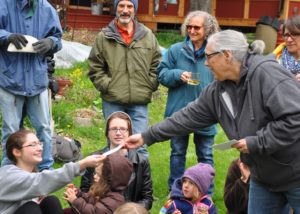
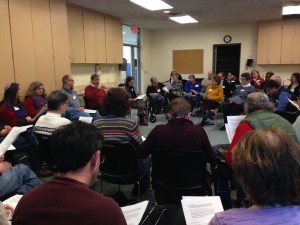
Rabbi Michael Strassfeld leads Tu B'Shevat Text Study
Rabbi Michael Strassfeld leads Tu B’Shevat Text Study

Yesterday, AARC and the Jewish Alliance for Food, Land, and Justice hosted 50 people for two lovely events, led by our visiting Rabbi, Michael Strassfeld.  Tu B’Shevat–the “birthday of the trees”–provided us a great occasion to focus for the weekend on Judaism and the environment.

Another post will talk about the Tu B’Shevat seder.  In this one, I want to share with people who couldn’t make it to the afternoon text study some of the passages and insights offered by Rabbi Michael.

We started with two verses from Deuteronomy (20:19-20):

When you besiege a city for a long time, making war against it in order to take it, you shall not destroy its trees by wielding an axe against them. You may eat from them, but you shall not cut them down. Are the trees in the field human, that they should be besieged by you? Only the trees which you know are not fruit trees may you destroy and cut down, that you may construct siegeworks against the city that is making war with you until it falls.

It’s an interesting passage, with several ideas in it.  For starters, the text suggests that even in war, ethical constraints remain–and not just the most urgent ethical constraints, dealing directly with human lives.  Fruit trees take many years to grow, and of course they are important sources of food.  So this rule against their destruction may be founded on the obligations the current generation has to the future.

It’s a limited point, though; the explicit permission to use other, non-fruit-bearing, trees as battering rams and so on makes that clear.  This is not a modern environmentalism; it’s expressing something narrower. Still, we learned, Maimonides extended the concept somewhat:

It is forbidden to cut down fruit-bearing trees outside a (besieged) city, nor may a water channel be deflected from them so that they wither. . . . [This applies] not only to cutting it down during a siege, but whenever a fruit-yielding tree is cut down with destructive intent.  . . . It may be cut down, however, if it causes damage to other trees or to a field belonging to another man or if its value for other purposes is greater (than that of the fruit it produces).  The Law forbids only wanton destruction.  . . . Not only one who cuts down (fruit-producing) trees, but also one who smashes household good, tears cloths, demolishes a building, stops up a spring, or destroys aricles of food with destructive intent, transgresses the command Thou shalt not destroy (bal tashit). 

So according to Maimonides, the passage in Deuteronomy amounts to a comprehensive ethical ban on “wanton destruction,” whether in time of war or not, whether of a fruit tree or something else.  This is broader, for sure–but still very limited.  It reaches only wanton destruction: destruction that is for no appropriate purpose.  And the focus remains on present-day human purposes.  It seems to me the passage from Maimonides doesn’t quite capture the cross-generational insight from the original Torah passage.  But that’s what we moved to next. [Read more…] about Harvesting Jewish learning to nurture an environmental ethic

Filed Under: Community Learning, Event writeups, Posts by Members, Tikkun Olam Tagged With: tu b'shevat

Experience POLIN

January 14, 2016 by Clare Kinberg

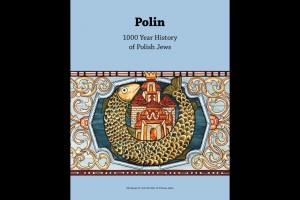
Cover to the POLIN catalog
Cover to the POLIN museum catalog. Polin, Hebrew for Poland, also means “Dwell here.”

“Museums can be agents of transformation that can move a whole society forward,” Barbara Kirshenblatt-Gimblett said in her opening to her January 13, 2016 lecture  at the U-M Museum of Art’s Stern Auditorium. That may sound like an audacious and grandiose statement, but after listening to Kirshenblatt-Gimblett, the chief curator of the core exhibition at the POLIN Museum of the History of Polish Jews–which literally stands on the rubble of the Warsaw Ghetto–few in the audience were doubters. Born in Toronto in 1942 to Polish immigrant parents, Kirshenblatt-Gimblett articulates a vision of recovery of 1000 years of Polish Jewish life that transports museum visitors into the world Ibrahim Ibn Yakub found on his journey in the 10th century, and through multimedia exhibits, brings them into the experience of Jewish life in Poland into the 20th century.

What makes Kirshenblatt-Gimblett and her collaborators special is their articulation of principles for the museum and their creative adherence to those principles in every aspect of the museum. When the museum opened in 2014, Kirshenblatt-Gimblett published an essay “A theater of history: 12 principles,” which begins, 

The Museum of the History of Polish Jews was created from the inside out. Before there was a museum, before there was a building, before there was a collection, there was a plan for the exhibition. The story – the thousand-year history of Polish Jews – came first. All else followed. The museum and the story it tells in the core exhibition will be an agent of transformation. Polish visitors will encounter a history of Poland, but in a way they have not experienced before. Jewish visitors will discover a history of what was once the largest Jewish community in the world and a center of the Jewish world – an estimated 70 percent of Jews today, more than 9 million people, are thought to descend from this territory. All visitors will encounter a Poland about which little is known and much misunderstood, a country that was one of the most diverse and tolerant in early modern Europe, a place where a Jewish minority was able to create a distinctive civilization while being part of the larger society.

Her essay–which in a move both simple and radical, she posted on Facebook–outlines in easily understandable language, extraordinary ideas about the presentation of  history and culture. Her lecture at U-M was this essay with slides, and information from over a year of experience with ongoing programming and over a million visitors to the museum. Leaving the lecture, many in the audience could be overheard making plans to visit POLIN.

Filed Under: Community Learning, Event writeups Tagged With: museums, Poland

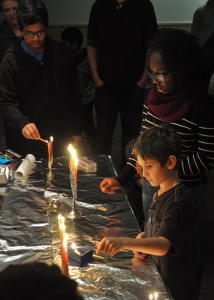
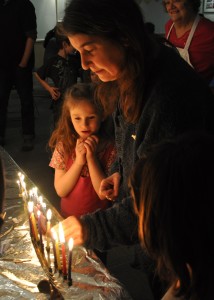
Magical Hanukkah Lights

December 16, 2015 by Clare Kinberg

Beit Sefer G'dolim with their Hanukkah flames
G’dolim with their Hanukkah flames
Beit Sefer Yeledim with their Hanukkah flames
Yeledim with their Hanukkah flames
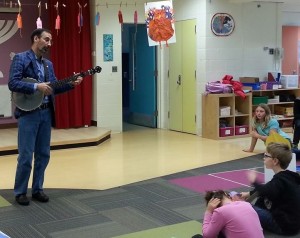
Paul with his traditional Jewish banjo teaching I Had a Little Dreidel
DSC_0804
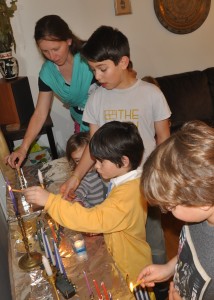
Families with Young Children Light the Lights
DSC_0818
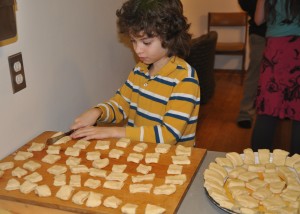
Making Sufganiyot


DSC_0819
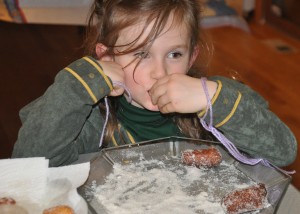
Finishing Sufganiyot


Playing with the Gelt


DSC_0831

DSC_0832

Feeling the magic
Feeling the magic

Filed Under: Event writeups Tagged With: Hanukkah

Fun at the annual bbq.

September 12, 2015 by Margo Schlanger

This year at Olson Park:

From the Annual Picnic 2015

Filed Under: Event writeups Tagged With: BBQ

Shabbaton: Privacy/Security/Inclusivity/Salad

August 25, 2015 by Margo Schlanger

By Dave Nelson

Dave Nelson and a goat
On the weekend of August 14 AARC was pleased to host a shabbaton with Rabbis Michael Strassfeld and Joy Levitt, who will be visiting us several times this year, including for High Holy Day services. Strassfeld and Levitt are two of the most distinguished rabbis currently working in the Reconstructionist movement, and the mid-August Shabbat evening service they led was fresh and lively—a promising glimpse of what we might expect for Rosh Hashanah and Yom Kippur.

Rabbi Joy’s Kabbalat Shabbat sermon was concise and graceful.  She deftly explored what appeared to be trivial (and somewhat contradictory) rabbinical opinions on the proper construction of courtyard entryways: Who can be obliged to chip in to pay for it, how the doorhandles are to be mounted, where a gatehouse should be located, and so on.  But she teased out a very powerful, surprisingly relevant message about how we are morally obligated to work together to maintain our privacy and security, without inadvertently fostering exclusivity.  While there are obvious overtones here—especially in an age of shared and contested borders, gated communities, large-scale protests, and larger-scale dumps of hacked databases—what the rabbi chose to highlight was the slightly more subtle moral hazard: When we become too wholly focused on maintaining our own security and privacy, we make ourselves entirely inaccessible to the cries of those in need of our assistance.

As ever, the potluck was delicious and diverse.  Quinoa and kale were in surprisingly short supply, but a variety of exceedingly fresh tomato and cucumber salads more than compensated for this omission.

Filed Under: Event writeups, Posts by Members Tagged With: Joy Levitt, Michael Strassfeld, potluck

At Farm Education Day and Sustainable Food Fest

June 18, 2015 by Clare Kinberg

Despite periodic torrential rain, Matthaei Botanical Gardens was a beautiful place to be on June 14 for the Farm Education and Sustainable Food Fest. Marcy Epstein, Carol Lessure and Idelle Hammond-Sass talked to many people at the AARC table.


Blair Nosan from Hazon Detroit taught 40 people how to make sauerkraut.
Massaging the salt into the cabbage
Massage salt into the cabbage
Add flavors
Add flavors
Pack into jar.
Pack into jar.


There you have it.
There you have it. “Food Fest Sauerkraut June 14 2015”
11159498_825896817478447_5211131699392849125_n
Learning where the food comes from.
10347555_825896844145111_2818108066363202684_n
Challah Rising irresistible samples!
11430108_825896874145108_4239904000824685556_n
Oh the flavors of local food!
Local food, in so many flavors!
Delicious.


Filed Under: Event writeups, Food, Tikkun Olam Tagged With: food/land/justice

Food/Land/Justice in the Washtenaw Jewish News

June 1, 2015 by Margo Schlanger

Here are the five articles from the Washtenaw Jewish News about our Food, Land, & Justice activities in 2014/2015, the Shmita year.

FLJ-all

Filed Under: Articles/Ads, Event writeups, Tikkun Olam Tagged With: food/land/justice, Shmita

Klezmer Dance All Age Fun!

May 28, 2015 by Clare Kinberg

Friday May 22nd was really a special and beautiful evening. The room filled with the warmest of blessings for Rabbi Michal. And then the fun really kicked in. Many thanks to Allison Stupka, Barbara Rust Boyk and the whole crew that organized the evening. Let’s have Klezmephonic over again! Nancy Meadow took terrific photos of our klezmer dance party!

klezmer1 klezmer2 klezmer3 klezmer5 klezmer6 klezmer4

Filed Under: Event writeups, Simchas Tagged With: Klezmer

What goes into a Mezuzah?

May 4, 2015 by Clare Kinberg

mez pro 3 What goes into a mezuzah? Just ask an AARC Beit Sefer (Religious School) student! On April 26th and Mary 3rd, AARC member and Beit Sefer mom Marcy Epstein led an all-school mezuzah making workshop. The students learned about the difference between the mezuzah case and the scroll inside, and how we have come to name each part as the mezuzah. They discussed why and how Jewish homes have mezuzot on our door frames and demonstrated the ritual of kissing the mezuzah both entering and exiting the rooms of our homes. The students explored the letter Shin and many of the words that it represents, and then they learned about the prayer on the mezuzah scroll, the Shema and the V’ahavta. Marcy shared how these two prayers became so important that we would want them ever present in our homes.mez pro 4

The students rolled out their airdry clay and formed them into beautiful original cases, working with shapes and wood pieces for texture. Then Marcy and the teachers made the letter Shin for each child and set their mezuzot cases to dry, reminding them that over the week they might think about what prayer they would like to say while entering and exiting their bedrooms. The next week, the kids painted and embellished their beautiful cases. They then copied the Hebrew of the Shema and first words of the V’ahavta onto origami paper “scrolls” along with their own original prayers and set them inside the mezuzah cases to make their personalized mezuzot. By adding their own prayers to the scroll in the mezuzah, the students learned about Jewish “lifehacks,” explained by Rabbi James Brandt, director of the Jewish Federation of the East Bay in a January 2015 Jewish Week article “as this generation’s equivalent of ‘do-it-yourself Judaism,’ represented by the groundbreaking 1973 publication of the The First Jewish Catalog (co-edited by Michael Strassfeld), which offered a model of creating Jewish life ‘outside the official system.’”

mez pro 1Marcy hopes that our families might share a mezuzah hanging with the kids, not only so they can know where on the door frame to look for a mezuzah, but also to celebrate their warming embrace of the ancient ways with modern import reflective of their lives.

So, if you ask the students at the AARC Beit Sefer, you might find that in addition to the shema on a scroll, what goes into a mezuzah case is love, care, creativity, and their own heartfelt (or silly, but definitely personal) prayers.mez pro 2


Filed Under: Beit Sefer (Religious School), Event writeups

Second Seder was a Night of Questions

April 6, 2015 by Clare Kinberg

2nd seder 2015 1Over thirty AARC members, family, and friends gathered in Rav Michal and Jon Sweeney’s living room, adding chairs several times as we evidently fulfilled the tradition of cramming as many bodies into a space as possible. Our second seder focused on the questions and the questioners: questions that are traditionally asked, questions we could ask, and why we ask. After the seder, I asked several people to comment on the meaningful moments for them.

On our name tags we included a self-descriptive word about what kind of child we were or are. Allison Stupka said, “It was so interesting to hear what kind of children people thought they were. I did not know many of the people I was sitting at the table with, and got to know them through interesting conversation.” Our questions led us to think about why we retell the same story year after year of the Israelites’ slavery and flight to freedom. We asked about transformations in how we tell–and how we hear–the story to give it contemporary meaning. Ellen Dannin said, “Our seder found us struggling with issues of slavery and freedom, of how to build and keep a just society, and of why year after year we should tell our children the story of Passover.”

We talked about contemporary situations of both slavery and injustice, the difference and similarities between the physical bondage of Africans in our country’s first 200 years and the low-waged jobs of people who supply so many of the products we use and depend upon. Martha Kransdorf said, “During the seder, I was struck by questions that drew parallels between the enslavement the Israelites experienced, and the experiences of Palestinians today.” One of our seder’s guests was Laurie White’s roommate, Manal, a Palestinian from Nazareth who is here at the University of Michigan on a yearlong Fulbright. “I appreciated the warm welcome Manal received at her first seder ever, despite years of doing Palestinian-Jewish dialogue work in Israel,” Laurie said.

Rav Michel also gave us a lot to chew on when she suggested that often we have thought of contemporary “plagues” as being the ugly aspects of our society such as racism, sexism, etc. But in the Exodus story, the plagues were decrees of God that challenged the power of the Pharoah. In this light, could contemporary “plagues” (that challenge military/industrial/corporate power) be more like unions, renewal energy and self-sufficient communities? An interesting turn! As Danny Steinmetz said of our second night seder, “Got me thinking about the incredible popularity of the seder and that rituals work best that are designed ground up to teach and to provoke curiosity.”

The potluck food was plentiful and scrumptious. And for those who wonder about my recipe for vegetarian stuffed cabbage, keep posted! Thanks to Rav Michal, Jon, and Sima for hosting our large group, and to Ellen Dannin for help in putting together our ritual.

Filed Under: Event writeups Tagged With: Passover

  • « Go to Previous Page
  • Page 1
  • Interim pages omitted …
  • Page 7
  • Page 8
  • Page 9
  • Page 10
  • Page 11
  • Go to Next Page »

Primary Sidebar

Search

Join Our Mailing List

Sign up for our twice a week newsletter to get details on upcoming events and catch up on our latest news.

This field is required.

Check your inbox or spam folder to confirm your subscription.

Upcoming Events

  • All day, May 17, 2026 – Beit Sefer
  • 9:00 am – 10:00 am, May 17, 2026 – Rosh Chodesh Minyan Sivan [ZOOM]
  • 7:00 pm – 8:00 pm, May 20, 2026 – Pop-in Torah Study with the Rabbi [Zoom]
  • All day, May 21, 2026 – May 23, 2026 – Shavuot
  • 6:30 pm – 8:00 pm, May 22, 2026 – Fourth Friday Kabbalat Shabbat

Latest News

  • AARC Has a New Member Area April 30, 2026
  • RSVP to “Lesson of the Homeland” and the Stories We Tell: A Conversation with Anat Zeltser April 16, 2026
  • Climate Action Shabbat article in the April 2026 Washtenaw Jewish News April 3, 2026
  • Reimagining Torah Study: Moving from Zoom to In Person by Rabbi Gabrielle Pescador April 1, 2026
  • Creative Spirit at the AARC Beit Sefer March 27, 2026

Footer

Affiliated with

Copyright © 2026 Ann Arbor Reconstructionist Congregation