
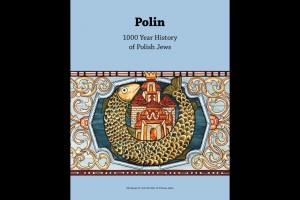
“Museums can be agents of transformation that can move a whole society forward,” Barbara Kirshenblatt-Gimblett said in her opening to her January 13, 2016 lecture at the U-M Museum of Art’s Stern Auditorium. That may sound like an audacious and grandiose statement, but after listening to Kirshenblatt-Gimblett, the chief curator of the core exhibition at the POLIN Museum of the History of Polish Jews–which literally stands on the rubble of the Warsaw Ghetto–few in the audience were doubters. Born in Toronto in 1942 to Polish immigrant parents, Kirshenblatt-Gimblett articulates a vision of recovery of 1000 years of Polish Jewish life that transports museum visitors into the world Ibrahim Ibn Yakub found on his journey in the 10th century, and through multimedia exhibits, brings them into the experience of Jewish life in Poland into the 20th century.
What makes Kirshenblatt-Gimblett and her collaborators special is their articulation of principles for the museum and their creative adherence to those principles in every aspect of the museum. When the museum opened in 2014, Kirshenblatt-Gimblett published an essay “A theater of history: 12 principles,” which begins,
The Museum of the History of Polish Jews was created from the inside out. Before there was a museum, before there was a building, before there was a collection, there was a plan for the exhibition. The story – the thousand-year history of Polish Jews – came first. All else followed. The museum and the story it tells in the core exhibition will be an agent of transformation. Polish visitors will encounter a history of Poland, but in a way they have not experienced before. Jewish visitors will discover a history of what was once the largest Jewish community in the world and a center of the Jewish world – an estimated 70 percent of Jews today, more than 9 million people, are thought to descend from this territory. All visitors will encounter a Poland about which little is known and much misunderstood, a country that was one of the most diverse and tolerant in early modern Europe, a place where a Jewish minority was able to create a distinctive civilization while being part of the larger society.
Her essay–which in a move both simple and radical, she posted on Facebook–outlines in easily understandable language, extraordinary ideas about the presentation of history and culture. Her lecture at U-M was this essay with slides, and information from over a year of experience with ongoing programming and over a million visitors to the museum. Leaving the lecture, many in the audience could be overheard making plans to visit POLIN.

