• Skip to primary navigation
  • Skip to main content
  • Skip to footer
Ann Arbor Reconstructionist Congregation

Ann Arbor Reconstructionist Congregation

  • Home
  • About
    • Overview
    • Rav Gavrielle Pescador
    • Our History
      • Photo Gallery
    • Our Values and Vision
    • LGBTQ Inclusive
    • Our Board
    • Our Sacred Objects
    • About Reconstructionist Judaism
    • Jewish Ann Arbor
  • Programs
    • Shabbat and Holidays
    • B’nei Mitzvah
    • Tikkun Olam
    • In the (Washtenaw Jewish) News
    • Health and Safety Expectations for In-Person Gatherings
    • Join our Mailing List
  • Religious School
    • About Beit Sefer
    • Teachers
    • Enrollment and Tuition
    • 2025-26 Beit Sefer Calendar
  • Blog
  • Calendar
  • Membership
    • Thinking about joining?
    • Member Area
  • Contact Us
  • Donate
You are here: Home / Blog

Blog

Who by water and who by [police] fire?

October 6, 2016 by Clare Kinberg

The Unetaneh Tokef prayer is unique to the Rosh Hashanah and Yom Kippur liturgy. The first line is variously translated as ‘We shall ascribe holiness to this day” and “Let us speak of the awesomeness.” The poem contains the imagery of the book of life opening on Rosh Hashanah, and being sealed on Yom Kippur. A translation of the poem can be found in this blog post by Rabbi Reuven Hammer.

For our Rosh Hashanah service this year, Deb Kraus wrote this powerful introduction to the Unetaneh Tokef.

From last high holy days to today, how many African American people have died by police fire?

For smoking an e-cigarette, like Alfredo Olango

For reaching for a gun, like Che Taylor
For just having a gun, like Michael Moore and Nicholas Robertson and Corey Jones.
Or for refusing to drop a gun, like Sahlah Ridgeway and Sylville Smith

For waiting for his son’s schoolbus to arrive, like Keith Lamont Scott.
For having his car stall out, like Terence Crutcher
For speeding, like Moses Rubin and Doll Pierre-Louis
For riding a motorcycle, like Terrence Sterling
For stealing a car, like Paul O’Neal
Or for stealing an officer’s car, like Paterson Brown, Jr.

For running away from the cops, like Dalvin Hollins and Deravis Caine Rogers and Jabril Robinson and Rodney Watts and Akiel Denkins and Calin Roquemore and Ricky Ball and Jessica Williams and Miguel Espinal and Donte Taylor and 13 year old Tyre King.
Or for approaching the cops, like Christopher Goodlow and Javario Eagle

For shooting himself in his own wheelchair, like Jeremy McDole.
For being schizophrenic, bipolar, suicidal or mentally impaired in some other way, like James Anderson and Janet Wilson and Joseph Mann and Jawari Porter and Kevin Matthews and Carlumandarlo Zaramo and Tyler Gebhard.

For trying to help a neighbor, like Bettie Jones
For faking a prescription, like Keith McLeod
For selling CDs outside a convenience store, like Alton Sterling
For damaging a traffic sign, like Peter Gaines
And for road rage, like Delrawn Small and Clarence Howard.

For “refusing to cooperate” like Cameron Glover and Gregory Frazier and Nathaniel Pickett and Darnell Wicker, who, BTW, was probably deaf…
OR For doing everything the police said, like Philando Castile
For sitting in his bedroom looking threatening, like Levonia Riggins
Or trying to protect her five year old child in her own home, like Korryn Gaines.
For looking like someone else, like Colby Friday and Donnell Thompson, Jr.
For engaging in “suspicious activity,” like Dazion Flenaugh and David Joseph, and Greg Gunn
For fighting back, like Kevin Hicks and Junior Prosper
For turning around too quickly, like Antronie Scott

For panicking, like all the people above, Blue AND Black…

Although, a sign I saw Saturday summed it up:
“We live in a world where trained cops can panic and act on impulse but untrained civilians must remain calm with a gun in their face.”

Notice race was not mentioned in that last quote. I’ll say it again:

“We live in a world where trained cops can panic and act on impulse but untrained civilians must remain calm with a gun in their face.”

I know that none of these situations are as straightforward as I have presented it.

But this year, as we pray the Unetaneh Tokef, let us really try to comprehend the myriad ways those who have pledged to serve and protect can instead cause people to die by fire, just because of the color of their skin.

–Deb Kraus

For a long reflection on Unetaneh Tokef, written by Rabbi Toba Spitzer, for Rosh Hashanah 5762 (Sept. 18, 2001), please go here.

Filed Under: Poems and Blessings

Our Yom Kippur Workshops in the Washtenaw Jewish News

October 6, 2016 by Margo Schlanger

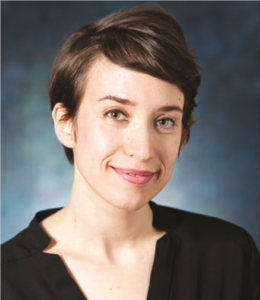
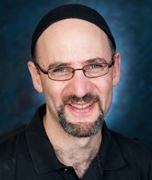
As is our tradition at AARC, between services on Yom Kippur we have several workshops where we can together study, meditate, and discuss. This year, there will be three sessions.  From 2:15 to 3:30 pm Barbara Boyk-Rust will lead “Soul Nourishment: Meditation and Sacred Chant for the Quiet of the Day” and Ellen Dannin will lead “Yonah – It’s Much More than Just a Whale.” From 3:45 to 5 pm, Margo Schlanger and Ronald Simpson-Bey will lead a conversation about the modern experience of imprisonment, and what kind of conditions–physical and programmatic–create the best chance of t’shuvah.  All are welcome to join any of these workshops, whether or not you are attending services with us.

Barbara Boyk Rust
Ellen Dannin
Margo Schlanger
Ronald Simpson-Bey

Thanks to Jonathan Cohn for writing this up for the Washtenaw Jewish News:

wjn-oct-16-web

Filed Under: Articles/Ads, Community Learning, Tikkun Olam, Upcoming Activities Tagged With: High Holidays, Yom Kippur

The Thing with Name Tags

September 29, 2016 by Clare Kinberg

Me with my new name tag
Clare Kinberg with new name tag

One of the first tasks I was assigned as Events and Communications coordinator for AARC was to make name tags for new members, including teenagers who had would soon become bnei mitzvah and therefore full-fledged members of the congregation. And for Rosh Hashanah, I make replacement name tags for members who’ve lost theirs over the course of the year.

Now in my second year of working for AARC, I see the annual “Name Tag Check” as an important part of “taking stock,” preparing for the High Holidays. Over this past year, I’ve made four new name tags for bnei mitzvah and I’ve made five for new members….and this week I made 27 name tags for members who have lost theirs, including one for myself. Members: When you come to services for the High Holidays, be sure to pick up and put on your name tag. And put it back when you leave.

What’s with all this name tag business? Besides gently helping with our sometimes over-taxed memories for the names of people we know but just can’t pull up at the moment, name tags are an important part of reminding us of our responsibility toward welcoming others who are newer to our community. Our High Holiday services are open to all; many people come to pray with us once a year, and others who are considering joining a congregation come to check out the feel of the community. Our community is informal and pluralistic, welcoming to newcomers from a real diversity of backgrounds. If you are new to services, or attending as a non-member, I hope you will talk to people wearing AARC name tags. And members, let your name tag remind you to strike up conversations with someone you don’t already know!

I know my Name Tag Check next year will include several bnei mitzvah. I hope it will include many new members, too! (And if you lose your name tag in the middle of the year, no need to wait till High Holidays for the replacement; just let me know and I’ll make you a new one.)

Shana tova

Filed Under: Upcoming Activities Tagged With: High Holidays, Rosh Hashanah

Rena’s Fall recipe: Farmer’s Market Potato Salad

September 21, 2016 by Clare Kinberg

farmers-market-potato-saladAdapted by Rena Basch from Cooking Light magazine June 2010

Looking for a change of pace from traditional potato salad? This dish could be called “Not-Just Potato Salad.” This recipe is a flexible, vinaigrette-based powerhouse that you can load up with your favorite veggies. I particularly love it because it can be made from whatever fresh vegetables are available at the farmers market during the harvest season, or if it’s winter, sub out the ingredients like fresh corn, zucchini and green beans for frozen. During the winter-time, skip the cherry tomatoes; it’s still delicious.

For a beautiful looking salad, use a mix of red, purple, Yukon and brown-skinned potatoes. If you don’t have a variety of colorful potatoes, just use fingerlings or small red potatoes. You can serve this dish at room temperature just after it’s tossed together, or you can make it ahead, and serve chilled.

Ingredients:
1 cup fresh corn kernels, about 2 ears.  
2 pounds potatoes, scrubbed and cut into 1-inch pieces
2 ½ tablespoons olive oil, divided
2 tablespoons chopped fresh tarragon
2 tablespoons cider vinegar
2 tablespoons whole-grain Dijon mustard
½ teaspoon hot pepper sauce (such as Tabasco)
3/4 teaspoon salt
½ teaspoon freshly ground black pepper
Cooking spray
¾ cup vertically sliced red onion
¾ cup diced zucchini
 ¾ cup chopped green beans
1 cup cherry tomatoes, halved

Preheat oven to 425°.

Cut the corn off of the cobs. Place corn and chopped potatoes on a jelly-roll pan (or cookie sheet). Drizzle with 1 tablespoon oil and toss to coat. Bake at 425° for 30 minutes or until potatoes are tender.  Place roasted potato and corn in a large bowl.  Combine tarragon and next 5 ingredients (through pepper) in a small bowl, stirring with a whisk. Gradually add remaining 1 1/2 tablespoons oil, stirring constantly with a whisk. Drizzle potato mixture with dressing; toss gently to coat.

Heat a large skillet over medium heat. Coat pan with cooking spray. Add onion, green beans and zucchini to pan; cook 4 minutes or until lightly browned, stirring occasionally. Add zucchini mixture and tomatoes to potato mixture; toss gently to combine.


Filed Under: Food, Posts by Members Tagged With: recipes

D’var on Eikev by bar mitzvah Aaron Belman-Wells

September 21, 2016 by Clare Kinberg

aaron-belman-wellsShabbat  shalom.

While I was working on my maftir [concluding section of the weekly Torah portion], Deuteronomy 11:22-25, there were several points where I noticed some differences in translations of the text. These differences could be as seemingly minor as “Red” or “Reed” Sea, or as major as “Sea of the Philistines” or “Western Sea,” or even which Wilderness. Differences in translations and/or text arise because of language, misunderstanding, human error, knowledge etc. My aliyah [segment of the Torah portion], however, concerns the Promised Land. So, as you can see, knowing which sea or wilderness the text is referring to marks a boundary and is significant. Despite how minor many of these changes may seem, they still can make incredible differences in what we are to take away from that section. Looking around [i][ii] to see if this was simply an anomaly, I noticed that there were other points in the Torah where this kind of change occurred. After thinking about why this might happen, I decided that there could only be one major possibility for a change as this: there is no definite word or phrase of text that must be placed there, so people simply wrote in what they assumed to be what was meant to be there. While this often works, the example with the Red and Reed Sea shows that often times there is little to no communication or standardization  between people attempting to translate the Torah.

Differences in translation may also be due to differences in agendas and purposes. Few of us read or speak the Hebrew of the Torah, so we depend on translators. Some translators wish their translations to reflect, to the degree possible, exactly what was written. Others, recognizing that a world of 5,000 or 6,000 years ago is very foreign to modern readers, try to make the text accessible to the reader, making changes to make the events and discussion straightforward. We can see similar, if less important, differences in translations of the Bard’s Hamlet, in which there are at least 3 different versions, despite the fact that only 1 is used[iii]. Equally important, there may be differences in the translator’s view of the Torah and Judaism that influence the translation. Is a given event a recitation of a real event, or is it to be interpreted and put in some context?  All of these result in differences of words and of meaning. [Read more…] about D’var on Eikev by bar mitzvah Aaron Belman-Wells

Filed Under: Divrei Torah, Posts by Members Tagged With: Bar mitzvah

Join the 2016 AARC CROP Hunger Walk Team

September 12, 2016 by Clare Kinberg

Submitted by Cara Spindler

crop-walk-graphicOn Sunday, September 25 the Interfaith Council for Peace & Justice (ICPJ) is hosting the 42nd Annual Washtenaw/Ann Arbor CROP Hunger.  ICPJ has organized this 5k charitable walk since 1974, raising a total of $3.2 million over the decades.  Last year Washtenaw County walkers raised $48,500, with about 300 walkers participating.

CROP Hunger Walks are locally organized by businesses, schools, and communities of faith. “CROP” originally stood for the “Christian Rural Overseas Program,” a 1947 joint program between several church organizations to help with post-war poverty.  Today these community-wide local events seek to raise funds to end hunger and increase food security and food-related social justice in the U.S. and globally.  More than 1,600 walks take place across the U.S. annually.  About 25% of the proceeds go to local hunger-fighting efforts, and the walker can determine where the remaining 75% of their raised funds goes (choosing from a vetted list of global hunger agencies).

Please come and walk with us on September 25!  Call Cara Spindler ( 734-255-0939) if you want to coordinate more.  Our contingent will gather at Trinity Lutheran at 1:30 pm.  

STARTING LOCATION: Trinity Lutheran Church (1400 W Stadium Blvd., Ann Arbor, MI 48103)

DATE: Sunday, September 25, 2016, 1–4 PM

To sign up:

  1. Go to the CROP Hunger Walk website using this link
  2. Click REGISTER
  3. Fill out the form (or sign in using Facebook)
  4. When you get to “Create or Join a Team” choose “Join an existing team”
  5. Click “see list” next to the search box, and select “Ann Arbor Reconstructionist Congregation”
  6. Click the “Join Now” button.

Your friends and neighbors can donate via the website (once you log in there’s lots of tools for soliciting donations and accepting payment)—or you can bring a check/cash to drop off at the Walk.

See you on September 25!

Filed Under: Posts by Members, Tikkun Olam, Upcoming Activities Tagged With: food/land/justice, interfaith, Tikkun Olam

A “tebah” for the Huron

September 8, 2016 by Clare Kinberg

by Clare Kinberg, Beit Sefer director

Last year, on the first day of our religious school, Beit Sefer, I told a story about the word Hebrew word “tebah”תֵּבַ֣ת. When we meet again for the first session this year (10am Island Park) I want to tell the same story. I’m pretty sure at least some of the kids will remember it if I tell it again. I hope so, but it doesn’t matter.

Ann Arbor Jewish religious school
Beit Sefer Students and Teachers on the last day of class last year May 2016

It is Jewish tradition to tell the same stories over and over again. And every time a story is told, even with the same words, it is a different story, because the hearer has changed. You are not the same person you were last time you heard the story. As adults, we’ve heard many stories in the Torah dozens of times. Yet, what you hear and understand from a story, using the exact same words, is different every time you hear it.

Here is the story at I told it last year:

The stories that Jews tell from the Torah are some of our oldest stories. In fact, something like 200 generations of Jews have passed down the stories that are in the Torah. One of the oldest ones, and a story that is told by lots of different peoples, is the story of a great flood that covered the earth, and one family–Noah, his wife Nehama and their children–and the ark they built to ride on the waters of the flood and to save the plants and animals so that the earth could start over.

In Hebrew the word for Noah and Nehama’s boat is tebah. A tebah is a special boat that keeps its passengers safe. In the whole Torah there is only one other tebah:  while Noah and Nehama’s tebah was large enough to hold a pair of every animal and every plant on earth, the other tebah was so small it held only one baby passenger. In the Torah stories, about 100 generations after the great flood, the baby Moses was born and his sister, the prophet Miriam, built a small tebah, a basket more like a cradle than a huge ark, to save Moses’ life. When Moses was a grown man, so the story goes, he led the Jews out of slavery. So while one tebah played a part in saving life on earth, the small tevah played a part in saving the Jewish people.

Since one word, tebah, is used to mean such different things, a colossal ship made of gopher wood and a baby basket made of reeds, perhaps the meaning of tebah, is “life-saver.”

Or maybe it is the stories themselves that are the ark, the boat, that keeps us afloat. The stories I mean are both the stories that have been passed down generation to generation, and the stories we are creating with our own lives.

basket boat used at Ann Arbor Jewish religious school Beit Sefer
Basket-boat

Last year, on the opening day of Beit Sefer, we passed a small boat shaped basket around a big circle of parents and students. As we passed the basket, we each recited, “This basket holds our stories, pass it on.” Then, the person accepting the basket replied, “Thank you, I will learn the stories and pass them on.”

This year on opening day, we are going to make the baskets, and we are going to make a new story, all together. Beit Sefer begins at Island Park at 10am. Parents are asked to stay for a meeting, and to play a special role in writing a story and helping the students launch a tevah on the Huron River. Immediately following the launch, will be our AARC Annual Picnic. Noon to 3pm. Bring protein to grill, a side dish to share. AARC will provide drinks and paper goods.

See you there!

Filed Under: Beit Sefer (Religious School), Upcoming Activities Tagged With: huron river, Torah

Yom Kippur Workshops 2016

September 7, 2016 by Margo Schlanger

It’s our Yom Kippur tradition at AARC to have several afternoon sessions where we can together study, meditate, and discuss. This year, there will be three sessions; two from about 2:15 to 3:30 pm, and one from 3:45 to 5 pm.

One of the 2:15 sessions will be guided meditation, led by our member, Barbara Boyk-Rust, who writes:

Soul Nourishment: Meditation and Sacred Chant for the Quiet of the Day.
As we fast and pray on Yom Kippur we are asked to be in more direct contact with our spirit and with our connection to God than any other day of the year. While we move toward this during the evening, morning, and late afternoon services, what assists us during the spaces between the services? A walk, a nap, a quiet conversation? Each may be of help. A different way of prayer is also fitting. It is a time of day when we may be longing for sustenance. Together we will create a form of soul nourishment through meditation and offering up a few sacred texts in chant. May this time augment and amplify the expression of our soul on this holy day.

Our member Ellen Dannin will facilitate a conversation about the Book of Jonah:

Yonah – It’s Much More than Just a “Whale”: We will share reading the story of Yonah / Jonah, with time for participants’ contributions, questions, thoughts. Feel free to bring your own texts.

At 3:45, you can choose between a walk, a chat with a friend, or whatever else moves you, and a session that uses Jonah, again, as a starting off point a conversation about solitary confinement. We’ll start with some materials from this T’ruah study guide (which is based on a Yom Kippur d’var member Margo Schlanger gave at AARC in 2013).  But we’ll move fairly quickly into the modern experience of imprisonment and examine the question, What kind of conditions–physical and programmatic–create the best chance of t’shuvah?  Our leaders for this session will be member Margo Schlanger and Ronald Simpson-Bey.

Ronald Simpson-Bey, leading Ann Arbor Yom Kippur workshop
Ronald Simpson-Bey

Ron is the Alumni Associate for JustLeadershipUSA (JLUSA), part of the steering team of the newly formed Collaborative to End Mass Incarceration in Michigan (MI-CEMI), and co-founder and advisory board member of the Chance For Life (CFL) organization in Detroit. He served 27-years in the Michigan prison system, where he founded many enrichment programs rooted in transformation, redemption, and self-accountability.  In the course of that time, he spent two years in solitary confinement. He was a jailhouse lawyer who got his conviction reversed by the courts and got himself out of prison.  He attended Eastern Michigan University, Mott Community College, and Jackson Community College, and he has worked as a staff paralegal at the former Prison Legal Services of Michigan.

On this day of atonement, join this workshop to better understand American imprisonment, and what kinds of change we need and can help with.

Filed Under: Community Learning, Tikkun Olam, Upcoming Activities Tagged With: High Holidays, Yom Kippur

Your Story Adds to our Shofar Service on Rosh Hashanah

September 1, 2016 by Clare Kinberg

Cover of Rachel Barenblatt's machzor/high holiday prayerbook
Cover of Rachel Barenblatt’s machzor/high holiday prayerbook

Deb Kraus is looking for several people to tell 3-5 minute personal stories as part of the Rosh Hashanah day (October 3, this year) Shofar Service. Deb offers some explanation and background:

The Shofar Service, which happens in the later part of the Rosh Hashanah Service, is divided into three parts:  Malchuyot (majesty/sovereignty), Zichronot (remembrances) and Shofarot (call to action). For the last few years, AARC congregants have offered short 3-5 minute personal stories to introduce each section of prayer. This has been a really meaningful way for our members to participate in communal leadership and share an important part of themselves with the community.  For example, in past years, Kevin Norris shared about a health challenge (Shofarot) , Dina Kurz talked about higher power (Malchuyot), and I talked about hiking in the alps (Malchuyot) and (another year) how my daughter Molly and I shared memories of our old house in an attempt to get it sold (Zichronot).  Last year, this is where Clare called us to welcome Jews of all colors (Shofarot). So,  do you have a story to share? Contact me (drdebkraus@gmail.com) with your story idea, and I’ll try to fit it into the service.

In this blog on her site, the Veleveteen Rabbi, Rabbi Rachel Barenblatt introduces each section of the Shofar Service with a poem, directing our hearts to open to the prayers. Another resource on the Shofar Service is offered by T’ruah: The Rabbinic Call for Human Rights, with these kavanah/intentions for Malchuyot, Zichronot, and Shofarot. These may help you get started on finding your story.

Filed Under: Community Learning Tagged With: High Holidays, Rosh Hashanah

Just out about AARC in the Washtenaw Jewish News

August 27, 2016 by Margo Schlanger

This year’s Washtenaw Jewish News guide to Jewish Life in Washtenaw County includes an ad highlighting our upcoming fall events and a profile of our congregation.

Guide-Jewish-Life-16-ad Guide-Jewish-Life-16


Filed Under: Articles/Ads, Upcoming Activities

  • « Go to Previous Page
  • Page 1
  • Interim pages omitted …
  • Page 54
  • Page 55
  • Page 56
  • Page 57
  • Page 58
  • Interim pages omitted …
  • Page 75
  • Go to Next Page »

Footer

Affiliated with

Copyright © 2026 Ann Arbor Reconstructionist Congregation