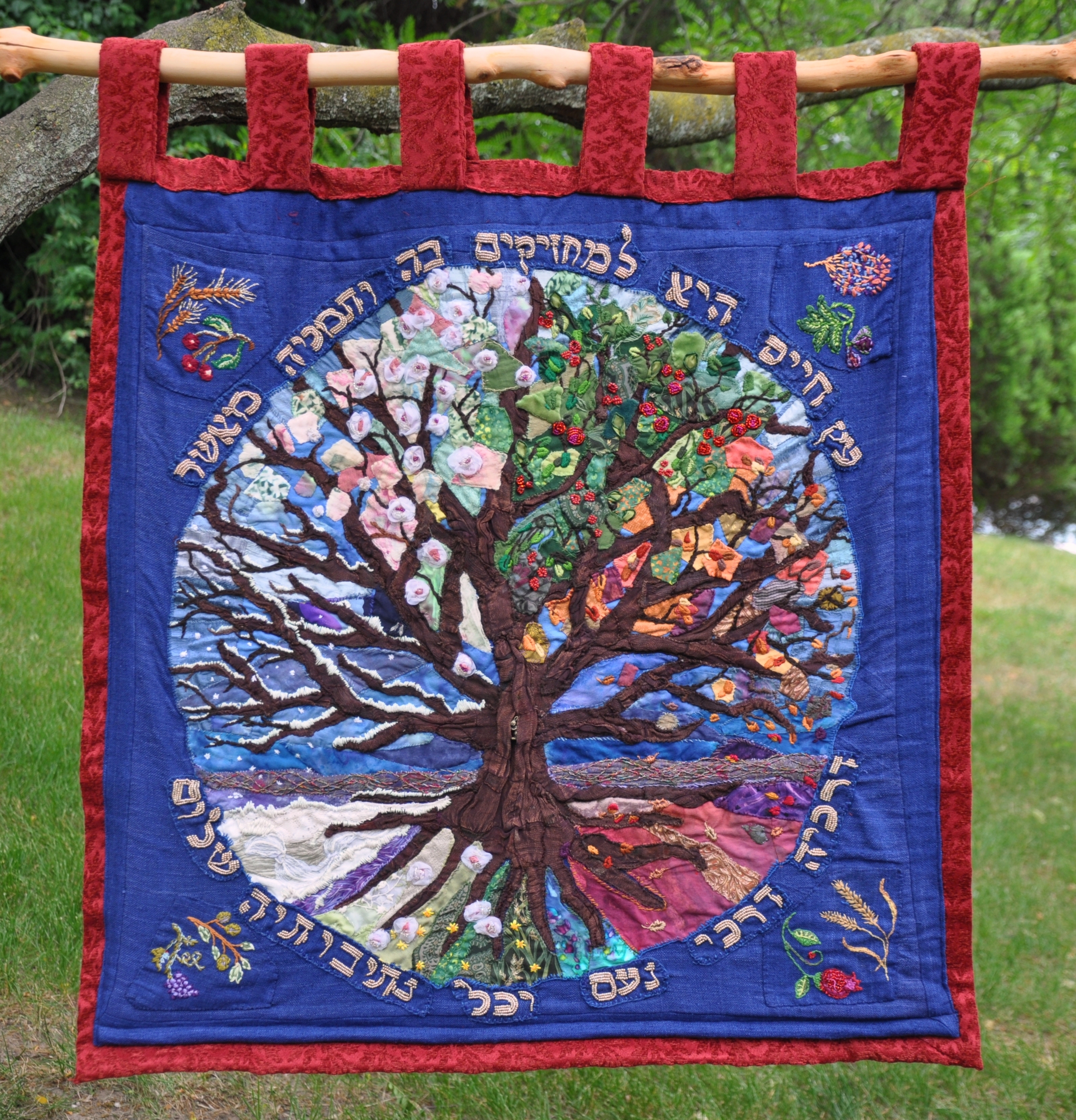
Our once a month Shabbat morning service is informal and relaxing, a lovely way to learn and share Jewish tradition while forming closer bonds of community. September’s Second Saturday will be Rabbi Ora’s first as our new rabbi.
4365 Platt Rd, Ann Arbor, MI 48108 (Platt and Ellsworth)
Accessible North Shelter
AARC will provide drinks, charcoal and paper products. You bring something to grill, a side dish to share, and your summer stories! The BBQ will be at a new location this year, Lillie Park.
Our annual BBQ picnic is a very nice time for all ages to relax together, introduce new people to the congregation, reconnect after summer travels.
Thinking of joining? New member? Want to meet Rabbi Ora? Everyone welcome!
Since Beit Sefer Director, Clare Kinberg is teaching the K’tanim (Little Ones) this year, Beit Sefer Committee Chair, Becky Ball will convene the meeting.
Please, at least one parent from each family attend.
It’s our Yom Kippur tradition at AARC to have several afternoon sessions for study, meditation, and discussion. This year, there will be three sessions; two from about 2:15 to 3:30 pm, and one from 3:45 to 5 pm.
Barbara Boyk Rust
Meditation and Sacred Chant for the Quiet of the Day
led by Barbara Boyk Rust
2:15pm
One of the blessings of Yom Kippur’s fast is the cleansing, purifying and opening we experience as we abstain from food and other routines. Giving ourselves over to a day of prayer and reflection in community affords us a unique opportunity to deepen our spiritual contact. Through sacred Hebrew chant and meditation this time together will support our entering a state of deep meditative consciousness to quiet our mind that we might hear the still small voice within and receive guidance for the year that is beginning.
Margo Schlanger
American Immigration
hachnasat orchim (welcoming the stranger)
a discussion led by Margo Schlanger
2:15pm
Margo Schlanger will facilitate a discussion on American immigration enforcement and the mitzvah of hachnasat orchim (welcoming the stranger). Margo is a member of AARC and a law professor whose recent work has focused on challenging the Trump Administration’s ramped-up immigration enforcement; she is counsel in federal cases challenging the administration’s “Muslim ban” executive order and its effort to deport hundreds of Detroit-area Iraqi nationals who have been here for decades.
Danny Steinmetz
Jewish burial and mourning practices
a workshop led by Danny Steinmetz
3:45pm
Over several millenia, Jews have developed distinctive practices for dealing with death. Traditionally, Jews do not leave the deceased unattended before burial, and use simple shrouds and coffins. After burial the focus shifts to the mourners and their obligations to console and care for mourners. The presentation will cover some of these practices (as well as their origin and rationale) and consider implications for a Reconstructionist community. The presentation will be by Danny Steinmetz is an ex-rabbinical student and a former chair of the AARC board.
Most of us read a lot, and we’ve probably read plenty about Charlottesville. But we don’t all have the opportunity to think about these things with others in our Jewish community. As a beginning, I asked several AARC members what they have read this week that they found thoughtful, representative of what they are thinking, or want others in our Jewish community to read. Many of the pieces below were new to me and I’m grateful to have read them. Please add your own links in the comments.
On August 4th, Hazon and Oakland Ave Urban Farm hosted a “Resilience in the North End” Shared Shabbat Experience
The Jewish food movement connects food accessibility, eating, cooking and sustainable agriculture with Jewish tradition. For 3,000 years, Judaism has been encouraging us to think critically about the food we eat, the land our food comes from, and the ways our food choices affect the health of our community and our planet. Hazon organizes from the principle that the more people are able to understand their own relationship to food and land, and simultaneously, to Jewish tradition, the more they will engage in creating healthier and more sustainable communities for all. Hazon does this by building connections and relationships between farmers, entrepreneurs, farm workers, consumers, distributors, rabbis, Jewish leaders, business leaders, and other faith leaders.
On Sunday August 27th, Hazon Detroit will sponsor the 2nd Annual Michigan Jewish Food Festival.
The Festival will be at Eastern Market and will run from 11am-4pm. Carpools will be meeting at East side of Arborland Sunday at 9:45am, leaving at 10am. RSVP to Idelle hammond_sass@msn.com, or Martha marthakransdo@umic.edu.
Last year, 5,000 people came to the first Michigan Jewish food festival This year’s event will bring together over 60 Jewish organizations and more than 60 food entrepreneurs and food justice organizations to share traditions and to build relationships.
You will be able to meet and learn from chefs
Joan Nathan
The Gefilteria’s Liz Alpern
Taste of Ethiopia’s Meskem Gebreyohannes
There will be speakers and demos on:
Jewish Ethics and Eating Meat;
Water Issues from Flint, Detroit and Southeast Michigan
Detroit and Regional Food Policy and Food Sovereignty
Demo tent for hands-on learning and skill sharing
Single Flower Honey Tasting
Making your own Herbal Teas for Health
Oral History Story Booth (on the Topsy Turvy Bus) where immigration and food stories will be recorded by the Jewish Historical Society of Michigan and the Leonard N. Simons Jewish Community Archive.
Plus lots of activities for kids, free guided walking tours of the Eastern Market, music, and a health area sponsored in part by Henry Ford Medical Systems.
In my portion, D’varim, the Israelites have arrived on the other side of the Jordan River, near the Promised Land, after spending 40 years wandering around in the desert. Moses is talking to the people, telling them the story of their whole journey, from Horeb to their current location on the other side of the Jordan. First Moses told how God had said to them: Go to the Promised Land and claim it, take it away from the Amorites. God promised this land to Abraham, Isaac, Jacob, and their heirs.
Moses then reminded the people of how the time came when he couldn’t handle all of their complaining. As their leader, he had been in charge of judging all their disagreements. Moses suggested each of the 12 tribes pick a representative or chief to be the judge for their tribe. The people said that was a good plan and the representatives were appointed.
Moses gave each chief important instructions—to be kind and fair to each other and to strangers, and to treat everyone equally. Moses told them if they had any problems in the tribe and the chiefs couldn’t handle it, they should bring that problem to him. Next Moses reminded the people of how they left from Horeb and traveled through the terrible but great wilderness to the hill country of the Amorites. They went there because Moses was following God’s command to go to this land that had been promised.
When they neared the Promised Land, the people wanted to send scouts ahead to check things out. Again they picked a representative from each tribe, and sent them to the hill country to spy on the Amorites. When the spies returned, some of them said it was a really wonderful country that God was giving them. But the people refused to go into the Promised Land because other scouts said that the people there were stronger and taller, with large cities with sky high walls.
Moses said, You guys aren’t listening to the Eternal our God. God will go first to help you with everything you do. God’s the one who got you out of Egypt. Moses compared God watching over them to how a parent watches over their child. But the people didn’t have faith in God or what Moses was telling them.
God was listening to the people complaining and refusing to go into the land, and God got angry and vowed that none of that generation would see the Promised Land. Not even Moses. The only exceptions were Caleb, because he remained loyal, and Joshua, who took over for Moses as leader.
The people were sorry and some now wanted to fight. But it was too late. God didn’t protect them because they hadn’t trusted God. The Amorites crushed them like bees.
The people wept for God to help them, but God did not help them because they weren’t loyal. Instead, God ordered them back into the wilderness, where they were to stay for 40 years. Moses himself complained that, although he hadn’t done anything wrong while they were deciding whether to go in the Promised Land, God was still furious with him. Moses would be banished to the wilderness along with all the other adults.
One thing that got my attention in my portion is the idea of God speaking and acting. The whole time I was reading it, I imagined God as a little cloud over Moses’ ear. How can you show that God would protect the people against the Amorites if they were loyal, since there is literally nothing to represent God? Or what does it mean to say that God was speaking to Moses? How God was telling Moses where to go and what to do?
I think God is sort of like your mind, because you can choose where to go and what to do. God being like your mind is not when you decide to do something you shouldn’t do, and it is not like your parents telling you what to do. God doesn’t tell you what to do, but God helps you through problems, especially when you are making a major change or getting ready for a new life. God always believes in doing the right thing.
I also thought about what the “Promised Land” means. I think it’s a place in your mind where everyone can be safe no matter what. In God’s Promised Land in my portion, only good people made it to the Promised Land. In my Promised Land it doesn’t matter if you’re good or bad, you can still live there.
The idea of treating everyone fairly reminded me of my work at High Point School. I attend Honey Creek Community School. Our school shares a building with High Point, a school for children and young adults with disabilities. Almost every Thursday during the school year, I work in a High Point classroom. High Point students communicate in different ways, like with movements and facial expressions. If one student pulls on her jacket, that means she wants her jacket off. If she’s smiling, that means she’s happy. We learn a hand-over-hand method. For example, for baking, you put your hand on top of their hand to use a spoon.
I really like working in the High Point classroom. Some of my friends can only say hi to High Point students in the halls between classes, but I get to spend a good amount of time with them and make friends with them. In our school, High Point students are treated the same as other students–they just learn differently. I learn differently, too. I am a visual learner.
For my service project, I did extra work at High Point, and I am going to make a donation to them from my Bat Mitzvah gifts.
I would like to thank: Deb, for helping me learn Torah. Reb Aura, for helping me prepare for the service and for leading the service. Members of our Havurah, my family, and my friends for being here to support me. My parents, for always being there for me and supporting me on my Bat Mitzvah journey.
Yesterday I represented AARC at a planning meeting for the August 25thCommunity-Wide Shabbat at Hillel. It looks like most of the Ann Arbor congregations–Temple Beth Emeth, Beth Israel, the Orthodox Minyan, Pardes Hannah, and AARC–are coming together at Hillel to welcome Shabbat with song and have brief services and a meal. The evening will begin with activities for families with kids. The Hillel staff is arranging for extra parking. I hope many members of AARC will come out for this inaugural annual Community Wide Shabbat.
It was interesting to learn at the meeting, for the 3rd of 4th time this month, that many people who work at the JCC don’t know that the Ann Arbor Reconstructionist Community (AARC) and the Jewish Cultural Society (JCS) are different organizations. I do love JCS: “Ann Arbor’s Secular Humanistic Community,” and we do both rent space at the JCC and have Sunday morning schools for our kids. But Reconstructionist Judaism is distinctive in our approach to building community that emphasizes spiritual aspects of Judaism, commitment to evolving religious practice, and inclusivity of a wide range of relationships to God and godliness. There are some great resources on these ideas on our website.
We need more opportunities for the local Jewish community to get to know us. Which leads me to the bulletin board.
Last year, the G’dolim and K’tanim designed a Tu B’Shevat bulletin board that celebrates nature and the seven species of foods in the Torah. We are ready for a new one!
We have some prime wall space at the JCC which needs some updating. We could be using the bulletin board to put ourselves out there in eye-catching informative fashion. Do you have any ideas? Is graphic design a forte of yours? We have lots of photos of activities, our handmade and distinctive ritual objects, our members. The bulletin board could highlight our new rabbi, the upcoming High Holidays, our dynamic school for kids. Plus thoughtful, fun people in the congregation. Can you help design some of this into a bulletin board, soon, before the end of August? Contact Clare ckinberg@gmail.com.
Yesterday I got all excited when I realized that the upcoming total solar eclipse (August 21) coincided with Rosh Hodesh Elul, the new moon of the Jewish month in which we prepare for the High Holidays. What meaning could I derive from this momentous coincidence? Almost immediately my friend Max Jasny informed me that solar eclipses always occur on the new moon, but not every new moon. Max and I have a lot of things in common, for one, he works as an administrative assistant at Martha’s Vineyard Hebrew Center, a small congregation in a beautiful place, with a Reconstructionist rabbi. But clearly, he knows more about astronomy than I do!
Still, a total solar eclipse on Rosh Hodesh Elul has been viewed only five times in the last 250 years. It is a moment that can be grabbed to acknowledge the grandeur of the universe and the many opportunities the Jewish calendar cycle gives us to reset our personal and communal clocks.
This week I had two important meetings in planning for next year: The High Holiday Logistics Committee (Allison Stupka, me, Idelle Hammond-Sass, Mike Ehmann and Rebecca Kanner) kicked into gear with a potluck on Allison’s back porch. We planned the “big move” of all our prayer books and ritual items from the Jewish Community Center over to the UUA building which we rent for Rosh Hashana and Yom Kippur. We are so looking forward to having the services led by our new rabbi, Ora Nitkin-Kaner. As in all past years, AARC ticketless HH services are open to all and are smoothly run with lots of volunteer energy. You can view the volunteer sign up here. At least, put the dates in your calendar.
The Beit Sefer/Religious School Committee also met this week. Allison Stupka (busy girl!), me, Becky Ball and Stacy Dieve met at Becky’s home and planned two upcoming events for prospective, new and returning Beit Sefer families. We will be having a “popsicle party” on Wednesday August 30th at 6:30pm at the JCC for all returning Beit Sefer families and all families who are checking us out as a possible place for their kids to attend religious school. We’ll play on the playground (or gym if the weather is bad), share summer experiences, reacquaint the kids, and take the opportunity to show prospective families the school.
We also planned a religious school Open House at the JCC during Sukkot on Sunday Oct 8 for prospective families who may have connected with us during High Holidays and are still needing a religious school for their kids.
Coming Up in July…
July 28, Fourth Friday: Kabbalat Shabbat and Vegetarian Potluck at the JCC. This will be the last Fourth Friday that Rabbi Alana will lead for us at the JCC.
July 29, Saturday, Isabel Ahbel-Rappe’s bat mitzvah: Rabbi Aura Ahuvia will lead services.
Rabbi Alana was part of an “On Point” radio discussion among “millennial” clergy on July 6, 2017. In this discussion a rabbi, an imam, an Episcopal priest and a Catholic priest discuss why they have dedicated their lives to the clergy. Asking questions about declining numbers of people affiliating with congregations, the host Ray Suarez seemed to be motivated by concern for his own daughter, recently ordained as an Episcopal priest. Rabbi Alana did a great job in challenging the assumptions that young people are not interested in religion and getting in strong statements about creative Judaism and the spiritual pull of social justice activism. She also gave some good explanations of the work Detroit Jews for Justice is doing. Take a listen!
We have two more opportunities this summer to participate in Rabbi Alana led services. On July 28, AARC will have its regular Fourth Friday Kabbalat Shabbat and Potluck at the Jewish Community Center. And, news flash, Rabbi Alana will lead a Reconstructionist service at the Community-Wide Shabbat at Hillel on August 25th. Because August 25th is a fourth Friday, AARC is moving our regular service to Hillel on that evening. More about this will be posted soon. In the meantime, you can register for the free dinner here. There will be children’s activities, several choices for services (TBE and BIC are having their congregational services at Hillel that evening as well), in additional to a communal dinner.
When Reconstructionist Educators get together: Teaching Hebrew Prayer
I think a lot about teaching Jewish prayer to our kids. So, I was drawn to a recent thread of discussion on the Reconstructionist Educators (RENA) email list about teaching Hebrew prayer. One director started off the discussion by saying that the students in her school usually seem bored by learning Hebrew prayers, perhaps because “prayer is so disconnected from their lives.” She is thinking about replacing Hebrew prayer study with short sessions of silence, meditation, and writing. Another person shared a reference to a lesson plan on kids writing their own prayers. The long-time director at Congregation Beth-El Zedeck in Indianapolis wrote about his school’s “tefilah laboratory” where the students learn and write prayers and practice them in the sanctuary, where the environment affects their experience. Another director wrote about engaging families with young children with prayer. A theme running through the discussions is looking at the relationship between learning Hebrew and learning prayer: connected, yet separate, too.
This year our Beit Sefer will again be experimenting with different ways to engage our students in prayer. We want students to feel comfortable with Jewish and Hebrew prayer, to understand Hebrew prayer as an expressive mode of spirituality, to know that Jewish prayer has evolved over time, and that they can be involved in creating prayer. We want to prepare them to begin getting ready for bar or bat mitzvah, if that is the path they are on, which requires familiarity with Hebrew and Hebrew prayer. And we want them to be able to access their own spirituality through Jewish prayer. I am grateful to have a place to learn what other Reconstructionist educators are thinking about these topics.
I’d been intending to write about the RENA conference I went to back in the low key month of Cheshvan (early November)! The annual conference is for Directors of Reconstructionist religious schools, a group that at most has 100 eligible participants. There were about 15 directors at the conference.
The Jewish Community of Amherst (MA), a Reconstructionist congregation, hosted the first two days of the meeting, and for the last day we traveled about half hour away to the Springfield Jewish Community Center. We also spent an afternoon at the National Yiddish Book Center, located on the Hampshire College campus. We had sessions on developing new structures for supplementary education, project-based learning, experiential Jewish education, and other innovations..
Now that I’ve put off writing for so long, I see that long-range impact of the conference is the group’s ongoing discussions and resource sharing, made richer and more accessible now that I’ve met the correspondents. Next year’s conference is in Boulder, CO. I look forward to attending again.
When you find a 11-foot, 112-year old wimple in the mail!
As noted in the past, most of the postal mail the AARC receives takes the form of bills, checks, services we don’t need, scams, and benign crazy talk—but we also get some really nice or interesting notes from really nice and interesting people. May was a bit thin for mail, but the one piece of non-bill, non-check, non-request, non-scam mail we did get was a doozy: A package from Rabbi Ralph Ruebner in Skokie, IL containing our wimple!
What’s a “wimple” (apart from a nuns’ hat)? This:
The wimple is an ornate, embroidered or painted cloth used to bind up a Torah scroll after it has been read. It is made from swaddling cloth used to bind a baby at his circumcision. Thus, almost from the moment of birth, a direct link is established between the child and the Torah.
The custom of preparing a wimple—the word means “cloth” or “veil” in old German—began about 400 years ago in Germany and spread from there to Alsace, Switzerland, France and the Low Countries. As German Jews emigrated to other lands, especially America, they brought the custom with them but it has remained confined to a limited section of Ashkenazic Jewry. (source)
This wimple, our Torah’s wimple—originally used to bind “Robert Hessel (corrected from Hefsel, after learning about the “Long s” see comment below)Hambuch” measures roughly 11 feet long, and is hand-painted with text and other decorative elements. It has some … interesting discoloration whose precise nature—given its original ritual duty—I decline to meditate on.
Here’s a look at the full wimple (which, given its dimensions, is challenging to photograph) via video:
our wimple’s central panel
As you no doubt recall from your frequent perusal of the AARC Board Meeting Minutes (meticulously taken by your dedicated secretary), although we’ve had the same interestingly idiosyncratic Torah for several decades, its ownership was long unclear (due to leadership and administrative changes both in our little Hav and the congregation who loaned us the Torah to begin with).
Last year we had the good fortune to finally hear from the current Board of the Niles Township Jewish Congregation/ Congregation Ezra-Habonim of Skokie, IL. (Niles Township Jewish Congregation lent us our Torah ~20 years ago, shortly before they merged with Congregation Ezra-Habonim). Soon after we officially (and emphatically) purchased our Torah.
Detail of the baby’s name inscribed on the wimple; love this rainbow gradation!
Rabbi Ralph Ruebner of Skokie was kind enough to send the wimple along to be reunited with our Torah, as well as these details about this wimple, wimples in general, and the history of the Niles Township Jewish Congregation/ Congregation Ezra-Habonim, and German Jews in middle America.