• Skip to primary navigation
  • Skip to main content
  • Skip to primary sidebar
  • Skip to footer
Ann Arbor Reconstructionist Congregation

Ann Arbor Reconstructionist Congregation

  • Home
  • About
    • Overview
    • Rav Gavrielle Pescador
    • Our History
      • Photo Gallery
    • Our Values and Vision
    • LGBTQ Inclusive
    • Our Board
    • Our Sacred Objects
    • About Reconstructionist Judaism
    • Jewish Ann Arbor
  • Programs
    • Shabbat and Holidays
    • B’nei Mitzvah
    • Tikkun Olam
    • In the (Washtenaw Jewish) News
    • Health and Safety Expectations for In-Person Gatherings
    • Join our Mailing List
  • Religious School
    • About Beit Sefer
    • Teachers
    • Enrollment and Tuition
    • 2025-26 Beit Sefer Calendar
  • Blog
  • Calendar
  • Membership
    • Thinking about joining?
    • Member Area
  • Contact Us
  • Donate

Clare Kinberg

The 5778 Sukkah Goes UP

October 5, 2017 by Clare Kinberg

The Sukkah is UP at The Farm on Jennings. Carole invites anyone to come and have a meal in it, and relax and enjoy the beautiful weather and land.

Havdalah in the Sukkah

 6900 Jennings Rd, 48105.

Saturday October 7

5:30pm to 7:30pm (Sunset is at 7:05).

We’ll have a potluck dinner, and close with havdallah.

Bring a dish to share. Musicians, bring your instruments.

AARC Sukkah raising begins, Oct 1 2017 at The Farm on Jennings
Cooperative Hammering
The first s’kach (organic rooftop) goes up
Decorations get made
A very long chain decoration
We invite 14 Ushpizin/honored ancestral guests: Sarah, Rebecca, Rachel, Leah, Miriam, Deborah, Esther, Abraham, Isaac, Jacob, Joseph, Moses, Aaron, David (the kids named them all!)


Filed Under: Beit Sefer (Religious School), Event writeups Tagged With: Sukkot

The Call of the Shofar: Rena Basch on Activism

October 4, 2017 by Clare Kinberg

Rena and Jeff Basch at our 2017 Annual BBQ. Photo by Stephanie Rowden
by Rena Basch, from her dvar on Rosh Hashana

Often people hear a distinct, sharp call to action. Something happens; something shocking or traumatic happens to you, your family, your community, or your nation. We hear these calls to action. They’re often loud and clear. Yet, we struggle with what actions to take. We hear the call. But then what?

There are also softer, more subtle calls to action. You’ve heard something over and over again, but then one day, the same words sound different. Something crystallizes in your head. “Aha,” you say. You hear the call.

For me, current events of 5777 provided an unrelenting cacophony. Deafening calls to action. I sifted through the noise, adjusted priorities, and chose a path for tikkun olam. I’m fortunate and grateful for being able to do this: hear the call–consider, contemplate, plan–then act. I have learned how to do this from all of you. Our community sounded the shofar, then taught me how to hear it. You’ve showed me how I can be useful, can help change the world.

Here are just a few examples:

A pair of our founders, my friends Aura and Aaron Ahuvia, extend an invitation to me–a call to an unaffiliated, uninvolved Jew: Come to our Reconstructionist Havurah. I’m like, “What’s a Reconstructionist Havurah? Sounds like a cult.” They took the time to explain, and Aha! I’m in. This is Judaism to me.

Over the years, these subtle calls to action continued from our community members. A very young Sarah Kurz–I will always remember her empathy. Back when the Hav was still meeting in the basement of a church near the law quad. A special aunt of mine had died. I’m crying during services and Sarah comforts me. I hear the call: I need to do that too – comfort those in need. Stop being afraid to reach out.

Again, a few years ago – Marcy Epstein says “let’s plan Shmita. Let’s plan Shmita for the Jewish community of Ann Arbor and southeast MI.” And I say, “Huh? What’s Shmita? Never heard of it.” Then, “that’s too devout, that’s too spiritual, that’s too big an endeavor. I can’t.”

“Of course you can,” she said. “Food! Land! Justice! Shmita!” Aha, I hear the call. She and Carol, and Idelle and many others made me see how I was needed to help us study and celebrate Shmita.

Last year, Rabbi Alana spoke at the Interfaith Council for Peace and Justice 50th Anniversary dinner. Here’s what I heard her say–more or less: “You old activists need to listen to the young activists to understand today’s issues, to understand today’s methods. And you young activists need to learn from the old how to build infrastructure.” Aha! A clear call to action. I can help with that. I can learn from different generations. I can help build bridges.

Again, this past year, right now really–the cacophony. Bells are ringing loud and clear. The shofar blowing every morning in the form of daily news. Fresh assaults on our values nearly every day. The antithesis of tikkun olam. I heard, I hear this shofar. Most of us here today hear the call to action. And our community, like usual, we’re hearing that call–we’re listening, processing–the are wheels turning, and we’re helping each other find our way to action.

I decided in November to become “An Activist.” (Because I need yet another career path, another to-do list, right?) I’ve been listening to my mother saying over and over again–“gerrymandering is tearing apart our nation.” Aha! The light bulb goes on, the idea crystallizes, I hear the call. I can act to fix that.

I look around our congregation and see role models everywhere, activists of all sorts, hearing the call, living their values, giving their skills and time, acting to make the world a better place in a myriad of different ways. I tell Rebecca Kanner I’m going to work on redistricting reform. I ask her to teach me how to be an activist.  She says “you already are.” What? Huh? ……Aha! thank you. Thank you for giving me the confidence to say, yes. Yes, I am an Activist.

So thank you, my Ann Arbor Reconstructionist community for giving me the support, the role models, the opportunities and the confidence to truly heed the shofar. We all hear the call. We are all acting.


Filed Under: Divrei Torah, Posts by Members, Tikkun Olam Tagged With: Rosh Hashanah, Shmita, Tikkun Olam

Yom Kippur, 2017

September 29, 2017 by Clare Kinberg

Our Yom Kippur services are open, ticketless, and accessible to all. Services will be led by Rabbi Ora Nitkin-Kaner and are musical and participatory. Services are held at the First Unitarian Universalist Congregation of Ann Arbor, 4001 Ann Arbor-Saline Road, the red brick building on the southeast corner of Ellsworth. More details here.

Fri., Sept. 29, Kol Nidrei, 6:45 gathering and candlelighting, service begins at 7pm

Sat., Sept. 30, Yom Kippur Morning and Torah service, 10 am – 2 pm

 Children’s Service, 10:30 – 11:30 am

Afternoon Workshops, 2:15 – 5:00 pm Workshop Descriptions

Yizkor, 5:15 – 6:30 pm, A non-traditional service offering mourners the opportunity to share some words about the person they lost. (Please plan on spending no more than 5 minutes, so all may participate)

Ne’ilah/Shofar/Havdalah, 6:45 – 7:45 pm

Break-the-fast, 7:45 or when 3 stars appear. Reservations are closed now.

Filed Under: Upcoming Activities Tagged With: High Holidays, Yom Kippur

About our Selichot Prayer Service, Sat Sept 16

September 13, 2017 by Clare Kinberg

by Rabbi Ora Nitkin-Kaner

The practice of Selichot goes back at least 2,000 years, and may be even older: Legend has it that when King David realized the Jerusalem Temple would eventually be destroyed, he begged God to tell him how the Jewish people would be able to connect with God while in exile. God told King David that the people could recite ‘selichot’–penitential prayers–to bring them closer to God, and that they should include a recitation of the “Thirteen Attributes of God,” a passage from Exodus evoking God’s compassionate nature–and one that we now recite throughout Rosh haShana and Yom Kippur: “Adonai! Adonai! A God compassionate and gracious, slow to anger, rich in steadfast kindness, extending kindness to the thousandth generation, forgiving iniquity, transgression, and sin; yet He does not remit all punishment…”

As Jewish tradition evolved, it became customary to recite Selichot prayers in the days and weeks leading up to Rosh haShana. In Eastern Europe, Selichot were originally recited early in the morning, prior to dawn. There was a custom in Eastern Europe that the person in charge of prayers would make the rounds of the village, knocking three times on each door and saying, “Israel, holy people, awake, arouse yourselves and rise for the service of the Creator!” It later became common practice to hold the first Selichot service–considered the most important–at a time more convenient for the masses. Therefore, the Selichot service was moved to Saturday night.

For our own Selichot service this Saturday night, we’ll end Shabbat together with Havdallah, and then learn a few soulful niggunim – wordless melodies – that will form an aural backdrop to our Rosh haShana and Yom Kippur services. If you’d like to get a head-start on learning these melodies, or if you’re not able to make it to Selichot, here are 2 of the tunes we’ll be learning: Joey Weisenberg’s Shochein Ad and Nishmat Kol Chai.

Selichot Prayer Service
 Saturday, September 16
8pm
each bring a candle (we’ll have extras if you forget)
 Touchstone Common House
(yellow building at the front right behind the Touchstone sign)
 560 Little Lake Drive (off Jackson Rd between Wagner and Zeeb)

please park on the street


Filed Under: Community Learning, Rabbi's Posts, Upcoming Activities Tagged With: High Holidays, Selichot

Tashlich New Time and Place

September 7, 2017 by Clare Kinberg

Tashlich

Friday September 22, 2017

6:30pm

begin at JCC, 2935 Birch Hollow Dr.

walk to Mallets Creek in Mary Beth Doyle Park and Wetlands

A heron at Mary Beth Doyle Park, photo Sept 7 2017 by Evelyn Neuhaus

This year we will be doing Tashlich (the Rosh Hashanah custom of casting into running water the things we want to be free of) on Friday September 22, as part of our Fourth Friday Kabbalat Shabbat service and potluck at the JCC.

Mary Beth Doyle Wetlands in early August 2017

We will gather together at the JCC at 6:30 for brief song and prayer, drop off our potluck, and walk to Mallets Creek, about three blocks due east of the JCC on Birch Hollow. If you are running late, meet us there. Everyone welcome.

Butterflies love the vegetation in Mary Beth Doyle Wetlands

Rabbi Ora asked if there might be a location for tashlich within walking distance of the JCC so that we could combine our Fourth Friday service, Shabbat Shuva (the Shabbat between Rosh Hashanah and Yom Kippur), and tashlich. Well, it turns out, there is!

Mary Beth Doyle Park and Wetlands (formerly Brown Park) was reopened in 2008 with major changes, including planting tens of thousands of plugs of 25 species of grasses and forbs (herbaceous flowering plants). The idea for the new seeding and planting was to attract wildlife to this new wetland area. Ten years later, the project has succeeded!

Learning at Mary Beth Doyle Wetlands

On a recent walk through Doyle, I saw several herons, egrets, ducks, butterflies and more quietly and gracefully enjoying the gently flowing water. The park had a delightful atmosphere, a bridge over the water, and couldn’t have been more lovely.

As always, AARC High Holiday services are open and ticketless and (except Selichot and Tashlich) are held at the First Unitarian Universalist Congregation of Ann Arbor, 4001 Ann Arbor-Saline Road, the red brick building on the southeast corner of Ellsworth.

Services this year will be led by our new rabbi, Ora Nitkin-Kaner. As in past years, many members of the congregation will participate in the service by doing readings, chanting Torah and haftorah, and leading workshops.

We will have a fish and dairy Break-the-Fast at the end of Yom Kippur, as in past years. You must make a reservation for this. Here is the link.

Like last year, we will have services for young children (toddler through elementary) from 10:30-11:30am on Rosh Hashanah and Yom Kippur, with childcare during adult services and an activities coordinator for the tweens.

You need to let us know if your children will need childcare. Here is the signup for childcare.

Everything you need to know about AARC High Holiday Services is at this link on our website.


Filed Under: Upcoming Activities Tagged With: High Holidays, Tashlich

Annual BBQ Picnic and Start of Beit Sefer

August 31, 2017 by Clare Kinberg

AARC Weekend September 9 and 10

Dates to put into your calendar

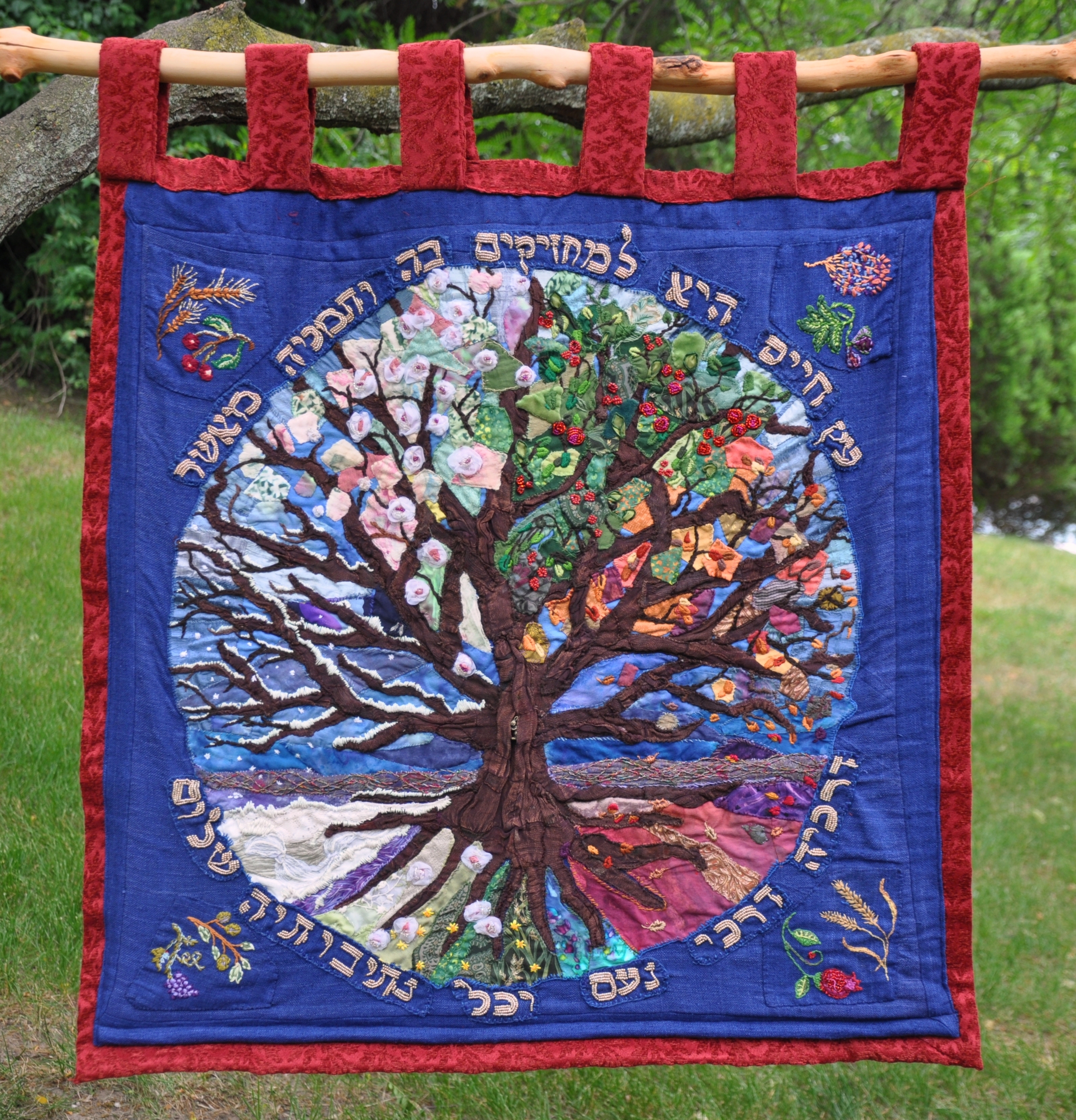
Torah Table tapestry at Ann Arbor Reconstructionist CongregationSecond Saturday Shabbat Morning Service
Saturday September 9, 10am-noonish
Jewish Community Center of Ann Arbor
2935 Birch Hollow Dr, Ann Arbor, MI 48108
Our once a month Shabbat morning service is informal and relaxing, a lovely way to learn and share Jewish tradition while forming closer bonds of community. September’s Second Saturday will be Rabbi Ora’s first as our new rabbi.
Everyone welcome!


Annual BBQ Picnic
Sunday September 10, Noon-2ish
From the Annual Picnic 2015
Lillie Park
4365 Platt Rd, Ann Arbor, MI 48108 (Platt and Ellsworth)
Accessible North Shelter
AARC will provide drinks, charcoal and paper products. You bring something to grill, a side dish to share, and your summer stories! The BBQ will be at a new location this year, Lillie Park.
Our annual BBQ picnic is a very nice time for all ages to relax together, introduce new people to the congregation, reconnect after summer travels.
Thinking of joining? New member? Want to meet Rabbi Ora? Everyone welcome!


First day of Beit Sefer/ Religious School
Sunday September 10, 10am – noon
 Lillie Park, gather at the North Shelter.
Parents meeting 10:45-11:45
Since Beit Sefer Director, Clare Kinberg is teaching the K’tanim (Little Ones) this year, Beit Sefer Committee Chair, Becky Ball will convene the meeting.
Please, at least one parent from each family attend.

Filed Under: Beit Sefer (Religious School), Upcoming Activities

Yom Kippur Workshops 2017

August 24, 2017 by Clare Kinberg 1 Comment

It’s our Yom Kippur tradition at AARC to have several afternoon sessions for study, meditation, and discussion. This year, there will be three sessions; two from about 2:15 to 3:30 pm, and one from 3:45 to 5 pm.


Barbara Boyk Rust
Meditation and Sacred Chant for the Quiet of the Day
led by Barbara Boyk Rust
2:15pm

One of the blessings of Yom Kippur’s fast is the cleansing, purifying and opening we experience as we abstain from food and other routines.   Giving ourselves over to a day of prayer and reflection in community affords us a unique opportunity to deepen our spiritual contact.  Through sacred Hebrew chant and meditation this time together will support our entering a state of deep meditative consciousness to quiet our mind that we might hear the still small voice within and receive guidance for the year that is beginning.


Margo Schlanger
American Immigration
hachnasat orchim (welcoming the stranger)
a discussion led by Margo Schlanger
2:15pm

Margo Schlanger will facilitate a discussion on American immigration enforcement and the mitzvah of hachnasat orchim (welcoming the stranger). Margo is a member of AARC and a law professor whose recent work has focused on challenging the Trump Administration’s ramped-up immigration enforcement; she is counsel in federal cases challenging the administration’s “Muslim ban” executive order and its effort to deport hundreds of Detroit-area Iraqi nationals who have been here for decades.


Danny Steinmetz
 Jewish burial and mourning practices
a workshop led by Danny Steinmetz
3:45pm

Over several millenia, Jews have developed distinctive practices for dealing with death.  Traditionally, Jews do not leave the deceased unattended before burial, and use simple shrouds and coffins. After burial the focus shifts to the mourners and their obligations to console and care for mourners. The presentation will cover some of these practices (as well as their origin and rationale) and consider implications for a Reconstructionist community. The presentation will be by Danny Steinmetz is an ex-rabbinical student and a former chair of the AARC board. 


Filed Under: Community Learning Tagged With: High Holidays, immigrants, meditation, mourning, Yom Kippur

What AARC members are reading about Charlottesville

August 18, 2017 by Clare Kinberg 2 Comments

Charlottesville, VA August 12, 2017. Photo by Andy Campbell from an article by writer and parent Jen Margulies suggested by Rabbi Ora Nitkin-Kaner: White Supremacy Is Bad for the Jews. Let’s Be Bad for White Supremacy

Most of us read a lot, and we’ve probably read plenty about Charlottesville. But we don’t all have the opportunity to think about these things with others in our Jewish community. As a beginning, I asked several AARC members what they have read this week that they found thoughtful, representative of what they are thinking, or want others in our Jewish community to read. Many of the pieces below were new to me and I’m grateful to have read them. Please add your own links in the comments.

Greg Saltzman contributed an 2016 article with background to the President’s connection to the Klan:  In 1927, Donald Trump’s Father was Arrested after a Klan Riot In Queens

Sarai Brachman Shoup suggested the The VICE video Charlottesville: Race and Terror

Margo Schlanger says she learned from these two articles

  • The Monuments Must Go: An open letter from great-great-grandsons of Stonewall Jackson.
  • In Charlottesville, the Local Jewish Community Presses On 

Kira Berman brought  Hymn: A New Poem by Sherman Alexie

[excerpt]

I will silently sit and carefully listen to new stories
About other people’s tragedies and glories.

I will not assume my pain and joy are better.
I will not claim my people invented gravity or weather.

And, oh, I know I will still feel my rage and rage and rage
But I won’t act like I’m the only person onstage.

I am one more citizen marching against hatred.
Alone, we are defenseless. Collected, we are sacred.

We will march by the millions. We will tremble and grieve.
We will praise and weep and laugh. We will believe.

We will be courageous with our love. We will risk danger
As we sing and sing and sing to welcome strangers.

Culinary historian Michael Twitty reading from the Torah.

Marcy Epstein wanted to make sure LGBTQ perspectives are included such as this piece by Michael Twitty: I’m Black, Jewish and Gay and Food is my Weapon Against Bigotry 

Deborah Fisch found this both informative and hopeful: Life After Hate: Trump Admin Stops Funding Former Neo-Nazis Who Now Fight White Supremacy

For a long read and deep analysis on racism and antisemitism, Eric Ward’s Skin in the Game: How Antisemitism Animates White Nationalism is a must read.

If you have any thoughts on these pieces, or additional suggestions, please add in the comments section.


Filed Under: Community Learning Tagged With: antisemitism, racism

2nd Michigan Jewish Food Festival

August 10, 2017 by Clare Kinberg Leave a Comment

Click on postcard for details

Did you know that Metro Detroit is at the forefront of both the urban agriculture movement (and here) and the Jewish food movement? In 2000, there were about 80 farms within Detroit city limits; in 2016 the number soared to an amazing 1,400 urban farms in Detroit. Detroit’s number of black urban farmers is growing, and cooperation with Jewish organizations such as Hazon and the Isaac Agee Downtown synagogue, is on the uptick. Here is a nice reflection on this cooperation by rabbinic student and Hazon fellow Zoe McCoon.

On August 4th, Hazon and Oakland Ave Urban Farm hosted a “Resilience in the North End” Shared Shabbat Experience

The Jewish food movement connects food accessibility, eating, cooking and sustainable agriculture with Jewish tradition. For 3,000 years, Judaism has been encouraging us to think critically about the food we eat, the land our food comes from, and the ways our food choices affect the health of our community and our planet. Hazon organizes from the principle that the more people are able to understand their own relationship to food and land, and simultaneously, to Jewish tradition, the more they will engage in creating healthier and more sustainable communities for all. Hazon does this by building connections and relationships between farmers, entrepreneurs, farm workers, consumers, distributors, rabbis, Jewish leaders, business leaders, and other faith leaders.

On Sunday August 27th, Hazon Detroit will sponsor the 2nd Annual Michigan Jewish Food Festival.

The Festival will be at Eastern Market and will run from 11am-4pm. Carpools will be meeting at East side of Arborland Sunday at 9:45am, leaving at 10am. RSVP to Idelle hammond_sass@msn.com,   or Martha  marthakransdo@umic.edu.

Last year, 5,000 people came to the first Michigan Jewish food festival  This year’s event will bring together over 60 Jewish organizations and more than 60 food entrepreneurs and food justice organizations to share traditions and to build relationships.

You will be able to meet and learn from chefs

  • Joan Nathan
  • The Gefilteria’s Liz Alpern
  • Taste of Ethiopia’s Meskem Gebreyohannes

There will be speakers and demos on:

  • Jewish Ethics and Eating Meat;
  • Water Issues from Flint, Detroit and Southeast Michigan
  • Detroit and Regional Food Policy and Food Sovereignty
  • Demo tent for hands-on learning and skill sharing
  • Single Flower Honey Tasting
  • Making your own Herbal Teas for Health
  • Oral History Story Booth (on the Topsy Turvy Bus) where immigration and food stories will be recorded by the Jewish Historical Society of Michigan and the  Leonard N. Simons Jewish Community Archive.
  • Plus lots of activities for kids, free guided walking tours of the Eastern Market, music, and a health  area sponsored in part by Henry Ford Medical Systems.

Filed Under: Upcoming Activities Tagged With: food/land/justice

Isabel Ahbel-Rappe’s bat mitzvah d’var on D’varim

August 2, 2017 by Clare Kinberg

Shabbat shalom.

In my portion, D’varim, the Israelites have arrived on the other side of the Jordan River, near the Promised Land, after spending 40 years wandering around in the desert. Moses is talking to the people, telling them the story of their whole journey, from Horeb to their current location on the other side of the Jordan. First Moses told how God had said to them: Go to the Promised Land and claim it, take it away from the Amorites. God promised this land to Abraham, Isaac, Jacob, and their heirs.

Moses then reminded the people of how the time came when he couldn’t handle all of their complaining. As their leader, he had been in charge of judging all their disagreements. Moses suggested each of the 12 tribes pick a representative or chief to be the judge for their tribe. The people said that was a good plan and the representatives were appointed.

Moses gave each chief important instructions—to be kind and fair to each other and to strangers, and to treat everyone equally. Moses told them if they had any problems in the tribe and the chiefs couldn’t handle it, they should bring that problem to him. Next Moses reminded the people of how they left from Horeb and traveled through the terrible but great wilderness to the hill country of the Amorites. They went there because Moses was following God’s command to go to this land that had been promised.

When they neared the Promised Land, the people wanted to send scouts ahead to check things out. Again they picked a representative from each tribe, and sent them to the hill country to spy on the Amorites. When the spies returned, some of them said it was a really wonderful country that God was giving them. But the people refused to go into the Promised Land because other scouts said that the people there were stronger and taller, with large cities with sky high walls.

Moses said, You guys aren’t listening to the Eternal our God. God will go first to help you with everything you do. God’s the one who got you out of Egypt. Moses compared God watching over them to how a parent watches over their child. But the people didn’t have faith in God or what Moses was telling them.

God was listening to the people complaining and refusing to go into the land, and God got angry and vowed that none of that generation would see the Promised Land. Not even Moses. The only exceptions were Caleb, because he remained loyal, and Joshua, who took over for Moses as leader.

The people were sorry and some now wanted to fight. But it was too late. God didn’t protect them because they hadn’t trusted God. The Amorites crushed them like bees.

The people wept for God to help them, but God did not help them because they weren’t loyal. Instead, God ordered them back into the wilderness, where they were to stay for 40 years. Moses himself complained that, although he hadn’t done anything wrong while they were deciding whether to go in the Promised Land, God was still furious with him. Moses would be banished to the wilderness along with all the other adults.

One thing that got my attention in my portion is the idea of God speaking and acting. The whole time I was reading it, I imagined God as a little cloud over Moses’ ear. How can you show that God would protect the people against the Amorites if they were loyal, since there is literally nothing to represent God? Or what does it mean to say that God was speaking to Moses?  How God was telling Moses where to go and what to do?

I think God is sort of like your mind, because you can choose where to go and what to do. God being like your mind is not when you decide to do something you shouldn’t do, and it is not like your parents telling you what to do. God doesn’t tell you what to do, but God helps you through problems, especially when you are making a major change or getting ready for a new life. God always believes in doing the right thing.

I also thought about what the “Promised Land” means. I think it’s a place in your mind where everyone can be safe no matter what. In God’s Promised Land in my portion, only good people made it to the Promised Land. In my Promised Land it doesn’t matter if you’re good or bad, you can still live there.

The idea of treating everyone fairly reminded me of my work at High Point School. I attend Honey Creek Community School. Our school shares a building with High Point, a school for children and young adults with disabilities. Almost every Thursday during the school year, I work in a High Point classroom. High Point students communicate in different ways, like with movements and facial expressions. If one student pulls on her jacket, that means she wants her jacket off. If she’s smiling, that means she’s happy. We learn a hand-over-hand method. For example, for baking, you put your hand on top of their hand to use a spoon.

I really like working in the High Point classroom. Some of my friends can only say hi to High Point students in the halls between classes, but I get to spend a good amount of time with them and make friends with them. In our school, High Point students are treated the same as other students–they just learn differently. I learn differently, too. I am a visual learner.

For my service project, I did extra work at High Point, and I am going to make a donation to them from my Bat Mitzvah gifts.

I would like to thank: Deb, for helping me learn Torah. Reb Aura, for helping me prepare for the service and for leading the service. Members of our Havurah, my family, and my friends for being here to support me. My parents, for always being there for me and supporting me on my Bat Mitzvah journey.

Shabbat shalom.


Filed Under: Divrei Torah Tagged With: bat mitzvah

  • « Go to Previous Page
  • Page 1
  • Interim pages omitted …
  • Page 7
  • Page 8
  • Page 9
  • Page 10
  • Page 11
  • Interim pages omitted …
  • Page 24
  • Go to Next Page »

Primary Sidebar

Search

Join Our Mailing List

Sign up for our twice a week newsletter to get details on upcoming events and catch up on our latest news.

This field is required.

Check your inbox or spam folder to confirm your subscription.

Upcoming Events

  • 9:00 am – 10:00 am, April 17, 2026 – Rosh Chodesh Minyan Iyar [ZOOM]
  • All day, April 19, 2026 – Beit Sefer
  • 6:30 pm – 8:00 pm, April 24, 2026 – Fourth Friday Kabbalat Shabbat
  • All day, April 26, 2026 – Beit Sefer
  • 12:00 pm – 3:00 pm, April 26, 2026 – “Lesson of the Homeland” and the Stories We Tell: A Conversation with Anat Zeltser
  • All day, May 3, 2026 – Beit Sefer

Latest News

  • RSVP to “Lesson of the Homeland” and the Stories We Tell: A Conversation with Anat Zeltser April 16, 2026
  • Climate Action Shabbat article in the April 2026 Washtenaw Jewish News April 3, 2026
  • Reimagining Torah Study: Moving from Zoom to In Person by Rabbi Gabrielle Pescador April 1, 2026
  • Creative Spirit at the AARC Beit Sefer March 27, 2026
  • When Is a Killer Not a Murderer? by Elizabeth Brindley March 19, 2026

Footer

Affiliated with

Copyright © 2026 Ann Arbor Reconstructionist Congregation