This year’s Washtenaw Jewish News guide to Jewish Life in Washtenaw County includes an ad highlighting our upcoming fall events and a profile of our congregation.
Guide-Jewish-Life-16-ad Guide-Jewish-Life-16
This year’s Washtenaw Jewish News guide to Jewish Life in Washtenaw County includes an ad highlighting our upcoming fall events and a profile of our congregation.
Guide-Jewish-Life-16-ad Guide-Jewish-Life-16

How could our little congregation plan so much for one day? But so be it: on Sunday September 11, there will be something for everyone in the congregation, and our friends, too.
Our annual BBQ picnic is a very nice time for all ages to relax together, introduce new people to the congregation, reconnect after summer travels. AARC will provide drinks, charcoal and paper products. You bring something to grill, a side dish to share, and your summer stories! The BBQ will be at a new location this year at Island Park, with a footbridge over the Huron River, a playground, a nice shelter and lots of exploration space, it’s a terrific place for our picnic. Plus it’s the place we plan to have tashlich this year, so we’ll all know how to get there! September 11, noon to 3pm.

AARC member Andy Kirshner will premier his new film, the musical Liberty’s Secret, on September 22, at the Michigan Theater, for one night only. Andy wrote the screenplay, lyrics and score and co-directed the movie with choreographer Debbie Williams. The movie-musical, which has been more than eight years in the making, was shot entirely in Southeast Michigan and over 150 Ann Arborites participated as extras, including a few faces very familiar to AARC.
“I love old musicals — like those by George Gershwin, Meredith Wilson, Leonard Bernstein, and Frank Loesser — but frankly, the gender politics of the musical-theater classics are terrible,” Andy says. “So I wanted to write a musical that would capture some of the same tap-dancing, jazz-inspired joy of an earlier era, but where the women weren’t tamed by men. I wanted to write a traditional musical that was non-traditional.”
Liberty’s Secret might be just the feel-good relief we’re needing in this tension filled presidential election season. Both a charming romantic comedy and a pointed political satire, Liberty’s Secret follows the rise of Liberty Smith, the squeaky-clean daughter of a “family values” preacher who becomes the symbolic centerpiece of a socially conservative presidential campaign. When ingénue Liberty falls in love with her (female) spin-doctor, the result is a cable news catastrophe. A kissing video goes viral, and a confused Liberty must choose between the life she knows, and the love she has always dreamed of – while all of America watches.
Advanced tickets are available online at http://bit.ly/2ajGOsg for what is anticipated to be a highly popular event. Tickets are $10, or $8 for students.
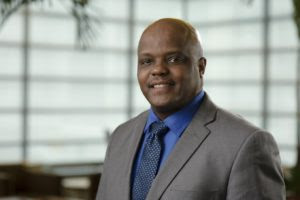
Though we in AARC think of Andy as Eli’s dad and Stephanie’s partner, he is also known as Professor Kirshner, who is jointly appointed by the UM School of Music, Theater, and Design’s innovative Performing Arts Technology Department and by the Stamps School of Art and Design. He is an award-winning composer, theater artist, and filmmaker whose work has been commissioned by the National Endowment for the Arts, Artserve Michigan, Meet the Composer, and many others. More information about him can be found at www.andykirshner.com
A trailer for the film is available at www.libertysecret.com

This weekend, July 22nd-24th, AARC members and friends will be having a Shabbaton (a weekend of prayer services and learning) with Rabbi Ora Nitkin-Kaner, who was ordained this year at the Reconstructionist Rabbinical College (RRC). I thought a little background on RRC might be of interest to folks. For this blog I wrote to several rabbis who were ordained at RRC asking them to comment on the education they received.
RRC, a seminary to train rabbis for Reconstructionist Jewish congregations was founded in 1968 in Philadelphia and moved to its location in Wyncote, PA in 1982. The College’s five to six year program of study for rabbinic ordination has changed since 1968, but is still structured around focusing on a different historical period each year, building a deep understanding of Judaism as an evolving religious civilization. This developmental approach encourages the students to enter into a dialogue with previous generations of Jews who addressed perennial human issues in the context of their own times.
The Wikipedia article on RRC usefully divides the college’s own history into three periods: the founding in 1968 till 1981 when, headed by Ira Eisenstein, it formed a course of study based on Mordechai Kaplan’s ideas ; 1981-1993 when the movement published its first prayer book and incorporated more study of other religions and spirituality within Judaism; and 1993 to the present during which the college has significantly expanded education in community organizing, leadership and pastoral counseling. Rabbi Mordechai Liebling ( ’85), who is now director of RRC’s Social Justice Organizing Program and attended RRC during the middle period, says, “the combination of Arthur Green, Arthur Waskow, and Zalman Schacter was a wonderful balance of the political and spiritual dimensions of Jewish life.”
Rabbi Rebecca Alpert ( ’76) wrote the entry on RRC for the Jewish Women’s Archive, which includes this section on the ordination of women:
The question of the ordination of women to the rabbinate certainly was in the public consciousness at the time the Reconstructionist Rabbinical College was founded in 1968. The women’s liberation movement was asking questions about women’s complete equality that had not seriously been considered previously. Although none was yet ordained, several women candidates were then studying at the Reform Movement’s Hebrew Union College. Despite the open discussion of this issue, the founders of the Reconstructionist Rabbinical College decided not to create added controversy by recruiting women for its first class. In its second year, however, when the founders advertised for students, they received one inquiry from a woman. Sandy Eisenberg Sasso was accepted without debate or subsequent controversy. For the next several years, only a few women applied, and all were accepted. Women comprised half the class that entered in 1974, the year of Sandy Sasso’s graduation, and that trend has continued ever since. By 2005, twenty-four out of the movement’s 106 synagogues in the United States had women as senior or assistant rabbis. Women lead four of the country’s twelve largest Reconstructionist congregations, which range in size from 237 to one thousand members. The rabbinical college too has had women as part of upper-level administration and full-time faculty since the mid-1970s. It currently houses Kolot: the Center for Jewish Women’s and Gender Studies, a resource center for curricular and liturgical materials.
An interesting note: Rabbi Shelley Goldman, the last candidate AARC interviewed, wound up taking a full time position as Assistant Rabbi at Congregation Beth-El Zedeck in Indianapolis, IN, where Rabbi Sandy Eisenberg Sasso, RRC’s first women graduate, is Senior Rabbi emerita.
A recent graduate, Rabbi Tamara Cohen (’14) has this to say about her education there: “RRC provided me with a feminist, justice-oriented, intellectually rigorous, ritually creative, alive and nurturing Jewish community and learning environment that helped me take the next steps I had long been yearning to take in my leadership, in my spiritual development, in my critical understanding of Jewish history, text, and culture, in my understanding of community organizing and community building, in my personal soul work, and in my ability to be a pastoral presence and support for those in need. It also gave me invaluable teachers and colleagues and keys to continue to study and grow, lead and belong, as a rabbi over the rest of my life.”
Rabbi Nathan Martin, who will be leading our High Holiday services this year and was ordained from RRC in 2006 wrote, “The three most impactful elements of my RRC rabbinical education were: a) the support and guidance I received as I donned my professional ‘kippah’ doing work in the rabbinic field, b) the way in which the community modeled creative access to tradition and sought to live out their values, and c) having a ‘chevre,’ close colleagues, who helped create a container for me to process and live into my emerging rabbinic identity.”
Please RSVP for Shabbaton events here. You are welcome even if you don’t RSVP, but it sure helps us plan if you do let us know you are coming.
The concluding public session of our weekend Shabbaton with Rabbi Ora Nitkin-Kaner, will be an adult (and interested teen!) study session on the topic of prayer. Rabbi Ora writes, “The rabbis of the Talmud had an uneasy relationship to prayer. They found it to be mysterious, potentially dangerous, and physically and emotionally overwhelming, and they couldn’t decide whether it was better to pray with too much feeling or too little. (The rabbis, unlike Goldilocks, found nothing that was ‘just right.’)”
All are welcome to join us as we study from Talmud Berakhot and deepen our understanding of our rabbinic tradition’s relationship to prayer, as well as our own. No Hebrew knowledge or previous Talmud study necessary.
Sunday July 24, 2016 10-12noon at the JCC 2935 Birch Hollow Dr.
Please RSVP for this session and all of the other Shabbaton events here. You are welcome even if you don’t RSVP, but it sure helps us plan if you do let us know you are coming.

We are excited to welcome Rabbi Ora Nitkin-Kaner for a shabbaton July 22-24. The shabbaton will include Friday evening kabbalat shabbat/welcoming shabbat service and potluck, a Saturday morning shabbat Torah service, dessert/Havdallah on Saturday evening, and a Sunday morning study session. Times and locations of all of these opportunities are below.
Lauren Benjamin of the AARC Rabbi search committee writes:
After earning a BA and MA in Religious Studies from the University of Toronto, Rabbi Ora worked as a Resurrection After Exoneration (RAE) Program Manager in New Orleans helping wrongfully convicted and incarcerated men after their release from prison. It was through this work that she decided to pursue rabbinical study with an eye toward social justice and chaplaincy work.
Since enrolling in RRC in 2011, Rabbi Ora has worked as a rabbinic intern and student rabbi for a variety of congregations and has continued to use her experience with incarcerated individuals as a doorway to larger discussions about justice and Tikkun Olam. She is also a certified yoga instructor with an interest healing and bodywork. The rabbi search committee was impressed with her thoughtful responses to questions about Reconstructionist Judaism and spirituality more generally, as well as her empathetic listening skills. Beginning in August, Rabbi Ora will start a yearlong chaplaincy training in New Orleans and will be available as a potential rabbi for AARC in 2017.
Events: RSVP here.

This year, 2016, the Jewish festival holiday of Shavuot, and the celebration of Loving Day, fall on June 12. This has set me to musing. Shavuot is our celebration of the giving of Torah at Mt. Sinai, and Loving Day commemorates the day in 1967 when the U.S. Supreme Court struck down all laws (which still remained in sixteen states) that banned interracial marriage. It is celebrated by interracial families around the globe, according to the lovingday.org website, to fight racial prejudice and to build multicultural community. This is the first year that Shavuot and Loving Day have occurred on the same day.
On Shavuot, Jews traditionally read the Book of Ruth, the story of a Moabite woman who, after her Israelite husband dies, joins her mother-in-law Naomi, and confirms her Israelite identity with the words, “whither you go, I will go, wherever you lodge, I will lodge, your people will be my people, and your God will be my God.” The reasons given for reading Ruth on Shavuot are that the story takes place during the seasonal harvest that the holiday marks; that Ruth’s acceptance of the Israelite faith is analogous to the Jewish people’s acceptance of Torah; and because of the legend that King David, a descendant of Ruth, died on Shavuot.
The confluence this year of these two holidays is an opportunity to think about Ruth’s words in today’s racially tense and divided world, at a time when many of our families are interracial and there is a growing recognition that Jews are a multiracial people. Traditionally, we view Ruth who, as a convert, leaves her Moabite self behind and throws in her lot with the Jewish people. Today we understand marriage and all relationships as reciprocal: Ruth and Naomi will need to lodge where each, and both together, are accepted and safe. Today we recognize and appreciate that individuals bring all of themselves into their relationships and families. We don’t ask a convert to cut themselves off from their past, or leave out any part of themselves. And corollary to this, we recognize that, as a multiracial people, all Jews are affected by racism. Which makes me think: How would our community and our lives be different if each of us would say to each individual in our community “whither you go, I will go, wherever you lodge, I will lodge, your people will be my people, and our God is one.”
Saturday June 11, 7:30pm: Shavuot–the celebration of our receiving the Torah. Judith Jacobs will host us at her house, and serve the traditional blintzes. Sign up here to attend. We’ll read a retelling of the story from “Listen to Her Voice: Women of the Hebrew Bible” and then focus on a chapter of “Reading Ruth: Contemporary Women Reclaim a Sacred Story” (Please note, this gathering is instead of our Second Saturday service that morning.)
This year’s Michigan Loving Day celebration is in Grand Rapids, hosted by Ebony Road Players.

What is the tradition all about of Jews going on outings to fields or parks on Lag B’Omer, the 33rd day following the first night of Passover? This year the 33rd day of counting the Omer won’t be till May 26th… but in traditional AARC practice, we’ll celebrate at a conveniently-close-enough time (May 15th, 9:30-11:30am)!
Lag B’Omer is a day of rejoicing in nature, especially for children; a day of appreciating the budding trees and the blooming flowers. For Torah background on Lag B’Omer, “Judaism 101” has a good entry:
According to the Torah (Lev. 23:15), we are obligated to count the days from Passover to Shavu’ot. This period is known as the Counting of the Omer. An omer is a unit of measure. On the second day of Passover, in the days of the Temple, an omer of barley was cut down and brought to the Temple as an offering. This grain offering was referred to as the Omer.
For a good overview of contemporary practices, Big Tent Judaism uses a very nice entry taken from Sacred Celebrations: A Jewish Holiday Handbook, by Ronald H. Isaacs and Kerry M. Olitzky.
Many synagogues hold picnics and outings on Lag B’Omer, with food, music, dance, sporting events (often in the form of the competitive Maccabiah), and other festivals. It is often the last social get-together before the summer vacation. Jewish weddings are often held on Lag B’Omer as well. Some synagogues hold a bonfire and cookout on Lag B’Omer which often includes Israeli singing and dancing.
In Israel, Lag B’Omer is a day for bonfire celebrations. The most famous is held at the village of Meron, near the northern city of Safed. Shimon Bar Yochai is said to be buried there, and huge crowds gather at his tomb for this very happy celebration. It is said that while Rabbi Shimon Bar Yochai was hiding in his cave he wrote a famous holy book of mysticism called the Zohar. On Lag B’Omer, many of the Hasidim study portions of the Zohar during the special celebrations at Meron.
Finally, some synagogue schools have turned Lag B’Omer into a day for honoring their religious school teachers. Special assemblies and parties are held, and awards are often given to the teachers.
AARC Beit Sefer will try out several of these practices on Sunday May 15th, 9:30-11:30, when we meet at Carole Caplan’s farm for a special last session of the year. Other members and friends of the congregation are welcome to bring a dish and join the Beit Sefer families in the fun. Contact Beit Sefer Director Clare Kinberg for info, ckinberg@gmail.com.
AARC Beit Sefer has had a terrific year–with fun and engaging teachers and madrichim/teenage teaching assistants, lots of parent participation, and integration into the whole congregation. Member Becky Ball, mom to Sam and Joey, has stepped up to chair the Beit Sefer committee which includes Sarah Abramowicz, Candace Bramson, Stacy Dieve, and Allison Stupka (and Clare Kinberg, ex officio in her role as Beit Sefer director).
We’re all working to showcase and grow the Beit Sefer–and that includes an Open House this Sunday (May 1) for prospective students and their parents. It’s during the normal school time–9:30 to 11:30 am. Here’s the article in the Washtenaw Jewish News (page 8) about the Open House (thanks for writing it, Becky!). Do you know someone who might be looking for Jewish education for their elementary age kids? Please invite them! You can use this letter as a template. And don’t forget to join us at second Saturday services on May 14, 10 am, led by the G’dolim.
WJN-May-16-web-BeitSeferOpenHouse

By today, you’ve probably decided what you are making for your first Passover meal tomorrow night. Patti and I will be making Stuffed Cabbage, with the recipe posted last year at this time. I’m about to go make some, and if you come to the AARC Family Seder on Sunday, you’ll get to have a taste!
But there is a long week ahead of Pesach food restrictions, and I want to share with you a stand out cookbook that could make your week more culinarily delightful: The Seasonal Jewish Kitchen: A Fresh Take on Tradition by Amelia Saltsman. With a Romanian grandmother and an Iraqi grandmother, growing up in a farming community in Israel and her extensive writings on local and fair food production, family farms, and farmers’ markets, she is an author whose interests are close to my heart. You can access some recipes and read more about her on her website and blog.
I’ve often thought about the contradiction between the limits on foods we can eat on Passover, the necessity of sticking to the dry “bread of affliction” for a full week, and our communal focus on the Passover feast, creating ever more scrumptious Pesach foods. Rabbi Yael Levy’s “Thoughts on Matzah” post from her Jewish Mindfulness site helped me come to a satisfying understanding of this.
Thoughts On Matzah
Rabbi Yael Levy | 4-20-2016
When we begin the Seder, the matzah is lechem oni—the bread of affliction.
By the middle of the seder the matzah has become the afikomen—the dessert—what we seek, what we long for.
The transformation starts as we lift up the three matzot, break the middle matzah and call, “This is the bread of affliction that our ancestors ate in the land of Egypt. Let all who are hungry come and eat.”
As we acknowledge the suffering and brokenness that exists in us and in our world and reach out from this place to make connections, to share who we are and what we have to offer the matzah goes from being the bread of poverty to being the bread of connection, hope and faith.