
by Idelle Hammond-Sass

In Ann Arbor and the Detroit area, several churches and synagogues have become “sanctuary congregations.” Being a sanctuary congregation can include participating in a range of actions, from educating the public about immigration issues to becoming a haven for guests who need sanctuary to evade deportation.

Ann Arbor Friends Meeting recently accepted a guest in Sanctuary and a coalition of congregations is coordinating logistics. You may also be interested in reading about the guest and how he came to be in Sanctuary here: press release/sanctuary .
“Doorminders” are on 24-hour rotation to make sure the place is secure and to screen visitors. Washtenaw Congregational Sanctuary, which includes Ann Arbor Jewish Sanctuary (a group of local Jewish congregations) is a member of this effort.
Washtenaw Congregational Sanctuary (WCS) is an interfaith coalition of congregations, and unaffiliated individuals, throughout Washtenaw County who have joined together to support immigrants and their families in our community. The group is led by the Interfaith Council for Peace and Justice (ICPJ) and the Washtenaw Interfaith Coalition for Immigrant Rights (WICIR). WCS formed in January 2017 in response to intensified and increasingly unjust activities of Immigration and Customs Enforcement (ICE) in our community.
It Takes a Village
It takes a lot of people to maintain a 24-hour watch. Doorminders are scheduled in three shifts: 8am – 4pm, 4pm – 10pm, and 10pm – 8am. Training is necessary to be a doorminder, but is very short and simple. My experience as a doorminder was very positive, with ample support, information and comfortable surroundings (wifi, etc.). A large pool of people is needed in the event that a new guest arrives in sanctuary, and to enable shift splitting when necessary.
The next Doorminder Training is February 9th, 2019, at 1pm, Friends Meeting House, 1420 Hill St. Ann Arbor, MI. RSVP on Eventbrite is encouraged for the training. The doorminder signup is as simple as “Signup Genius.” Occasionally, there may be other needs, such as a ride to medical treatment.
In addition, I encourage you to join the Ann Arbor Jewish Sanctuary email list (a2jewishsanctuary@googlegroups.com) to find out about actions, such as rides to Detroit for check in to ICE, USCIS, and other types of support. AARC member Laurie White helps coordinate rides at lonawhite1@gmail.com. For more information see the website .


 On July 2, 2018 in La Opinión, the largest Spanish-language newspaper in the United States,
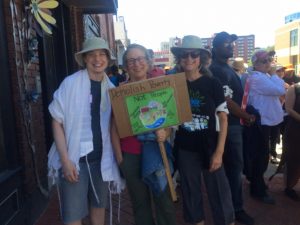 Dear AARC,
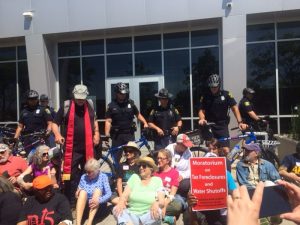 I was trained for the civil disobedience action and volunteered to be one of those to be arrested. There is personal and legal support teams for those who volunteer for an action. The movement is well organized and spirits are kept lifted through chant and song. I am writing this to encourage anyone with the inclination and availability to participate




 American Jewish World Service has a full Haggadah, an insert about the Rohingya Crisis, “An Exodus in Our Time,” and several different readings all downloadable
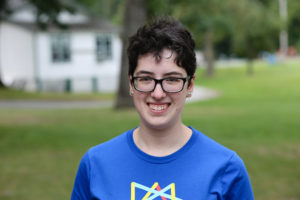 This year, Avodah has given me the amazing opportunity to work full-time as a community organizer at Jane Addams Senior Caucus, a position that most recent college grads would not qualify for. I’ve been able to grow as an organizer and make real change for seniors in Chicago, and Avodah has helped me along the way by providing the emotional, financial, and professional resources I needed to succeed. Instead of moving to a new city and having to build friends and a support system from scratch, I’ve found community with the other young Jews in nonprofit jobs who are doing Avodah with me. Instead of navigating Chicago’s rapidly gentrifying housing market on my own, I’ve been living in a safe, healthy, and affordable communal living situation provided by Avodah. And for perhaps the last time in my life (unless I end up in a union) I have the support of Avodah staff ready to help me with any challenges I face in my first real job.


