• Skip to primary navigation
  • Skip to main content
  • Skip to primary sidebar
  • Skip to footer
Ann Arbor Reconstructionist Congregation

Ann Arbor Reconstructionist Congregation

  • Home
  • About
    • Overview
    • Rav Gavrielle Pescador
    • Our History
      • Photo Gallery
    • Our Values and Vision
    • LGBTQ Inclusive
    • Our Board
    • Our Sacred Objects
    • About Reconstructionist Judaism
    • Jewish Ann Arbor
  • Programs
    • Shabbat and Holidays
    • B’nei Mitzvah
    • Tikkun Olam
    • In the (Washtenaw Jewish) News
    • Health and Safety Expectations for In-Person Gatherings
    • Join our Mailing List
  • Religious School
    • About Beit Sefer
    • Teachers
    • Enrollment and Tuition
    • 2025-26 Beit Sefer Calendar
  • Blog
  • Calendar
  • Membership
    • Thinking about joining?
    • Member Area
  • Contact Us
  • Donate

tu b'shevat

Tu B’Shevat Shabbaton

February 1, 2016 by Margo Schlanger

TreeOur Tu B’Shevat Shabbaton was a great success.  Read all about the text study here, and the seder here.


Seder
Tu B’Shevat Seder Plate
Rabbi Michael leads text study
Text study
The beit sefer kids
Planting parsley
Planting parsley at Tu b’Shevat — to be ready for Passover


We’re excited to announce a Tu B’Shevat Shabbaton, the weekend of Jan. 22, with three events, all led by visiting Rabbi Michael Strassfeld, Rabbi Emeritus of the Society for the Advancement of Judaism. The Shabbaton will be environmentally-themed throughout.


  1. Our regular Fourth Friday Kabbalat Shabbat service and potluck, at the JCC.  This will start with a Tot Shabbat gathering for preschoolers and their families, at 5:45 pm.  Childcare (and pizza for the kids) are available starting 6:15.  (RSVP to Clare Kinberg for either or both.) The service starts at 6:30.  Bring something for the vegetarian potluck dinner that follows.
  2. Saturday text study and discussion: 4 pm
  3. Saturday Tu B’Shevat Seder: 5:30 pm.  With vegetarian supper.  Free, but reservations are required.  RSVP at http://shabbaton-FoodLandJustice.eventbrite.com.  Note: there will be a separate kid-friendly event at the same time, done in time for its participants to join the full group for supper.

Rabbi Strassfeld explains: “The classic Jewish texts about the environment [Deuteronomy 20:19-20; Rambam, Mishneh Torah, Laws of Kings and Wars 6:8, 10] prohibit the wanton destruction of nature. The stress on wanton destruction implies that the destruction of natural resources is permissible if it benefits human beings. For the text study on Shabbat, we will study other Jewish texts to see how Judaism can help us to create a contemporary environmental ethic rooted in the value of all things.”

The Tu B’Shevat seder that will follow is structured around eating of four different kinds of fruit, coupled with readings, songs and kavanot/reflections. The  Kabbalists of Safed created a Tu B’Shevat seder in the 17th century, loosely modeled on the Passover seder. Over the past several decades, Jews across the world have used Tu B’Shevat as a time to focus on the environment. Rabbi Strassfeld notes, “Our Tu B’Shevat seder will combine the focus on personal growth of the Jewish mystics with contemporary ecological concerns.”  Detroit’s Congregation T’Chiyah and its Rabbi, Alana Alpert, will be joining the Ann Arbor community for the seder, as will several Hazon Detroit fellows.

The events are co-sponsored by AARC and the Jewish Alliance for Food, Land, & Justice.  They are a continuation from last year’s year-long exploration of the teachings of Shmita, and are funded by an impact grant from the Jewish Federation of Greater Ann Arbor.  AARC and the Alliance welcome all community members to join any or all these Shabbaton activities; the events are free, but online registration is required.

Our flyer is below.  Please feel free to download, print and share it!

2015-12-Shabbaton-ad

MJ_Strassfeld_photo-B&WRabbi Michael Strassfeld is the author, editor, or co-editor of numerous books and articles, including three versions of the Jewish Catalog, A Shabbat Haggadah: Ritual and Study Texts for the Home; and Jewish Holidays, a guide to the holidays used in many Jewish households.  Since the 1973 appearance of the first Jewish Catalog, subtitled “a do it yourself kit,” Rabbi Strassfeld’s books have been the go-to publications for progressive American Jews seeking explanations, contemporary readings, and resources relating to traditions and holidays.


Filed Under: Community Learning, Event writeups, Tikkun Olam Tagged With: food/land/justice, tu b'shevat

Four Worlds of the Tu B’Shevat Seder

January 27, 2016 by Clare Kinberg

by Idelle Hammond-Sass

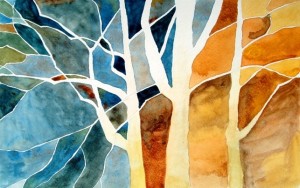
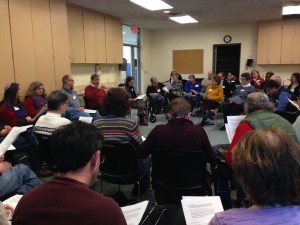
TreesClappingWatercolorOn Saturday evening January 23, AARC visiting rabbi Michael Strassfeld led about 60 people on a ritual journey through the mystical four worlds of the Kabbalists, exploring the different qualities of each world and our relationship to them. The Tu B’Shevat seder, modeled loosely after the Passover seder, was created by the mystics of S’fad in the 16th century, but the original holiday itself grew out of ancient tithing, and later was associated with planting trees in Israel and caring for the land.

Seder-01-23-2016

In an earlier study session, Rabbi Michael led an exploration of Jewish teachings about the environment.  The Tu B’Shevat seder is more mystical, a product of rabbinic imagination. Each mystical “world” is associated with a category of fruit, its season, an aspect of self, and an intention–and accompanied by a glass of wine. The Haggadah for the Tu B’Shevat seder, put together by Rabbi Michael and AARC co-chair Margo Schlanger, was rich with readings and illustrations that deepened our understanding. And, yes, like Passover, it is structured on fours: four worlds, four glasses of wine, four seasons.

This ancient New Year of the Trees or “Rosh Hashanah L’ilanot” was also associated with the mystical feminine aspect of God, or Shechinah. We added Miriam’s cup to our seder, and said a blessing for Miriam’s well, for without fresh water, the trees and plants cannot flourish. The cup was dedicated to the people of Flint, whose water has been polluted.

Our room was set with a U shaped arrangement of tables beautifully set with platters of fruits and seeds (carefully following the no nuts rule of the JCC) that illustrate the four worlds. The platters were piled high with figs, bananas, grapes, apple, pomegranate, pears as well as olives, dates, apricots, raspberries: Fruits with pits, hard shells and soft, dried and fresh.

Tu B'Shevat Seder Plate
Tu B’Shevat Seder Plate

The beauty of the ritual pairs a mystical sphere or world with a fruit that symbolizes it, as well as mirrors our own spiritual state. For instance in the physical realm of Assiyah (winter, white wine) we ate fruit with protective outer shells, such as banana, pomegranate, or oranges. When we peel away our protection, and can be vulnerable, we can share the sweetness inside. If you are unfamiliar with the Kabbalah, this is a sweet way to become familiar with the four worlds of Assiyah (Physical), Yetzirah (Formation), B’riyah (thought), and Atzilut (Spirit).

A delicious and plentiful dinner was organized by Rena Basch and catered by El Harissa Café. (Khallid explained our menu, featuring a Tunisian egg Tangine, Lablabi, Mama Houria, a carrot dip, with a lovely salad with figs and pomegranate seeds, and poached pears with Michigan fruit sauce.)

This event was co-sponsored by Jewish Alliance for Food Land and Justice with an impact grant through the Jewish Federation of Greater Ann Arbor. The seder helped us reach our goals of bringing together people from the wider community and celebrating the deep roots we share in the Tree of Life.  AARC was joined by Rabbi Alana Alpert and members of Congregation T’chiyah of Oak Park, fellows from Hazon Detroit, and many others from the Ann Arbor community.  Like all ARRC events, we could not have done this without volunteers, and a big thank you to all who planned and worked so hard–Margo Schlanger, Clare Kinberg, Carole Caplan and Rena Basch.

For more information on Tu B’Shevat there are many good resources on the web at Hazon.org, and Ritual Well, to name a couple.  The Jewish Alliance for Food, Land and Justice Facebook page is active–come visit!

Filed Under: Community Learning, Event writeups, Posts by Members Tagged With: food/land/justice, Michael Strassfeld, tu b'shevat

Harvesting Jewish learning to nurture an environmental ethic

January 25, 2016 by Margo Schlanger

Rabbi Michael Strassfeld leads Tu B'Shevat Text Study
Rabbi Michael Strassfeld leads Tu B’Shevat Text Study

Yesterday, AARC and the Jewish Alliance for Food, Land, and Justice hosted 50 people for two lovely events, led by our visiting Rabbi, Michael Strassfeld.  Tu B’Shevat–the “birthday of the trees”–provided us a great occasion to focus for the weekend on Judaism and the environment.

Another post will talk about the Tu B’Shevat seder.  In this one, I want to share with people who couldn’t make it to the afternoon text study some of the passages and insights offered by Rabbi Michael.

We started with two verses from Deuteronomy (20:19-20):

When you besiege a city for a long time, making war against it in order to take it, you shall not destroy its trees by wielding an axe against them. You may eat from them, but you shall not cut them down. Are the trees in the field human, that they should be besieged by you? Only the trees which you know are not fruit trees may you destroy and cut down, that you may construct siegeworks against the city that is making war with you until it falls.

It’s an interesting passage, with several ideas in it.  For starters, the text suggests that even in war, ethical constraints remain–and not just the most urgent ethical constraints, dealing directly with human lives.  Fruit trees take many years to grow, and of course they are important sources of food.  So this rule against their destruction may be founded on the obligations the current generation has to the future.

It’s a limited point, though; the explicit permission to use other, non-fruit-bearing, trees as battering rams and so on makes that clear.  This is not a modern environmentalism; it’s expressing something narrower. Still, we learned, Maimonides extended the concept somewhat:

It is forbidden to cut down fruit-bearing trees outside a (besieged) city, nor may a water channel be deflected from them so that they wither. . . . [This applies] not only to cutting it down during a siege, but whenever a fruit-yielding tree is cut down with destructive intent.  . . . It may be cut down, however, if it causes damage to other trees or to a field belonging to another man or if its value for other purposes is greater (than that of the fruit it produces).  The Law forbids only wanton destruction.  . . . Not only one who cuts down (fruit-producing) trees, but also one who smashes household good, tears cloths, demolishes a building, stops up a spring, or destroys aricles of food with destructive intent, transgresses the command Thou shalt not destroy (bal tashit). 

So according to Maimonides, the passage in Deuteronomy amounts to a comprehensive ethical ban on “wanton destruction,” whether in time of war or not, whether of a fruit tree or something else.  This is broader, for sure–but still very limited.  It reaches only wanton destruction: destruction that is for no appropriate purpose.  And the focus remains on present-day human purposes.  It seems to me the passage from Maimonides doesn’t quite capture the cross-generational insight from the original Torah passage.  But that’s what we moved to next. [Read more…] about Harvesting Jewish learning to nurture an environmental ethic

Filed Under: Community Learning, Event writeups, Posts by Members, Tikkun Olam Tagged With: tu b'shevat

Planting Parsley in a Leap Year!

January 7, 2016 by Clare Kinberg

parselyThe days are just beginning to lengthen, and though the cold is just settling in, the extra light signals the tree sap that spring will come. And so begins the Jewish cycle of springtime, full moon holidays: Tu b’Shevat, Purim, and Passover.

In addition to the Tu b’shevat Shabbaton on Friday and Saturday January 22/23, Rabbi Strassfeld will help our Beit Sefer students on Sunday January 24 to do some Tu b’shevat planting. Though the holiday is the “New Year of the Trees,” in our cold climate it is a custom to do some indoor planting of parsley in anticipation of Passover. I’ve done this many times and noticed that sometimes the parsley is ready to harvest by Passover, and sometimes not. I consulted with Erica Kempter of Nature and Nuture Seeds about how to better ensure our parsley seeds will grow by Passover (keep them in a warm and lighted place). But the Jewish calendar gives a very strong reason for why some years are better than others for growing indoor parsley for Passover. In each 19 year cycle there are seven leap years during which an extra month is added between the holidays of Tu b’shevat and Passover. Some years there are ~60 days between the holidays, and some years (like this year!) there are ~90 days! A good year for planting parsley on Tu b’shevat to be harvested for the Passover seder plate!

This year, the Beit Sefer students will be planting not only parsley, but arugula and lettuce, too. Here are some instructions if you want to try this at home. This is the year!

Filed Under: Beit Sefer (Religious School), Food, Upcoming Activities Tagged With: Michael Strassfeld, Passover, tu b'shevat

WJN article about our Tu B’Shevat Shabbaton

December 3, 2015 by Margo Schlanger

Here’s the article in the new issue of the Washtenaw Jewish News about our upcoming Tu B’Shevat Shabbaton.  Led by Rabbi Michael Strassfeld, and co-sponsored by the Jewish Alliance for Food, Land, & Justice.  More info here.  Please join us; the events are free, but RSVP required for childcare (email Clare Kinberg) and for the Seder, at http://shabbaton-foodlandjustice.eventbrite.com.

2015-12_Shabbaton1


And here’s the advertisement.  Feel free to download, print and share!

2015-12-Shabbaton-ad


Filed Under: Articles/Ads, Community Learning, Upcoming Activities Tagged With: food/land/justice, Rabbi Strassfeld, Shabbaton, tu b'shevat

Our Tu B’Shevat Seder

February 11, 2015 by Clare Kinberg

1800361_1020311074649875_658418913251029784_n

by Rachel Baron Singer

Thoughts of trees, fruit, and burgeoning greenery are generally sparse during Midwestern winters, but on the evening of February 3rd (the 15th of Shevat), I was fortunate to attend an event where all three were front and center. To celebrate the New Year of the Trees, members of AARC gathered at the beautiful home of Carole Caplan for a potluck dinner and Tu B’Shevat seder. Growing up, I’d always loved this little holiday where machberot [notebooks] were pushed aside for a day of planting seeds and eating dates at Hebrew school. So I was beyond thrilled to recapture a little bit of that magic as an adult.

Written and led by Ellen Dannin, the seder kicked off with an explanation of the four different types of trees found in the Torah, including the Torah itself—a tree of life! We then shared poems and passages about trees and nature, all of which were personally selected by the attendees. This gave the seder a lovely personal touch, and gave us all a chance to share how we each interpret nature.

10968400_1020311124649870_5364300205119966905_n (2)Finally, we all had the opportunity to sample the various fruits the Kabbalists of 16th century Safed believed mirrored the order of the universe. These were broken into three groups: Fruits that need protection (nuts, pomegranates, coconuts), fruits with an inedible pit to protect their hearts (peaches, dates), and fruits that can be eaten whole (grapes, figs, blueberries). It was a wonderful way to pay homage to nature from a Jewish perspective, and to escape the ice and snow for an evening!

Filed Under: Event writeups Tagged With: tu b'shevat

Tu B’Shevat Potluck/Seder (Tues. Feb. 3)

January 9, 2015 by Margo Schlanger

Tree-with-animals-(green-tint)Tu B’Shevat, the 15th of Shevat on the Jewish calendar, marks the beginning of a “new year” for trees. This is the season in which the earliest-blooming trees in the land of Israel emerge from their winter sleep and begin a new fruit-bearing cycle. An ecological approach to this holiday considers human interaction with the natural environment, a mystical approach considers human interaction within a spiritual environment.  After a potluck dinner at 6:30 pm, we will explore both through a Tu B’shevat seder of fruits, nuts, wine, and juice.

It’s all happening at Carole Caplan’s house.  Please RSVP to Carole (caplan.carole@gmail.com or 847-922-9693); she’ll send you the address and directions.

OR, if you’d like to have your own seder, here’s a guide you might use, from member Ellen Dannin.

Filed Under: Upcoming Activities Tagged With: tu b'shevat

  • « Go to Previous Page
  • Page 1
  • Page 2

Primary Sidebar

Search

Join Our Mailing List

Sign up for our twice a week newsletter to get details on upcoming events and catch up on our latest news.

This field is required.

Check your inbox or spam folder to confirm your subscription.

Upcoming Events

  • 12:20 pm – 2:00 pm, April 12, 2026 – AARC Book Group
  • 9:00 am – 10:00 am, April 17, 2026 – Rosh Chodesh Minyan Iyar [ZOOM]
  • All day, April 19, 2026 – Beit Sefer
  • 6:30 pm – 8:00 pm, April 24, 2026 – Fourth Friday Kabbalat Shabbat
  • All day, April 26, 2026 – Beit Sefer
  • All day, May 3, 2026 – Beit Sefer

Latest News

  • Climate Action Shabbat article in the April 2026 Washtenaw Jewish News April 3, 2026
  • Reimagining Torah Study: Moving from Zoom to In Person by Rabbi Gabrielle Pescador April 1, 2026
  • Creative Spirit at the AARC Beit Sefer March 27, 2026
  • When Is a Killer Not a Murderer? by Elizabeth Brindley March 19, 2026
  • AARC to Join the 5th Annual Fair Housing Awareness Bikeathon in Detroit! – From Robin Wagner March 5, 2026

Footer

Affiliated with

Copyright © 2026 Ann Arbor Reconstructionist Congregation