• Skip to primary navigation
  • Skip to main content
  • Skip to footer
Ann Arbor Reconstructionist Congregation

Ann Arbor Reconstructionist Congregation

  • Home
  • About
    • Overview
    • Rav Gavrielle Pescador
    • Our History
      • Photo Gallery
    • Our Values and Vision
    • LGBTQ Inclusive
    • Our Board
    • Our Sacred Objects
    • About Reconstructionist Judaism
    • Jewish Ann Arbor
  • Programs
    • Shabbat and Holidays
    • B’nei Mitzvah
    • Tikkun Olam
    • In the (Washtenaw Jewish) News
    • Health and Safety Expectations for In-Person Gatherings
    • Join our Mailing List
  • Religious School
    • About Beit Sefer
    • Teachers
    • Enrollment and Tuition
    • 2026-27 Beit Sefer Calendar
  • Blog
  • Calendar
  • Membership
    • Thinking about joining?
    • Member Area
  • Contact Us
  • Donate
You are here: Home / Blog

Blog

Remembering For Life, Being Remembered for Life

November 10, 2019 by Gillian Jackson

Erev Rosh Hashanah Sermon 5780

By Rabbi Ora Nitkin-Kaner
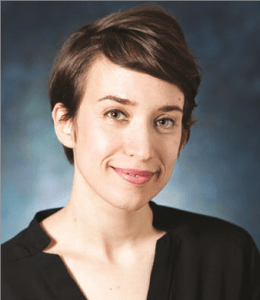
Rabbi Ora Nitkin-Kaner

Why are we here?

I don’t mean that in the sense of why do we exist – although, of all the times to ask that question, Rosh HaShanah would be a reasonable one. But you can relax. I’m not thinking quite that meta. 

I mean, why are we here, in this building, this evening? Where does Rosh HaShanah come from?

In Chapter 23 of Leviticus, we find God saying to Moses: “Speak to the Israelite people and say to them: ‘These are My fixed times, the fixed times of the Lord, which you shall proclaim as sacred occasions.’” Essentially, God is saying: “Here’s the Jewish calendar.” The first holiday listed is Passover, then Shavuot, then Rosh HaShanah, Yom Kippur, Sukkot. And each of these sacred occasions is accompanied by a verse or two on how to observe it. 

For Rosh HaShanah, it is written: “On the first day of the month, you shall observe a day of rest, a memorial proclaimed with the blowing of the shofar, a holy convocation” (Leviticus 23:24).

So we know when Rosh HaShanah is supposed to take place – the first of the month of Tishrei. And we know it’s meant to be a holy day, which means, no work. And we know it’s meant to be a day of remembering – a “zichron” – announced by a shofar.  

What are we supposed to remember?

The simplest answer, of course, is that we’re supposed to remember the past year. Rosh HaShanah opens up the ten Days of Awe, during which we recall, reflect, and repent, so that we don’t repeat our missed marks from the past year.

But we’re not the only ones remembering on this holiday. God is also remembering.

During services tomorrow, we’ll sing: “Zokhrenu l’hayyim” – God, remember us for life and inscribe us in the Book of Life. And we’ll add, “Zocher yetsurav…” – God of Mercy, remember all your creations with compassion. 

Based on how many times in the Rosh HaShanah liturgy we ask God to remember our deeds and judge us for good, it seems like we’re not convinced it’s a sure thing. So as an added strategy, we also ask God to remember that we have a relationship that goes way back. 

We begin the Rosh HaShanah Amidah with, “Baruch Atah Adonai Eloheinu ve’Elohai avoteinu ve’imoteinu…” – “Blessed are You, Holy One, God of our ancestors, God of Abraham, Isaac, Jacob, Sarah, Rebecca, Rachel, Leah.” And then throughout the Amidah we repeatedly refer to God as “Elohainu v’Elohai avoteinu v’imoteinu” – Our God and God of our ancestors – and ask God to go easy on us based on the merit of their good deeds. 

On the surface, this strategy seems not unreasonable. To be a little glib, you could call it cosmic nepotism. We’re saying to God, “Hey, you knew my great great great etc. grandfather… he was a good guy. So I’m probably a good guy, too, no?”

But thinking about it more deeply, this a strategy based on a flawed premise. Because if you’ve ever read more than one or two chapters of Genesis alone, you’ve realized that our biblical ancestors had profoundly messy and morally complicated lives. 

On Rosh HaShanah alone, we read plenty of examples of our ancestors’ misdeeds. 

The Torah reading for the first day of Rosh HaShanah is the story of how Sarah orders Abraham to cast out Hagar and her son Ishmael. Abraham is troubled, but he listens to Sarah. So Hagar and Ishmael are sent out into the desert with just a little bread and water. They survive only because God intervenes to save them. 

And the Torah reading on the second day of Rosh HaShanah? That’s the story of Akedat Yitzchak, of the near-murder of Isaac. Abraham listens to what he believes is the voice of God, telling him to sacrifice his and Sarah’s child. Abraham and Isaac journey to Mount Moriah, and Abraham binds Isaac and places him on an altar and is about to cut Isaac’s throat, and then an angel intervenes to save them. 

In both of these stories as they appear in our Torah, there’s no acknowledgement of misdeed. There’s no apology. And there’s no recompense.

And Abraham and Sarah were just the first of our complicated ancestors. Their children, and their children’s children, and on and on through the generations, morally missed the mark again and again. Our biblical ancestor fought amongst themselves. They stole land and birthrights. They lied, and cheated, and sold siblings into slavery.

So why do we remind God of our connection to these ancestors when we pray on Rosh HaShanah? Couldn’t this actually backfire? 

Here’s the thing: We don’t know the impact of reminding God of our ancestors, because we don’t know God – God is inherently unknowable. We have no idea what it means for God to remember us, or our ancestors. 

What we do know, though, is our own experience of remembering. 

We know how it feels to remember our flawed ancestors. And it can be hard to be reminded of this complicated legacy and the fact that it’s a part of our cannon.

So what we do with this flawed family tree? How do we sit with these difficult ancestors?

Well, Jews throughout history have been trying to figure this out. I would say these efforts typically fall into one of the 3 categories.

The first category is a kind of apologetics, reframing our ancestor’s actions as unequivocally positive. This is something the rabbis of the Talmud did often. To them, Abraham wasn’t a man who almost murdered his son; Abraham was a God-fearing person who somehow knew all along that he’d never actually be allowed to go through with it. And Sarah, abusive towards Hagar? According to the rabbis, Sarah was morally unblemished (Bereshit Rabbah 58:1). She only wanted what was best for her son.

This drive to reframe, to say that what seems bad is actually morally unobjectionable, is older than the Torah itself. It goes back to earliest human history, and is rooted in the youngest, most tender places of our collective and individual psyches. In psychological terms, we could say that this drive comes from the child self, who needs the parent, on whom they’re reliant, to be completely good and blameless. Rather than finding our ancestors at fault, we twist the stories and ourselves into knots in order to see them as only good.

The second tendency is to look at the stories of our ancestors and focus only on their sins. Many Jews throughout history have done just that – have said “look at these flawed characters” or “look at this abusive God.” And based on the painful moral ambiguity of our inherited stories, some have said: “I want none of this.” And have walked away from God, or from Jewish practice, or from Jewish community.

You could say that this second tendency is rooted in the collective teenage psyche. It’s the need to push away from home. It’s the need to individuate, find independence, and critique the status quo so that we can emerge into a fuller perspective on the world and our place within it.

So. The first option aligns with the needs of the child-self: My people are actually good. The second option aligns with the teenage self: My people are actually bad.

And the third option? The third comes from the integrated or adult psyche. From that vantage point, we look back at our ancestors and their misdeeds. At the teshuvah they did manage. And at what they left undone. We notice how flawed they were. And also, how hard they were trying. And finally, we notice that there is much for us learn: from their values, from their mistakes, from their stories.

You may have gathered, by now, that this doesn’t only apply to Sarah, Rebecca, Rachel, Leah, Abraham, Isaac, Jacob. This isn’t just about our distant ancestors. It also applies to our own more recent ancestors. Even the ones still with us – the family we called earlier today to wish a Shanah Tova to, or the ones we visited this past summer, or last year.

For me, this time of year – this time of remembering ancestors – brings back memories of my own grandfather, the way he shuffled down the synagogue aisle on Rosh HaShanah, the way his hand, shaking with Parkinsons, felt in mine as I helped him to his seat. I remember his sweet smile, his playful personality. 

I remember my grandmother making kugel for us for the holiday meal, a sweet noodle kugel with raisins, and my grandfather sprinkling extra sugar on top, the shaking of his hands helping to spread the sugar evenly. 

I remember standing next to my father in shul on Yom Kippur, and how he draped his tallit over my sister and I during the priestly blessing, and how protected and safe I felt. 

And, in my remembering, I also remember how my father, who didn’t like his rabbi, would sit in the front row during Rosh HaShanah services and blatantly read a book during the rabbi’s sermon. And I remember how my grandmother would greet us with suffocating hugs when we came over for dinner, her anxious love permeating everything.

On Rosh HaShanah, we remember. Our distant ancestors, and the ones closer.

And as we remember, we also choose. Do we recall only the good, and cover over the bad? Do we remember only the bad, and forget the good? Or can we remember with compassion and moral clarity, with a gentle eye on the course of history and how it shaped our ancestors and us? 

In our liturgy, we sing again and again, “Zochreinu lechayyim” – remember us for life. How can we remember in a way that enlivens us? How can we remember the ways our ancestors missed the mark, but still know that we have arrows to string and release in the direction of love? How can we remember so that the memories are more lesson than burden? How can we remember, for life?

This whole sermon, I’ve been talking about remembering the past. But the reality is that one day, we, too, will become ancestors. At some point, we will no longer be doing the remembering. We will be the ones remembered, by our children, grandchildren, nieces, nephews, friends, colleagues, students, all whose lives we’ve touched. 

What might we do with the knowledge that we will one day be remembered?

I want to close by sharing with you the inspiration for this evening’s sermon. A few weeks ago, I was sitting in my office with Sam Ball, a young congregant whose bar mitzvah is coming up in November. We were reading Sam’s Torah portion, Lech Lecha. Lech Lecha recounts how a pregnant Hagar ran away from home because of how badly Sarah treated her.

As we read through the story of Sarah and Abraham and their mistreatment of Hagar, Sam said to me: “Abraham and Sarah really should’ve thought about what their descendants would think of them.”

On Rosh HaShanah, we remember. To reshape and reframe the old stories so that they enliven us. And, Sam reminded me and us that we are at our best when we also remember that we are accountable to the future, when we live holding the question, “Who do my descendants need me to become?” 

We too will become ancestors one day. And the way we live our lives will be a lesson for generations to come.

My simple blessing for us, as we enter this holiday of remembering: May we remember, for life. May we act this coming year in such a way as to inscribe ourselves in the Book of Life. And when the time comes, may we be remembered, for life. And let us say, Amen.

Filed Under: Rabbi's Posts Tagged With: Rabbi Ora, Reconstructionism, Rosh Hashanah

Exciting Opportunities for Learning Abound!

November 4, 2019 by Gillian Jackson Leave a Comment

Global Day of Jewish Learning and Other Opportunities for Independent Study

Reconstructing Judaism will participate in the Global Day of Jewish Learning, presented by the Aleph Society on November 17th. The Reconstructionist community is invited to join via live-stream at 1pm Eastern Time to experience Rabbi David Teutsch’s presentation on “Feedback that Works: The Art of Tochecha (the rebuke).”

For a long term project, check out Project Zug, operated by the Hadar Institute. which offers courses in Jewish learning on subjects ranging from “Death Penalty in the Talmud” to “Bob Dylan: A Jewish Journey Between Home And Exile.” By signing up on the website, you can follow a facilitated course led by a rabbi or scholar.

Reconstructing Judaism’s own online initiative, Ritualwell, offers interactive online classes through its Immersions program. Featuring in depth study with rabbis and teachers, the site’s topics include “Ethical Eating,” “Poetry as Sanctuary,” and “Jewish Mysticism.”

Last but not least, our own Rabbi Ora will kick off a new Ta’Shma: Come and Learn series on January 11, 2020; the series continues on subsequent Second Saturdays. I hope you are inspired to take advantage of one of these wonderful opportunities for learning!

Filed Under: Community Learning Tagged With: learning

Happy 5th Birthday to AARC Book Group

October 27, 2019 by Emily Eisbruch

Happy 5th birthday to the AARC book group! Launched in 2014 by Jon Sweeny and Judith Jacobs, the group offers a welcoming and cozy environment in which AARC members and friends gather for intellectually stimulating discussion, friendship, networking, and nourishment. Over the years, the reading selections have ranged from a book about Tiananmen Square (our very first meeting) to books about Israel/Palestine, Jewish history and culture, politics, spirituality, death and dying, anthropology, and more.

Carol Levin comments, “My favorite things about the book group have been getting to know everyone (as a newcomer to AARC, it’s a great gateway to the community), stimulating discussion among a variety of backgrounds and experiences, and Greg and Audrey’s fabulous hospitality.”

Speaking of hospitality, appreciation is owed to everyone who has hosted the AARC book group over the years, including a huge thank you to Greg Saltzman and Audrey Newell for being our regular book group hosts, and to Greg for serving as a terrific coordinator. We have recently switched from a Sunday morning spot to a Sunday noon start time, allowing us to welcome Beit Sefer (religious school) staff to our meetings.

Thanks to Audrey for the outstanding lunch on Sept 15, 2019, over which we discussed Michael Sfard’s The Wall and the Gate: Israel, Palestine, and the Legal Battle for Human Rights.

Favorites

Several group participants identified their favorite books from among the many we’ve read and discussed.

  • Carol Levin selected Guide For the Perplexed, by Dara Horn. “I love how Horn draws connections between the historical figures Moses Maimonides and Solomon Schechter and relates their lives, and personalities, and ethical questions to today’s world of espionage and intelligence.”
  • Greg Salztman picked as his favorite The Golem and the Jinni, by Helene Wecker. “I liked the mix of historical fiction and fantasy. The golem was a fundamentally good being, and I could enthusiastically root for her triumph as she faced various perils.”
  • Martha Kransdorf chose Setting Fires, by Kate Wenner, as her favorite book group pick. “I know the shul and the rabbi who were the inspirations for those portrayed in the book, and I certainly know the NYC neighborhood where some of the story occurred. I was also moved by the mystery behind the father of the protagonist and of the arsonist.”
  • Avi Eisbruch’s favorite book group pick is To The End of the Land, by David Grossman. Avi says “I liked the way the rich inner life and maternal struggle of the main character Ora were portrayed as well as how the intersection of private and public/national events were entwined in the story.”

February with Rabbi Ora

The book group was especially well attended the past two Februaries, when Rabbi Ora chose the readings and led the discussion.

  • February 2018: Rabbi Ora led us in discussing Understanding Antisemitism, by Jews For Racial & Economic Justice.
  • February 2019: Rabbi Ora guided our conversation about a chapter of Radical Judaism: Rethinking God & Tradition, by Rabbi Art Green.

We are delighted to announce that Rabbi Ora will again lead the book group on Sunday, February 9, 2020, book selection to be announced.

AARC Book Group discussing Radical Judaism: Rethinking God & Tradition with Rabbi Ora, February 2019.

Join us

Interested in joining the AARC book group? We’d love to have you! Simply reach out to Greg at gsaltzman@albion.edu. You are welcome to come every month or as often as you like. Our selection for Sunday, December 8, 2019 is Like Dreamers: The Story of the Israeli Paratroopers Who Reunited Jerusalem and Divided a Nation, by Yossi Klein Halevi. The book for Sunday, January 12, 2019 is The Girl from Foreign: A Memoir, by Sadia Shepard.

Happy reading!

Filed Under: Books, Event writeups, Posts by Members Tagged With: book group

Busy Weekend at AARC: Simchat Torah and a Robust Welcoming Event for New and Prospective Members

October 20, 2019 by Gillian Jackson

It was a busy weekend at AARC! We celebrated the Torah with Beit Sefer and held an informational event for new and prospective members.

The room was filled with excitement as the Torah was unrolled. The children were tasked with finding key words in the text. For some, this was the first time they had been up close to the Torah. After rolling up the Torah, families were led in a traditional Simchat Torah dance by Rabbi Ora and Marcy Epstein.

Beit Sefer students and families explored the Torah during Simchat Torah
Beit Sefer students created their own Torahs to celebrate Simchat Torah. Photo credit: Marcy Epstein

Later in the day, Rabbi Ora and Beit Sefer director Clare Kinberg welcomed new and prospective members at our “Meet Us” event, held to showcase Reconstructionism and our congregation. We are thrilled to welcome so many wonderful new families to our congregation!

Rabbi Ora leading our “Meet Us” event. Photo credit: Deborah Fisch
Clare Kinberg, Beit Sefer Director, teaching families about AARC’s Religious School

Filed Under: Beit Sefer (Religious School), Event writeups

Another Renewing Sukkot Campout for AARC Families

October 13, 2019 by Gillian Jackson

Rabbi Ora shaking the Lulav with Beit Sefer Students on Sukkot

AARC families gathered this year on Carole’s farm to celebrate Sukkot. The campout began with a group effort to build the Sukkah. The children diligently created paper chains and tissue paper flowers while the parents and some older teens worked with hammers and nails.

AARC parents enjoying the fire after working hard to construct the Sukkah!

Once the Sukkah was complete, families enjoyed a cookout and a night under the stars!

On Sunday morning, Rabbi Ora joined in to bless the Sukkah, sing songs, and shake the lulav with the children and their families.

Beti Sefer students shaking the lulav and the etrog

The whole campout was a beautiful way to welcome in the New Year: with community, love, and the great outdoors!

Filed Under: Beit Sefer (Religious School), Event writeups Tagged With: Sukkot

Children in the Open Tent

October 3, 2019 by Clare Kinberg

by Clare Kinberg, Beit Sefer director

Rosh Hashanah Children’s Service 2019, photo by Nancy Meadow

For the Rosh Hashanah Children’s Service, I transformed our Community Chuppah into Abraham and Sarah’s tent, which was said to be open on all four sides in order to welcome guests. The theme for this year’s Beit Sefer is “Welcome.” We are learning to be welcoming of ourselves, new friends, new community members and immigrants to our country. Based on several Midrashim and a story told by Nissan Mindel on chabad.org, I wrote a story for our families:

Bruchim habaim, welcome to the tent of Abraham and Sarah in Beersheva. We are in the desert and our ancestors Abraham and Sarah have a beautiful garden around their tent, which is open on all four sides, just like this chuppa we sit under. This is a story about their open tent.

Abraham and Sarah were not born in Beersheva; they came from far away. They went on a long round-a-bout journey, walking thousands of miles to get where they finally built their tent and garden. While they were on their journey, some of the people they met were very kind and welcoming, offering them water and food and a place to rest.  Sometimes they tried to pass through places where people chased them away shouting “get away,” we don’t want you here.

When Sarah and Abraham built their own tent, they wanted it to be open on all sides to let people who were passing by know that they were welcome. Sarah and Abraham would sit in their tent and listen for travelers. They would welcome them into the tent and feed them.

Out in the garden surrounding the tent, there were two tall date palm trees. The leaves at the top of the trees could see and hear from many miles away. So the trees were the first ones who could see caravans of travelers when they were still far away. And the caravans could see the trees and know there was a place to rest from the hot desert sun.

The trees kept watch for Sarah and Abraham, and when the trees saw a caravan of people who seemed like they came from far away, people who dressed differently and spoke a different language, they would rustle their leaves with a special swishing sound.

When Abraham and Sarah heard the sound of the date palm trees swishing in the special way, they knew they had to do more than wait for the travelers to come to the tent. They knew the travelers might wonder if they would be welcome. So Sarah and Abraham would prepare food and water and they would run out of the tent to greet the strangers and offer them water, food, and good company.

Filed Under: Beit Sefer (Religious School), Event writeups, Sacred Objects

L’Shana Tova! AARC Welcomes in 5780

September 30, 2019 by Gillian Jackson

What a wonderful Rosh Hashanah at AARC this year! We were joined by many new friends for flowing, joy-filled, and inspiring services.

Rabbi Ora encouraged us to consider our image of what we would like the world to be and “be a prophet” for our vision. These inspiring directives helped us to focus on our vision and goals for the coming year.

A heron at Mary Beth Doyle Park, photo Sept 7 2017 by Evelyn Neuhaus

We began Tashlich meditation with Loosen, Loosen by Aly Halpert. Our guided meditation prompted us to reflect on what we want to let go of in our lives and how we want to transform this letting go into the creation of good in our lives. Participants let go by casting stones and leaves into Malletts Creek.

Please join us for Yom Kippur services, beginning on October 8th at 6:45pm for Kol Nidrei. Yom Kippur day services begin October 9th at 10am. Services are followed by Yoga, Meditation, and Chanting workshops from 2:30-4:30pm. Yizkor begins at 4:45pm, followed by Ne’ilah and Shofar at 6:30pm. The day wraps up at 7:45pm with a Break-The-Fast meal. We hope to see you there!

Filed Under: Event writeups

Follow-up on the Welcoming Blog Series: The Act of Welcoming is Happening All Over Town!

September 17, 2019 by Gillian Jackson Leave a Comment

The need to reach out to our community and express openness and welcome is not singular to our congregation. It seems that many around our community are feeling the need to organize events that send the message of welcome to those around us.

It is not surprising, given our current political climate, that we are all opening our arms to each other in order to say “You are loved, I value you, and you are welcome here.” We are always looking for ways to balance the scales in our lives. The heavy weight of hostility coming from our administration calls us to add weight to our own messages of welcome.

Our own Beit Sefer is using “Welcoming” as the theme of the school year. Students learned this previous Sunday how as a people, Jews have relied on other welcoming us in our Diaspora. Over the course of this school year, Beit Sefer students will study our relationship with immigrants and immigration, how to be welcoming with each other, and about how welcoming has been taught in our religious texts.

Jewish Family Services of Washtenaw County is holding Welcoming Week this week. JFS’s website explains that this event is meant to emphasize that “being a welcoming community for all makes everyone stronger economically, socially, and culturally.” JFS has invited Ann Arbor businesses to advertise themselves as “Welcoming Businesses.” Shoppers can get discounts at some locations by showing an “I’m A Welcomer” packet when they shop. More information is available at JFSannarbor.org.

The Ann Arbor Jewish Sanctuary and Immigration Network has launched the “Butterfly Project: Migration is Beautiful, Never Again is Now.” This project aims to blanket the town with tiles and pictures that illustrate the beauty of migration, demonstrating to the immigration community through visual arts that they are welcome, wherever they are. If you would like to participate in this project, please contact AARC member Idelle Hammon-Sass at Hammond_sass@msn.com.

Our blog series focused on ways we can make everyone feel welcome in our congregation – how we as Reconstructionists can build upon our Jewish tradition to be more inclusive in our interactions with each other and our guests. Perhaps we can use the momentum from our very important work to take part in other acts of welcoming happening in our community! Do you know of any other welcoming efforts happening right now? Please share them in the comments!

Filed Under: Community Learning, Reconstructionist Movement, Tikkun Olam

High Holidays 2019

September 8, 2019 by Gillian Jackson

Shofar

Please join the Ann Arbor Reconstructionist Congregation this year for the High Holidays. All the information you need is on our High Holidays website.

High Holidays Schedule

  • Saturday, September 21st, 7:30-8:30pm. Selichot gathering at Amy Rosenberg’s House (1501 Avondale Avenue).
  • Sunday, September 29th, 7:00-8:30pm. Erev Rosh Hashanah services.
  • Monday, September 30th, 9:30am-1:00pm. Rosh Hashanah First Day services.
    • Children’s service from 10:30-11:30am.
  • Monday, September 30th, 5:00pm. Tashlich. Gather at the JCC to walk to Mallets Creek.
  • Tuesday, October 8th, 6:45pm. Kol Nidrei gathering and candle lighting. Kol Nidrei begins at 7:00pm sharp.
  • Wednesday, October 9th, 10am-2:00pm. Yom Kippur morning and Torah service.
    • Children’s service, 10:30-11:30am.
    • Afternoon workshops, 2:30-4:30pm.
    • Yizkor, 4:45-6:15pm.
    • Ne’ilah/Shofar, 6:30-7:45pm.
    • Break-the-fast, 7:45pm or when 3 stars appear. Reservations required.

Please remember to sign up to volunteer! We need lots of help to ensure that High Holidays services run smoothly.

If you are planning to make use of our childcare services, please sign up here. We need accurate numbers in order to staff the childcare center correctly!

Finally, Rabbi Ora encourages members to participate in services by reading and sharing reflections. If you would like to participate, please sign up here.

I look forward to seeing everyone in the coming weeks as we welcome the New Year!

Filed Under: Upcoming Activities Tagged With: High Holidays

Meet Our Guest Cantor for the High Holidays: Gabrielle Pescador

September 2, 2019 by Gillian Jackson

I am a rabbinic student in the Aleph Ordination Program for Jewish Renewal and plan to join its cantorial track next year. The part of Jewish tradition that I connect to most deeply is davening. I am transported by its potential to crack the heart open and invite healing and personal transformation. I feel the interplay of prayer and music in every cell of my body and want to share this experience in a prayer community to lift all of our prayers together. 

Before entering rabbinic studies, I spent several years working on community projects that integrate art, education and social justice, including making documentary films on incarcerated youth and LGBTQ concerns and creating public art events focused on victims of harsh U.S. immigration policies. I am excited to have the opportunity to serve the Ann Arbor Reconstructionist Congregation, a spiritual community that values diversity, inclusiveness, tolerance, respect, social consciousness, and artistic expression. 

Filed Under: Upcoming Activities Tagged With: High Holidays

  • « Go to Previous Page
  • Page 1
  • Interim pages omitted …
  • Page 37
  • Page 38
  • Page 39
  • Page 40
  • Page 41
  • Interim pages omitted …
  • Page 77
  • Go to Next Page »

Footer

Affiliated with

Copyright © 2026 Ann Arbor Reconstructionist Congregation