• Skip to primary navigation
  • Skip to main content
  • Skip to footer
Ann Arbor Reconstructionist Congregation

Ann Arbor Reconstructionist Congregation

  • Home
  • About
    • Overview
    • Rav Gavrielle Pescador
    • Our History
      • Photo Gallery
    • Our Values and Vision
    • LGBTQ Inclusive
    • Our Board
    • Our Sacred Objects
    • About Reconstructionist Judaism
    • Jewish Ann Arbor
  • Programs
    • Shabbat and Holidays
    • B’nei Mitzvah
    • Tikkun Olam
    • In the (Washtenaw Jewish) News
    • Health and Safety Expectations for In-Person Gatherings
    • Join our Mailing List
  • Religious School
    • About Beit Sefer
    • Teachers
    • Enrollment and Tuition
    • 2025-26 Beit Sefer Calendar
  • Blog
  • Calendar
  • Membership
    • Thinking about joining?
    • Member Area
  • Contact Us
  • Donate
You are here: Home / Blog

Blog

Shabbat Shuvah Sermon: The Importance of Reset Buttons in a Year of Upheaval and a Time of Tshuvah

September 27, 2020 by Gillian Jackson

Deborah Kraus

Shabbat Shuvah is the Shabbat between Rosh Hashanah and Yom Kippur. As the name implies, it continues the holiday themes of t’shuvah, repentance and return.

Before I begin, I want to say something because as I struggled to write this drash, I couldn’t quite rid myself of the thought, “people don’t want to hear about this.  They want something really political that speaks to the moment.” 

Nonetheless, I persisted, and wrote this anyway.  Primarily because it’s what I agreed to write, but also because of my strong belief that if we don’t figure out how to help ourselves in times like this, we can’t have the energy to help others or the world.

In this week’s Brene Brown’s podcast Unlocking Us (which I highly recommend) she refers to an article by Adrian Farrow, entitled “Your Surge Capacity is Depleted; it’s Why You Feel Awful.”  It’s about how we cope (or don’t) when an acute situation, like the pandemic, becomes a chronic one.  It includes the term “resilience bank account,” which for most of us was depleted a long time ago and discusses how to get it back, most notably “to step into a more spacious mental space that allows you to do things that are constructive instead of being mired in a state of psychological self torment.”

And with that intro, here goes. 

Like many of us, I think of High Holidays as being the great time of resetting.  If we only do it once a year, this feels like the right time.  

How have we gone off our course?  

How might we even want to redefine our course?  

Is our course even possible any more?

Of course, this has been a particularly challenging year, even for those of us privileged enough to not have the rug pulled out from under us on a regular basis (I count myself among you if that is not yet clear)!  Think back to March and the frantic search for disinfectant wipes and toilet paper, when we were first confronted with the question of what is truly necessary to sustain us through what we thought was just going to be the next few days, maybe weeks.

And as days and weeks turned into months, and plans changed and were canceled, when we all started to ache for our connections and began to feel trapped in our homes, when those in our midst began to really annoy us—we did another reckoning of what was truly necessary, this time to sustain us through the few next months.

And, need I remind any of us that the problems of the world didn’t stop.  There were more black people killed with the subsequent long awaited beginning of a racial reckoning, there have been wildfires and disastrous hurricanes, there’s a recession, and of course there’s the almost complete erosion of democracy and the culture of caring in our country.  Topped off by the passing last Friday night of our hero and icon, Ruth Bader Ginsberg.

While “reset button” is not the word most people think of first in referring to 2020, (I believe that word would be…never mind; you fill in the blank), this whole year has been one long series of reset buttons as COVID has magnified every single crack in ourselves, our families, our communities, our nation and our world.

We have proven to ourselves both how adaptable we can be, as well as how inflexible we can seem when there’s even just a little extra stress, a little unexpected anything.  At some point in the last 6½ months, we have all been at our breaking points a few times.

In fact, rather than being THE resetting time, the High Holidays this year feels like a time to look around us and inside ourselves and all breathe a sigh of relief for having gotten though to this occasion.  Shehechiyanu!

Nonetheless, when Rabbi Ora asked what I’d like to do a reflection on for High Holidays this year, I suggested this concept of reset buttons.   I think of bowling alleys from my youth, impatiently pushing the button when the pins got stuck or my preferred bowling ball did not immediately return.  Or we could think about the restart mechanism on our laptops and phones: we’ve learned that the first thing to try when something freezes or malfunctions is to restart it.

For some of us this reset has meant taking inventory.  

What is truly essential to live a contented life?  

Who is essential, both to society and to us?  

and

How are we adjusting? 

What have we learned from this experience?  

And I figured since I posed the questions and have another couple of minutes, I should answer them!

First, I have a renewed sense of my privilege.  I am lucky enough to be able to work from home and that I have a home that I love.  Much as I miss my daughter, I am glad she is launched, because anyone who is in transition has had such a harder time.  I have enough money to see me through. I live, as most of us do, in a bubble that has kept us safe because others take their health seriously and have the resources to do so. And most of us have skin color deemed not threatening.  I’m absolutely not trying to minimize what this pandemic has been like for anyone with a less full backpack of privilege.  

Next, I have become even clearer on what I need to be psychologically OK and that is connections.  At least once a day, I need a quality connection, outside of my work (which is full of them; I am a psychologist and connecting is my job).  And connections have abounded.  My close friends have become closer, generally through our weekly walks, usually, but not always, on the phone.  In fact, one of my closest friends moved to NJ during this time and I venture to say that in terms of our connection, I barely noticed.

Third, there’s been a renewed commitment to my health.  Being of the age bracket deemed vulnerable, and having had some health concerns that make me more so, I doubled down.  Walking at least my 10K steps and logging my food every day has turned into a discipline that reminds me to “change the things I can” when there’s so much of this world that I need to “accept that I cannot change.”

Fourth, I have learned I can do with less.  Life is simpler.  And I’ve been relieved to have more time to myself.  There has been less FOMO; I mean we’re all missing out!  The great equalizer!

But the next one is in direct contradiction to this last one.  While I can do with less, and my history is to “adapt, adapt, adapt,” my newest realization is that I some areas, pushing for more is a radical act.  None of us know how much time we have left in the world, and as Nadine Stair’s poem says, 

“If I had my life to live over, I’d dare to make more mistakes next time. I’d relax, I would limber up. I would be sillier than I have been this trip. I would take fewer things seriously. I would take more chances. I would climb more mountains and swim more rivers. I would eat more ice cream and less beans. I would perhaps have more actual troubles, but I’d have fewer imaginary ones.

So instead of saying an automatic “no” to my wants, I’m figuring out what parts of my wants can be possible.   Which is why I’m coming to you tonight from Glen Arbor, aka “my happy place,” where I have been since second day Rosh and will be till next Wednesday.  Yup, I’m spending Yom Kippur contemplating at the lake.

This great idea wasn’t mine.  But I’m glad someone asked me why, if I hadn’t gotten enough lake on my vacation, why I couldn’t go back up, since work is portable right now.  That’s the thing: despite my persona, I just don’t think outside the box enough. 

I imagine that’s what Nadine was thinking when she wrote that poem.

Because if not now, when?

In summary, I’ve stopped saying, “I can’t wait till things get back to normal,” 

because no one knows if that will ever happen, or what the new normal will look like,

because I believe that the real test of this reset button and this time of reflection is in what we will automatically go back to by next year,

And lastly,

because I believe that if we have learned nothing in this time– if we reset automatically to how things were– that  will have been the true missed opportunity.

Questions for Discussion:

What are the things you have learned through this pandemic and which of these lessons do you want to keep or expand upon as we think about post-pandemic?

Despite all the death, financial problems and governmental heartlessness, are there ways that the pandemic has been good for the world?

Does this concept of extended time of reset resonate for you, and if so, has it changed your high holiday experience?  If so, how?

Filed Under: Posts by Members Tagged With: high-holidays-2020, posts by members

Yizkor at Home: Sharing The Memories of Our Loved Ones Virtually in 2020

September 20, 2020 by Gillian Jackson

As we gradually shift from Rosh Hashanah celebrations to the reflective period leading up to Yom Kippur, our attention turns inward as we contemplate the year behind us. Part of this reflection includes the practice of remembering our loved ones.

Over time, AARC has cultivated a meaningful community Yizkor ritual to honor and share memories of our loved ones. Prior to this year, we gathered on Yom Kippur afternoon in a small chapel that allowed us to gather close. We lit a yahrzeit candles and held stones that evoked memories while sharing the stories of those we loved. For a detailed account of this ceremony and how it came to be, please see member Leora Druckman’s recent Washtenaw Jewish News article below.

Although we cannot be together in physical space this year, a meaningful ceremony has been crafted for us to share. We’ll be gathering for Community Yizkor over Zoom at 4:30 pm on Yom Kippur. In order to prepare for this event, the organizers have made some suggestions:

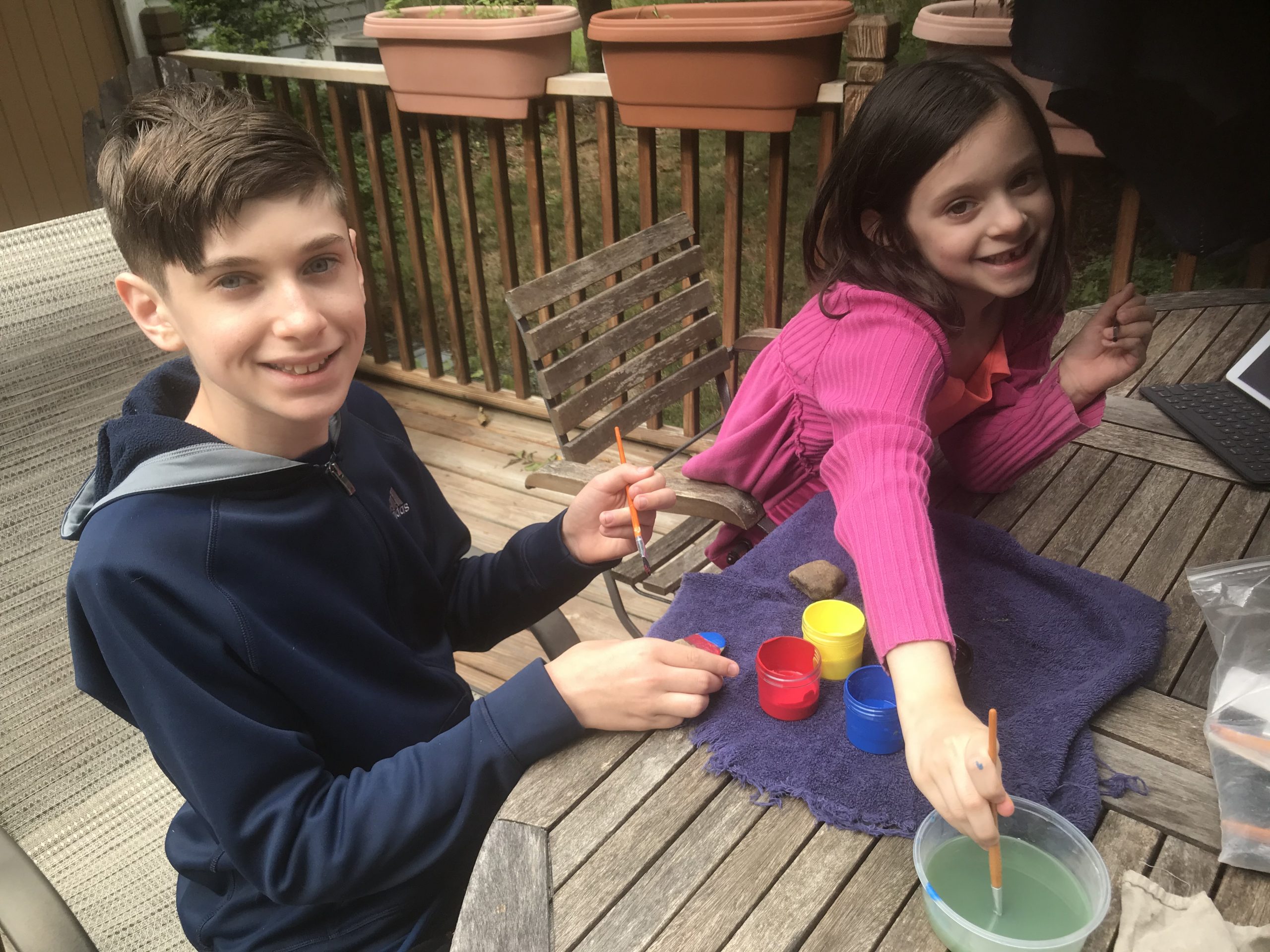
  • Please take time before the event to gather a yahrzeit candle, matches, and a stone that you can hold during the ceremony. (Members will have received stones and candles in their Tishrei bags).
  • You may want to spend some time thinking ahead of what you might like to share during the service. If you’d like to share a photo, please have it ready.
  • Members will receive zoom links for this event in their email. If you are not a member and would like to attend, please register here.
AARC member Leora Druckman’s article “AARC Makes Yizkor Comes Alive” in the September 2020 Washtenaw Jewish News. See page 13 here: https://washtenawjewishnews.org/PDFs/WJN-09-20-web.pdf

Filed Under: Upcoming Activities Tagged With: yizkor

A Guided Personal Tashlich

September 6, 2020 by Gillian Jackson

By: Rabbi Ora Nitkin-Kaner

The guided meditation above is based on Tashlich; you can use it as an alternative to an outdoors Tashlich or to enhance the ritual.

Last year for Tashlich, we gathered at Mallett’s Creek on Rosh Hashanah afternoon. We were blessed with a warm autumn late-afternoon sun, and we stood for a long time on the bridge over the creek, singing together: ‘Loosen, loosen baby. You don’t have to carry the weight of the world in your muscles and bones. Let go, let go, let go. Holy breath and Holy Name: will you ease, will you ease this pain.’ 

God-willing, next year we’ll gather and sing together as a community again. For this year, we’re offering a guided personal Tashlich ritual to do on your own, with family, or with friends—please just take care to be COVID-safe.

How to do Tashlich this year:

1. Look for a natural body of water that you can access easily. Tashlich is an invitation to cast our sins away into a body of water like a river, spring, lake, pond, or well. Most people prefer natural, flowing bodies of water because it gives the effect of our past deeds being swept away by the current. If you don’t live near a natural body of water or can’t manage to get to one, you can use running water from a hose or faucet. 

2. Try performing Tashlich on Rosh Hashanah. Tashlich is supposed to be performed on the first or second day of Rosh Hashanah. If, however, you’re unable to perform the ceremony on Rosh Hashanah, Tashlich can be done any day during the Days of Awe until Yom Kippur. 

3. Examine what you’ve struggled with in the past year before doing Tashlich. Tashlich requires that we review our behavior over the last year before we can cast away our deeds. Remember that everyone struggles with mistakes, misdeeds, and accidents, so don’t be afraid to be honest with yourself during this period of review. Keep in mind, however, that the goal of Tashlich is to move forward in the year, rather than to dwell on the past.

4. Collect your “sins” in your pockets. We have provided you with seeds to act as physical symbols of your sins; seeds are safer than bread for the wildlife that live in nearby creeks. Although some people discourage tossing actual items because it stems from superstitious practices, it can be helpful, especially for young people, to visualize our misdeeds being carried away by the water.

5. Walk to the body of water or basin. As you do, try singing, if it feels appropriate. Here are some possibilities (click on the links to hear the songs):

  1. Eili, Eili: Eili, Eili shelo yigameri l’olam. Hachol v’hayam, rishrush shel hamayim, b’rak hashamayim, t’filat ha-adam.
  2. Hashiveini: Hashiveini, ve’ashuvah x2 Chadeish, chadeish, chadeish, yameinu k’kedem x2
  3. Avinu Malkeinu: Avinu malkeinu, choneinu va-aneinu ki ein banu ma-asim. Asei imanu tzedakah vachesed v’hoshi-einu.

6. Read a biblical prayer. The source passage for Tashlich comes from the last verses of the prophet Micah (7:18-20). These verses tell why we practice Tashlich:

7. Cast your sins into the body of water. After your prayer, reach into your pockets and grab the seeds or metaphorical sins, and throw them into the water. Once you let go of them, breathe out and watch them wash away. Only do this when you feel ready. It might take you longer than some other people to prepare for this moment, but don’t feel rushed. 

‘Who is a God like You, Forgiving iniquity and remitting transgression; Who has not maintained wrath forever against the remnant of God’s own people, Because God loves graciousness, God will take us back in love; God will cover up our iniquities, You will hurl all our sins into the depths of the sea. You will keep faith with Jacob, loyalty to Abraham, as You promised on oath.’

8. Offer a prayer about your hope for the year. Talk to God out loud about who you are and who you’d like to be in the coming year. If you need help with words, try answering some of these questions:

  • Am I using my time wisely? If not, how can I?
  • How do I want to be there for the people who need me? 
  • What new insights and knowledge do I want to acquire this year?
  • What would it look like to live more fully this coming year?
  • How can I trust more in You, or, how can I more closely align with what is holy in the world?

Filed Under: Rabbi's Posts Tagged With: High Holidays, high-holidays-2020, Tashlich

AARC Makes Yizkor Come Alive, in September 2020 Washtenaw Jewish News

September 1, 2020 by Emily Eisbruch

Thanks to Leora Druckman for this article in the Sept. 2020 Washtenaw Jewish News.

Washtenaw Jewish News Article

You can click on the article to view a larger version.

Filed Under: Articles/Ads Tagged With: yizkor

Special High Holidays Delivery!

August 31, 2020 by Gillian Jackson

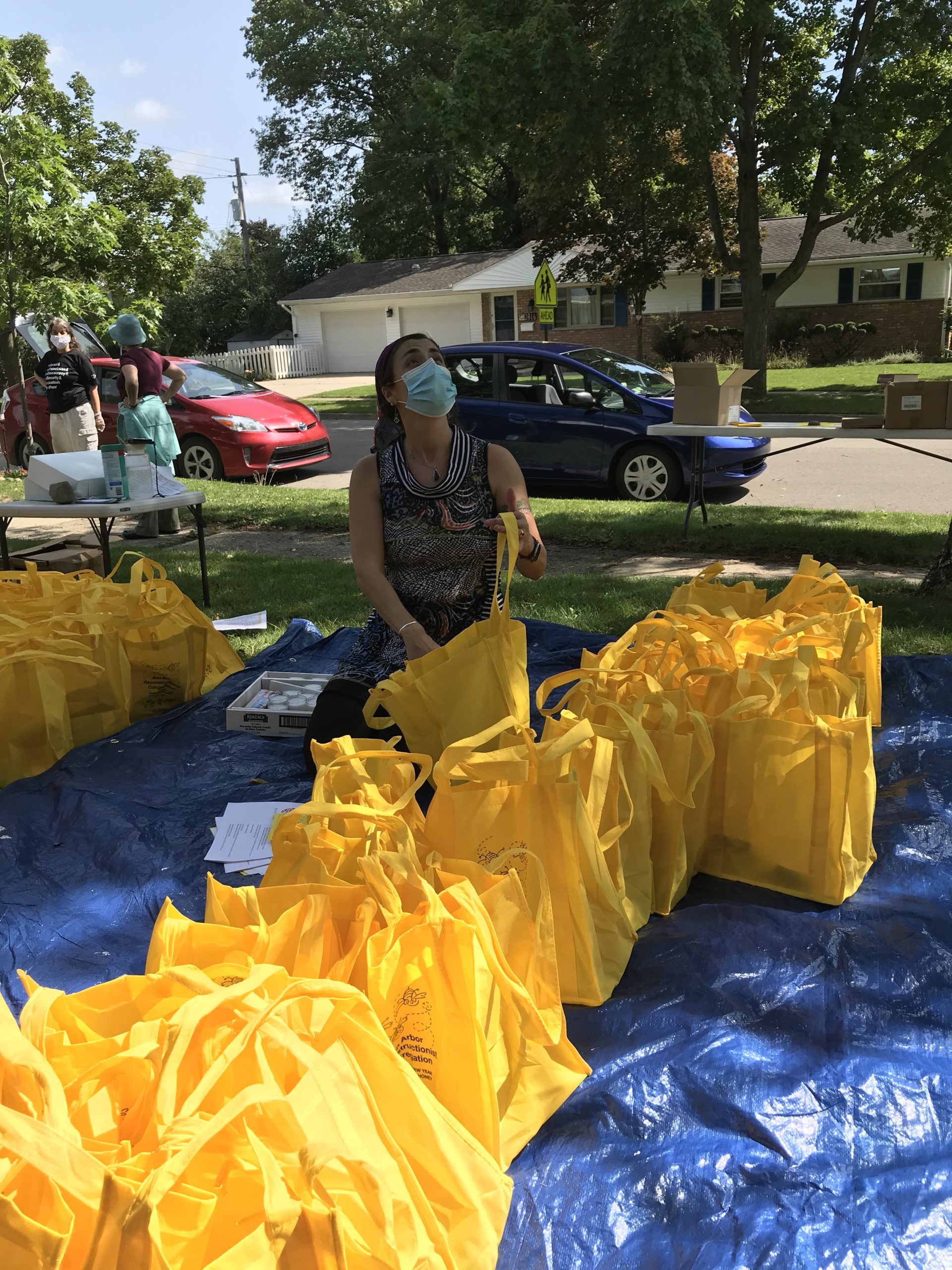
AARC Members Will Receive Tishrei Bags in Support of the High Holidays At Home

The High Holidays cannot help but be different this year, but thanks to the hard work of our Tishrei Bag Committee, all of our members will be able to celebrate with a set of thoughtfully curated items. Engaging with ritual objects is an important part of the chagim; the Tishrei Bag project supports us in uniting with our fellow members from our own homes through the vehicle of these shared objects.

The Tishrei Bags will include:

  • Apples and honey
  • 2 pairs of holiday candles for Erev Rosh Hashana and Erev Yom Kippur
  • A yahrzeit candle for Yizkor
  • Bird seed for Tashlich
  • Recipes
  • Special gifts from Beit Sefer families
  • High Holidays schedule and handouts
  • High Holidays prayer book (machzor)

Members can receive their Tishrei Bags in either of two ways: You can pick your bag at 2815 Pebble Creek on September 13th from 1:30-4 pm, or a member can deliver the bag to your house. If you do not pick up your bag on the 13th, a volunteer will bring it to your home.

A special thank you to the Tishrei Bag Committee: Laurie White, Carol Levin, Clare Kinberg, Jen Hall, and Evelyn Neuhaus. Thank you also to our volunteer delivery crew and to the Meadows family for assembling the bags! It takes a village! Please email us if you have any questions about the Tishrei Bags.

Filed Under: Upcoming Activities Tagged With: High Holidays, high-holidays-2020, mitzvah, Tishrei Bag

Beit Sefer visits Barn Sanctuary

August 25, 2020 by Clare Kinberg

The month of Elul, when we prepare ourselves for Rosh Hashanah and the Days of Awe, begins with The New Year for the Animals, where we learn about compassion, care, and openheartedness. The Barn Sanctuary in Chelsea, where over 120 rescued farm animals experience love and care, gave our Beit students and teachers excellent examples of compassionate care.

Aharon Varady writes on OpenSiddur: What a better way to begin a month dedicated to humbling ourselves and repairing our relationships than by reflecting first on our relationship with behemah — the domesticated animals which depend on us for their care and sustenance. The category of behemah includes all animals historically bred by humans as domesticated creatures, both kosher and non-kosher, e.g. cats and cattle, dogs and donkeys, goats, pigs, chicken, and llamas. If we can imagine, empathize, and understand the dependency of behemah in our care, how much better can we realize our relationship with blessed Holy One, and the infinite chain of inter-dependencies uniting all living relationships in reflection of this Oneness.

Students and teachers alike were fascinated by the virtual tour. Aaron, Ava, and Noah Jackson

The mission of the Barn Sanctuary: We rescue and rehabilitate abused and neglected farmed animals by creating a safe haven where these individuals can recover and thrive. We envision a world in which farmed animals are seen as individuals and treated with empathy and compassion. 

We learned that turkeys can change the color of their heads based on their emotions, and that turkeys have “accents” so that Michigan turkeys sound different from turkeys from other places

Our virtual tour guide, Sarah Chouinard, did an outstanding job of introducing us to the animals, and attentively answering our students many questions. Sarah spent a full hour with us as we visited chickens, goats, sheep, donkeys and cows in addition to the pigs and turkeys.

We learned that they have about 32 pigs because last year two of the rescued pigs were pregnant, and now they have their (already 200 lb) babies!
As we met the farm animals, our students introduced their stuffed animals who they snuggled with while touring the Barn Sanctuary.

The Barn Sanctuary is a wonderful local organization that we hope you will support. Visit them at barnsanctuary.org

Filed Under: Beit Sefer (Religious School) Tagged With: Elul

Child and Family Programming and Childcare for High Holidays 2021

August 16, 2020 by Gillian Jackson

AARC offers an engaging and flexible series of High Holidays learning opportunities and services for children and families, led by AARC Beit Sefer (religious school) Director Clare Kinberg. To take part, please fill out the Child and Family Programming Form. For now, due to COVID-19 safety considerations our children’s services and child care will be open to members only. If we are able to invite the public, we will update this webpage.

High Holidays Children’s Services Schedule:

  • Tuesday, September 7th, 10:30am: Rosh Hashanah Children’s Service at the UU
  • Thursday, September 16th, 10:30am: Yom Kippur Children’s Service at the UU

If you have any questions about this programming, please email us. We looking forward to sharing this sacred time together!

High Holidays Childcare Signup:

  • Children and caregivers will be required to wear masks while indoors.
  • High Holiday Childcare is offered for children 2 years of age and older.
  • The childcare room will be located in the Jackson Lounge in the main corridor leading to the sanctuary. Vaccinated teens over 12 may stay in the boardroom across the hall.
  • Both childcare rooms will be staffed by qualified caregivers.
  • Childcare for members who sign up by September 1 is free of charge.  Reservations (and payment) should be made by September 1. Members who do not sign up by the deadline will be asked to pay $10 per child per day.Without advance reservation, childcare will be offered on a space-available basis only.  Sign up online below.
  • If we are able to open up childcare for non-members, the cost for non-members is $20 per child per day.  
  • Payment is due by September 1, by mailing a check or paying online using the Donate button to the right.
  • Please note that children under 13 must remain in childcare or be supervised by an adult at all times; children cannot be allowed to roam on their own while on the Unitarian Universalist Congregation premises. Children may leave childcare only if an adult picks them up.

Filed Under: Beit Sefer (Religious School) Tagged With: high-holidays-2020, youth

High Holiday Workshops 2020

August 16, 2020 by Gillian Jackson

One of the silver linings of the “High Holidays at Home” format is added flexibility with workshop locations, times, and formats. In this spirit, we will be hosting a range of workshops and classes throughout the High Holiday period. Zoom links will be sent out to members in early September. If you would like to attend as a guest, please fill out the High Holidays Registration Form.

___________________

Challah Baking Workshop

Friday September 11th, 10am-noon

Participants will learn how to prepare Challah dough, braid a special Rosh Hashanah crown, and recite special prayers during the preparation. To learn more about Lori’s process, please see our Challah Blog!

This workshop is created and facilitated by AARC member Lori Lichtman.

To attend this class, please sign up here. Zoom link will be sent to registrants before the event.


The Story of Sarah and Hagar in Art, Poetry, and Our Own Reflections

Saturday, September 19th, 2pm

On Rosh Hashanah we read the story of Sarah and Hagar, with its themes of family trauma, isolation, jealousy, survival, and reconciliation. In this workshop, we’ll reflect on how the story of Sarah and Hagar resonates with us today.  We’ll share our reactions to various artistic depictions of the story, read a poem or two, and then exchange our reflections.

This workshop is created and faciliated by AARC member Emily Eisbruch.

To attend this class, sign up here. Zoom link will be sent to registrants before the event.

______________________________________________________________________________

Birth/Fertility and Its Opposite: Personal Reflections

Saturday, September 19th, 4pm

In today’s Torah and Haftarah selections, both Sarah and Hannah, after struggles with infertility, are blessed with children. These stories can sometimes be a point of pain for those of us who do not feel like we were so blessed.  What has the journey of fertility and infertility been like for us?  Have your thoughts and feelings changed through the years?  If you have a story or thought you’d like to share, or just want to come and listen to others, please join us on Rosh HaShanah Day 1 afternoon.

This workshop is created and facilitated by AARC member Deb Kraus.

To attend this class, sign up here. Zoom link will be sent to registrants before the event.

______________________________________________________________________________

Cultivating Self-Forgiveness: A Practice for the Days of Awe

Thursday, September 24th, 7pm

This experiential offering will guide you through coming into a deep and quiet space within yourself, noticing the ways you may have “missed the mark” this past year, and engaging in a practice of self-forgiveness.

Your participation will require that you have a comfortable and quiet place to sit for 90 minutes; that you have printed off the provided worksheet for self-reflection and have something to write with; and that you have registered so that you can be sent the Zoom link. Our time together will include meditation and guided imagery, journal writing and sharing in pairs or small groups.

This workshop is created and facilitated by AARC member Anita Rubin-Meiller.

Anita is a clinical social worker in private practice with many years of experience in creating and leading workshops and ongoing groups for cultivating self-compassion, self-forgiveness, and compassionate life
review.

To register for this workshop, please email Anita. ______________________________________________________________________________

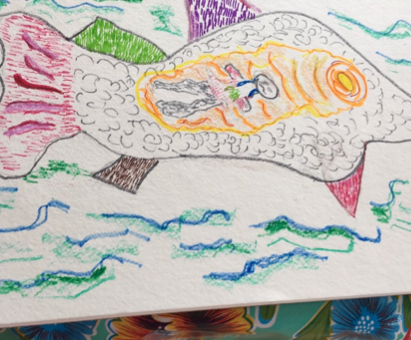
JONAH (AND THE WHALE): A Teshuva Journey through Art and Midrash with Idelle Hammond-Sass

Sunday September 27, 10am -12pm

Jonah is a traditional Haftarah for the afternoon of Yom Kippur. Join us for this experiential workshop from the comfort of your own home. Gather some art supplies at your desk or kitchen table to make your own ‘visual midrash’!

Using Jonah’s journey as a way in to our own process of Teshuva, we’ll explore Jonah through a brief text reading, followed by drawing to music and reflective writing. Drawing and writing offer two ways to see what comes to the surface, using our imagination to dive deep into the process of making a visual image and seeing what we have created.(optional)

Please bring writing paper, pen/pencil, plain paper 8 ½”x 11 or larger (can be computer paper) any “art” supplies on hand, such as your kids crayons, colored pencils, oil pastels (cray pas), charcoal pencils, markers etc. as well as some random colored paper or magazines (to tear) and a glue stick or tape. Whatever you have around the house is great!

To attend this class, sign up here. Zoom link will be sent to registrants before the event.

Filed Under: Uncategorized Tagged With: high-holidays-2020, workshops

AARC To Host A Robust Month of Elul Programming

August 12, 2020 by Gillian Jackson

Throughout history we as Jews have leaned on our traditions to lead us back to ourselves in times of trouble or uncertainty. The month of Elul is one of those traditions: a time of cheshbon hanefesh or an accounting of the soul.

Elul has come at a perfect time this year; many of us are carrying a heavy emotional load due to the current state of affairs. Elul encourages us to take time to look inward and prepare for what’s to come. In this spirit, we are offering a multi-modal Elul experience:

LEARN: Elul Psalms Series, or, What Does a Jew Do With All These Worries, Hopes, and Feelings?

Sunday August 23, 30, and September 6, 2-3:15 pm on Zoom

“All our days slip away.” “Help me stay safe.” “Shield me from the counsel of evil men.” “Look how good and pleasant it was to be together.”

All these phrases are from the Book of Psalms, but they could easily describe our feelings in this moment, too. As we enter into Elul and this unusual season of teshuvah, we’ll use the ancient psalms as an entry point to gentle awareness, creativity, and reflection. Each class will offer a mix of learning, discussion, and writing.

August 23: Introduction and Psalms of Noticing and Gratitude

We’ll talk briefly about what makes a psalm, explore some psalms of gratitude (from the Book of Psalms and contemporary poets), and talk about what it means to be a Jew talking to/about the Holy. Our first writing exercise will serve to ‘prime the pump’ and get words flowing; our second exercise will invite reflection on our values, our voices, and our relationship to the Source. Expect rich discussion and sharing.

August 30: Psalms of Fear and Loss

Today’s focus is psalms of anxiety, fear, and loss. We’ll explore some of these psalms (both classical and contemporary) and then shift into writing together. Our writing exercises will help us give name to our experiences of living through this time of disorientation and grief, and those who wish will be invited to share their reflections in small groups. This session requires particular care because these psalms can evoke or activate difficult emotions. We’ll close this session with a meditative, musical practice designed to help us release our emotions and return to a sense of spiritual safety.

September 6: Psalms of Comfort and Connection

In this session we’ll explore psalms of connection to the Holy and the holiness within ourselves and community. We’ll do a deep dive into a single psalm, exploring how different translations and nuances of language can impact a psalm’s message. We’ll explore psalms both classical and contemporary, and then engage with our final two writing exercises.

LISTEN: Songs of Return, A High Holiday Community Playlist

We’ve started a community playlist on Spotify that already includes some gorgeous niggunim, new melodies, and High Holiday favorites to get us in the teshuvah mood. We want you to listen and enjoy, of course, but also invite you to add your favorites tunes so we can all hear them. To listen, all you need is a free Spotify account. To add music, you’ll need to open the Spotify app on your phone, tablet, or desktop.

BREATHE: Elul Meditation Offerings

A series of pre-recorded meditations from Rabbi Ora and members are now available to stream, below. These themed meditations vary in length and style, and can be listened to on your schedule as many times as you like.

Blessing This Moment (16 min)

Hineini: A Meditation & Chant for Presence (18 min)

Sitting in Divine Light (10+ min)

A Mind-Body-Spirit Integration (6 min)

Gam Zeh Kadosh/This, Too, Is Holy (9+ min)

WRITE: Daily Reflection Prompt

Sign up to receive daily reflection and journalling prompts for the entire month of Elul (August 21-September 18). Created by Rabbi Jordan Braunig, these prompts are “meant to give us time to cozy up to ourselves, to spend a few moments a day with our souls and to maybe learn a thing or two about ourselves.”

SING: Selichot 5780: Creating Holy Space Within

Saturday September 12, 8 pm on Zoom

Our Selichot services will ease us into the High Holy Days with beautiful melodies led by members and Rabbi Ora. In addition to singing and havdalah, we’ll take time to imagine how to create holy space in our hearts and our homes in anticipation of online Rosh HaShanah and Yom Kippur services.

If you have any questions about any of these Elul offerings, please email Gillian.

Filed Under: Upcoming Activities Tagged With: Elul, High Holidays, high-holidays-2020, jewish learning

Rabbi Ora hosts Nachamu (Comfort Us): A Havdalah and Healing Service for the End of Av

August 3, 2020 by Gillian Jackson Leave a Comment

Saturday, August 15, 8-9:15pm via Zoom

https://www.facebook.com/watch/?v=2681450128798066
Karov, by Batya Levine

On Saturday, August 15th, at 8:00pm, we will come together as a community to hold one another in our grief, sadness, and hope. Nachamu (Comfort Us): A Havdalah and Healing Service for the End of Av is an opportunity to put down all we’ve been carrying the last few months and give voice to our experiences.

The healing service will be a mix of meditation, singing, and opportunities to share one-on-one. We’ll conclude with a havdalah that will move us from the emptiness and loss that the Hebrew month of Av commemorates into the powerful call to introspection of the month of Elul.

A zoom link will be sent out the week of August 10th. If you are not on our mailing list and would like to attend, email us for the link.

A prayer for healing:

God of consolation,
Surely you count in heaven,
Just as we count here on earth,
In shock and in sorrow,
The souls sent back to You,
One-by-one,
The dead from the COVID pandemic,
As the ones become tens,
The tens become hundreds,
The hundreds become thousands,
The thousands become ten-thousands
And then hundred-thousands,
Each soul, a heartbreak,
Each soul, a life denied.

God of wisdom,
Surely in the halls of divine justice
You are assembling the courts,
Calling witnesses to testify,
To proclaim
The compassion of some
And the callousness of others
As we’ve struggled to cope.
The souls taken too soon,
Whose funerals were lonely,
Who didn’t need to die,
Who died alone,
Will tell their stories
When You judge
Our triumphs
And our failures
In these hours of need.

God of healing,
Put an end to this pandemic,
And all illness and disease.
Bless those who stand in service to humanity.
Bless those who grieve.
Bless the dead,
So that their souls are bound up in the bond of life eternal.
And grant those still afflicted
With disease or trauma
A completed and lasting healing,
One-by-one,
Until suffering ceases,
And we can stop counting the dead,
In heaven

And on earth.

The prayer above, entitled “One-by-One: A Prayer as the COVID Death Toll Mounts,” is by Alden Solovy, liturgist, poet, and teacher. He is the author of Jewish Prayers of Hope and Healing. © 2020 Alden Solovy and www.tobendlight.com. Reproduced with permission.

Filed Under: Upcoming Activities Tagged With: covid-19, grief, healing

  • « Go to Previous Page
  • Page 1
  • Interim pages omitted …
  • Page 30
  • Page 31
  • Page 32
  • Page 33
  • Page 34
  • Interim pages omitted …
  • Page 75
  • Go to Next Page »

Footer

Affiliated with

Copyright © 2026 Ann Arbor Reconstructionist Congregation