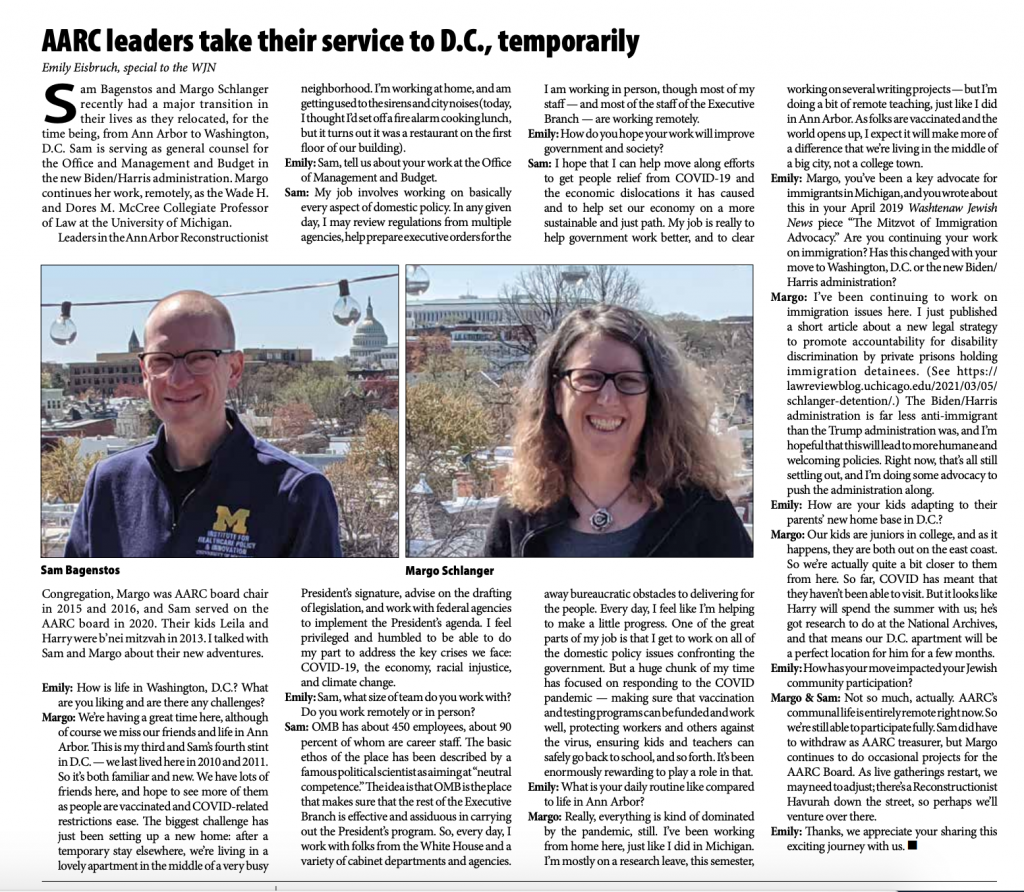
This article appeared in the May 2021 Washtenaw Jewish News.

Ann Arbor Reconstructionist Congregation
This article appeared in the May 2021 Washtenaw Jewish News.
This article was written for the May 2021 edition of the Washtenaw Jewish News

On May 16th, Jews around the world will celebrate Shavuot, the holiday that commemorates our receiving of the Torah on Mount Sinai.
Why did I write ‘our,’ rather than ‘their’? Because tradition teaches (Shevuot 39a) that when the Torah was given, every Jew was standing at Sinai, including the souls of all Jews (and converts to Judaism) who would ever be born.
The idea that every soul was present at Sinai means that each one of us has a natural connection to God, Torah, and every other Jew that ever lived. This is a powerful birthright. But it might also be felt as a burden.
A burden in what way? Well, I’ve had countless conversations with Jews across the denominational spectrum who insist that they’re ‘not a good Jew,’ meaning not knowledgeable enough, or not committed enough, or not connected enough. Weighted down with overblown expectations of what it looks like to be ‘a good Jew’ and shame for not meeting those expectations, it’s no surprise that for many, Judaism can feel like an albatross.
And ours isn’t the first generation to feel this way. According to one midrash (Shabbat 88a), during revelation, God held a mountain over the Israelites’ heads and threatened: “Either accept the Torah or this shall be your burial place!” From the very beginning, we have some interpreting our religion as coercive and burdensome. But that’s not the only way.
In Reconstructionist Judaism, we understand that wrestling with God and our received tradition is part and parcel of being Jewish. It can be generative and joyful, especially when done in the company of fellow seekers. Reconstructionist Judaism also teaches that the past has a vote but not a veto. As the living embodiment of Judaism, we get to discern which aspects of Judaism support our moral vision for ourselves and for the world. We get to choose what kind of relationship to have to commandments, culture, history, and communities.
This perspective is also rooted in our tradition. Even as one midrash imagines God holding the mountain over our heads as a threat, another describes the mountain as a magnificent chuppah for the wedding between Israel and God (Mechilta Bachodesh 3).
This is the story I prefer: That being Jewish is a choice we make to be in relationship. It’s a choice that we get to affirm daily, weekly, monthly. It’s a choice that makes room for joy. And we are encouraged to come to the relationship with the fullness of who we are and who we are striving to become.
May is Open House Month at the Ann Arbor Reconstructionist Congregation. We welcome all visitors to our Zoom Shabbat services and programs, including Wednesday May 12th’s “What IS Reconstructionist Judaism: A Discussion with Rabbi Ora,” at 7:30 pm. To register, email aarcgillian@gmail.com; learn more at www.aarecon.org.
Thanks to Avi Eisbruch who reviewed the book The Ten Year War by Ann Arbor Reconstructionist Congregation member Jonathan Cohn, in the April 2021 Washtenaw Jewish News.

Thanks to AARC member Carole Caplan for this article on Shmita in the April 2021 Washtenaw Jewish News.


Thanks to Etta Heisler for this article in the April 2021 Washtenaw Jewish News.

Thanks to Gillian Jackson for this article in the March 2021 Washtenaw Jewish News.

Here’s a Washtenaw Jewish News article on the collaboration between the Ann Arbor Reconstructionist Congregation and Congregation Agudas Achim (in Attleboro, MA), from the February 2021 Washtenaw Jewish News.

This article was also posted in the Reconstructionist Rabbincal College News.
This interview with AARC member Carole Caplan, founder and owner of the The Farm on Jennings, appeared in the January 2021 Washtenaw Jewish News.
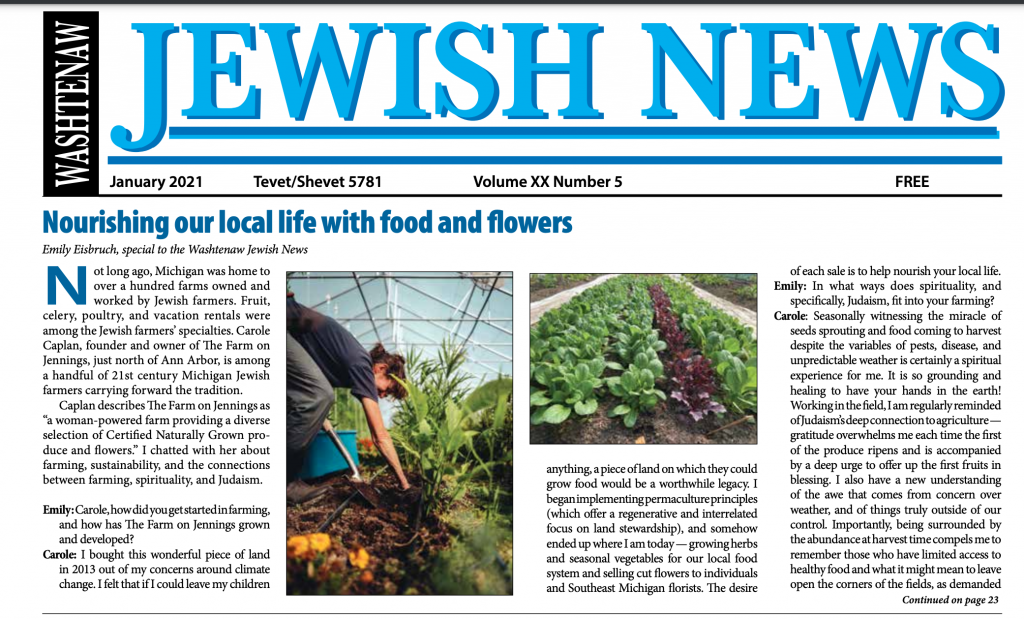
Article starts on front page (above) and continues on page 23 (below).

This article in the Nov. 2020 Washtenaw Jewish News highlighted creative new AARC programming during the COVID-19 pandemic.

You can click on the article to view a larger version.
– Emily Eisbruch, special to the Washtenaw Jewish News December 2020 Edition
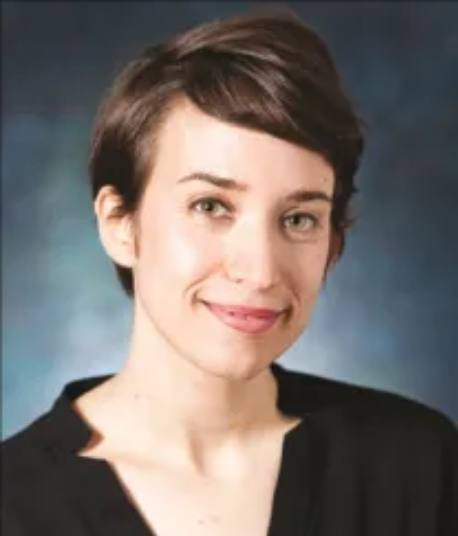
Rabbi Ora Nitkin-Kaner
What can be better than poetic verse and vivid imagery to elevate and move our spirits? The Ann Arbor Reconstructionist Congregation (AARC) features beautiful and thought provoking poetry in its worship services, led by Rabbi Ora Nitkin-Kaner. Here’s a chat with Rabbi Ora about the role of poetry in Jewish services.
Rabbi Ora, what inspired your interest in incorporating poetry into Jewish services?
I grew up attending a Conservative shul in Toronto where Shabbat prayers were usually sung with the same melodies and there was rarely any deviation from the strict ‘keva’ (order of service). When I moved to Philadelphia in 2011 to attend the Reconstructionist Rabbinical College, I joined Fringes, a chavurah co-founded by feminist activist poet Elliott batTzedek. Fringes services feature a mix of traditional liturgy and contemporary poetry. I learned from davening (praying) with Fringes that poems can shake up our expectations of what prayer looks and feels like.
What do you see as the role of poetry in worship services?
Poems crack open our hearts when we’re feeling broken, or tired, or fearful or numb. Poems offer an ‘aha’ moment; they help us feel seen, and less alone. Good poetry reminds us that there is beauty in the world — beauty that we’ve witnessed, and beauty that others have witnessed and bring to us in a gift of words. Poetry is remedy, balm, revolution, or reminder of how interconnected we all are.
What does poetry provide that the siddur / prayerbook does not?
The siddur is full of gorgeous poetry! The psalms and the prophets are featured widely in our Shabbat siddur, and are profound and powerful poetry. But there are two real challenges to appreciating the poetry of the prayerbook: One, services are usually in Hebrew, and most North American Jews aren’t fluent Hebrew speakers. This means that a lot of the beauty of the language gets lost. And two, any poem that gets repeated again and again will lose a lot of its vividness. Bringing new poetry into services cuts through the lulling effect of repetition. Poetry—if it’s good, if it gets us and we get it—says, ‘Wake up! Pay attention!’
How does poetry compare to music/song in services?
Poetry is an invitation to awaken to what’s holy in the world and in ourselves. It’s a chance to see things in a new light, or to feel seen. For these reasons, I think of poetry as more of an individual experience — though I do love that moment when, just after our congregation finishes reading a new poem out loud, you can hear a collective murmur of ‘wow’ and ‘yes.’ Singing together is more about the collective experience, feeling the sound of many voices resonating in the room or in our bodies.
What are your favorite sources for poetry to use in services?
Poetryfoundation.org and poets.org are consistently great online sources. Lately I’ve been enjoying drawing from the book Poetry of Presence: An Anthology of Mindfulness Poems, by Phyllis Cole-Dai (editor) and Ruby R. Wilson (editor).
Who/what are some of your favorite poets and favorite poems?
Consistent favorites are Adrienne Rich, Yehuda Amichai, Ada Limon, Ross Gay, Carl Phillips, Mary Oliver, and for services in particular, Rumi and Rainer Maria Rilke.
Mary Oliver’s ‘Wild Geese’ (shown below) is an antidote to the harshness and shaming that lives in some aspects of our Jewish tradition, our world, and ourselves.
Wild Geese, by Mary Oliver
You do not have to be good.
You do not have to walk on your knees
for a hundred miles through the desert repenting.
You only have to let the soft animal of your body
love what it loves.
Tell me about despair, yours, and I will tell you mine.
Meanwhile the world goes on.
Meanwhile the sun and the clear pebbles of the rain
are moving across the landscapes,
over the prairies and the deep trees,
the mountains and the rivers.
Meanwhile the wild geese, high in the clean blue air,
are heading home again. Whoever you are, no matter how lonely,
the world offers itself to your imagination,
calls to you like the wild geese, harsh and exciting –
over and over announcing your place
in the family of things.
To learn more about the Ann Arbor Reconstructionist Congregation, and see for yourself how poetry is used to enrich the services, please visit aarecon.org, or contact Gillian Jackson at aarcgillian@gmail.com or Rabbi Ora Nitkin-Kaner at rabbi@aarecon.org.
NOTE: This article appeared in the December 2020 Washtenaw Jewish News. See page 10 here.

