Despite the challenges this year, our community was able to share in the joy of the holiday. Enjoy this photo montage from some of our events!


Despite the challenges this year, our community was able to share in the joy of the holiday. Enjoy this photo montage from some of our events!


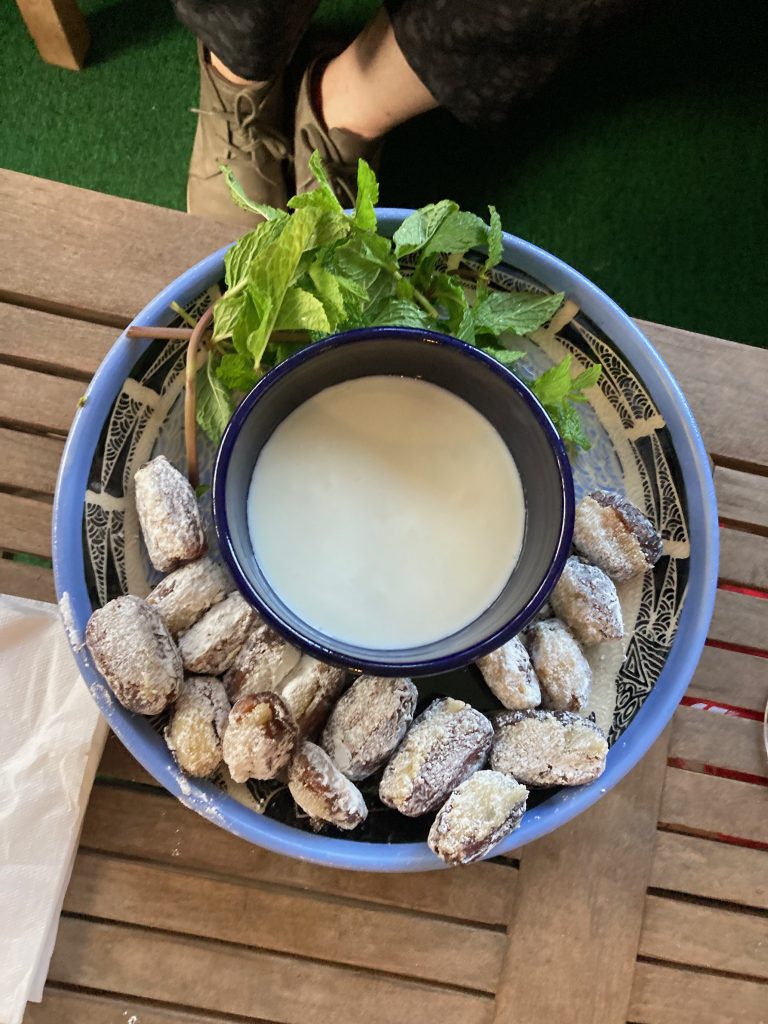
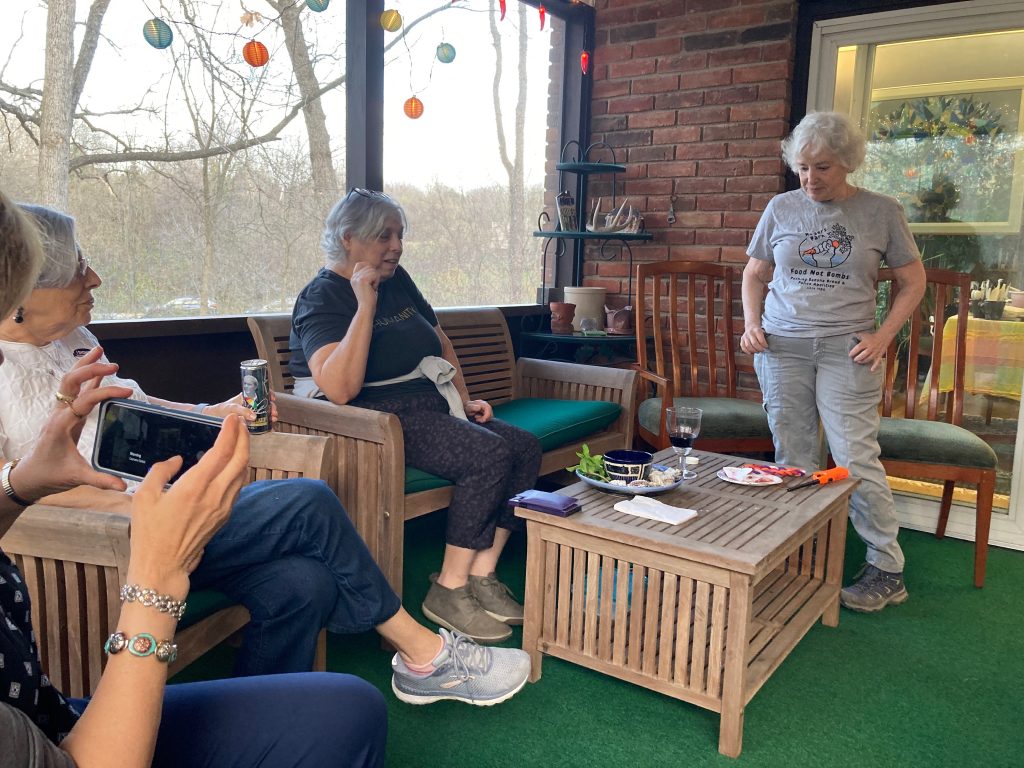
The conclusion of Passover this year was marked with a joyous Mimouna celebration at the house of Jeff and Rena Basch. The Mimouna bonfire echoed a tradition that originates in Morocco as a cultural holiday and is celebrated in Israel with picnics and barbecues in the park. The weather was warm and everyone was so glad to be spending time together, releasing the constriction of the passover holiday by eating carbs and sweets! (pictures below!) The event was such a success we are hard at work planning more outdoor social gatherings for the summer, if you are interested in hosting something- let Gillian know!
The origins of the holiday vary depending on who you’re talking to. For some, Mimouna celebrates the yarzheit of Maimonides. For others, it began as an interfaith celebration of community and liberation in Morocco. The nation of Morocco is home to many Sephardic jews and Muslims; on the final night of Passover, these two communities would come together and share a meal filled with sweets and carbs. It was a time that Muslim neighbors could expect to be invited into the homes of their Jewish friends to celebrate the conclusion of the holiday. Many communities around the world have used this tradition to reconstruct opportunities to celebrate community and interfaith friendships.
At our Mimouna bonfire, Clare Kinberg shared a beautiful Mimouna family tradition. Clare blessed people with mint leaves dipped in buttermilk and dates and shared a blessing of fertility. This blessing was shared from her Moroccan relatives. The fertility blessing was not limited to childbirth, Clare encouraged everyone to think about what aspects of their life they would like to ‘fertilize’ or nourish. This could be something like a garden, a career, a relationship etc. It is a beautiful tradition that we were lucky to share on this beautiful evening. To learn more about the tradition, check out this article written by her niece, Rabbi Yohanna Kinberg.


photo credit: Emily Eisbruch
What a joyous occasion to spend the evening together celebrating Purim! It was exactly two years ago that we last celebrated purim together in person. Enjoy these photos from Jen Swanson of the evening!


Last week, a handful of AARC members attended a lecture by Rabbi Rebecca Alpert titled ‘Reconstructionism without Zionism.’ The event was the beginning of a series of lectures hosted by a coalition of Rabbis and members of the Reconstructionist community that are concerned about the conflict between Israel and Palestine. The series was not hosted by the Reconstructing Judaism official body or the Reconstructionist Rabbinical College. The lectures will occur bi-weekly and cover a range of topics including Decolonizing Jewish Liturgy, Rethinking Israel Education: Teaching Jewish Kids to Think Critically about Israel/Palestine, Becoming an Abolitionist: Antiracism and Antizionism and more. To learn more about the upcoming lectures, check out the coalition’s website here.
The lecture was opened with an appeal for all participants to sit with their uncomfortable feelings about Israel, be curious about what feels challenging, and remain open to hearing divergent viewpoints. Rabbi Brian Walt invited everyone to take part in a prayer to open the lecture:
Barukh atah Adonai Elo heinu melekh ha’olam asher kid’shanu b’mitzvotav v’tzivanu lirdof tzedek v’shalom l’chol yoshvei tevel.
Blessed is the Source of Life that makes us holy through mitzvot, calling us to pursue justice and peace for all.
If you want to read Rabbi Alpert’s lecture, you can find the source info here from an article she published on Rabbi Brant Rosen’s blog. In her lecture, Rabbi Alpert argued that we need to redefine what it means to be Jews in diaspora. She maintained that how Mordechai Kaplan related to Israel in the post-WWII era needs to be subject to ‘transvaluation’ in the same way that we have transvalued (or redefined) other concepts within Judaism such as the assertion of Jews as the ‘chosen people.’ Rabbi Alpert concluded by urging the Jewish community to consider the ethical implications of war and occupation.
Upon the conclusion of her lecture, the floor was opened up for 45 minutes questions. It was clear during the Q & A that participants had a lot to say about the subject of Zionism, and Rabbi Alpert’s opinion on the subject. The level of emotion and the fact that over 280 people attended the lecture demonstrates our communities’ need to grapple with this issue. The coalition hosting the lecture provided this space for discussion in the form of a Google group after the lecture.
If last week’s lecture is an example of the level of passion on the topic, we are in for an engaging series of lectures and discussions!
To attend next week’s lecture, sign up here.

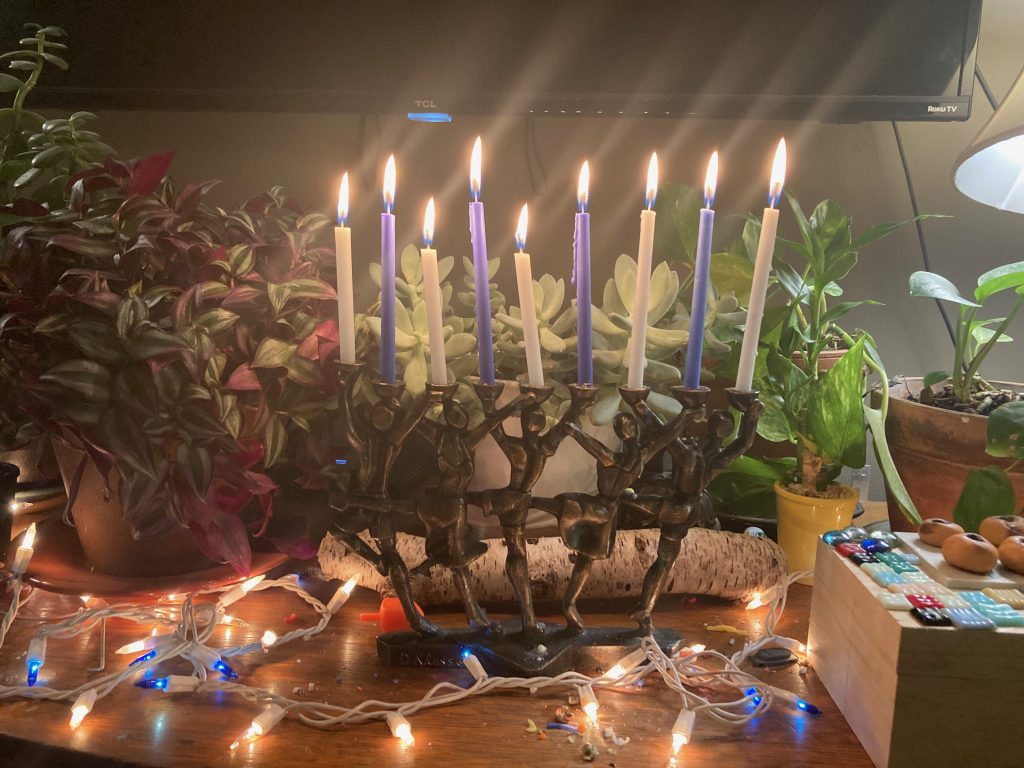
We had big plans this year for indoor in-person events at the JCC and in people’s homes, but unfortunately the tides of the pandemic shifted and we needed to make new plans! Thankfully most of our events were able to be moved outdoors or onto Zoom, and only a few had to be cancelled. I am truly grateful for our community’s willingness to be flexible and make the best of the difficult circumstances we find ourselves in. There were many moments of joy and community to be found in this year’s celebration of lights and miracles — L’Chaim! Enjoy some photos from the week’s events below:


Jews sometimes are called “people of the Book,” referring to the Torah. Books, interpreted more broadly, are the focus of the Ann Arbor Reconstructionist Congregation (AARC) book group. We have met since 2014 about eight times per year, discussing a different book each time. AARC book group meetings are open to members of the local Jewish community regardless of whether they belong to AARC.
Besides the intellectual stimulation of reading and discussing books, the AARC book group helps provide a sense of community and connection among the participants. Before COVID forced us to meet via Zoom, our meetings began with tasty food. (My wife, Audrey, loves feeding people.) May the pandemic end soon and the tasty food return!
Many of the books we discussed recently won National Jewish Book Awards. For example:
I’ve also loved some Jewish-themed books we’ve discussed that did NOT win National Jewish Book Awards, such as:
We discussed several books that did not have specifically Jewish themes:
Previews of coming attractions:
If you would like to be added to the email distribution list for AARC book group announcements and Zoom links for our meetings, please email me at gsaltzman@albion.edu.
To see this article in the November 2021 Washtenaw Jewish News, scroll to Page 10 here. https://washtenawjewishnews.org/PDFs/WJN-11-21-web.pdf
AARC whole heartedly made some lemonade out of lemons this summer spending lots of time outdoors together after a long time physically apart during the COVID-19 pandemic. It took a little more planning, but we were able to find ways to congregate safely together to observe Shabbat, celebrate holidays, gather for social events, and religious school. Enjoy the photo blog today, and re-live the lovely times spent outdoors!


photo credit: Aaron Jackson


photo credit: Cara Spindler

If you have some photos you would like to share, send them my way and I will add them to this blog post! Email aarcgillian@gmail.com

Members from Washtenaw and Ingham county Jewish congregations gathered Sunday evening for a stimulating evening of learning on Jewish approaches to justice.
The keynote speaker for the evening was Eli Savit, Washtenaw County Prosecutor. Mr. Savit offered a fascinating perspective, redefining how we pursue justice work within the legal system. Savit compared re-writing existing unjust laws to the early rabbis’ re-interpretation of the biblical commandment to kill one’s own ‘rebellious son’ (ben sorer u’moreh). The early rabbis made the discernment process for execution so long and convoluted that no one could possibly meet the standards to carry out the law. Savit likened this process to such contemporary issues as choosing not to prosecute young offenders for smaller crimes and implementing a restorative justice program for larger crimes.
Savit’s lecture led to the conclusion that the criminal justice system is influenced by larger systems of injustice in our society. Not only do we need to re-think how we prosecute crimes, but must also increase funding for education and health care–the lack of which can contribute to violence within our society. The thought-provoking lecture led to a vibrant Q and A with Mr. Savit.
Following the keynote address, attendees were sent into breakout rooms for ‘Speed Cheesecaking’ to discuss issues important to them and get to know members of other congregations. Many attendees commented that they appreciated the opportunity to get to know more people within the larger Jewish community.
The evening carried on with three consecutive study sessions where attendees could choose from discussions led by area rabbis on topics as diverse as LBGTQIA advocacy, kabbalah, gender, and social justice. Rabbi Ora led two sessions; ‘When a Pauper Takes the Bimah: The Revolutionary Message of Lecha Dodi,’ and ‘Nothing But Niggunim!’
The event was a success and everyone agreed we will carry on the tradition for years to come!

For Shavuot this year, Beit Sefer director Clare Kinberg organized a COVID-safe outdoor picnic for the end of the year Beit Sefer gathering. The event was hosted at the home of Beit Sefer teacher Aaron Jackson. Families were treated to freshly made blintzes, lovingly prepared by Clare Kinberg.
This was the first time since the pandemic began that most of the Beit Sefer students had been together as a group! They had so much fun catching up and playing on the playground together. Yasher koach to the Beit Sefer teachers and especially Clare for organizing this event and providing such a stimulating year of learning for our Beit Sefer students.