• Skip to primary navigation
  • Skip to main content
  • Skip to footer
Ann Arbor Reconstructionist Congregation

Ann Arbor Reconstructionist Congregation

  • Home
  • About
    • Overview
    • Rav Gavrielle Pescador
    • Our History
      • Photo Gallery
    • Our Values and Vision
    • LGBTQ Inclusive
    • Our Board
    • Our Sacred Objects
    • About Reconstructionist Judaism
    • Jewish Ann Arbor
  • Programs
    • Shabbat and Holidays
    • B’nei Mitzvah
    • Tikkun Olam
    • In the (Washtenaw Jewish) News
    • Health and Safety Expectations for In-Person Gatherings
    • Join our Mailing List
  • Religious School
    • About Beit Sefer
    • Teachers
    • Enrollment and Tuition
    • 2025-26 Beit Sefer Calendar
  • Blog
  • Calendar
  • Membership
    • Thinking about joining?
    • Member Area
  • Contact Us
  • Donate
You are here: Home / Blog

Blog

Sympathy for Azazel

September 29, 2015 by Clare Kinberg

Yom Kippur 5776 talk by Sam Bagenstos

samuel bagenstosWhen Deb Kraus asked me to give a talk on the scapegoat parsha, I was intrigued and intimidated.  It should be obvious why I was intimidated—this is a deeply learned crowd, and the chances of embarrassing myself by offering some half-baked reaction to one of the most studied portions of Torah were high.

But why was I intrigued?  Well, in part it goes back to my days misbehaving in Hebrew School.  In Fourth Grade or so, all my buddies and I did was try to learn to curse in Hebrew.  I remember one of them leaning over in class, whispering to me what he said was the Hebrew for “Go to Hell!”—I still don’t know whether he was right; we were all just making stuff up—which is the first time I recall hearing the word, “Azazel.”  Yes, even though it was the Seventies, “Go to Hell!” was as transgressive as we got, I’m ashamed to say.

Ever since then, I’ve found the scapegoat story somewhat fascinating.  I mean, we’re Jews—I thought we didn’t have much of an idea of Hell, or a devil, or anything like that.  Yet here we see, right in Leviticus—the most prescriptively legalistic book of the Torah—that Aaron must take the two goats and draw lots, with one goat designated for the Lord and the other “for Azazel.”

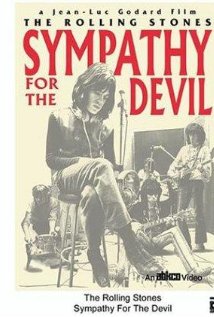
This is apparently the only place in the Torah in which the word “Azazel” appears.  And a debate has raged for centuries about what, exactly, the word means.  Some do in fact interpret “Azazel” as referring to a demon, evil demigod, or fallen angel.  (The suffix “-el” often denotes an angel’s name.)  Others interpret “Azazel” as referring to a rough mountain—in other words, it’s the place where the goat is sent.  Note that the Torah does not say anything about what happens to Azazel’s goat once it is set free.  It just says that “the goat shall carry on it all [the Israelites’] iniquities to an inaccessible region; and the goat shall be set free in the wilderness.”  Nonetheless, the Mishnah tells us that the tradition during the time of the Temple was to push the scapegoat off of a hard, rocky cliff.  And “Azazel” may simply have referred to the cliff.smpathy for the devil

But then there’s the third, simplest interpretation.  “Azazel” might refer to the goat itself.  “Ez”—Hebrew for goat—plus “azal”—apparently the Aramaic word for “to go.”  So “Azazel” might simply mean, roughly, “the goat that went away”—just as the English “scapegoat” means “the goat that escaped.”  Obviously, it’s the first of these definitions that inspires my title, Sympathy for Azazel—thanks Mick and Keith!—but I’m actually more interested in the other two, as you’ll see. [Read more…] about Sympathy for Azazel

Filed Under: Divrei Torah, Posts by Members, Tikkun Olam Tagged With: High Holidays

Torah Accompanies Us in Our Uncertainty

September 28, 2015 by Clare Kinberg

Rosh HaShanah 5776 talk by Rabbi Michael Strassfeld

Editor’s note: The Ann Arbor Reconstructionist Congregation wants to take this opportunity to profusely thank Rabbis Michael Strassfeld and Joy Levitt for leading our High Holiday observances, teaching us, and sharing the New Year with us.

MJ_Strassfeld_photo-B&WThere is a great deal of discussion these last few years in the Jewish community about its future. Based on recent surveys including the Pew study, there is concern about decreased participation in Jewish life by many people. The open society of America has led to assimilation.

A related phenomenon is a growing perception of religion as a force for intolerance and conflict in the world. What is and what should be the future of Judaism as a religion?

In pre-modern times, religion was a way to explain and understand a mysterious world. Why did things happen? Why did people get sick? Why did one side win a battle?

The answer: because God or gods created the world and controlled what happened. Over time, a belief in one God, a God of justice pre-dominated. It became the unified theory to explain the world. God punished sinners and rewarded the righteous. If the suffering of the innocent wasn’t completely explained by this notion at least there was some context for a way to strive to understand the world or a foundation to have faith that God had a plan even if you didn’t understand it. The world was not random but a world of purpose. But then over time, humans came to understand the world more clearly and discovered the laws of nature. Humans discovered germs and contagion, and disease no longer seemed either random or the scourge of God. Or as the atheist Christopher Hitchens wrote in 2007: “Thanks to the telescope and the microscope, [religion] no longer offers an explanation of anything important.”

Does religion in general and specifically does Judaism still have a purpose? Is that why recent surveys show an increasing number of Jews who define themselves and their Judaism as non-religious?

Reconstructionism encourages us to ask what needs reconstructing in Judaism—not just tinkering around the edges—but what needs to be radically recast or reunderstood. In his time Mordecai Kaplan, the founder of Reconstructionism, propounded a different understanding of the nature of God. In the face of the growing evidence of the decline in the adherence to Judaism, especially as a religion, I have come to believe that it is the fundamental way we think about Judaism that needs reconstructing. It struck me that part of the problem of religion in the modern world is that we both look to religion for certainty, especially in moments of crisis, and as moderns we rarely find that certainty. The theology of our ancestors, if it ever was their theology, simply doesn’t work for most of us. We don’t believe God saved this child fleeing from Syria because we don’t believe God caused that three year old to die on the beach in that terrible photo we all saw. We don’t think God gave cancer to that person, and let the other person recover from a heart attack. We just don’t organize our world this way. Religion for liberal Jews is not about certainty. [Read more…] about Torah Accompanies Us in Our Uncertainty

Filed Under: Rabbi's Posts Tagged With: High Holidays, Michael Strassfeld, Rosh Hashanah

Beit Sefer Builds a Sukkah and Shakes a Lulav

September 28, 2015 by Clare Kinberg


Beit Sefer students really did the building.
H1t3KjkZYULlHidLiXQcDfeb4KttX27ZCUolV7UTle0
What a beautiful day to build a sukkah.

Enornous toda raba to Carole Caplan who really knows how to build a sukkah!

Debbie Gombert led us in song.
We made lulavs from local plants and shook them to the east, north, south, west, and up and down.

Filed Under: Beit Sefer (Religious School) Tagged With: Sukkot

Jonathan Cohn’s WJN article about High Holiday services

September 25, 2015 by Margo Schlanger

2015-09-High-Holidays

Filed Under: Articles/Ads Tagged With: High Holidays

Lunch and Learning in the Sukkah, on the Farm

September 20, 2015 by Margo Schlanger

apple bushel

Sept 27th, 2015, 11:45am-3:30pm

Join us for a vegetarian catered lunch.
Please bring a side dish or something from your harvest to share!

Following lunch we will celebrate the season with:

  • Readings and reflection on the end of this shmita cycle
  • Mindful walking in the garden
  • Art and exercises for expression and play
  • Yoga / Movement practice

There is no charge and the community is invited, but space is limited. Please RSVP to caplan.carole@gmail.com.  Directions will be provided.

This event is hosted by AARC and the Jewish Alliance for Food, Land and Justice, and is funded in part by a generous grant from the Jewish Federation of Greater Ann Arbor!

impact fund banner

Filed Under: Upcoming Activities Tagged With: food/land/justice, Shmita, Sukkot

Preparing for Yom Kippur

September 20, 2015 by Margo Schlanger

MJ_Strassfeld_photo
Rabbi Michael Strassfeld

From Rabbi Michael Strassfeld, who will be leading Yom Kippur services:

We gather on Yom Kippur to engage in teshuvah—reflection and change both as individuals and as a community. The services will be a mixture of liturgy, contemporary readings, talks by the rabbis and by laypeople, music played, an original story for children and adults, and singing led by laypeople and by the rabbis.
Unique to Yom Kippur is the avodah service. Traditionally it recounts the ritual in the Temple on Yom Kippur in ancient times. Instead our avodah service will be structured around us as individuals, in relationships and connected to the world. We will also touch on these themes as raised in the talks by Deb, Anita and Clare from Rosh ha-Shana.

We will take some time as individuals and then in small groups to reflect on our selves and our hopes and visions for that self. The third confession will focus on our commitment to social justice climaxing with a liturgical poem made up of Biblical verses on the theme of tzedek—justice.

Yom Kippur will come to a close with a special Yizkor service at 5:30 with an opportunity to share memories of loved ones. Neilah, the concluding service (at 7 pm ) is the climax of the day as the themes and the music come together one last time. It feels like crossing the finish line of a spiritual marathon. We will end with a special havdalah ritual with lights carried by the children and the final blast of the shofar.

Filed Under: Rabbi's Posts, Upcoming Activities Tagged With: High Holidays, Yom Kippur

Yom Kippur Readings (2015)

September 19, 2015 by Margo Schlanger

These were some of the readings at our 2015 Yom Kippur services.

Who by Fire

by Leonard Cohen

And who by fire, who by water,
Who in the sunshine, who in the night time,
Who by high ordeal, who by common trial,
Who in your merry merry month of may,
Who by very slow decay,
And who shall I say is calling?

And who in her lonely slip, who by barbiturate,
Who in these realms of love, who by something blunt,
And who by avalanche, who by powder,
Who for his greed, who for his hunger,
And who shall I say is calling?

And who by brave assent, who by accident,
Who in solitude, who in this mirror,
Who by his lady’s command, who by his own hand,
Who in mortal chains, who in power,
And who shall I say is calling?

The Kol Nidre Mirror to Our Soul

by Sandy E. Sasso, in All These Vows: Kol Nidre (Lawrence A. Hoffman, ed., Jewish Lights Publishing, 2011) [edited and adapted]

Life is filled with more than the scrapes and bruises of childhood that require nothing more than a kiss and a hug to make them better.  Life’s real issues are far more complicated and sometimes intractable.  Technology assures us a solution for every problem; medicine promises a pill for every pain.  But religion recognizes that we are mortal; we can’t fix everything.  Kol Nidre reminds us to forgive ourselves for it.

I recently learned that you can trap bees on the bottom of a Mason jar without a lid.  The bees fly in for the honey at the bottom of the jar and then they think they are stuck, because they never look up to see that the jar is open.  Life weighs us down.  Like the bees on the bottom of the Mason jar, we think that there is no way out of our situation, that we are trapped.  Kol Nidre – the High Holy Days – tells us to look up.

Technology is not so forgiving.  One of the problems of the Internet is that it does not forget; it keeps all our data – forever.  We cannot delete foolish e-mails or unflattering photos.  Our digital past remains indelibly with us.  How different is the Book of Life where tradition pictures God recording our good and bad deeds.  That record is erasable through t’shuvah.  If we regret something written in our own life’s book, atonement is our delete button.  The Rabbis teach that if individuals have repented, we are not allowed to remind them of their past errors.  Our past does not shackle us to the bottom of a Mason jar; we can look up.  We can begin again.

New Year’s Poem

by Rachel Barenblatt, http://velveteenrabbi.blogs.com/blog/2006/9new_years-poem.html

I’m cleaning the cupboard
beside the stove, low to the floor,
where pots and pans hide
haphazardly.

Our kitchen is well-used,
baker’s rack gleaming
with neat jars of peaches,
string beans, preserves

but one swipe of paper towel
across this hidden surface
and I flinch at the grime
I never noticed before.

This is teshuvah: opening
every closed-up space. I’m
a window smeared with dust,
a cabinet in need of scouring.

It’s simple work, but
part of me resists, preferring
distraction to clarity.
When I make the leap

I suddenly can’t believe
I ever ignored the dirt.
Hot water blesses my hands
into action. God, help me

put my house in order,
begin the year in readiness
for the wonders I know
are coming, are always here.

God Was In This Place & I, i Did Not Know

by Lawrence Kushner

We go down into ourselves with a flashlight, looking for the evil we have intended or done – not to excise it as some alien growth, but rather to discover some good within it. We begin not by rejecting the evil, but by acknowledging it as something we meant to do. This is the only way we can truly raise and redeem it.

We lose our temper because we want things to be better right away. We gaze with lustful eyes because we have forgotten how to love the ones we want to love. We hoard material possessions because we imagine they will help us live more fully. We turn a deaf ear, for we fear the pain of listening would kill us. We waste time, because we are not sure how to enter a relationship. At the bottom of such behavior is something that was once good. On this sacred day, a day of communion and of light, our personal and collective perversions creep out of the cellar, begging to be healed, freed, and redeemed.

Rabbi Yaakov Yosef of Polnoye taught: The essence of the finest t’shuva [turning] is that “deliberate sins are transformed into merits,” for one turns evil into good, as I heard from my teacher [the Baal Shem Tov], who interpreted the Psalm verse “Turn aside from evil and do good” to mean: ‘Turn the evil into good.’

The conclusion of true t’shuva, of true turning, is not self-rejection or remorse, but the healing that comes from telling ourselves the truth about our real intentions and, finally, self-acceptance. This does not mean that we are now proud of who we were or what we did, but it does mean that we have taken what we did back into ourselves, and acknowledged it as part of ourselves. We have found its original motive, realized how it became disfigured, perhaps beyond recognition, made real apologies, done our best to repair the injury, but we no longer try to reject who we have been and therefore who we are, for even that is an expression of what is holy.

We do not simply repudiate the evil we have done and sincerely mean never to do again; that is easy (we do it all the time). We receive whatever evils we have intended and done back into ourselves as our own deliberate creations. We cherish them as long-banished children finally taken home again, and thereby transform them and ourselves. When we say the vidui, the confession, we don’t hit ourselves; we hold ourselves.

On Jewish Identity

by Theodore Bikel (published in Moment Magazine, May/June 2010)

I consider myself to be a Jew in the vertical and horizontal sense. Horizontal, because I feel myself to be kin, relative and family of every Jew who lives today, wherever he or she may be. Vertical, because I am son, grandson and descendant of all the Jews who came before me; I am also father, grandfather and ancestor of all those who w\ill come after me. Am I special because I am a Jew?… I am not better than my neighbors, not nobler; I just carry a knapsack that is heavier with memory, with pain. As a Jew, I peddle the lessons of history. As for survival in the face of mortal threats, we who have repeatedly stared into the jaws of death are better able to deal with the threats than those who face them for the first time. But when we tell the world about survival, we are talking about creative survival, not mere physical survival. Everybody who is threatened with extinction fights for physical survival. Yet to survive as a moral people is as important, maybe more important. Far too often people forget this.

There is a Time

Ecclesiastes 3:1-8

A season is set for everything, a time for every experience under heaven:
A time for being born and a time for dying,
A time for planting and a time for uprooting the planted;
A time for slaying and a time for healing,
A time for tearing down and a time for building up;
A time for weeping and a time for laughing,
A time for wailing and a time for dancing;
A time for throwing stones and a time for gathering stones,
A time for embracing and a time for shunning embraces;
A time for seeking and a time for losing;
A time for keeping and a time for discarding;
A time for ripping and a time for sewing,
A time for silence and a time for speaking;
A time for loving and a time for hating;
A time for war and a time for peace.

A Man Doesn’t Have Time

by Yehuda Amichai

A man doesn’t have time in his life
to have time for everything.
He doesn’t have seasons enough to have
a season for every purpose. Ecclesiastes
Was wrong about that.

A man needs to love and to hate at the same moment,
to laugh and cry with the same eyes,
with the same hands to throw stones and to gather them,
to make love in war and war in love.
And to hate and forgive and remember and forget,
to arrange and confuse, to eat and to digest
what history
takes years and years to do.

A man doesn’t have time.
When he loses he seeks, when he finds
he forgets, when he forgets he loves, when he loves
he begins to forget.

And his soul is seasoned, his soul
is very professional.
Only his body remains forever
an amateur. It tries and it misses,
gets muddled, doesn’t learn a thing,
drunk and blind in its pleasures
and its pains.

He will die as figs die in autumn,
Shriveled and full of himself and sweet,
the leaves growing dry on the ground,
the bare branches pointing to the place
where there’s time for everything.

I needed to talk to my sister

by Grace Paley, in Fidelity (2008)

I needed to talk to my sister
talk to her on the telephone I mean
just as I used to every morning
in the evening too whenever the
grandchildren said a sentence that
clasped both our hearts

I called her phone rang four times
you can imagine my breath stopped then
there was a terrible telephonic noise
a voice said this number is no
longer in use how wonderful I
thought I can
call again they have not yet assigned
her number to another person despite
two years of absence due to death

The Essene Book of Days

by Danaan Perry (Earthstewards Network, 2003) [edited]

Sometimes I feel that my life is a series of trapeze swings.  I’m either hanging on to a trapeze bar swinging along or, for a few moments in my life, I’m hurtling across space in between trapeze bars.

Most of the time I spend my life hanging on for dear life to my trapeze-bar-of-the-moment.  It carries me along at a certain steady rate of swing and I have the feeling that I’m in control of my life.  I know most of the right questions and even some of the right answers.  But once in awhile, as I’m merrily (or not-so-merrily) swinging along, I look out ahead of me into the distance, and what do I see?  I see another trapeze bar swinging towards me.  It’s empty, and I know, in that place in me that knows, that this new trapeze bar has my name on it.  It is my next step, my growth, my aliveness coming to get me.  In my heart-of-hearts I know that for me to grow, I must release my grip on this present well-known bar to move to the new one.

Each time it happens to me, I hope that I won’t have to grab the new one.  But in my knowing place I know that I must totally release my grasp on my old bar, and for some moment in time I must hurtle across space before I can grab onto the new bar.  Each time I am filled with terror.  It doesn’t matter that in all my previous hurtles across the void of unknowing I have always made it.  Each time I am afraid that I will miss, that I will be crushed on unseen rocks in the bottomless chasm between the bars.  But I do it anyway.  Perhaps this is the essence of what mystics call the faith experience.  No guarantees, no net, no insurance policy, but you do it anyway because somehow, to keep hanging on to that old bar is no longer on the list of alternatives.  And so for an eternity that can last a microsecond or a thousand lifetimes, I soar across the dark void of “the past is gone, the future is not yet here.”  It’s called transition.  I have come to believe that is the only place that real change occurs.  I mean real change, not pseudo-change that only lasts until the next time my old buttons get punched.

In our culture, this transition zone is looked upon as a “no-thing”, a no-place between places.  Sure, the old trapeze bar was real, and that new one coming towards me, I hope that’s real too.  But the void in between?  That’s just a scary, confusing, disorienting “nowhere” that must be gotten through as fast and as unconsciously as possible.  What a waste!  I have a sneaking suspicion that the transition zone is the only real thing, and that the bars are illusions we dream up to avoid the void, where the real change, the real growth occurs for us.  Whether or not my hunch is true, it remains that the transition zones in our lives are extraordinarily rich places.  They should be honored, even savored.  Yes, with all the pain and fear and feelings of being out-of-control that may accompany transitions, they are still the most alive, the most growth-filled, passionate, expansive moments in our lives.

And so, transformation of fear may have nothing to do with making fear go away, but rather with giving ourselves permission to “hang-out” in the transition between trapeze bars.  Transforming our need to grab that new bar, any bar, is allowing ourselves to dwell in the only place where change really happens.  It can be terrifying.  It can also be enlightening.  Hurtling through the void, we just may learn to fly.

Self Forgiveness First

by Donna Schaper

The first thing people do when restoring old chairs is strip — strip right down to the bare wood. They do this to see what the original might have looked like and to determine if the thing is worth doing over. They strip away all the years of grime, the garish coats of paint piled one on top of the other. They get rid of all the junk that’s been tacked on through the years and try to find the solid, simple thing that’s underneath.

I’m like an old chair needing that stripping process. Every now and then I have to take a really hard look at the illusions I’ve built up in myself and see what I’ve gotten myself into. Illusions? Yes, illusions; the excess baggage I carry around, the unnecessary; all that keeps me living off center too long. Stripping myself of all this is an intentional letting go of these illusions. It is a spiritual act of personal forgiveness. God lets us let go.

It’s hard work to let God forgive me. I have to discover the original under all these coats I’ve added, strip away all the cynicism and anger I’ve built up, get rid of the junk I’ve taken on, defy my disappointments, and find what is real again.

Compassion

by Kristin Neff

Self-compassion involves acting the same way towards yourself when you are having a difficult time, fail, or notice something you don’t like about yourself. Instead of just ignoring your pain with a “stiff upper lip” mentality, you stop to tell yourself “this is really difficult right now,” how can I comfort and care for myself in this moment? Instead of mercilessly judging and criticizing yourself for various inadequacies or shortcomings, self-compassion means you are kind and understanding when confronted with personal failings – after all, who ever said you were supposed to be perfect? You may try to change in ways that allow you to be more healthy and happy, but this is done because you care about yourself, not because you are worthless or unacceptable as you are. Perhaps most importantly, having compassion for yourself means that you honor and accept your humanness.  Things will not always go the way you want them to.  You will encounter frustrations, losses will occur, you will make mistakes, bump up against your limitations, fall short of your ideals.  This is the human condition, a reality shared by all of us. The more you open your heart to this reality instead of constantly fighting against it, the more you will be able to feel compassion for yourself and all your fellow humans in the experience of life.


Filed Under: Poems and Blessings, Rabbi's Posts, Upcoming Activities Tagged With: High Holidays, Yom Kippur

What makes a moment religious?

September 16, 2015 by Clare Kinberg

Comments written by Julie Norris, delivered by Kevin Norris on Rosh Hashanah 2015

What makes a moment religious?

What makes an experience feel religious?

Is it a glimmer of a feeling, or a feeling that encompasses you?

What is your recipe for a religious moment?

This July 4th weekend, I was so struck when I had an experience that I expected to be a lot of nostalgic fun, but which shifted into something that felt unexpectedly, but unmistakably, religious.

We took a train to Chicago to meet up with our adult daughter, for the Grateful Dead’s 50th anniversary, fare-thee-well concert.  3 nights under the stars at Soldier’s Field with 70,000 tie-dyed faithful.

grateful deadAnd it happened almost immediately – the awareness that somehow this felt religious. It never struck me as religious in the early 1980s as I followed the band up and down the east coast, but now, the awareness of the rituals and culture surrounding this music led me to think about some of the similarities between the shows and services.

First, the music. Many of us are so deeply moved by music. The melodies and harmonies you recognize from decades gone by and the knowledge that these same tunes are known and appreciated by millions. The verse and refrain that feel like coming home.

There’s the rhythm of sitting and standing in unison. How do 70,000 people know, without being told, when to stand but this crowd knew. And through 3-1/2 hours, 3 nights in a row, if you closed your eyes to sink fully into the moment, suddenly a recognized chord or phrase that you hadn’t realized how much you’d missed hearing would emerge and you’d be drawn to your feet. And when you open your eyes you see that everyone else has stood too, in a collective expression of joy and appreciation.

Then there’s the text or lyrics, full of poetry and meaning, full of space for interpretation. And as I gaze at my daughter, I see that these words have now been passed on from one generation to the next.

[Read more…] about What makes a moment religious?

Filed Under: Posts by Members Tagged With: High Holidays, Rosh Hashanah

Our September ad in the Washtenaw Jewish News

September 15, 2015 by Margo Schlanger

2015-09 WJN_ad

Filed Under: Articles/Ads

Rosh Hashanah Readings (2015)

September 14, 2015 by Margo Schlanger

Yom Kippur Sonnet, with a Line from Lamentations

by Jacqueline Osherow, in Dead Men’s Praise (1999)

Can a person atone for pure bewilderment?
For hyperbole? for being wrong
In a thousand categorical opinions?
For never opening her mouth, except too soon?
For ignoring, all week long, the waning moon
Retreating from its haunt above the local canyons,
Signaling her season to repent,
Then deflecting her repentance with a song?
Because the rest is just too difficult to face –
What we are – I mean – in all its meagerness –
The way we stint on any modicum of kindness –
What we allow ourselves – what we don’t learn –
How each lapsed, unchanging year resigns us –
Return us, Lord, to you, and we’ll return.

The Journey

by Mary Oliver, in Dreamwork

One day you finally know
what you have to do, and begin,
though the voices around you
keep shouting
their bad advice –
though the whole house
begins to tremble
and you feel the old tug
at your ankles.
“Mend my life!”
each voice cries.
But you don’t stop.
You know what you have to do,
though the wind pries
with its stiff fingers
at the very foundations –
though their melancholy
is terrible.
It is already late
late enough, and a wild night,
and the road full of fallen
branches and stones.
But little by little,
as you leave their voices behind,
the stars begin to burn
through the sheets of clouds,
and there is a new voice,
which you slowly
recognize as your own,
that keeps you company
as you stride deeper and deeper
into the world,
determined to do
the only thing you can do,
determined to save
the only life you can save –
Yours.

Cold Feet

From Siddur Sha’ar Zahav

They say cold feet are a sign of turning back,
The failure of internal will –
But I say it can be the other way,
The body’s anticipation of things to come.
Whether demons are nipping at your heels
Or gnawing within, here’s the thing:
Settle quietly, close your eyes,
Then take the most deliberate, deep breath,
As though it were the very first (God’s breath) –
And when you can feel it penetrate every bit of your being,
Making the rest of your life possible,
You open your eyes
And take that first step out into the sea of reeds.
Watered feet are just the price of coming home.

Cruel Waters

by John Miodownik

Why, I asked? Why have all these seemingly friendly, well-mannered and trusted brooks and rivers, which we have grown up with, turned on us so unexpectedly, so violently, so destructively? What angered them? What provoked their rage to do us such harm? Why have these placid waters swelled to such a powerful surf rolling over our beloved Vermont villages swallowing homes, roads, bridges, trees, memories and dreams?

My son’s basement flooded full to the first floor threatening the very foundation of his home. All was sad, all was bleak, as the indifferent muddy waters invaded his life. But, at once, the small community rejected such harsh indignity. Regiments of neighbors hurried from near and far, armed with pumps, buckets, shovels, mops and endless energy to help stem the tide the best they could.

Left floating in the aftermath were personal belongings – clothing, bedding, old photographs, children’s treasured artwork, important files and valued documents. All were lovingly cleaned by strangers, and hung up on lines to dry. There, fluttering in the morning breeze, was one particular salvaged document. It was not signaling surrender but rather hope over chaos, cruelty and ruthlessness. By chance, it was my father’s official release paper from concentration camp Buchenwald.

Atonement Songs

by Judith Rafaela, in Another Desert: Jewish Poetry of New Mexico (2001) [edited and adapted]

The wild sounds of the shofar
pierce my skin and open my heart.
And I’m crazed for tunes in a minor key
that vibrate my tailbone and belly
and echo out across a shul packed
with doubters and believers
who come together
one day of the year to hear
archaic formulas and prayers.
Just for this moment
open us to rich tones –
Simple melodies that convey truths or fictions
about our fate.

What Can I Say

by Mary Oliver, in Swan (2010)

What can I say that I have not said before?
So I’ll say it again.
The leaf has a song in it.
Stone is the face of patience.
Inside the river there is an unfinishable story
and you are somewhere in it
and it will never end until all ends.

Take your busy heart to the art museum and the
chamber of commerce
but take it also to the forest.
The song you heard singing in the leaf when you
were a child
is singing still.
I am of years lived, so far, seventy-four,
and the leaf is singing still.

From Where Redemption Will Come

by Annie Dillard

Who shall ascend into the hill of the Lord? Or who shall stand in God’s holy place? There is no one but us. There is no one to send, nor a clean hand, nor a pure heart on the face of the earth, nor in the earth, but only us, a generation comforting ourselves with the notion that we have come at an awkward time, that our innocent fathers are all dead — as if innocence had ever
been — and our children busy and troubled, and we ourselves unfit, not yet ready, having each of us chosen wrongly, made a false start, failed, yielded to impulse and the tangled comfort of pleasures, and grown exhausted, unable to seek the thread, weak, and involved. But there is no one but us. There never has been.

Filed Under: Poems and Blessings Tagged With: High Holidays, Rosh Hashanah

  • « Go to Previous Page
  • Page 1
  • Interim pages omitted …
  • Page 62
  • Page 63
  • Page 64
  • Page 65
  • Page 66
  • Interim pages omitted …
  • Page 75
  • Go to Next Page »

Footer

Affiliated with

Copyright © 2026 Ann Arbor Reconstructionist Congregation