• Skip to primary navigation
  • Skip to main content
  • Skip to footer
Ann Arbor Reconstructionist Congregation

Ann Arbor Reconstructionist Congregation

  • Home
  • About
    • Overview
    • Rav Gavrielle Pescador
    • Our History
      • Photo Gallery
    • Our Values and Vision
    • LGBTQ Inclusive
    • Our Board
    • Our Sacred Objects
    • About Reconstructionist Judaism
    • Jewish Ann Arbor
  • Programs
    • Shabbat and Holidays
    • B’nei Mitzvah
    • Tikkun Olam
    • In the (Washtenaw Jewish) News
    • Health and Safety Expectations for In-Person Gatherings
    • Join our Mailing List
  • Religious School
    • About Beit Sefer
    • Teachers
    • Enrollment and Tuition
    • 2025-26 Beit Sefer Calendar
  • Blog
  • Calendar
  • Membership
    • Thinking about joining?
    • Member Area
  • Contact Us
  • Donate
You are here: Home / Blog

Blog

Barbara Boyk Rust: Spiritual Leader and Teacher

November 11, 2015 by Clare Kinberg

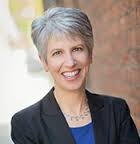
BBRustBarbara Boyk Rust was one of AARC’s founding members.  Eighteen months ago, she was ordained as a spiritual teacher and leader by a Bet Din of four leaders.  Her approach to Jewish observance centers around meditation and sacred chant.  Along with member Allison Stupka, Barbara will be leading our Kabbalat Shabbat service on Friday, December 18, at 6:30. Here, Barbara shares with the community some of her thoughts about her recent ordination process:

What prompted you to undertake the process of ordination? What was the preparation like?

Before moving further into spiritual leadership I needed the review and affirmation of others whom I hold as teachers, mentors and guides.  I needed them to say either “yes” or “no” to my sense of being called to teach and lead in a spiritual context.

Early rabbinic ordination, smicha or smichut l’rabanut, involved the laying on of hands from one rabbi to the next.  Some of the meanings of smicha are to rely on, or to be authorized.  Though I am following a unique path, it did not feel appropriate to me to take further steps authorized by myself alone.  Using a template similar to the origins of Jewish rabbinic ordination I held myself accountable to those who teach me and those whom I serve for recognition, validation and affirmation of this step of my journey as a spiritual leader and teacher.

Part of what I shared with them was the story of my journey, recapped briefly here:

I have been pursuing my spiritual path consciously since my mid-teens.  For more than half my life now, individuals, families and communities have asked me to serve as creator, facilitator and leader of holiday and life cycle celebrations.  Long ago, Reb Zalman Schacter-Shalomi said something to the effect of, ‘if 200 people think you’re a rabbi, you’re a rabbi.’  While I met that criteria long ago, I decided not to complete rabbinic training through the Aleph Rabbinic Program though I was enrolled in it for some years while I completed an interdisciplinary doctorate at The University of Michigan in Higher Education and Clinical Psychology. [Read more…] about Barbara Boyk Rust: Spiritual Leader and Teacher

Filed Under: Member Profiles, Simchas

Poetry by Janet Eigner

November 4, 2015 by Clare Kinberg

chamisaDuring a break in High Holiday services, AARC member Sally Fink brought me a copy of a stunning poem by her friend, the Sante Fe, Jewish poet, Janet Eigner. How grateful I am to be introduced to her! The poem, Sanctuary, has yet to be published so we can’t put it up on this blog yet. Below is another of her exquisite poems. And here is a wonderful review of Eigner’s second poetry collection, What Lasts is the Breath, “Reflecting on her contact with the Hopi and how it deepened her understanding of Judaism, Eigner said, ‘I do understand that ruach, (breath or spirit or wind) all can refer in Jewish belief, to God, and that the concept began simply and gained God meaning over the centuries of Jewish evolution.’”

Isaac’s Blessing
by Janet Eigner

When Isaac, a small, freckled boy
approaching seven, visits us for Family Camp,
playing pirate with his rubber sword,

sometimes he slumps in grief,
trudging along, his sacrifice and small violin
in hand, his palm over his chest,

saying, Mother is here
in my heart. Before he leaves for home,
we ask if he’d like a Jewish blessing.

Our grandson’s handsome face ignites;
he chirps a rousing, yes, for a long life.
We unfold the prayer shawl,

its Hebrew letters silvering the spring light,
hold the white tallis above his head,
recite the blessing in its ancient language

and then the English, adding, for a long life.
Isaac complains, the tallis didn’t
touch his head, so he didn’t feel the blessing.

We lower its silken ceiling
to graze his dark hair,
repeat the prayer.

Filed Under: Poems and Blessings

Rena Seltzer at Book Festival Local Authors Brunch

November 2, 2015 by Clare Kinberg

renaAARC member Rena Seltzer will give a short presentation on her book, The Coach’s Guide for Women Professors, as part of the Ann Arbor Jewish Book Festival’s local authors brunch on Sunday, November 8 at the JCC.
The brunch and conversation with the authors begins at 10am with author presentations at 10:30am. Brunch is $10 in advance for JCC members, or $15 for non-members, and $15 at the door. Advance purchase is recommended. The presentations are free and open to the public.
While you’re there, check out the Children’s Books sale, where you will be able to choose from over 120 titles chosen by AARC Beit Sefer Director Clare Kinberg.

Filed Under: Upcoming Activities

New WJN article about Rabbi Alana and AARC

October 29, 2015 by Margo Schlanger

By Jonathan Cohn

WJN-Nov-15-web-Alana

Filed Under: Articles/Ads Tagged With: Rabbi Alana

ICPJ 50th Anniversary: Looking Back, Looking Ahead

October 27, 2015 by Clare Kinberg

icpj 50thby Deb Kraus

When Ruth Kraut approached me five years ago to see if I wanted to be on the board of the Interfaith Council for Peace and Justice (ICPJ), I had only the slightest sense of what they did. I was aware that most of the people I knew who did political work were at least tangentially connected to ICPJ; what I didn’t know is that I was actually one of those people!

ICPJ coordinates the local CROP walk every year. I had walked in the CROP walk. Back in 1998, ICPJ organized a peacekeeping team to mitigate between the KKK and the equally angry counter demonstrators when the KKK came to Ann Arbor to recruit. I went to the peace demonstration that day. [editor’s note: For more news of that day here and here.]

Every year, ICPJ goes to protest at the School of the Americas, and I knew that Rebecca Kanner did civil disobedience that landed her in prison, but I’m not sure I knew that this was in the context of ICPJ. When I was a graduate student, I heard about and participated in an anti-war protest when George HW Bush was the UM commencement speaker. Just this past weekend, I found out this, too, was the work of ICPJ. And as our shmita team would attest, there was a lot of cross-pollination between our work and ICPJ’s theme year work on Food and Justice.

This is a subset of the great work that this organization has spearheaded. I am pleased to be involved in this work, and pleased that so many of you have some involvement in ICPJ as well. In fact, I sometimes joke that ICPJ is our social justice arm.

So here’s my ask:

In less than three weeks, ICPJ is hosting an anniversary dinner party to celebrate 50 years of peace and justice work in Ann Arbor and Washtenaw County.

It will be at 6 p.m. at the Morris Lawrence Building at WCC on Saturday, November 14. There will be remembrances from past decades, a silent auction, and a preview of what is happening in 2016. And our own Rabbi Alana will be one of the two keynote speakers as ICPJ looks ahead to the next 50 years.

Dinner will be family-style service with chicken and vegetarian options, sourced with fresh, local, seasonal ingredients.

The dinner is $50/person.

You can rsvp via email (jane@icpj.org) or phone (734-663-1870)–in which case you will be asked to send in a check–or you can get your tickets online.

I know it will be a great night, and I hope you can join me.

Filed Under: Posts by Members, Upcoming Activities Tagged With: interfaith, Rabbi Alana, Tikkun Olam

Member Profiles: Mark and Erica Ackerman

October 22, 2015 by Clare Kinberg

erica ackerman mark ackermanMark and Erica Ackerman have lived in the Burns Park area of Ann Arbor since 2001. Mark is a professor at UM in the School of Information and in the Division of Computer Science and Engineering in the College of Engineering where he does research in human-computer interaction (social computing). Erica is a web developer at the University, as well. They have two grown children, Rebecca and Zachary. Rebecca is a data analyst for a non-profit in New York City, and Zach was recently elected to the Ann Arbor City Council. You can read an interview with Zach about his election here.

Among other things, Mark is a news junkie, and Erica is active in the Democratic Party and has a passion for fighting global warming. An example of Erica’s blogging on the subject can be seen here. Mark and Erica began coming to AARC High Holiday services several years ago, and have gradually gotten more involved in the congregation.

Filed Under: Member Profiles

Mishkan/Sanctuary: Encountering the Sacred in Space and Time

October 15, 2015 by Clare Kinberg

Yom Kippur talk by Carole Caplan

sunsets-over-farmThe day outside is cool, but the bright sun filters through the trees and warms me every now and again. I can hear the rustle of the wind in the branches above, and the call of something further away, maybe a loon, making its way to more hospitable winter accommodations. The crackling of the leaves under my feet step after step, make it clear to me that out of nowhere and all too soon, fall has arrived.

Baba walks ahead of me, and my soul, battered and bruised from the turnings of seasons before, struggles to keep up with this wise man in every way. “I tend the path,” is all he says to me, and I wonder, if I am here to learn from him, how or why or when. We walk quietly together, yet completely alone, for a long time, step after step.

The woods grow deeper and I can smell the moss on untouched earth in this old wood forest that has stood here longer than I will even be alive. Baba moves a tree limb that has fallen in our way. Come this way he motions, and without words I hear him say, “I tend the path, Carole, for you.”

Step after step we make our way along the edge of the forest to an opening that overlooks a large field. Its expansiveness holds the possibility of future crops, of dreams, of desires, of growth, of success, of nourishment, of failure, of disappointment, of need, of drought, of lack; of death. I sense that all of these have happened here in this field before. Is it knowledge or preparation that makes the difference? Is it repentance or punishment? Is it chance or luck? I hear no answers, and quickly retreat back to the woods, overwhelmed by the acknowledgement that so many things will always remain outside of my control.

How is it that I have found myself here…here in this place…following a monk through the woods? I know I am searching. I know I am completely lost, yet I know I am somehow exactly where I need to be. Truly, this must be grace cradling me in her strong and loving arms.

My soul, that which time has completely walled off and simultaneously entirely exposed, begins to soften. I feel compelled to stop and lean against a tree too big for my arms to wrap around.

I watch as Baba walks ahead step by step. And then it happens. Through the deafening silence and the tears streaming down my face, I hear clearly and loudly what I never even knew I had been longing to hear… “I tend the path, Carole—and it is enough for me to do just that.” It was a simple but elusive validation. A much needed directive, urging me on. It is enough just to be. It’s not about how much you can do. Enough just to walk. Not to always be striving, struggling, hurrying, worrying to get somewhere. Not about what you can produce. Enough just to tend that which is in front of us on our path with our time, our talent, our hearts, and yes, with our broken souls.

Baba and I turn to head back to the others making lunch at the central house. In a wordless flash, I recognize this as a magic moment−a door through which I have passed and will have been changed forever. I don’t know how it is that I have found myself here in these woods, but I do know that here I have somehow found myself renewed.

So, this I know: I am here to tend the path. The path that has led me to a farm outside of Ann Arbor where I tend the gardens, and know it to be “enough.” The soil there outside my door holds the seeds that become the plants that provide the fruits that adorn the tables that I am being called to set–and this cycle nourishes every part of me. I hope you will visit me sometime. You see, there is a path there that wanders through the growing things that turn with the seasons. And perhaps once there, you’d like to join me, step-by-step, for a walk.

Filed Under: Posts by Members Tagged With: High Holidays, Yom Kippur

Our Kahal, Our Sacred Community

October 14, 2015 by Clare Kinberg

Rosh Hashanah talk by Margo Schlanger

margoHi, I am Margo Schlanger, and I’m the chair of the Ann Arbor Reconstructionist Congregation. I’m here to welcome you, whether you’ve been a part of our community for its full history of 22 years, or this is your first time spending time with us, or—as with me and many others—something in between.

My two children are 15; it’s been two-and-a-half years since their b’nei mitzvah. There was something about that morning that really epitomized AARC for me. Something, in particular, about the Torah service. The kids read Torah—the parsha was Mishpatim, laws—and they gave drashes in which they talked about the function of some of those laws at the time they were promulgated, and how we need to notice and critique the Torah’s failures with respect to equality in particular. Those of you who know my kids know that they have strong views about religion—like pretty much everything else. I was really proud of them—their moral and intellectual seriousness, their sustained engagement with Jewish texts and tradition, and their Hebrew skills. All that was nourished here in our AARC community. As usual in our services, someone else also read Torah, too—in this case, it was my sister-in-law, Ellie. Ellie is orthodox, and she had never read Torah in a mixed gender congregation before. We invited her, and she accepted, as an act of bridging her orthodoxy with our more liberal Judaism. It was about shared family feeling, and shared Judaism. I was really proud of her, and proud to be her sister-in-law, both because of her evident erudition, and because she was willing to participate, just for a few minutes, in our community that is so very unlike hers.

Anyway, back to why I’m standing here before you. To me, what happened at my kids’ b’nei mitzvah—both with them, and with Ellie—was the essence of our kahal, our sacred community. As it did during that Torah service, AARC during High Holidays and all year round offers a space and community where so many different kinds of people can gather, and can share whatever it is about Judaism that is most meaningful to them. Whether that is prayer and communal services, on Fourth Fridays, Second Saturdays, and holidays; connecting at our monthly pot lucks that follow Fourth Fridays; social justice projects; book club, Beit Sefer. For different members, different families, the draw is different—but we have created a kahal, a sacred community, out of all of us together.

And so now I get to the ask. Our community depends on you. That means both money and effort; we count on both, in so many ways. For many of the folks here, we depend on your membership, and your efforts on our behalf, and your membership dues. For non-members, perhaps you’d like to take the (very easy) plunge and become a member. But even for non-members not interested in membership—and we love having non-members come to our services, including these lovely High Holiday services—we depend on your support.

So welcome to our service, and welcome to this next year in our community. We will this year, together, enjoy many events and activities and meals and study sessions. We’ll do that with rabbinic leadership—Rabbis Strassfeld, Levitt, and Alpert—and with lay leadership, as we conduct our more permanent rabbi search. Please support this community—your community—as generously as you can.

L’shanah Tovah

[Editor’s note: You can easily renew your membership online right here.

Filed Under: Posts by Members Tagged With: High Holidays, Rosh Hashanah

Eyn Od/There is Nothing Else

October 7, 2015 by Clare Kinberg

Rosh Hashanah talk by Deb Kraus

FullSizeRenderI’ve been thinking a lot recently about the passage of time. I’m turning 60 in a few weeks, and a few months back, my daughter Molly turned 20 (I know, right?) and while writing this up north, a place where time seems to both stand still and pass much too quickly, the frustration of not being able to just stop time at the parts we like, to slow down the passage of our lives, hit me pretty strongly.

I think it hit me particularly strongly because of an experience I had while hiking in the Alps this summer. Lest this sound as pretentious to you as it does to me, let me explain a little about this trip.

Looking back, I’m not sure why I thought this middle-aged amateur hiker—late to the notion of exercise in any form, from a long line of people who were entirely sedentary—could do it. Obviously the idea of hiking 102 mostly vertical miles through three countries—literally into three countries—with the backdrop of majestic mountains, the sound of cow bells, the taste of cheese, chocolate and baguettes, and the bragging rights that would come with completing something as difficult as the Tour du Mont Blanc, all of this appealed to me, and as many of you can attest, training for this trip over the past year had given me a new sense of competence and strength.

And while it was beautiful—and yes, tasty—to be in this part of the world, the hiking was much, much harder than I anticipated. And I’m not even going to talk about the punishing downhill part! As I tried to scurry up the inclines to keep up, depriving myself of photo opps because “the slowest one should not incur the wrath of the group any more than is absolutely necessary,” two things happened.

First, I got teachable. My friend sat me down after the second day and quite harshly told me to “follow the leader” who had been trying to slow me down the whole day, but in French words I didn’t understand. How counterintuitive to be told to go slow, slower than I could have ever imagined, up each long (several hour!) incline. Don’t look up to see where you are going; that will only freak you out. You’ll lose your breath.

And yes, it’s all about the breath. And as I followed the leader the next morning, I found that my friend was right: when I focused on my breath first, and matched my step to that, amazingly I was able to get up every incline on the trail. After a while, I could even look up to see where I was going, and then look back down and focus on where I was. Eyn Od

Breath by breath, then Step by step. A walking meditation.

A very looong walking meditation.

The second and more universally applicable thing I learned is what happens when I did this, when I did slow myself down.

The phrase that kept coming to me, over and over, was Eyn Od. There is nothing else.

Just this breath. Just this step. Just this moment.

As a psychologist who is current on neurobiology, I have known for a long time how important meditation and mindfulness are. I just never took the time.

But on the mountain, there was nothing else to do.

Eyn Od. There is nothing else.

But here’s the most remarkable thing: the slowing down has continued. I no longer want to be so busy all the time, to run from thing to thing, to always maximize my productivity, to wonder what I should or could be doing even as I’m working as hard as I can already. To play mindless computer games that continue the racing thoughts when I could be resting. Well, OK, that last thing I really do want to do, but I’ve been told it’s really bad for me, and from the vantage point of what I learned in the Alps, that makes total sense.

So it’s still a struggle. Much easier, on the mind anyway, to take my time when all I have to do every day is to hike from point A to point B, or point F to point G. Harder when I juggle work, community responsibilities, the responsibilities of a home and neighborhood, and all the other things I do. I still am reaching for that #*($&# game between clients or when someone is two minutes late. There is a part of me that is truly addicted to that sense of busy-ness.

But I’m finding out, each time I slow down, I can put myself back in the Alps or floating down the Crystal Rver, and when I do that, in comes that same phrase,

Eyn Od. There is nothing else.

Just this moment.

Nothing to be afraid of. Or impatient about. Or judgmental about.

Just this moment, and then the next. Just like each step on the trail in the Alps.

Eyn Od.

There is nothing else.

Filed Under: Posts by Members Tagged With: High Holidays, Rosh Hashanah

Choosing Life?

October 7, 2015 by Clare Kinberg

Kol Nidre 5776 talk by Rabbi Michael Strassfeld

MJ_Strassfeld_photo-B&WIn the Torah portion we read just before the High Holidays, God says: I set before you life and death, choose life. Seems kind of obvious, doesn’t it? Except in the most dire circumstances, we would choose life if we could. So what does the Torah mean when it enjoins us to choose life?

What is life? How would we define it? For Judaism, a core part of the answer lies in what we are doing right this moment. Not praying, not talking, not even studying, but doing any or all of those things together in community. As Robert Putnam, noted in his seminal book entitled Bowling Alone, fewer and fewer Americans are participating in civic and community life. Through an examination of bowling leagues and other forms of group activities, he found a serious change in the pattern of Americans as the role of the individual was elevated and the group demoted.

The internet has only made this issue more complex. Does the enormous virtual community created by social media diminish or increase peoples’ connections to one another? If you have 200 or 500 Face book friends—is that real connection even if it is only virtual, or is it a superficial “friendship,” or no friendship at all? Is it enabling connections you couldn’t possibly have face to face or is it a way of distancing yourself from others and controlling their access to your life?

In our contemporary world, Judaism is counter cultural when it suggests community as an essential aspect of religious life. The intimate act of pouring one’s heart out to God is not done in solitude but rather in the context of a minyan, a prayer quorum. The language of prayer, even the al het the confessional of Yom Kippur, is recited in the plural, though it is clear to most of us that the litany of sins we recite may have little to do with us. Shabbat and holidays are to be celebrated with family and friends.

While some religious traditions encouraged a renouncing of the worldly, Judaism called for an embrace of the world. Tikkun olam—repairing the world—may be a newly coined expression but love your neighbor as yourself has always been an essential teaching of Judaism. We are meant to live life in relation to other people—not in a cave alone, subsisting on a few berries. Don’t gossip, don’t put a stumbling block before the blind, don’t oppress the stranger because you were a stranger… all these injunctions found in the Book of Leviticus are about the challenges and opportunities for holiness in the everyday interactions with other people. Yes, we, each of us is created in the divine image/tzelem elohim. The Torah said it first: each human being is created with inalienable rights. Yet, those individual rights are supported and modified in the context of relationships. Caring and supportive relationships lead to community. [Read more…] about Choosing Life?

Filed Under: Divrei Torah, Rabbi's Posts Tagged With: High Holidays, Michael Strassfeld

  • « Go to Previous Page
  • Page 1
  • Interim pages omitted …
  • Page 61
  • Page 62
  • Page 63
  • Page 64
  • Page 65
  • Interim pages omitted …
  • Page 76
  • Go to Next Page »

Footer

Affiliated with

Copyright © 2026 Ann Arbor Reconstructionist Congregation