• Skip to primary navigation
  • Skip to main content
  • Skip to footer
Ann Arbor Reconstructionist Congregation

Ann Arbor Reconstructionist Congregation

  • Home
  • About
    • Overview
    • Rav Gavrielle Pescador
    • Our History
      • Photo Gallery
    • Our Values and Vision
    • LGBTQ Inclusive
    • Our Board
    • Our Sacred Objects
    • About Reconstructionist Judaism
    • Jewish Ann Arbor
  • Programs
    • Shabbat and Holidays
    • B’nei Mitzvah
    • Tikkun Olam
    • In the (Washtenaw Jewish) News
    • Health and Safety Expectations for In-Person Gatherings
    • Join our Mailing List
  • Religious School
    • About Beit Sefer
    • Teachers
    • Enrollment and Tuition
    • 2025-26 Beit Sefer Calendar
  • Blog
  • Calendar
  • Membership
    • Thinking about joining?
    • Member Area
  • Contact Us
  • Donate
You are here: Home / Blog

Blog

Entering the High Holy Days Together

October 19, 2022 by Gillian Jackson

Rabbi Debra Rappaport for AARC, Erev Rosh Hashanah 5783

Why are you here? I invite you to please check in with yourself in this moment with
the question: why are you here tonight? If you’d be willing, please raise your hand for
as many of these are true for you:

I am here…
Because this is what Jews do on Rosh Hashanah
Because someone invited me
Because I love singing with other people
Because I love seeing my community, and this is when we gather
Because my soul needs this
Because my heart aches and I’m hoping for solace
Because it’s commanded in the Torah
Because my heart aches and this is a place I can sit with my feelings
Because this is where I talk with God or my higher power
What else? [because this is what our parents and grandparents and those
before them did]
All of the above?

There’s a story from early modernity, when Jews started having a choice about
whether to go to synagogue or not. Someone who was not so sure about whether
she wanted to go asked a couple friends: “Shmulik, why do you go to synagogue?”
Shmulek answered, “Nu, to talk to God!” Hmmm, she thought, not so sure about that
God thing, can’t be proved through modern science. “Moishie, why do you go to
synagogue?” she asked. “Nu? To talk to Shmulek!” he answered! So many reasons
bring us together for Rosh Hashanah! Jews have been gathering for this day since
the Torah (Lev 23 and Num 29), when God told Moses to proclaim to the Israelites:
בַּחֹ֨דֶשׁ הַשְּׁבִיעִ֜י בְּאֶחָ֣ד לַחֹ֗דֶשׁ יִהְיֶ֤ה לָכֶם֙ שַׁבָּת֔וֹן זִכְר֥וֹן תְּרוּעָ֖ה מִקְרָא־קֹֽדֶשׁ׃ In the seventh month, on the first day of the month, you shall observe complete rest, a sacred occasion
commemorated with loud blasts. You shall not work at your occupations; and you
shall bring an offering by fire to יהוה.

The biblical commands for Rosh Hashanah are to remember (and/to) hear, to listen
to the shofar, and to not go to work.

So what’s the significance of the shofar, and what is this about remembering? The
sound of the shofar says “wake up! This is your life, this is it!” Rosh Hashanah is also
called Yom ha Zikaron – the day of remembering. “Remember who you are!
Remember what matters!” it says; “remember, you have choices! Wake up,
remember, you can change!” It’s also Yom haDin, a day of judgment, which calls us
to the work of teshuvah – to reflection, repentance and change – so that our behavior
aligns with our values.


Over the next 10 days, we’ll spend time immersed in rituals and imagery intended to
wake us up: “This is your life,” says the shofar, “this is it!” Some of our prayer
language praises the wondrousness of Creation, some bewails our lowly state; in
some we take responsibility; in some we ask for help. We will hear members’
reflections on big questions of life. We hope that by the end of Yom Kippur (or
Sukkot and Simchat Torah) we’ve been spiritually cleansed and renewed,
reconnected with our truest selves, and can move into winter with renewed joy and
resilience.


Tonight, I want to begin with our setting, in this congregation, in the turning from
5782 to 5783. I’ll start with a little bit of my own reflection on this moment for all of us
as citizens of the planet and of this country; mostly I’ll talk about community and why
we need to do the holy work of living together.


Though we’re just meeting, and it’s my first time in Ann Arbor, we share some
context. Most of us are still figuring out how and when to come out of pandemic-
induced isolation. Isolation continues to take a concerning toll on mental as well as
physical health; our children lost the normalcy of school for too long. Loved ones
have died since this community was last together in physical space. Some of us
have had major life changes, some for the good, and some not of our choosing.
We humans are all in new terrain. With escalating disasters of flood, fire and draught
that would have been unimaginable a generation ago, not to mention all the ways
humans are violently dehumanizing one another, we need to CHOOSE LIFE like we
never have before. Not by doing ever more and faster. But by taking opportunities
like these High Holy Days to wake up to our actual connectedness and interbeing
with all humans and all life on earth.


I believe every one of us is already doing the best we can manage toward healing
and justice, and simple kindness. And, we’re confronted every day with relentless
heartbreaking news around the world, in our country, and for the earth herself. I
name some of these “headlines” as a way of naming the wider discourse from which
we arrive here, for our holy days. Many of us ache with a longing to make things
better, and at the very least to make meaning of what’s going on. Each one of us
holds part of that call, and we hold the questions together.


Very few of us, I imagine, are arriving already in a contemplative state of being. Our
lives are busy, fast-paced, governed by our fast-paced minds. It takes time to settle
into heart-space. If I invite you to hold in your mind’s eye a four-strand braided
challah perfectly roasted with golden sesame seeds on it – your mind is right there
with me, right? Our minds can see it and maybe even smell it instantly. But if I invite
you to feel the joys and the vulnerability of being human, can anyone get there
instantaneously? So we give ourselves this time, and many modalities, and many
different voices, including the shofar, to enter into this deep reflection.


Most of us are steeped in the waters of this country, the values of independence and
self-determination. We think, “Okay, I can wake up, remember, reflect and turn on
my own, or maybe even more thoroughly with some close friends and maybe a
therapist.” But can you? Will you? Why would you do that when you don’t have to?
Contemplating and taking responsibility for our lives in a real and deep way – waking
up, turning and returning – is the most important thing for our lives and our world.
And it’s terrifying. Sometimes life’s circumstances force that reckoning upon us. The
High Holy Days give us a chance to practice, to prepare, to build our support
systems – in the context of community.


The very act of questioning why Jews pray as a community goes back more than a
thousand years. Jewish philosopher Yehuda HaLevi’s The Kuzari (written in 11 th
century Spain in the Arabic language) presents a dialog, in which the king of the
Khazars (an Asian tribe that converted to Judaism in the eighth century), interviews
representatives of each of the three major religions, so he can discern which is the
true religion.


The Khazar king asks the rabbi: If everyone read their prayers for themselves,
would not their soul be purer and their mind less abstracted?

The Rabbi responds:
Common prayer has many advantages. In the first instance a community will
never pray for something which is hurtful for the individual, while an individual
sometimes prays for something that is to another’s disadvantage.
One of the conditions of prayer, craving to be heard, is that its object be
beneficial to the world, and not harmful in any way.
Another is that an individual rarely accomplishes their prayer without slips and
errors. It has been laid down, therefore, that the individual recite the prayers of
a community, and if possible in a community of not less than ten persons, so
that one makes up for the forgetfulness or error of the other. In this way a
complete prayer is gained, and its blessing rests on every person. For the


Divine Influence is as the rain which waters an area, sharing its general
abundance…

I wanted to share that complete quote, because of the authors absolute certainty that
prayer is essentially meaningful and serves to bring functional benefit to the pray’ers
and their community.

Yet there’s something deeper that calls us to community: our utter vulnerability as we
wake up to the human condition. Alan Lew says it best in This is Real and You are
Completely Unprepared.

“The first thing we do during the High Holidays is come together; we stand
together before God as a single spiritual unit. We do this out of a very deep
instinct… We need each other deeply. Here in the full flush of the reality of the
life-and-death nature of this ritual, here in the full flush of our impotence as
individuals to meet this most urgent emergency, our need for each other is
immense. We heal one another by being together. We give each other hope.
Now we know for sure – by ourselves, ain banu ma’asim, there is nothing we
can do. But gathered together as a single indivisible entity, we sense that we
do have efficacy as a larger, transcendent spiritual unit, one that has been
expressing meaning and continuity for three thousand years, one that includes
everyone who is here, and everyone who is not here, all those who came
before us, and all those who are yet to come, all those who are joined in that
great stream of spiritual consciousness from which we have been struggling to
know God for thousands of years. We now stand in that stream, and that is
first thing we do.”

Lew’s brilliance is in naming how impossible it is for anyone to feel competent in the
face of life’s reckoning AND that together as discrete communities of Jews, we’ve got
this.

Specifically, here we are as the Ann Arbor Reconstructionist Congregation. This
community is in its own tender time of transition. You said goodbye to your beloved
rabbi, Rabbi Ora, just a few months ago. “Who is this person, this rabbi, in front of us
now?” and “Who are we as a community?” might be questions you’re sitting with. I
can’t imagine the range of the questions you’re holding. But I do know that each one
of you holds an essential piece of this community’s waking up, remembering, and
returning to the essence of who you will be going forward. Singing, praying, sharing
kavanot together during our services provides a shared foundation for what will
unfold in the year ahead. I don’t want to suggest that our shared experience in
synagogue is enough to weave the fabric of real community. That requires shared
endeavors, and responsibilities toward one another, time, goodwill, and much more.
You are already a community. And from what I’ve seen over the past few months(especially with the Davening Team), you are in really good hands with your lay
leadership and engaged members.

So where are we? Each of us is here tonight for different reasons. Together, we have
entered an energetic flow of prayer and of peoplehood that extends geographically
around the world, back and forward in time. Our actions of waking up, remembering,
and turning are held and supported in the archetypal energy of holy space and time.
Facing the profound limitations and finitude of our human condition is terrifying – and
yet the process actually functions to free us up from the habits of mind and heart and
our habitual actions that hinder us from living deeply, fully, joyfully. There is deep
purpose in all this: The Torah says: “Today I place before you life and goodness, or
death and wickedness. For I command you this day to Love YHVH and walk in God’s
ways…” (Deut 30:15-16), Choose life, the Torah implores, not just going through the
motions. Be awake for it!


We begin the year with gratitude, celebration, and song. When we start with love and
connection, appreciating even the smallest good in ourselves and others, we can
create space where it is safe to feel what we need to feel – the whole range, laughter
and joy, tears and mourning. And space to know what we need to know. To make
amends where we need to make amends.


May we soften to what’s real and wake up to an ever deeper more authentic knowing
of connection and love. Shana tova.


We continue with the Aleynu, originally written for Rosh Hashanah: It is up to us to
offer praises to the Source of all, to declare the greatness of the author of Creation,
who gave to us teachings of truth and planted eternal life within us. V’Ain Od, there is
nothing else, none Other, on page 1202/1204, please rise.

Filed Under: Rabbi's Posts Tagged With: High Holidays 2022, Rabbi Debra Rappaport

Letter from Rabbi Debra to The AARC Community

October 16, 2022 by Gillian Jackson

Dear AARC,

Just a week ago today I returned home (to Minneapolis) from two amazing holidays with you in Ann Arbor. It was an honor and pleasure to accompany you through Rosh Hashanah and Yom Kippur this year, and a treat to work so closely with Deb Kraus (as well as Gillian and Etta!) in all the planning. 

I’m remembering so many powerful moments of community: the gorgeous harmonies of the davening team, beginning with Hashkiveinu on Erev Rosh Hashanah and ending with Karov at the end of Yom Kippur; deep, soulful reflections (kavanot) from nine community members; engaging conversation about our reluctant prophet Jonah and how we are/aren’t like him; moving stories of deceased loved-ones; members who could be present stepping in last-minute for those who couldn’t (especially Molly on our final shofar!); music and Haftarah from our teens; and more. And outside the services, so many of you helped with communications beforehand, with setting up and cleaning up for services, and preparing the break-fast! The genuine sharing of community was truly manifest during these High Holy Days; you held these core Jewish activities together and I hope you feel really good about it.

More than ever this year, I’ve been appreciating the brilliance of our Holy Days cycle, with Sukkot pairing with the holidays we celebrated together. During Rosh Hashanah and Yom Kippur, along with the time leading up to RH and the 10 Days of Awe in between, we have space and rituals for deep reflection on our mortality, on our past year(s) and on how we want to live going forward. While we enact this process in community, the inner work is about how we show up individually to our relationships and communities. There is a severity of tone as we ask ourselves, How can I do better?  

Sukkot, which begins four days after Yom Kippur, sends us back into the physical world, to be together, to rejoice in our shared fragility and the abundance of our lot. It is predominantly social, and agricultural, celebrating cycles of the earth rather than the linear trajectory of our lives. R’ Yitz Greenberg points out the fallacy of considering the fast of Yom Kippur to be more holy than the feast of Sukkot. As humans, we are meant to experience the full range of the human experience. Sukkot is known as z’man simchateinu, the Season of our Joy! The biblical command is to be joyful – in the sense of fully embracing all of what life has to offer, and in the sense of sharing our abundance with those less fortunate. 

My hope is that you have had or will have the opportunity to relax in a sukkah with loved ones. My prayer is that you, together, gain clarity of vision for your next phase as a community, while continuing to show up profoundly and sustainably with and for one another and the wider community.

Thank you for the opportunity to be with you this season.

L’vracha, with blessings, 

Rabbi Debra Rappaport

debrarappaport@gmail.com

Filed Under: Rabbi's Posts Tagged With: High Holidays, Rabbi Debra Rappaport, Sukkot

Yom Kippur Community Kavanot

October 12, 2022 by Gillian Jackson

This Yom Kippur brought more opportunities to learn from the incredibly wise members of our congregation. There is enough wisdom and perspective within this blog post to keep you thinking all year! Mazel Tov to our Kavanot team on your incredible insights, your contributions are deeply appreciated.

Green sprout in parched earth

Al Heit , Sins Against Our Future

By Joshua Samuels

When speaking of different transgression we should atone for on Yom Kippur an important  learning from the Mishna states:

Sins between a person and Makom, Yom Kippur atones for, between two people, Yom Kippur does not offer atonement until the wronged person is made whole. (Rabbi Elazar Ben Azariah Mishna yoma Het Zayin)

I have left the phrase used for God in the Hebrew form, it is a less commonly used name, and also means place in Hebrew.

This teaches us those transgressions where we have sinned against the creator can be atoned through prayer, but those against our fellow person require us to make them whole again. 

If we take the word Makom in its simple everyday meaning, we can view this as sins against our place, our world can be atoned for on Yom Kippur. Unfortunately, the havoc and destruction we are wreaking on our environment is a transgression not only against Makom, in all its meanings, but against future people who will live on this planet, against our children and our children’s children.’

From those people of the future, as yet unborn, we cannot ask for, nor obtain forgiveness for the world we leave them.

While we cannot ask for forgiveness from the people of the future, we can strive for atonement through our actions.

There are many things that I do in my everyday life, that with a bit more awareness and thought would have less of an environmental impact.

It can be succinctly summed up as consuming less and producing less waste, but behind that lies a myriad of choices.

There are many things that I do out of lack of attention, quotidian things such as

I forget my reusable bags and use plastic bags from the store

I run the garbage disposal instead of collecting the scraps for the compost heap

I make multiple trips in the car when I could consolidate with some attention and so on, the list is long.

And there are changes in habits, such as changing what I eat to eat more local food and less meat.

Many choices are a question of changing habits or opting for a bit less convenience when the cost in resources is high, but some choices are far more challenging and there are things I am not willing to give up. Travel, particularly to visit family, is not something I am ready to forego. There is value in making these choices consciously, in weighing the global cost against the personal benefit

It is at times overwhelming when we feel that the actions we take are but a drop in the ocean, but the ocean is composed of drops, many drops.

So for this Al Het I will say in Hebrew:

Al Het Shehatanu neged Atid Olamaynu

For sins against the future of our world.

So let us strive to consume less, produce less waste, live with more disorganization and imperfection. Embrace entropy, it saves energy.

Releasing What Does Not Serve Us 

By: Seth Kopald 

We have finished the days of repentance when we asked our family and friends for forgiveness for our harmful deeds throughout the year. We have cleansed our actions. Yet, perhaps there’s more. Deep in our cells, our bones, our muscles, and our energy, our ancestors have transmitted to us many things, gifts and burdens. 

Our ancestors carefully crafted life rules to live by, ones that kept them safe, free, and prosperous. Perhaps these rules include: don’t shine too brightly, don’t advertise who you are, be the best at everything no matter the cost, or be alone because we get hurt when we are in numbers. Yet, they have also given us gifts. Like, the value of learning, community, singing and dancing, questioning authority, and having personal connections with G-d. 

Kol Nidre, the namesake prayer of this service, is an aramaic prayer revoking vows made before G-d and it is a call to reconnect with our ancestors. We were born into these vows and we are called to release them, the ones that don’t serve us. We are called to make a choice – to embrace life and live it fully. In order to do that, we must release the burdens that keep us from living. 

As we uncover burdens passed down by our ancestors, perhaps you may hear voices inside saying, “we can’t let it go, or we will lose connection”, or perhaps ”These burdens help us to never forget”. From my experience, when we ask our ancestors if this is true, they tell us, “You will always remember and we will always be here, but you don’t need the pain and these restrictions to life.” They want us to be free. 

We are now moving into the Amidah, a silent prayer, and in this place there is an opening, a moment to connect with G-d and our ancestors. I want to offer you a brief mediation to free us more deeply into that experience. 

So now I invite you to notice in your body any energy, beliefs, or unnecessary rules that have been passed down to you, ones that keep you from living and being your full Self. 

Now notice the gifts that have been passed down to you. 

Now, put them in two separate piles. 

See if it is ok to release the burdens. Perhaps you can send them back to your ancestors and they can be cleansed by sending the burdens over the horizon. Perhaps you need time to decide if this is ok and you want to temporarily put the burdens in a sacred container and save them, in case you do need them. Either way, you can experience what it is like to be free, to release the vows of our ancestors that no longer serve us. You can bury them with honor, like we would an old Torah that can no longer be used. You can step into a mikvah in your mind and allow the waters of Miriam to wash them away. See what, if any of this feels right for you. 

Now, embrace the gifts, and allow your natural qualities to emerge: curiosity, calmness, compassion and courage. Let them fill you up. With those qualities and gifts, let’s enter the silent Amida together, a chance to connect with G-d, one-on-one. As you do, if it feels right, invite your ancestors to be with you as we all turn toward G-d’s essence.

How To Approach The Process of Change

By Deb Kraus

Today is a day we afflict our souls.

It’s a day where we rehearse our own death.  Where we say over and over again all the sins we could have possibly committed, even ones that wouldn’t have occurred to us, and ask God to forgive them.  We beg to be written into a book of life that most of us don’t really believe exists.  We abstain from eating, from drinking even water, from bodily pleasures, from adorning ourselves.  We spend all day in shul.

In other words, it’s a day we can really “get our self-hatred on.”

So why, out of all the holidays of the year, is Yom Kippur my favorite holiday?

Possibly because I reject most of that.

Somehow, along with the orthodoxy I was raised with [which had me worrying one year about having turned on—and then immediately off—the light in my bedroom as I went to sleep after Kol Nidre (clearly I was more afraid of my mother than I was of God)] I was also brought up with the idea that to change, you had to really hate yourself.  As a clinical psychologist with 35 years of experience, I know that I’m not the only one to have gotten that message. 


But I also know that it’s not true.  You can’t self-hate yourself into self-acceptance or change.

Instead the radical notion, the one that actually works, is that we can love ourselves into changing.  I have three ideas about how we might do that:

First, if you are here trying to become a better person, in the sense of becoming someone other than you are, please be kind and know the impossibility of that.  As Nadia Bolz-Webber, the tattoo’ed Lutheran pastor of the House of Sinners and Saints in Denver says, “we can grow in wisdom but we still fundamentally remain ourselves.”  In other words, let’s try to stop being someone else or some ideal version of ourselves, and become, instead,  the best “us’es” we can become.  It’s the Rabbi Zuzya story all over again:  when asked what his main concern was in dying, he said “God won’t judge me on why I wasn’t more like Moses.  He’ll ask me why I wasn’t more like Zuzya.”

Second, we can take a lesson from one of my more self-loathing clients, who nonetheless parents very well. He says to his toddler daughter, “there’s nothing wrong with you that you can’t fix with what’s right with you.”  I love that, and I offer it to all of us.  “There’s nothing so wrong with us that we can’t fix it with what’s right with us.”

Thirdly, and perhaps most importantly, I know we don’t believe in the actual book of life, but in case you do, I have it on good authority (that is, a podcast) that we come into this holiday already written in.  If we believe we need to be saved on this day, know that we already have been. 

What if we took these three ideas into our day of prayer?  As we take this deep-dive look inside ourselves, cataloging all the ways we missed the mark once again this year, what if we did it with the idea that together, with a combination of God, community and ourselves, we can fix it.  And become the best versions of ourselves that we can.

As Rabbi Ora said at this point last year,

 “…it is love – the love we receive, the love we transmit – that enables us and energizes us to change. It’s not that we will be more worthy of love if we change. It’s that love – being loved, and being loving – is precisely what enables us and energizes us to undertake the holy work of teshuvah.”

She concluded with an invitation.  “Let’s start from that loving place.” 

Filed Under: Posts by Members Tagged With: High Holidays, High Holidays 2022, Yom Kippur

A conversation with Aaron Ahuvia on The Things We Love

October 12, 2022 by Emily Eisbruch

You are invited join the AARC Book Group on Sunday, November 13, 2022 at 11:30am on Zoom as we discuss the new book by the AARC’s Aaron Ahuvia, The Things we Love: How Our Passions Connect Us and Make Us Who We Are.

Aaron and his wife Aura were founders of the Ann Arbor Reconstructionist Havurah, which later became the Ann Arbor Reconstructionist Congregation (AARC). It’s always great to feature books by an AARC member at the book group!

Please email Greg Saltzman at gsaltzman@albion.edu for the AARC book group Zoom link.

Below is an interview with Aaron Ahuvia from the October 2022 Washtenaw Jewish News.

Filed Under: Articles/Ads, Books

AARC Welcomes Guest Rabbi to Guide Participatory High Holidays

October 6, 2022 by Emily Eisbruch

Thanks to Dave Nelson for this article in the October 2022 Washtenaw Jewish News. See also this blog on the Kavanot (members sharing reflections) from Rosh Hashanah services.

Filed Under: Articles/Ads

Hakhel: A Shmita Sukkot Gathering at the Farm on Jennings and Beit Sefer Campout Mashup!

October 5, 2022 by Gillian Jackson

It’s the end of the Shmita year, the 7th year in the ancient Jewish agricultural justice tradition in which  debts are forgiven, the enslaved are released, and our fields are released from cultivation. Traditionally we gather at Sukkot to conclude the year, and begin a new cycle full of intent for growing justice, solidarity and community resilience.  Join us on Saturday October 8 at the beautiful Farm On Jennings for study, imagining your personal and communal next 7 year cycle, and to volunteer in the fields for a fall farm cleanup. 

 The Farm on Jennings has been fallow all season, due to illness in the family, and our work will assist the farmers in re-gathering all the pieces of the farm that were released this year. We’ll weed the perennial food forest, harvest pears, and weed the hoop house.  This is  a unique opportunity to actually see what it must have been like to reclaim food-growing and cultivation after a year in which farming was not done.  RSVP Required.  

This event is not for families with children younger than 15 due to farm safety issues, and please do leave your beloved dogs at home for this!

Where:  The Farm on Jennings  6900 Jennings Road, Ann Arbor, MI 48105

Dates:  Study and Farm Re-Cultivation:  Saturday, October 8.

             Shmita program 9:30 – 10:45; Farm Volunteering 11 – 3. 

 Farm Volunteering Only:  Sunday, October 9, 10 – 2.

Please wear waterproof boots, long pants and long-sleeved shirt, bring a hat, and gloves if you want to wear them while working.  Please bring a journal and one personal object meaningful to you in this past year for the study/visioning session.

Parking is available in the circular driveway and along Jennings Road. Simple Farm lunch provided.

Beit Sefer Schedule:

Saturday:

2-4pm          Sukkot building and tent settling! (Dave and Martin) *Option to help AARC help spruce up Carol’s farm, Shmita celebration* ​Tools, more people to come learn how to set up a sukkah!​

3-4pm          Search for schach with Parents! (​snippers, any beautiful boughs from your property to share, and your children’s favorite fruits, so we can hang these from our sukkah)

4-5pm          Art and bruchot sign-making for the Sukkah! (Mollie and Marcy) ​Markers, cardstock, ​fun crafting items​​​

5-5:30pm     Dinner Prep with Marcy ​​​​compostable dishes and flatware two old tablecloths, your own mugs and bowls​

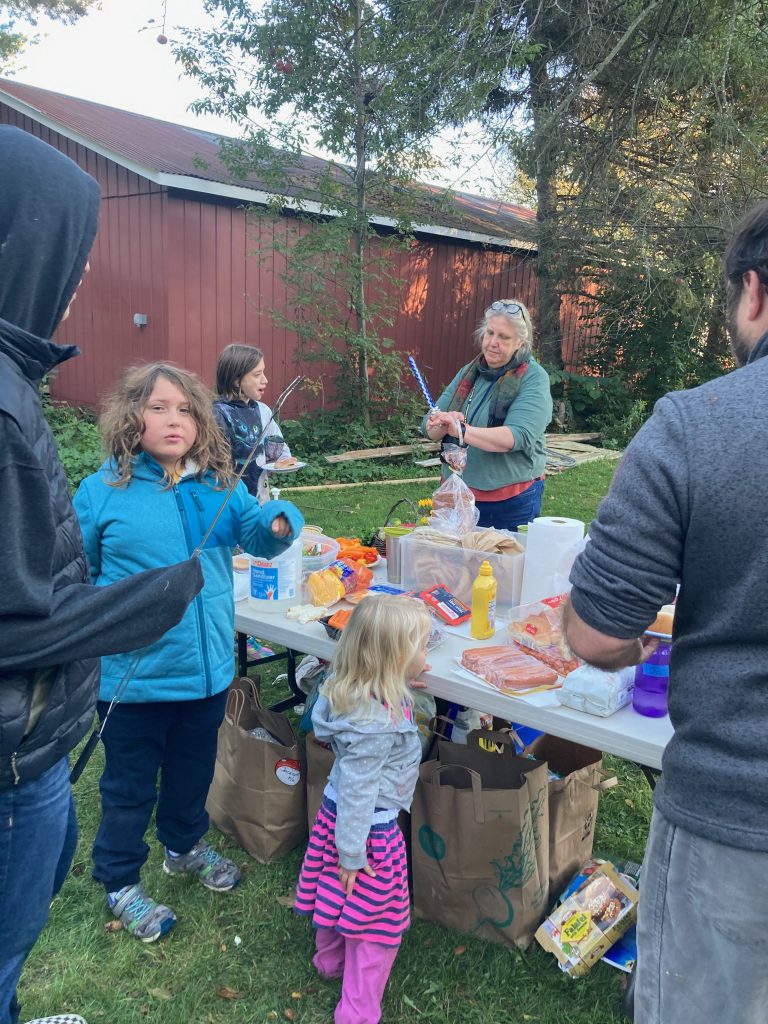
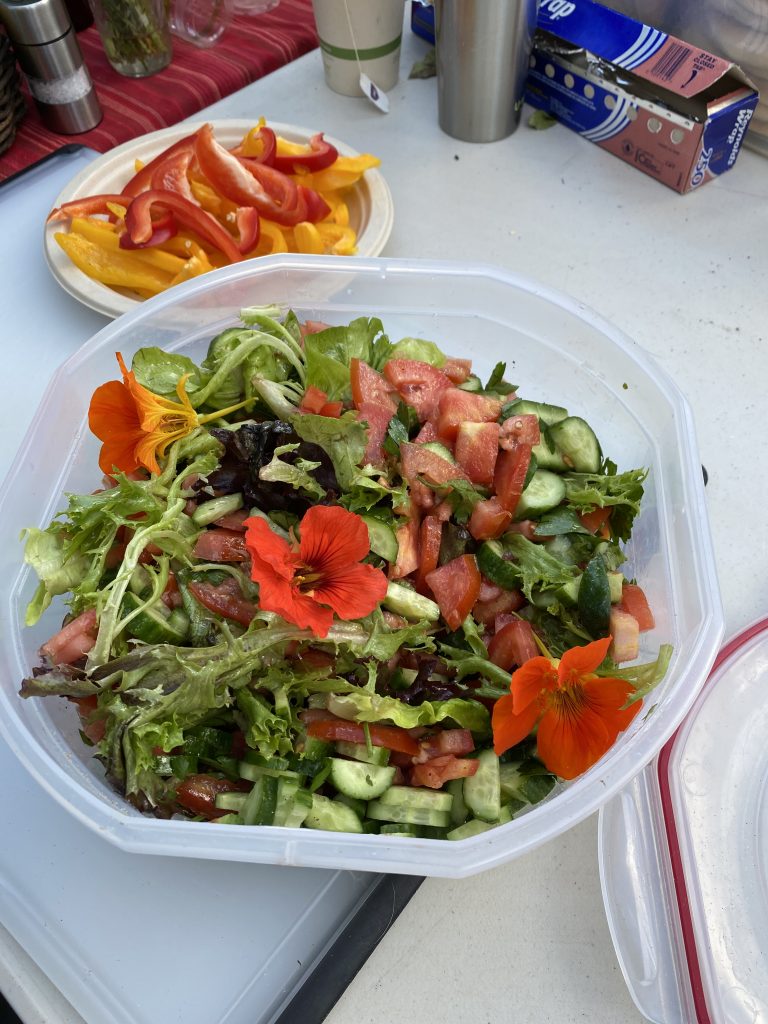
5:30-6pm     Kosher Fleshig Dinner Potluck (with hot dogs to roast, felafel, pita, salad, tahini, and homemade pumpkin muffins, apples for snack,​​​​ prepared dishes to pass, whole wheat bread with sunbutter and preserves)!

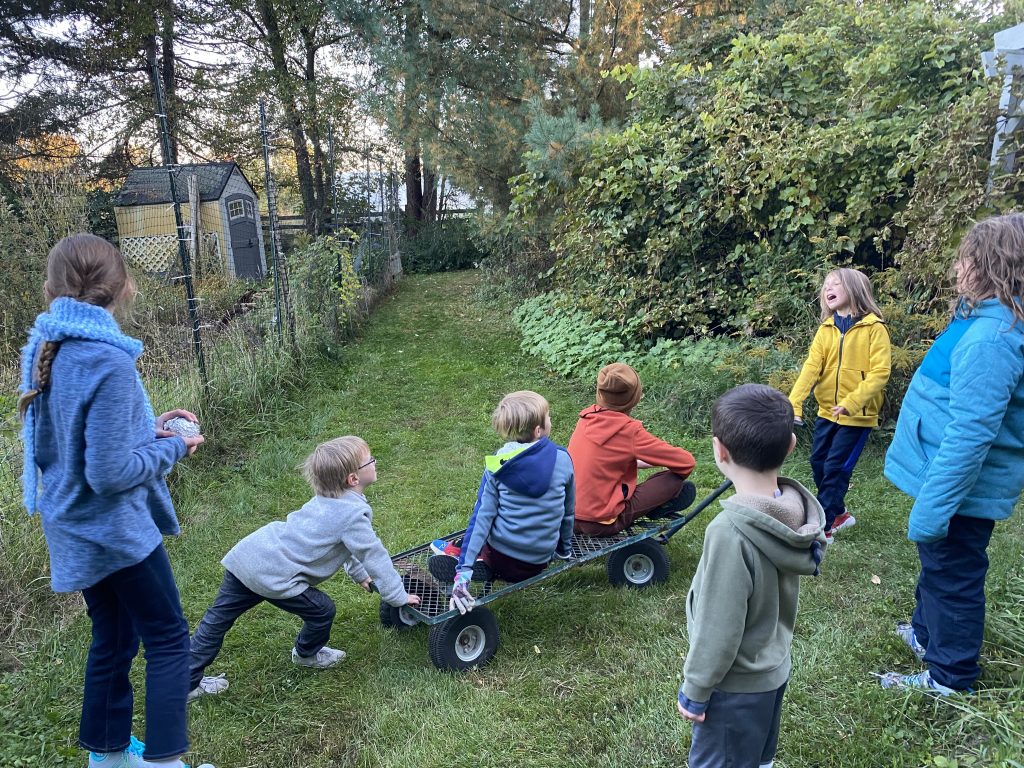
6-7pm           Active all-ages Games! (Otto and Mollie) ​a rubber ball, a kerchief​

7-8pm           Havdalah, S’mores and Jewish ghost stories (not too scary) around the campfire! (we could use parent talent for this!)​ ​Smore fixings, Bring your havdalah sets, candles, grape juice, spices, phones, cool stories

8-9pm           Flashlight reading and board games in the kids’ tents, bed!

9-10pm         Sweet shirot around the fire, with warmed wine for adults, bed! ​Box of wine, ​pot to warm it over the fire! Rise Up songbook​

Sunday:

7:00-8:30am       Early Riser Walks and Ad-hoc yoga! (Parents)​ That special morning person who would like to lead yoga ad-hoc

8:30-9:15am       Brekkie around the fire! (bring favorites– we’ll supply oatmeal, hot chocolate, (four gallons of milk and ground coffee, maple syrup, plus other goodies that can be eaten straight up or warmed over a fire in a pot that you bring )

9:15am-10am     Israeli Dancing with Drake!​ Your “dancin’ shoes”/ comfortable shoes

10am- 11am        Beit Sefer students meet in the barn! (Parents hang out, pack up, etc.) ​Pencil

11am- 11:30am   Beit Sefer kids and families decorate the sukkah! **Option to help the AARC help spruce up Carol’s farm* ​More construction paper, garlands, glue, string and tape ​​

11:30-noon          Dedication and first shake of etrog and lulav in the Sukkah! etrog and lulav

Noon                   Goodbyes! *Option to help the AARC help spruce up Carol’s farm, Shmita celebration​* ​Parents to join me in leaving 

Filed Under: Beit Sefer (Religious School) Tagged With: Beit Sefer, Shmita

Rosh Hashanah Kavanot 2022

September 28, 2022 by Gillian Jackson

What a joy it was to learn from and enjoy our community’s teachings on Rosh Hashanah. If you missed it or would like to read the Kavanot that were shared by Emily Eisbruch, Seth Kopald, Anita Rubin-Meiller or Dave Nelson you are in luck! We have posted them here on our blog to read and cherish going forward. Mazel Tov to our Kavanah writers on your profound and heart felt teachings, your contributions are deeply appreciated.

Gratitude for Community
– by Emily Eisbruch

Welcome community of
sharing, being, caring
Music, chanting, praying, dancing
Group aliyot with meaningful themes
Acknowledging our struggles and naming our dreams

Helping with the mitzvah corps
Warm congregation we are working for
August picnic at Bandemere park
Breaking the fast, after havdalah, after dark

Being together through COVID blues
Telling our stories in the Jewish news
Building thoughtful bonds on our listserv Recon chat
Where we ask each other, how about that?

Terrific book group conversations
On jews throughout the generations
Holidays – latke versus hamentashen debates
and pondering of collective fates

Creating chuppah cover squares
A gorgeous collaboration where each one shares
Ner tamid, Magillah ark, Torah Table tapestry
Members manifesting their artistry

For our youth, environmentally and ethically aware
An innovative and bold Beit Sefer
At these days of awe, let’s take measure
Of the community we are together
With gratitude, let’s look at how to nurture, how to be
In the Hebrew year five seven eight three

Praying from the Heart 

By: Seth Kopald 

As we continue deepening into our Rosh Hashanah experience, I invite you to ask yourself: Who is praying? 

Take a look inside. Is it a part of you who is going through the motions because this is what we do on Rosh Hashanah, or one who thinks we “should” be praying on this Holy day? Is it a part of you who might want something from G-d: healing, forgiveness, even a sense of ease? You may notice how much of your attention is above your shoulders, in your cognition. 

Now, slowly allow your attention to drop into your heartspace. Notice, you can sense yourself and the people around you, from your heart. From this place, perhaps we can extend warmth and love to those parts of ourselves who think we should pray, and recognize their desires and their fears. 

–

From this place of deep compassion for ourselves, we can then turn to G-d. From our heart, notice how we feel in G-d’s presence, no matter how you sense or perceive them. Perhaps you feel, or have felt abandoned, by G-d. Yet, for a moment, see if we can feel the acceptance that is there, and how we are also a part of the Divine – the life force we all share that is our true Selves? 

–

Can we for a moment, if you choose, allow yourself to be held, to sense the presence of something greater than ourselves. See how our hearts respond, how our bellies respond, and how our full bodies want to respond. Perhaps ask G-d in this moment: What do you want me to know? And see what you sense. . . 

–

As we move forward in prayer, let’s commune with G-d from this place, alive, embodied, vibrant, compassionate, and from our hearts – let’s commence in prayer.

Kavanah on the Non-Duality of the Divine

David Erik Nelson

About two weeks into the pandemic one of my kids had a question about the Kabbalistic Tree of Life diagram. I don’t recall what the question was, who asked it, or if anyone’s interest persisted long enough for me to find an answer.

But that got me looking at kabbalah, and I kept returning to it, because in those claustrophobic early days of the plague it was definitely more reassuring to read commentaries on centuries-old rabbinic esoterica than anything I was likely to see in the Washington Post.

I’m one of those people who often prefers to follow “the words of your heart” instead of the ones in the siddur. So I’m sharing this, for those who are likewise inclined.

Just a warning: at first, what I’m gonna read will come off as kind of anodyne and hippy-dippy. Then, on reflection, it will begin to seem sort of awful. That makes me nervous.

But I’m still going to share it with you. 

It starts like this:

The essence of divinity is found in every single thing—nothing but it exists. Since it causes every thing to be, no thing can live by anything else. It enlivens them; its existence exists in each existent.

Do not attribute duality to God. Let God be solely God. If you suppose that God emanates until a certain point, and that from that point on is outside of God, you have dualized. Realize, rather, that GOd exists in each existent. Do not say, “This is a stone and not God.” Rather, all existence is God, and the stone is a thing pervaded by divinity.

I don’t think that’s too earth shattering, right? I mean, it sounds an awful lot like a combination of Yoda describing the Force and the first lines from that Beatles song “I am the Walrus” (♬♫♪ I am he as you are he as you are me / And we are all together … Koo-koo-ka’choo… ♬♫♪ )

But Rabbi Moses ben Jacob Cordovero—the 16th Century Kabbalist who wrote what I read—doesn’t leave it at that. He goes on, and that’s where things get potentially…uncomfortable. Cordovero says:

Before anything emanated, there was only God. God was all that existed. Similarly, after God brought into being that which exists, there is nothing but God. You cannot find anything that exists apart from it. There is nothing that is not pervaded by the power of divinity. If there were, God would be limited, subject to duality. Rather, God… is present in everything, and everything comes into being from it. Nothing is devoid of its divinity.

That’s a little more extreme than Yoda and the Beatles. 

Because Cordovero isn’t saying “All of the good things are pervaded by God” or “All of the righteous are children of God” or “Everything in nature is God.”

His claim–which you could derive just from the words of the Sh’ma–is that “Nothing is devoid of God’s divinity.”

That’s … problematic. If I say nothing is outside of God, then I’m surely saying that the squirrel is divine and the car is divine, the meat is divine and the bullet is divine, the victim is divine, the killer is divine, the rescuer is divine, the ambulance divine, diesel is divine, the kid watching it all on YouTube is divine–

That all quickly becomes overwhelming. 

Cordovero claimed that by “Contemplating this, you are humbled, your thoughts purified.”

I don’t know about that.

But I do know that contemplating this non-duality—this complete saturation of all of reality (good, bad, and ugly) in the divine—feels simple and honest and true, in the way the Sh’ma feels simple and honest and true. 

And, on a functional level, it helps me get past the bumpier bits of our liturgy. 

A lot of us feel weird begging the forgiveness and protection of “Our Father, Our King” in Avinu Malkeinu. I feel less weird about it when I reflect that I am singing to a paternal majesty in which we all co-participate, that I’m begging me to forgive me, and for us to forgive each other, and to protect each other (and all of everything) from pestilence, sword, famine, captivity, destruction, iniquity–and all the other very unpleasant things that dwell together with us in the divine.

Zichronot

By Anita Rubin-Meiller

When my mother died in 1986 at the too soon age of 64, 3 months after my wedding, I made a decision to remember God. I was acutely aware of my choice…would I see God as this distant, all powerful entity that just took my mother’s life; or would I turn to the God of my still evolving understanding…a Divine presence shining through the loving and comforting presence of friends and family.  I chose the latter and remember gathering in my childhood bedroom with 3 of my dearest friends, sharing memories, laughter and tears. The blasts of the shofar in this Zichronot section of the Shofar service are a calling from God to us to remember we are never unseen, never forgotten; to remember the God that took care of Noah and saved the species of the Earth from total extinction; to remember that we too, are tasked with seeing the holiness in each and every living and breathing life form; that because we are remembered our actions matter.

There is an old fable, recounted in M.Scott Peck’s book…A Different Drum. It tells the tale of a monastery that had “fallen into hard times.” With only 5 monks remaining, its order was dying. Desperate for new possibilities, the aged Abbot makes a visit to the Rabbi from a nearby village. The Rabbi too was experiencing a dispirited community and so the two faith leaders conversed and commiserated. As the Abbot readied to return to the monastery, he asked if the Rabbi could offer any advice. The Rabbi responded, “ I have no advice to give, but the Messiah is among you.” You might guess what happened then…perhaps it would happen here, or anywhere…the monks, thinking that the Messiah could be any one of them started treating each other with immense kindness; started seeing the particular sparks of God each one manifested; started creating an aura of love and respect that began to attract visitors and even young men desiring to join the Order.

In my nascent meditation practice with the Awakened Heart community, I have been learning over and over again how reality is defined by what we bring our attention to. The shofar blasts of Zichronot ask us to bring our attention to God’s covenant; to the God whose image we are created in; to a God that is not only Sovereign but in the words of Rabbi Samuel Barth“a parent who has time and love for each child”. Through the teachings of Ram Daas, we are being asked to bring our attention to a God who bids us to “love, serve and remember.” What would it look like if what we were paying attention to and remembering was the Divine unfolding in the universe through the interconnection of everything? At the Awakened Heart August 2020 retreat, Sylvia Boorstein, a beloved Jewish Buddhist teacher, offered this drash to introduce the prayer: Hah-raynee m’kah-bel ahleye et mitzvat haboray Ve-ahavtah l’ray-ahchah k’mochah; translated by Rabbi Jeff Roth in this prayer chant as: I take the mitzvah upon myself of loving all who cross my path, offering kindness from my heart, loving you and loving me:  She said,“My choice of the most important commandment might be fixing a mezuzah to the doorposts of your house because when you go in and out and touch the mezuzah you are sensitive to this passage, “to love God with all our soul, all our might, all our heart”. If you took it really seriously you can’t just kiss the mezuzah and leave, you can’t take any grudges with you, so you have to stand in the doorway and think about it for a while – Ok, I can do this; Ok, heart clear – Go! And when you return, you pause, I can’t go in until I’m sure that my heart is free of negativity…may I be free of negativity and the danger it would pose to me of confusing my mind. You have to check yourself everytime you go in and out, am I fulfilling the commandment…I’m going to love everybody indiscriminately…May I have no ill will in my heart, may I have an unmortgaged heart.”

Perhaps for some of you, as it has been for me, this idea of keeping the heart clear of ill will has become particularly challenging amidst our political climate and escalation of hateful, provocative speech and actions. It has been surprisingly difficult to restrain my own hateful speech and violent wishes, albeit usually expressed under my breath or in the privacy of my own home. Still, I can feel its impact on my heart and spirit. So recently, I returned to Sylvia’s teaching and added mezuzahs to 2 other entranceways of our home. I have an earnest desire to follow her suggested practice, knowing the peace that can come to my body, mind and heart from doing so. Knowing it will help me remember that Everything, and everyone, is God. Perhaps the shofar blasts about to come will awaken the capacity to bring that intention into action; to remember to remember.

Filed Under: Posts by Members Tagged With: High Holidays 2022, kavanah, Rosh Hashanah

Sign Up For This Years Yom Kippur Break Fast!

September 12, 2022 by Gillian Jackson

With the guidance of our Health and Safety Committee, we have decided to host our community Break Fast this year after sundown and the Final Shofar. Attendees can enjoy their meal inside the social hall at the Unitarian Church, or can bring the meal into the courtyard and eat outside.

In order to make sure that we have the appropriate amount of food, please be sure to sign up today! Menu Below!

Please RSVP by September 5th.

Sign Up to Attend the Break Fast Here!

Filed Under: Upcoming Activities Tagged With: community, High Holidays 2022

Yom Kippur Workshops 2022

September 5, 2022 by Gillian Jackson

The War in Ukraine: Empire, War, Refugees, and us with Debbie Field 1:30-3pm

Our own family histories, and Jewish history in general, have been shaped by empires and their wars of conquest. In this interactive session, we’ll learn a little about the war in
Ukraine, its impact on civilians, and the creation of refugees. We’ll make some comparisons with our own experiences as Jews, and end by considering actions we might take as individuals and as a community.


Movement Workshop with Alison Stupka. 1:30-3pm

People will gain a reconnection with their bodies during their fast.


Jonah Workshop with Rabbi Debra, 3-4:30pm

During this breakout session, we will read the book of Jonah together, and share informal discussion about its themes and why the rabbis chose such a seemingly silly story for the Yom Kippur afternoon Haftarah.


Sing and Connect with Deb Kraus, 3-4:30pm

Deb Kraus will hold space outdoors if weather permits to sing together and connect.

Filed Under: Upcoming Activities Tagged With: community, community learning, High Holidays 2022, Yom Kippur

Thoughts on Elul By Rabbi Debra

August 31, 2022 by Gillian Jackson

Rabbi Debra Rappaport will be leading this year’s High Holidays services

Greetings! As I write to you, we are at the beginning of the new moon of Elul, the month that precedes the new moon of Tishrei – also known as Rosh Hashanah. ELUL is known as an acronym for the phrase Ani L’dod v’Dodi Li – I am my beloved’s and my beloved is mine. Who or what is the Beloved to whom we need to return this season? 

The work of this season is called cheshbon ha-nefesh – taking stock of our own souls and our relationships. Where have my actions not been true to my values? Where do I need to make amends and/or change course? Teshuvah – making amends where appropriate and returning to our best selves, to the ineffable Beloved, is the other part of our season’s work.

Though we are new to one another, we may share some of the same sentiments… for example, wondering as the season approaches, How have I changed? What difference did all of last year’s resolve make? Or, What more can I do to stem the destruction and injustices I see around me?

Believing that we can change, and that repairs can be made, matters. It forms how we choose to show up to every moment. The Talmud (Pesachim 54a) describes teshuvah as a possibility created even before the world itself was created! The possibility of choice and change exists in our very essence. Not just regarding the big things but in every moment. Not just as individuals but collectively. Think of how a tiny course correction on an ocean liner leads a ship to a different landing place. Likewise, tiny moments of showing up differently in our own behavior can change our life’s trajectory – and hopefully our country’s and our planet’s – for the better.

MyJewishLearning.com offers some ideas for practice for the month of Elul.  If you’d like to do some learning and reflecting together, please do join one of the High Holy Days workshops starting September 18.  Sign up here!

In any event, I am truly looking forward to meeting you in person, and making the journey of the holy days together. In the meantime, may all have a nourishing Elul.

L’shalom,

Rabbi Debra Rappaport    

Filed Under: Rabbi's Posts Tagged With: Elul, High Holidays, High Holidays 2022

  • « Go to Previous Page
  • Page 1
  • Interim pages omitted …
  • Page 18
  • Page 19
  • Page 20
  • Page 21
  • Page 22
  • Interim pages omitted …
  • Page 75
  • Go to Next Page »

Footer

Affiliated with

Copyright © 2026 Ann Arbor Reconstructionist Congregation