• Skip to primary navigation
  • Skip to main content
  • Skip to primary sidebar
  • Skip to footer
Ann Arbor Reconstructionist Congregation

Ann Arbor Reconstructionist Congregation

  • Home
  • About
    • Overview
    • Rav Gavrielle Pescador
    • Our History
      • Photo Gallery
    • Our Values and Vision
    • LGBTQ Inclusive
    • Our Board
    • Our Sacred Objects
    • About Reconstructionist Judaism
    • Jewish Ann Arbor
  • Programs
    • Shabbat and Holidays
    • B’nei Mitzvah
    • Tikkun Olam
    • In the (Washtenaw Jewish) News
    • Health and Safety Expectations for In-Person Gatherings
    • Join our Mailing List
  • Religious School
    • About Beit Sefer
    • Teachers
    • Enrollment and Tuition
    • 2025-26 Beit Sefer Calendar
  • Blog
  • Calendar
  • Membership
    • Thinking about joining?
    • Member Area
  • Contact Us
  • Donate

Yom Kippur

Yom Kippur Workshops 2016

September 7, 2016 by Margo Schlanger

It’s our Yom Kippur tradition at AARC to have several afternoon sessions where we can together study, meditate, and discuss. This year, there will be three sessions; two from about 2:15 to 3:30 pm, and one from 3:45 to 5 pm.

One of the 2:15 sessions will be guided meditation, led by our member, Barbara Boyk-Rust, who writes:

Soul Nourishment: Meditation and Sacred Chant for the Quiet of the Day.
As we fast and pray on Yom Kippur we are asked to be in more direct contact with our spirit and with our connection to God than any other day of the year. While we move toward this during the evening, morning, and late afternoon services, what assists us during the spaces between the services? A walk, a nap, a quiet conversation? Each may be of help. A different way of prayer is also fitting. It is a time of day when we may be longing for sustenance. Together we will create a form of soul nourishment through meditation and offering up a few sacred texts in chant. May this time augment and amplify the expression of our soul on this holy day.

Our member Ellen Dannin will facilitate a conversation about the Book of Jonah:

Yonah – It’s Much More than Just a “Whale”: We will share reading the story of Yonah / Jonah, with time for participants’ contributions, questions, thoughts. Feel free to bring your own texts.

At 3:45, you can choose between a walk, a chat with a friend, or whatever else moves you, and a session that uses Jonah, again, as a starting off point a conversation about solitary confinement. We’ll start with some materials from this T’ruah study guide (which is based on a Yom Kippur d’var member Margo Schlanger gave at AARC in 2013).  But we’ll move fairly quickly into the modern experience of imprisonment and examine the question, What kind of conditions–physical and programmatic–create the best chance of t’shuvah?  Our leaders for this session will be member Margo Schlanger and Ronald Simpson-Bey.

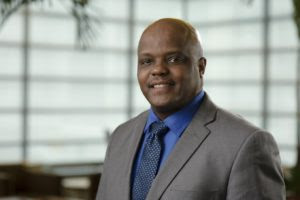
Ronald Simpson-Bey, leading Ann Arbor Yom Kippur workshop
Ronald Simpson-Bey

Ron is the Alumni Associate for JustLeadershipUSA (JLUSA), part of the steering team of the newly formed Collaborative to End Mass Incarceration in Michigan (MI-CEMI), and co-founder and advisory board member of the Chance For Life (CFL) organization in Detroit. He served 27-years in the Michigan prison system, where he founded many enrichment programs rooted in transformation, redemption, and self-accountability.  In the course of that time, he spent two years in solitary confinement. He was a jailhouse lawyer who got his conviction reversed by the courts and got himself out of prison.  He attended Eastern Michigan University, Mott Community College, and Jackson Community College, and he has worked as a staff paralegal at the former Prison Legal Services of Michigan.

On this day of atonement, join this workshop to better understand American imprisonment, and what kinds of change we need and can help with.

Filed Under: Community Learning, Tikkun Olam, Upcoming Activities Tagged With: High Holidays, Yom Kippur

Mishkan/Sanctuary: Encountering the Sacred in Space and Time

October 15, 2015 by Clare Kinberg

Yom Kippur talk by Carole Caplan

sunsets-over-farmThe day outside is cool, but the bright sun filters through the trees and warms me every now and again. I can hear the rustle of the wind in the branches above, and the call of something further away, maybe a loon, making its way to more hospitable winter accommodations. The crackling of the leaves under my feet step after step, make it clear to me that out of nowhere and all too soon, fall has arrived.

Baba walks ahead of me, and my soul, battered and bruised from the turnings of seasons before, struggles to keep up with this wise man in every way. “I tend the path,” is all he says to me, and I wonder, if I am here to learn from him, how or why or when. We walk quietly together, yet completely alone, for a long time, step after step.

The woods grow deeper and I can smell the moss on untouched earth in this old wood forest that has stood here longer than I will even be alive. Baba moves a tree limb that has fallen in our way. Come this way he motions, and without words I hear him say, “I tend the path, Carole, for you.”

Step after step we make our way along the edge of the forest to an opening that overlooks a large field. Its expansiveness holds the possibility of future crops, of dreams, of desires, of growth, of success, of nourishment, of failure, of disappointment, of need, of drought, of lack; of death. I sense that all of these have happened here in this field before. Is it knowledge or preparation that makes the difference? Is it repentance or punishment? Is it chance or luck? I hear no answers, and quickly retreat back to the woods, overwhelmed by the acknowledgement that so many things will always remain outside of my control.

How is it that I have found myself here…here in this place…following a monk through the woods? I know I am searching. I know I am completely lost, yet I know I am somehow exactly where I need to be. Truly, this must be grace cradling me in her strong and loving arms.

My soul, that which time has completely walled off and simultaneously entirely exposed, begins to soften. I feel compelled to stop and lean against a tree too big for my arms to wrap around.

I watch as Baba walks ahead step by step. And then it happens. Through the deafening silence and the tears streaming down my face, I hear clearly and loudly what I never even knew I had been longing to hear… “I tend the path, Carole—and it is enough for me to do just that.” It was a simple but elusive validation. A much needed directive, urging me on. It is enough just to be. It’s not about how much you can do. Enough just to walk. Not to always be striving, struggling, hurrying, worrying to get somewhere. Not about what you can produce. Enough just to tend that which is in front of us on our path with our time, our talent, our hearts, and yes, with our broken souls.

Baba and I turn to head back to the others making lunch at the central house. In a wordless flash, I recognize this as a magic moment−a door through which I have passed and will have been changed forever. I don’t know how it is that I have found myself here in these woods, but I do know that here I have somehow found myself renewed.

So, this I know: I am here to tend the path. The path that has led me to a farm outside of Ann Arbor where I tend the gardens, and know it to be “enough.” The soil there outside my door holds the seeds that become the plants that provide the fruits that adorn the tables that I am being called to set–and this cycle nourishes every part of me. I hope you will visit me sometime. You see, there is a path there that wanders through the growing things that turn with the seasons. And perhaps once there, you’d like to join me, step-by-step, for a walk.

Filed Under: Posts by Members Tagged With: High Holidays, Yom Kippur

Preparing for Yom Kippur

September 20, 2015 by Margo Schlanger

MJ_Strassfeld_photo
Rabbi Michael Strassfeld

From Rabbi Michael Strassfeld, who will be leading Yom Kippur services:

We gather on Yom Kippur to engage in teshuvah—reflection and change both as individuals and as a community. The services will be a mixture of liturgy, contemporary readings, talks by the rabbis and by laypeople, music played, an original story for children and adults, and singing led by laypeople and by the rabbis.
Unique to Yom Kippur is the avodah service. Traditionally it recounts the ritual in the Temple on Yom Kippur in ancient times. Instead our avodah service will be structured around us as individuals, in relationships and connected to the world. We will also touch on these themes as raised in the talks by Deb, Anita and Clare from Rosh ha-Shana.

We will take some time as individuals and then in small groups to reflect on our selves and our hopes and visions for that self. The third confession will focus on our commitment to social justice climaxing with a liturgical poem made up of Biblical verses on the theme of tzedek—justice.

Yom Kippur will come to a close with a special Yizkor service at 5:30 with an opportunity to share memories of loved ones. Neilah, the concluding service (at 7 pm ) is the climax of the day as the themes and the music come together one last time. It feels like crossing the finish line of a spiritual marathon. We will end with a special havdalah ritual with lights carried by the children and the final blast of the shofar.

Filed Under: Rabbi's Posts, Upcoming Activities Tagged With: High Holidays, Yom Kippur

Yom Kippur Readings (2015)

September 19, 2015 by Margo Schlanger

These were some of the readings at our 2015 Yom Kippur services.

Who by Fire

by Leonard Cohen

And who by fire, who by water,
Who in the sunshine, who in the night time,
Who by high ordeal, who by common trial,
Who in your merry merry month of may,
Who by very slow decay,
And who shall I say is calling?

And who in her lonely slip, who by barbiturate,
Who in these realms of love, who by something blunt,
And who by avalanche, who by powder,
Who for his greed, who for his hunger,
And who shall I say is calling?

And who by brave assent, who by accident,
Who in solitude, who in this mirror,
Who by his lady’s command, who by his own hand,
Who in mortal chains, who in power,
And who shall I say is calling?

The Kol Nidre Mirror to Our Soul

by Sandy E. Sasso, in All These Vows: Kol Nidre (Lawrence A. Hoffman, ed., Jewish Lights Publishing, 2011) [edited and adapted]

Life is filled with more than the scrapes and bruises of childhood that require nothing more than a kiss and a hug to make them better.  Life’s real issues are far more complicated and sometimes intractable.  Technology assures us a solution for every problem; medicine promises a pill for every pain.  But religion recognizes that we are mortal; we can’t fix everything.  Kol Nidre reminds us to forgive ourselves for it.

I recently learned that you can trap bees on the bottom of a Mason jar without a lid.  The bees fly in for the honey at the bottom of the jar and then they think they are stuck, because they never look up to see that the jar is open.  Life weighs us down.  Like the bees on the bottom of the Mason jar, we think that there is no way out of our situation, that we are trapped.  Kol Nidre – the High Holy Days – tells us to look up.

Technology is not so forgiving.  One of the problems of the Internet is that it does not forget; it keeps all our data – forever.  We cannot delete foolish e-mails or unflattering photos.  Our digital past remains indelibly with us.  How different is the Book of Life where tradition pictures God recording our good and bad deeds.  That record is erasable through t’shuvah.  If we regret something written in our own life’s book, atonement is our delete button.  The Rabbis teach that if individuals have repented, we are not allowed to remind them of their past errors.  Our past does not shackle us to the bottom of a Mason jar; we can look up.  We can begin again.

New Year’s Poem

by Rachel Barenblatt, http://velveteenrabbi.blogs.com/blog/2006/9new_years-poem.html

I’m cleaning the cupboard
beside the stove, low to the floor,
where pots and pans hide
haphazardly.

Our kitchen is well-used,
baker’s rack gleaming
with neat jars of peaches,
string beans, preserves

but one swipe of paper towel
across this hidden surface
and I flinch at the grime
I never noticed before.

This is teshuvah: opening
every closed-up space. I’m
a window smeared with dust,
a cabinet in need of scouring.

It’s simple work, but
part of me resists, preferring
distraction to clarity.
When I make the leap

I suddenly can’t believe
I ever ignored the dirt.
Hot water blesses my hands
into action. God, help me

put my house in order,
begin the year in readiness
for the wonders I know
are coming, are always here.

God Was In This Place & I, i Did Not Know

by Lawrence Kushner

We go down into ourselves with a flashlight, looking for the evil we have intended or done – not to excise it as some alien growth, but rather to discover some good within it. We begin not by rejecting the evil, but by acknowledging it as something we meant to do. This is the only way we can truly raise and redeem it.

We lose our temper because we want things to be better right away. We gaze with lustful eyes because we have forgotten how to love the ones we want to love. We hoard material possessions because we imagine they will help us live more fully. We turn a deaf ear, for we fear the pain of listening would kill us. We waste time, because we are not sure how to enter a relationship. At the bottom of such behavior is something that was once good. On this sacred day, a day of communion and of light, our personal and collective perversions creep out of the cellar, begging to be healed, freed, and redeemed.

Rabbi Yaakov Yosef of Polnoye taught: The essence of the finest t’shuva [turning] is that “deliberate sins are transformed into merits,” for one turns evil into good, as I heard from my teacher [the Baal Shem Tov], who interpreted the Psalm verse “Turn aside from evil and do good” to mean: ‘Turn the evil into good.’

The conclusion of true t’shuva, of true turning, is not self-rejection or remorse, but the healing that comes from telling ourselves the truth about our real intentions and, finally, self-acceptance. This does not mean that we are now proud of who we were or what we did, but it does mean that we have taken what we did back into ourselves, and acknowledged it as part of ourselves. We have found its original motive, realized how it became disfigured, perhaps beyond recognition, made real apologies, done our best to repair the injury, but we no longer try to reject who we have been and therefore who we are, for even that is an expression of what is holy.

We do not simply repudiate the evil we have done and sincerely mean never to do again; that is easy (we do it all the time). We receive whatever evils we have intended and done back into ourselves as our own deliberate creations. We cherish them as long-banished children finally taken home again, and thereby transform them and ourselves. When we say the vidui, the confession, we don’t hit ourselves; we hold ourselves.

On Jewish Identity

by Theodore Bikel (published in Moment Magazine, May/June 2010)

I consider myself to be a Jew in the vertical and horizontal sense. Horizontal, because I feel myself to be kin, relative and family of every Jew who lives today, wherever he or she may be. Vertical, because I am son, grandson and descendant of all the Jews who came before me; I am also father, grandfather and ancestor of all those who w\ill come after me. Am I special because I am a Jew?… I am not better than my neighbors, not nobler; I just carry a knapsack that is heavier with memory, with pain. As a Jew, I peddle the lessons of history. As for survival in the face of mortal threats, we who have repeatedly stared into the jaws of death are better able to deal with the threats than those who face them for the first time. But when we tell the world about survival, we are talking about creative survival, not mere physical survival. Everybody who is threatened with extinction fights for physical survival. Yet to survive as a moral people is as important, maybe more important. Far too often people forget this.

There is a Time

Ecclesiastes 3:1-8

A season is set for everything, a time for every experience under heaven:
A time for being born and a time for dying,
A time for planting and a time for uprooting the planted;
A time for slaying and a time for healing,
A time for tearing down and a time for building up;
A time for weeping and a time for laughing,
A time for wailing and a time for dancing;
A time for throwing stones and a time for gathering stones,
A time for embracing and a time for shunning embraces;
A time for seeking and a time for losing;
A time for keeping and a time for discarding;
A time for ripping and a time for sewing,
A time for silence and a time for speaking;
A time for loving and a time for hating;
A time for war and a time for peace.

A Man Doesn’t Have Time

by Yehuda Amichai

A man doesn’t have time in his life
to have time for everything.
He doesn’t have seasons enough to have
a season for every purpose. Ecclesiastes
Was wrong about that.

A man needs to love and to hate at the same moment,
to laugh and cry with the same eyes,
with the same hands to throw stones and to gather them,
to make love in war and war in love.
And to hate and forgive and remember and forget,
to arrange and confuse, to eat and to digest
what history
takes years and years to do.

A man doesn’t have time.
When he loses he seeks, when he finds
he forgets, when he forgets he loves, when he loves
he begins to forget.

And his soul is seasoned, his soul
is very professional.
Only his body remains forever
an amateur. It tries and it misses,
gets muddled, doesn’t learn a thing,
drunk and blind in its pleasures
and its pains.

He will die as figs die in autumn,
Shriveled and full of himself and sweet,
the leaves growing dry on the ground,
the bare branches pointing to the place
where there’s time for everything.

I needed to talk to my sister

by Grace Paley, in Fidelity (2008)

I needed to talk to my sister
talk to her on the telephone I mean
just as I used to every morning
in the evening too whenever the
grandchildren said a sentence that
clasped both our hearts

I called her phone rang four times
you can imagine my breath stopped then
there was a terrible telephonic noise
a voice said this number is no
longer in use how wonderful I
thought I can
call again they have not yet assigned
her number to another person despite
two years of absence due to death

The Essene Book of Days

by Danaan Perry (Earthstewards Network, 2003) [edited]

Sometimes I feel that my life is a series of trapeze swings.  I’m either hanging on to a trapeze bar swinging along or, for a few moments in my life, I’m hurtling across space in between trapeze bars.

Most of the time I spend my life hanging on for dear life to my trapeze-bar-of-the-moment.  It carries me along at a certain steady rate of swing and I have the feeling that I’m in control of my life.  I know most of the right questions and even some of the right answers.  But once in awhile, as I’m merrily (or not-so-merrily) swinging along, I look out ahead of me into the distance, and what do I see?  I see another trapeze bar swinging towards me.  It’s empty, and I know, in that place in me that knows, that this new trapeze bar has my name on it.  It is my next step, my growth, my aliveness coming to get me.  In my heart-of-hearts I know that for me to grow, I must release my grip on this present well-known bar to move to the new one.

Each time it happens to me, I hope that I won’t have to grab the new one.  But in my knowing place I know that I must totally release my grasp on my old bar, and for some moment in time I must hurtle across space before I can grab onto the new bar.  Each time I am filled with terror.  It doesn’t matter that in all my previous hurtles across the void of unknowing I have always made it.  Each time I am afraid that I will miss, that I will be crushed on unseen rocks in the bottomless chasm between the bars.  But I do it anyway.  Perhaps this is the essence of what mystics call the faith experience.  No guarantees, no net, no insurance policy, but you do it anyway because somehow, to keep hanging on to that old bar is no longer on the list of alternatives.  And so for an eternity that can last a microsecond or a thousand lifetimes, I soar across the dark void of “the past is gone, the future is not yet here.”  It’s called transition.  I have come to believe that is the only place that real change occurs.  I mean real change, not pseudo-change that only lasts until the next time my old buttons get punched.

In our culture, this transition zone is looked upon as a “no-thing”, a no-place between places.  Sure, the old trapeze bar was real, and that new one coming towards me, I hope that’s real too.  But the void in between?  That’s just a scary, confusing, disorienting “nowhere” that must be gotten through as fast and as unconsciously as possible.  What a waste!  I have a sneaking suspicion that the transition zone is the only real thing, and that the bars are illusions we dream up to avoid the void, where the real change, the real growth occurs for us.  Whether or not my hunch is true, it remains that the transition zones in our lives are extraordinarily rich places.  They should be honored, even savored.  Yes, with all the pain and fear and feelings of being out-of-control that may accompany transitions, they are still the most alive, the most growth-filled, passionate, expansive moments in our lives.

And so, transformation of fear may have nothing to do with making fear go away, but rather with giving ourselves permission to “hang-out” in the transition between trapeze bars.  Transforming our need to grab that new bar, any bar, is allowing ourselves to dwell in the only place where change really happens.  It can be terrifying.  It can also be enlightening.  Hurtling through the void, we just may learn to fly.

Self Forgiveness First

by Donna Schaper

The first thing people do when restoring old chairs is strip — strip right down to the bare wood. They do this to see what the original might have looked like and to determine if the thing is worth doing over. They strip away all the years of grime, the garish coats of paint piled one on top of the other. They get rid of all the junk that’s been tacked on through the years and try to find the solid, simple thing that’s underneath.

I’m like an old chair needing that stripping process. Every now and then I have to take a really hard look at the illusions I’ve built up in myself and see what I’ve gotten myself into. Illusions? Yes, illusions; the excess baggage I carry around, the unnecessary; all that keeps me living off center too long. Stripping myself of all this is an intentional letting go of these illusions. It is a spiritual act of personal forgiveness. God lets us let go.

It’s hard work to let God forgive me. I have to discover the original under all these coats I’ve added, strip away all the cynicism and anger I’ve built up, get rid of the junk I’ve taken on, defy my disappointments, and find what is real again.

Compassion

by Kristin Neff

Self-compassion involves acting the same way towards yourself when you are having a difficult time, fail, or notice something you don’t like about yourself. Instead of just ignoring your pain with a “stiff upper lip” mentality, you stop to tell yourself “this is really difficult right now,” how can I comfort and care for myself in this moment? Instead of mercilessly judging and criticizing yourself for various inadequacies or shortcomings, self-compassion means you are kind and understanding when confronted with personal failings – after all, who ever said you were supposed to be perfect? You may try to change in ways that allow you to be more healthy and happy, but this is done because you care about yourself, not because you are worthless or unacceptable as you are. Perhaps most importantly, having compassion for yourself means that you honor and accept your humanness.  Things will not always go the way you want them to.  You will encounter frustrations, losses will occur, you will make mistakes, bump up against your limitations, fall short of your ideals.  This is the human condition, a reality shared by all of us. The more you open your heart to this reality instead of constantly fighting against it, the more you will be able to feel compassion for yourself and all your fellow humans in the experience of life.


Filed Under: Poems and Blessings, Rabbi's Posts, Upcoming Activities Tagged With: High Holidays, Yom Kippur

Yom Kippur Afternoon Programming

August 31, 2015 by Clare Kinberg

medium_laronwilliamswebAs always, AARC will have afternoon programming on Yom Kippur, in between the Morning and Torah service (10am-2pm) and our evening non traditional Yizkor service (5:30-6:45pm). The afternoon programming is 2-5pm; come to one part or all, as you choose. At 2, there will be an hour guided meditation–or take a break, perhaps for a walk through the beautiful grounds of the First Unitarian Universalist Congregation building. From 3-3:50pm, we will host a workshop on institutional racism and insider/outsider status by Ann Arbor activist La’Ron Williams, and at 4-4:50pm Rabbi Michael Strassfeld will lead a discussion of the Book of Jonah.

This year we are trying something new: having a respected and honored guest lead a Yom Kippur afternoon workshop that will draw us to use our open and vulnerable condition to make meaningful change. La’Ron Williams conducts workshops – with schools, business organizations, and non-profits – on the fundamentals of creating inclusive communities across a number of lines of diversity. His workshops are always informative, entertaining, and filled with opportunities for personal growth and organizational development. La’Ron is also a nationally acclaimed, award winning storyteller who, for more than twenty-five years, has toured extensively presenting highly participatory, music-spiced programs composed of a dynamic blend of original and traditional tales. He is known for his pronounced commitment to justice and peacemaking – a commitment made concrete through his involvement with the Racial and Economic Justice Task Force of the Ann Arbor based Interfaith Council for Peace and Justice, and via his work with Washtenaw Faces Race, an all-volunteer, inter-racial, interdisciplinary group that consciously and consistently works to dismantle racial hierarchy and promote racial equity in local institutions within Washtenaw County.

La’Ron describes the Yom Kippur afternoon workshop:

In the main, America’s understanding of racism remains stuck in the 1960s. Most of us only recognize it when it shows up as it did in the June shooting at the AME Church in Charleston – in overt incidents of violence, or as easily identifiable, interpersonal acts of discrimination backed by the ill will of a few individuals.

Because we think of it that way, the remedies we envision for it are part-time, incidental, and situationally applied to those we identify as its victims. In truth, 21st century racism cannot be remedied in our spare time. It lies deeply imbedded in all of our institutions; operating constantly, continuously, and “invisibly” — to perpetuate, in hundreds of ways that remain largely unmentioned, unidentified, and unexamined, a hierarchy of White advantage.

This presentation is designed to help its participants begin to recognize and understand the pervasiveness and effects of this contemporary “stealth” racism. Using a blend of storytelling, lecture and dialogue, we will focus on concept building, increasing our awareness of our personal racial identity development within an already racialized milieu, and identifying the major illusions that act to thwart our efforts to achieve inclusion.

MJ_Strassfeld_photo-B&WThen at 4 o’clock, Rabbi Strassfeld will lead a discussion of the Book of Jonah, traditionally read on Yom Kippur afternoon. What a one-two! As commentator Aviva Gottlieb Zornberg writes in The Murmuring Deep: Reflections on Biblical Unconscious,  “The enigmas that enrage and sadden Jonah are not riddles to be solved. They remain; God invites Jonah to bear them, even to deepen them, and to allow new perceptions to emerge unbidden. In a word, to stand and pray.” And as Maya Bernstein comments on this: “And so we, Jonah-like, enter the synagogue as he entered the fish, and as we stand in the dark, unseeing, we call out to our Creator. We do not answer these riddles; rather, we immerse ourselves in them and let them take us over.”

Filed Under: Community Learning, Tikkun Olam, Upcoming Activities Tagged With: community learning, High Holidays, ICPJ, racism, Yom Kippur

  • « Go to Previous Page
  • Page 1
  • Page 2
  • Page 3

Primary Sidebar

Search

Join Our Mailing List

Sign up for our twice a week newsletter to get details on upcoming events and catch up on our latest news.

This field is required.

Check your inbox or spam folder to confirm your subscription.

Upcoming Events

  • All day, April 19, 2026 – Beit Sefer
  • 6:30 pm – 8:00 pm, April 24, 2026 – Fourth Friday Kabbalat Shabbat
  • All day, April 26, 2026 – Beit Sefer
  • 12:00 pm – 3:00 pm, April 26, 2026 – “Lesson of the Homeland” and the Stories We Tell: A Conversation with Anat Zeltser
  • All day, May 3, 2026 – Beit Sefer

Latest News

  • RSVP to “Lesson of the Homeland” and the Stories We Tell: A Conversation with Anat Zeltser April 16, 2026
  • Climate Action Shabbat article in the April 2026 Washtenaw Jewish News April 3, 2026
  • Reimagining Torah Study: Moving from Zoom to In Person by Rabbi Gabrielle Pescador April 1, 2026
  • Creative Spirit at the AARC Beit Sefer March 27, 2026
  • When Is a Killer Not a Murderer? by Elizabeth Brindley March 19, 2026

Footer

Affiliated with

Copyright © 2026 Ann Arbor Reconstructionist Congregation