• Skip to primary navigation
  • Skip to main content
  • Skip to primary sidebar
  • Skip to footer
Ann Arbor Reconstructionist Congregation

Ann Arbor Reconstructionist Congregation

  • Home
  • About
    • Overview
    • Rav Gavrielle Pescador
    • Our History
      • Photo Gallery
    • Our Values and Vision
    • LGBTQ Inclusive
    • Our Board
    • Our Sacred Objects
    • About Reconstructionist Judaism
    • Jewish Ann Arbor
  • Programs
    • Shabbat and Holidays
    • B’nei Mitzvah
    • Tikkun Olam
    • In the (Washtenaw Jewish) News
    • Health and Safety Expectations for In-Person Gatherings
    • Join our Mailing List
  • Religious School
    • About Beit Sefer
    • Teachers
    • Enrollment and Tuition
    • 2026-27 Beit Sefer Calendar
  • Blog
  • Calendar
  • Membership
    • Thinking about joining?
    • Member Area
  • Contact Us
  • Donate

High Holidays

Rosh Hashanah Sermon 5785

October 16, 2024 by Rav Gavrielle

In today’s Torah reading, we learn that Sarah has trouble conceiving, and instructs Abraham to be with her handmaiden Hagar, who then gives birth to Ishmael.  Hagar lords motherhood over Sarah which makes Sarah resentful, and although years later, Sarah miraculously gives birth to Isaac, she still feels insecure and starts scheming to secure Isaac’s status in the family hierarchy, and has Abraham banish Hagar and Ishmael into the wilderness with limited provisions.

Today’s Haftarah also pits two women against one another over fertility issues, Hannah and Peninah, the wives of Elkanah.  Hannah can’t bear children, which devastates her.  Peninah, on the other hand, is fertile, and lords this over Hannah.  Elkanah tries to reassure Hannah and tells her that she is worth more than 10 sons, but Hannah cannot be consoled, and prays intensely, with bitter tears.  She bargains with God – if God gives her a son, then she will offer him for priestly service.  

Hannah’s way of praying grabs the attention of Eli the priest who notices that her lips are moving but without sound, and so he accuses her of drunkenness.    Hannah explains that she is not drunk but rather praying intently.  Eli believes her and gives her a blessing: לְכִי לְשָׁלוֹם  (lechi l’shalom) – go in peace  – and assures her that God will grant her request.  And Hannah bears a son.

There is another parallel between the two biblical narratives, regarding making an offering of the son with first-born status. In the case of Hannah, she willingly makes an offering of her son Samuel to priestly service.  With Sarah and Abraham’s son Isaac, it is more complicated and one of the most problematic stories in Torah.  God commands Abraham to take a knife to Isaac and offer him as a sacrifice.  Thankfully an angel intervenes, and Isaac is spared.  When Sarah hears that her precious son had almost been sacrificed, she dies of shock.  

In comparing the two stories of making an offering of the first-born son, we see differences in the states of consciousness of the two mothers in question.    Hannah doesn’t give into the pettiness and jealousy that we see in Sarah’s treatment of Hagar.  Hannah doesn’t have Elkanah banish Peninah and Peninah’s children.  Instead, Hannah turns to faith whereas Sarah’s faith appears questionable.  Upon overhearing the angels tell Abraham that she will conceive a child in her old age, Sarah laughs; it seems that Sarah had given up on her dream and loses faith.  Hannah, on the other hand, does not give up, she does not laugh, but cries bitterly and prays. 

We read in Talmud (Brachot 32b): “From the day that the Temple was destroyed the gates of prayer have been closed, but the gates of tears are not closed.”  The Ralbag of medieval France adds that combining prayer and tears brings one closer to God. 

 In other words, our feelings count, our tears count, our grief counts. 

Through Hannah’s tears, vulnerability and authenticity, she draws closer to God, and to her emotional and spiritual truth.  She keeps the conversation going; she bargains and promises to make an unselfish offering in service of the community.  No animals, no people were slaughtered or sacrificed on an altar; the power of words and the power of tears were used instead.

Hannah’s story teaches us that our feelings count and asks us to examine how the yearnings of our heart can be turned into offerings.  What we want and what we long for, what we are grieving over can crack our hearts open and inspire us toward generosity, sharing and giving.  The story of Hannah encourages us to be in conversation with our own hearts and not stifle that inner voice.  

The rabbis of the Talmudic period were so affected by Hannah, that they said (Berachot 31) we must all move our lips when we pray.  We do this together, as a community.  Our individual yearnings, our individual conversations with God, that flow from our own hearts, are held together with the individual yearnings and conversations with God that flow from the hearts of the people sitting next to you, and the people sitting next to those people.  

In this space, we yearn as unique individuals and we yearn together.  We cry as individuals, and we cry together.  

The contrast and parallels between Sarah and Hannah’s stories have a lot to teach us.  We can see that our biblical ancestors were capable of evolving from one generation to the next.  Through her deep, authentic prayer Hannah makes a tikkun on Sarah’s pettiness and jealousy.  Hannah changes the paradigm and breaks a cycle of dysfunction by transmuting her suffering in a more enlightened way, that is not only good for her, but for future generations.  

None of us had perfect parents nor perfect ancestors; none of us are perfect human beings.  Reviewing our developmental and family history safely, with softness and compassionate curiosity, allows us to see patterns of conditioning and shaping.  Some of us may find it useful to do this in a professional therapeutic setting.  Some of us may prefer to journal, meditate, go for cranial sacral treatments or Reiki.  Some of us do all of that to walk the path of self-discovery, which is work worth doing and doing safely.  It is the work of liberation and healing, not just for us, but for the future generations who stand on our shoulders.  

Just as our biblical ancestors have evolved so can we.  If they can break through cyclical dysfunctional patterns and find healthier ways of acting and being, so can we.  These stories invite us to awaken to the dysfunctional patterns that we have absorbed because of personality, ethnicity, culture, history, tradition, and our very religion.   These stories charge us to open our hearts and minds, to be bold, to challenge the status quo, and embrace the sacred wisdom of the past while at the same time release what is no longer working.

Hannah, spoke directly to the Source of Being.  She did not go through a mediator or priest.  She allowed herself to be vulnerable without apology, to stand in her authenticity with strength and resolve.  She did not get rid of the competition nor abuse her privilege.  She prayed with all her heart.  She did not let her grief stifle her inner voice.  She remained hopeful in her pain by continuing to be in conversation with God and as such, she elevated her consciousness and made a commitment to share the gift that she might receive, and in so doing she shifted the paradigm for all of us.   Hannah’s story inspires us to move in this direction.  Zichronah livrachah.  Remember her and her story for she is a blessing for all of us.  Learning from the contrast of her story and Sarah’s is a blessing for all of us.   May we continue on the holy path of learning from our ancestors, for their sake, for our sake and for the sake of future generations.

Filed Under: Rabbi's Posts, Uncategorized Tagged With: High Holidays, Rosh Hashanah

Yom Kippur Workshops

October 7, 2024 by Emily Ohl

Workshop #1: Deborah Dash Moore on Mordechai Kaplan 2:00-3:10pm

Workshop #2: Niggun Circle 2:00-3:10pm

In this “workshop” we’ll be calming ourselves down by chanting melodies and prayers that focus on healing.  Interspersed in this, there will be opportunities to share what you need to.  

There’s nothing I’d rather do on a Yom Kippur afternoon (or any other time, TBH!) than sing.  If you are so inclined, please join us. – Deb K

Workshop #3: Listening through Grief in a time of Middle East upheaval: Communal Yizkor 3:15-4:25pm

This is a listening session for anyone who has experienced grief (in the largest sense) related to the Middle East over the past year and wishes to process it as a community as a step towards tikkun olam and personal Teshuva. This will be a space to listen with respect and kindness. Our intention is not to discuss policy, to engage in debate or to challenge each other’s experience but rather to deepen our sense of community. Sign-up now, if you want to reserve a spot. Please arrive on-time. We will be starting promptly.

Filed Under: Community Learning Tagged With: High Holidays, Yom Kippur

Children and Family Programming and Childcare for High Holidays 2024

September 8, 2024 by Emily Ohl

AARC offers an engaging and flexible series of High Holidays learning opportunities and services for children and families. To take part, please fill out the Childcare & Children’s Services Signup form below.

Childcare & Family/Children’s Services Signup

High Holidays Family/Children’s Services Schedule

  • Thursday, October 3rd, 2024, 10:30am: Rosh Hashanah Children’s Service at the UU
  • Saturday, October 12th, 2024, 10:30am: Yom Kippur Children’s Service at the UU

If you have any questions about this programming, please email us. We looking forward to sharing this sacred time together!

High Holidays Childcare Signup

  • Childcare is offered for children 2 years of age and older.
  • The childcare room is located in the hall behind the registration table. Vaccinated teens over 12 can be supervised in the teen room across the hall.
  • Both rooms will be staffed by qualified caregivers.
  • Members: Childcare for members who sign up by October 1 is free of charge. Members who do not sign up by the deadline will be asked to pay $10 per child per day. Without advance reservation, childcare will be offered on a space-available basis only. Sign up online below.
  • Non-members: The cost for non-members is $20 per child per day.
  • Payment is due by October 1. Payment can be made by mailing a check or using the Donate link to pay online.
  • Please note that children under 13 must remain in childcare or be supervised by an adult at all times; children are not permitted to roam on their own while on the Unitarian Universalist Congregation premises. Children may leave childcare only if an adult picks them up.

Filed Under: Uncategorized Tagged With: High Holidays

High Holidays 2023 at the Ann Arbor Reconstructionist Congregation!

August 7, 2023 by Gillian Jackson

High Holidays Ann Arbor Reconstructionist Congregation Shofar

Looking for a place to celebrate the High Holidays? Join the Ann Arbor Reconstructionist Congregation for services that honor tradition while exploring new and meaningful Jewish paths. Our musical and participatory services will be led by Rabbi Gabrielle Pescador, accompanied by a musical collective of AARC musicians and vocalists. 

High Holiday services at the Ann Arbor Reconstructionist Congregation are well known for providing a warm and inviting environment that welcomes everyone from all walks of life.

This year, we are offering 2 points of access for our services: In person, and online.

Our High Holiday services are open, ticketless, and available to all. All Rosh HaShanah and Yom Kippur services can be accessed online on our YouTube Page. Both in person and online services will be available to members and non-members.

All attendees, whether members or non-members, attending in person or online, must register in advance. Please visit our website to register.

Unless otherwise noted, all in-person services are held at the First Unitarian Universalist Congregation of Ann Arbor, 4001 Ann Arbor-Saline Road.

We are committed to providing a heartfelt and meaningful prayer experience that is accessible to everyone. If an accommodation would make our services more accessible to you, please email us. We look forward to spending this sacred time with you; if you have any questions or concerns, please email us! 

Plans for our highly anticipated Yom Kippur workshops are in the works. If you have an idea for a workshop that you would like to lead or an idea for a workshop that you would like someone else to lead, let us know!

High Holidays Schedule

WhenWhatTime and Details
Fri, Sept. 15Erev Rosh Hashanah7:00 – 8:30 pm
Sat,  Sept. 16Rosh Hashanah Day 1 services10 am – 12:45 pm
Children’s Service10:30 – 11:30 am
Sat., Sept. 16Tashlich (In Person Only)4:30 pm. Gather at JCC and walk to Mallet’s Creek
Sun., Sept. 24Kol Nidrei7:00 pm gathering and candle-lighting. At 7:00 sharp, Kol Nidrei begins
Mon., Sept. 25Yom Kippur Morning 10 am – 12:30 pm
Children’s Service10:30 – 11:30 am
Workshop #12:15- 3:30 
Workshop #23:45-5:15 
Yizkor 5:45 – 7:15 pm A non-traditional service offering a guided meditation for connecting with departed loved ones as well as offering mourners the opportunity to share some reflections.
Ne’ilah and Final Shofar7:30-8:30 pm
Break FastAfter Final Shofar Please RSVP  by Sept. 5th using the Sign up for Break Fast button on the right. More info

Filed Under: Upcoming Activities Tagged With: High Holidays

Letter from Rabbi Debra to The AARC Community

October 16, 2022 by Gillian Jackson

Dear AARC,

Just a week ago today I returned home (to Minneapolis) from two amazing holidays with you in Ann Arbor. It was an honor and pleasure to accompany you through Rosh Hashanah and Yom Kippur this year, and a treat to work so closely with Deb Kraus (as well as Gillian and Etta!) in all the planning. 

I’m remembering so many powerful moments of community: the gorgeous harmonies of the davening team, beginning with Hashkiveinu on Erev Rosh Hashanah and ending with Karov at the end of Yom Kippur; deep, soulful reflections (kavanot) from nine community members; engaging conversation about our reluctant prophet Jonah and how we are/aren’t like him; moving stories of deceased loved-ones; members who could be present stepping in last-minute for those who couldn’t (especially Molly on our final shofar!); music and Haftarah from our teens; and more. And outside the services, so many of you helped with communications beforehand, with setting up and cleaning up for services, and preparing the break-fast! The genuine sharing of community was truly manifest during these High Holy Days; you held these core Jewish activities together and I hope you feel really good about it.

More than ever this year, I’ve been appreciating the brilliance of our Holy Days cycle, with Sukkot pairing with the holidays we celebrated together. During Rosh Hashanah and Yom Kippur, along with the time leading up to RH and the 10 Days of Awe in between, we have space and rituals for deep reflection on our mortality, on our past year(s) and on how we want to live going forward. While we enact this process in community, the inner work is about how we show up individually to our relationships and communities. There is a severity of tone as we ask ourselves, How can I do better?  

Sukkot, which begins four days after Yom Kippur, sends us back into the physical world, to be together, to rejoice in our shared fragility and the abundance of our lot. It is predominantly social, and agricultural, celebrating cycles of the earth rather than the linear trajectory of our lives. R’ Yitz Greenberg points out the fallacy of considering the fast of Yom Kippur to be more holy than the feast of Sukkot. As humans, we are meant to experience the full range of the human experience. Sukkot is known as z’man simchateinu, the Season of our Joy! The biblical command is to be joyful – in the sense of fully embracing all of what life has to offer, and in the sense of sharing our abundance with those less fortunate. 

My hope is that you have had or will have the opportunity to relax in a sukkah with loved ones. My prayer is that you, together, gain clarity of vision for your next phase as a community, while continuing to show up profoundly and sustainably with and for one another and the wider community.

Thank you for the opportunity to be with you this season.

L’vracha, with blessings, 

Rabbi Debra Rappaport

debrarappaport@gmail.com

Filed Under: Rabbi's Posts Tagged With: High Holidays, Rabbi Debra Rappaport, Sukkot

Yom Kippur Community Kavanot

October 12, 2022 by Gillian Jackson

This Yom Kippur brought more opportunities to learn from the incredibly wise members of our congregation. There is enough wisdom and perspective within this blog post to keep you thinking all year! Mazel Tov to our Kavanot team on your incredible insights, your contributions are deeply appreciated.

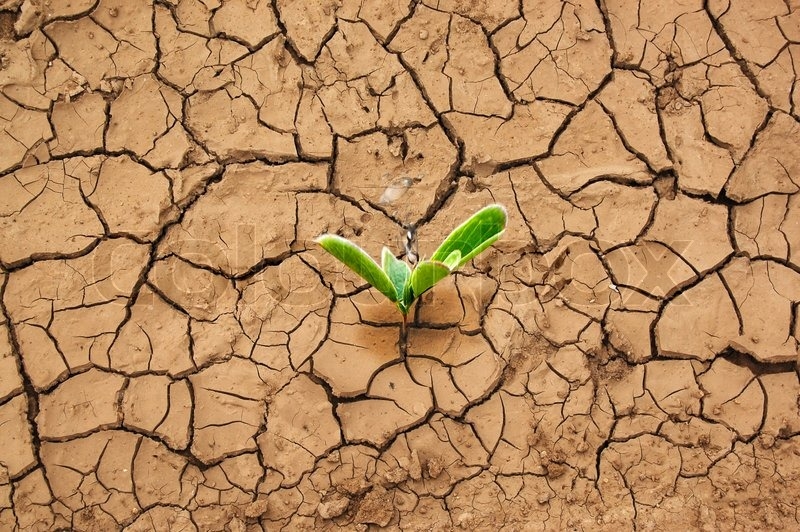
Green sprout in parched earth

Al Heit , Sins Against Our Future

By Joshua Samuels

When speaking of different transgression we should atone for on Yom Kippur an important  learning from the Mishna states:

Sins between a person and Makom, Yom Kippur atones for, between two people, Yom Kippur does not offer atonement until the wronged person is made whole. (Rabbi Elazar Ben Azariah Mishna yoma Het Zayin)

I have left the phrase used for God in the Hebrew form, it is a less commonly used name, and also means place in Hebrew.

This teaches us those transgressions where we have sinned against the creator can be atoned through prayer, but those against our fellow person require us to make them whole again. 

If we take the word Makom in its simple everyday meaning, we can view this as sins against our place, our world can be atoned for on Yom Kippur. Unfortunately, the havoc and destruction we are wreaking on our environment is a transgression not only against Makom, in all its meanings, but against future people who will live on this planet, against our children and our children’s children.’

From those people of the future, as yet unborn, we cannot ask for, nor obtain forgiveness for the world we leave them.

While we cannot ask for forgiveness from the people of the future, we can strive for atonement through our actions.

There are many things that I do in my everyday life, that with a bit more awareness and thought would have less of an environmental impact.

It can be succinctly summed up as consuming less and producing less waste, but behind that lies a myriad of choices.

There are many things that I do out of lack of attention, quotidian things such as

I forget my reusable bags and use plastic bags from the store

I run the garbage disposal instead of collecting the scraps for the compost heap

I make multiple trips in the car when I could consolidate with some attention and so on, the list is long.

And there are changes in habits, such as changing what I eat to eat more local food and less meat.

Many choices are a question of changing habits or opting for a bit less convenience when the cost in resources is high, but some choices are far more challenging and there are things I am not willing to give up. Travel, particularly to visit family, is not something I am ready to forego. There is value in making these choices consciously, in weighing the global cost against the personal benefit

It is at times overwhelming when we feel that the actions we take are but a drop in the ocean, but the ocean is composed of drops, many drops.

So for this Al Het I will say in Hebrew:

Al Het Shehatanu neged Atid Olamaynu

For sins against the future of our world.

So let us strive to consume less, produce less waste, live with more disorganization and imperfection. Embrace entropy, it saves energy.

Releasing What Does Not Serve Us 

By: Seth Kopald 

We have finished the days of repentance when we asked our family and friends for forgiveness for our harmful deeds throughout the year. We have cleansed our actions. Yet, perhaps there’s more. Deep in our cells, our bones, our muscles, and our energy, our ancestors have transmitted to us many things, gifts and burdens. 

Our ancestors carefully crafted life rules to live by, ones that kept them safe, free, and prosperous. Perhaps these rules include: don’t shine too brightly, don’t advertise who you are, be the best at everything no matter the cost, or be alone because we get hurt when we are in numbers. Yet, they have also given us gifts. Like, the value of learning, community, singing and dancing, questioning authority, and having personal connections with G-d. 

Kol Nidre, the namesake prayer of this service, is an aramaic prayer revoking vows made before G-d and it is a call to reconnect with our ancestors. We were born into these vows and we are called to release them, the ones that don’t serve us. We are called to make a choice – to embrace life and live it fully. In order to do that, we must release the burdens that keep us from living. 

As we uncover burdens passed down by our ancestors, perhaps you may hear voices inside saying, “we can’t let it go, or we will lose connection”, or perhaps ”These burdens help us to never forget”. From my experience, when we ask our ancestors if this is true, they tell us, “You will always remember and we will always be here, but you don’t need the pain and these restrictions to life.” They want us to be free. 

We are now moving into the Amidah, a silent prayer, and in this place there is an opening, a moment to connect with G-d and our ancestors. I want to offer you a brief mediation to free us more deeply into that experience. 

So now I invite you to notice in your body any energy, beliefs, or unnecessary rules that have been passed down to you, ones that keep you from living and being your full Self. 

Now notice the gifts that have been passed down to you. 

Now, put them in two separate piles. 

See if it is ok to release the burdens. Perhaps you can send them back to your ancestors and they can be cleansed by sending the burdens over the horizon. Perhaps you need time to decide if this is ok and you want to temporarily put the burdens in a sacred container and save them, in case you do need them. Either way, you can experience what it is like to be free, to release the vows of our ancestors that no longer serve us. You can bury them with honor, like we would an old Torah that can no longer be used. You can step into a mikvah in your mind and allow the waters of Miriam to wash them away. See what, if any of this feels right for you. 

Now, embrace the gifts, and allow your natural qualities to emerge: curiosity, calmness, compassion and courage. Let them fill you up. With those qualities and gifts, let’s enter the silent Amida together, a chance to connect with G-d, one-on-one. As you do, if it feels right, invite your ancestors to be with you as we all turn toward G-d’s essence.

How To Approach The Process of Change

By Deb Kraus

Today is a day we afflict our souls.

It’s a day where we rehearse our own death.  Where we say over and over again all the sins we could have possibly committed, even ones that wouldn’t have occurred to us, and ask God to forgive them.  We beg to be written into a book of life that most of us don’t really believe exists.  We abstain from eating, from drinking even water, from bodily pleasures, from adorning ourselves.  We spend all day in shul.

In other words, it’s a day we can really “get our self-hatred on.”

So why, out of all the holidays of the year, is Yom Kippur my favorite holiday?

Possibly because I reject most of that.

Somehow, along with the orthodoxy I was raised with [which had me worrying one year about having turned on—and then immediately off—the light in my bedroom as I went to sleep after Kol Nidre (clearly I was more afraid of my mother than I was of God)] I was also brought up with the idea that to change, you had to really hate yourself.  As a clinical psychologist with 35 years of experience, I know that I’m not the only one to have gotten that message. 


But I also know that it’s not true.  You can’t self-hate yourself into self-acceptance or change.

Instead the radical notion, the one that actually works, is that we can love ourselves into changing.  I have three ideas about how we might do that:

First, if you are here trying to become a better person, in the sense of becoming someone other than you are, please be kind and know the impossibility of that.  As Nadia Bolz-Webber, the tattoo’ed Lutheran pastor of the House of Sinners and Saints in Denver says, “we can grow in wisdom but we still fundamentally remain ourselves.”  In other words, let’s try to stop being someone else or some ideal version of ourselves, and become, instead,  the best “us’es” we can become.  It’s the Rabbi Zuzya story all over again:  when asked what his main concern was in dying, he said “God won’t judge me on why I wasn’t more like Moses.  He’ll ask me why I wasn’t more like Zuzya.”

Second, we can take a lesson from one of my more self-loathing clients, who nonetheless parents very well. He says to his toddler daughter, “there’s nothing wrong with you that you can’t fix with what’s right with you.”  I love that, and I offer it to all of us.  “There’s nothing so wrong with us that we can’t fix it with what’s right with us.”

Thirdly, and perhaps most importantly, I know we don’t believe in the actual book of life, but in case you do, I have it on good authority (that is, a podcast) that we come into this holiday already written in.  If we believe we need to be saved on this day, know that we already have been. 

What if we took these three ideas into our day of prayer?  As we take this deep-dive look inside ourselves, cataloging all the ways we missed the mark once again this year, what if we did it with the idea that together, with a combination of God, community and ourselves, we can fix it.  And become the best versions of ourselves that we can.

As Rabbi Ora said at this point last year,

 “…it is love – the love we receive, the love we transmit – that enables us and energizes us to change. It’s not that we will be more worthy of love if we change. It’s that love – being loved, and being loving – is precisely what enables us and energizes us to undertake the holy work of teshuvah.”

She concluded with an invitation.  “Let’s start from that loving place.” 

Filed Under: Posts by Members Tagged With: High Holidays, High Holidays 2022, Yom Kippur

Thoughts on Elul By Rabbi Debra

August 31, 2022 by Gillian Jackson

Rabbi Debra Rappaport will be leading this year’s High Holidays services

Greetings! As I write to you, we are at the beginning of the new moon of Elul, the month that precedes the new moon of Tishrei – also known as Rosh Hashanah. ELUL is known as an acronym for the phrase Ani L’dod v’Dodi Li – I am my beloved’s and my beloved is mine. Who or what is the Beloved to whom we need to return this season? 

The work of this season is called cheshbon ha-nefesh – taking stock of our own souls and our relationships. Where have my actions not been true to my values? Where do I need to make amends and/or change course? Teshuvah – making amends where appropriate and returning to our best selves, to the ineffable Beloved, is the other part of our season’s work.

Though we are new to one another, we may share some of the same sentiments… for example, wondering as the season approaches, How have I changed? What difference did all of last year’s resolve make? Or, What more can I do to stem the destruction and injustices I see around me?

Believing that we can change, and that repairs can be made, matters. It forms how we choose to show up to every moment. The Talmud (Pesachim 54a) describes teshuvah as a possibility created even before the world itself was created! The possibility of choice and change exists in our very essence. Not just regarding the big things but in every moment. Not just as individuals but collectively. Think of how a tiny course correction on an ocean liner leads a ship to a different landing place. Likewise, tiny moments of showing up differently in our own behavior can change our life’s trajectory – and hopefully our country’s and our planet’s – for the better.

MyJewishLearning.com offers some ideas for practice for the month of Elul.  If you’d like to do some learning and reflecting together, please do join one of the High Holy Days workshops starting September 18.  Sign up here!

In any event, I am truly looking forward to meeting you in person, and making the journey of the holy days together. In the meantime, may all have a nourishing Elul.

L’shalom,

Rabbi Debra Rappaport    

Filed Under: Rabbi's Posts Tagged With: Elul, High Holidays, High Holidays 2022

Children and Family Programming and Childcare for High Holidays 2023

August 7, 2022 by Gillian Jackson

AARC offers an engaging and flexible series of High Holidays learning opportunities and services for children and families. To take part, please fill out the Childcare & Children’s Services Signup form below.

Childcare & Family/Children’s Services Signup

High Holidays Family/Children’s Services Schedule

  • Saturday, September 16th, 2023, 10:30am: Rosh Hashanah Children’s Service at the UU
  • Monday, September 25th, 2023, 10:30am: Yom Kippur Children’s Service at the UU

If you have any questions about this programming, please email us. We looking forward to sharing this sacred time together!

High Holidays Childcare Signup

  • Childcare is offered for children 2 years of age and older.
  • The childcare room is located in the hall behind the registration table. Vaccinated teens over 12 can be supervised in the teen room across the hall.
  • Both rooms will be staffed by qualified caregivers.
  • Members: Childcare for members who sign up by September 1 is free of charge. Members who do not sign up by the deadline will be asked to pay $10 per child per day. Without advance reservation, childcare will be offered on a space-available basis only. Sign up online below.
  • Non-members: The cost for non-members is $20 per child per day.
  • Payment is due by September 1. Payment can be made by mailing a check or using the Donate link to pay online.
  • Please note that children under 13 must remain in childcare or be supervised by an adult at all times; children are not permitted to roam on their own while on the Unitarian Universalist Congregation premises. Children may leave childcare only if an adult picks them up.
Childcare & Family/Children’s Services Signup

Filed Under: Upcoming Activities Tagged With: High Holidays

Elul Workshops with Rabbi Debra Rappaport

August 6, 2022 by Gillian Jackson

We approach the High Holy Days during the Hebrew month of Elul. ELUL is referred to as an acronym for Ani L’Dodi V’Dodi Li (Song of Songs 6:3) “I am drawn to my Beloved and my Beloved is drawn to me.” And so we begin with love as the foundation and container of the hard work of teshuvah, aligning our actions with our values.

Here are three invitations, three moments, to learn and reflect in community with Rabbi Debra Rappaport. Each one stands alone; each speaks to a different big question of the season. Each session support participants in preparing our hearts to arrive at the High Holy Days with clear(er) intentions. The focus is on text-based reflection (in English), so the sessions will be inclusive of all, regardless of Jewish background. Please rsvp to attend HERE.

Thursday, September 15: 7:00 – 8:15 pm Turning inward, Teshuvah (turning, returning)

How can the teachings of the season support our cheshbon ha-nefesh (taking an account of the state of our souls) and our teshuvah (making reparations and returning to our highest selves)?

Thursday, September 22: 7:00 – 8:15 Reaching outward, Din V’Rachamim (Justice/Judgment & Mercy/Compassion)

What are the implications of the Rosh Hashanah image of a heavenly court in which perfect justice is weighed against compassion and forgiveness?

Thursday, September 29: 7:00 – 8:15 Confessing together, Al Chet

By Yom Kippur, we are to have made amends with those whom we’ve harmed. What, then, is the significance of the confessional words we recite together on Yom Kippur? Why do we recite as a community when we didn’t necessarily commit all the transgressions? Do the traditional words convey all we need to say at this moment in history?

Filed Under: Upcoming Activities Tagged With: Elul, High Holidays, High Holidays 2022

Introducing Debra Rappaport, AARC’s Rabbi for the High Holidays

July 21, 2022 by Emily Eisbruch


The Ann Arbor Reconstructionist Congregation (AARC) is delighted to announce that Rabbi Debra Rappaport will lead our High Holiday services for the fall of 2022 (Hebrew Year 5783). 

Rabbi Debra shares this warm greeting:

“Greetings from Minneapolis! My name is Debra Rappaport, I use she/her pronouns, and I share a home overflowing with plants with my husband Bobby Zelle and our fierce funny cat Ozi. I have served two wonderful congregations for seven years each since my ordination from the Reconstructionist Rabbinical College in 2007, one in Vail, CO and one in Minneapolis, MN. I’m really excited to be with you this High Holy Days season! Though we don’t really know each other yet, I have been moved by the way the AARC values member engagement at every level.

I’m inspired by the way the people I’ve “met” (by Zoom) are approaching the High Holy Days, with active roles for as many people as possible. And I’m really excited to meet more of you!”

A bit more info on Rabbi Debra: she is co-chair of the Minnesota Rabbinical Association and she served as co-chair of the Reconstructionist Rabbinical Association Bi-Annual Convention in March 2022. Before becoming a rabbi,  she had a career in sales, marketing, and change management, earning  an MBA from the Wharton School in 1990. AARC Board Co-Chair Debbie Gombert shared that after a just a few conversations, she felt connected and thrilled that we will be sharing High Holidays and partnering with Rabbi Debra this year.

In addition to leading Rosh Hashanah and Yom Kippur services for the AARC, Rabbi Debra will also lead several workshops around the high holidays.  The first workshop will be for a Kavanot (intentions) team on Sunday, July 31. Rabbi Debra will also lead three adult education/workshops via Zoom on these Thursdays: September 15, 22 and 29th to help us get spiritually ready for the holidays. Mark your calendars!

We are at this time forming a Kavanot (intentions) team for those who would like to contribute liturgy in the form of stories, poems or intentions to the High Holiday services. Here are details from Rabbi Debra:

The first opportunity I will have to meet some of you will be a
Zoom gathering on Sunday, July 31st, 1:30-3:00 pm ET with Deb Kraus as your local host.

This gathering of what will be the Kavanot team is for folks who feel moved to write and share something during our Rosh Hashanah or Yom Kippur services. Everyone is welcome! 

You don’t need to know what you want to write at this point; together, we’ll start to explore the themes of the services and the questions that inspire reflection. Please RSVP to Deb at drdebkraus@gmail.com by Friday, July 29.  

Alternatively, if singing, chanting, musical prayer, and making music in general suits you better, please be in touch with Etta Heisler at ettaqueen@gmail.com.
The “Davenning team” is beginning to convene this month as well. Likewise, everyone is welcome – it’s about bringing our voices together in prayer, not about performance.

Stay tuned as more information about plans for the High Holidays 5783 will be available in future blog posts and emails. As a community, we have a lot to plan and a lot to look forward to, and we are grateful to have Rabbi Debra Rappaport as our rabbinical leader for this season.

Filed Under: Upcoming Activities Tagged With: High Holidays, Rosh Hashanah, Yom Kippur

  • « Go to Previous Page
  • Page 1
  • Page 2
  • Page 3
  • Page 4
  • Interim pages omitted …
  • Page 7
  • Go to Next Page »

Primary Sidebar

Search

Join Our Mailing List

Sign up for our twice a week newsletter to get details on upcoming events and catch up on our latest news.

This field is required.

Check your inbox or spam folder to confirm your subscription.

Upcoming Events

  • 10:30 am – 12:00 pm, October 10, 2026 – Second Saturday Shabbat Morning Service
  • 12:00 pm – 1:30 pm, October 11, 2026 – New Perspectives, Timely Conversations: Elliot Ratzman
  • 1:45 pm – 3:00 pm, October 11, 2026 – AARC Book Group
  • 6:30 pm – 8:00 pm, October 23, 2026 – Fourth Friday Kabbalat Shabbat
  • 10:30 am – 12:00 pm, November 14, 2026 – Second Saturday Shabbat Morning Service

Latest News

  • Conversation Series Focusing on Making Challenging Ideas Accessible October 5, 2026
  • Kavanah, Baruch She’amar (Yom Kippur, 9/21/2026) by Margo Schlanger September 30, 2026
  • Celebrating Alan Haber on the Occasion of His 90th Birthday September 20, 2026
  • Exhibit Showcases AARC Creativity September 10, 2026
  • D’var Torah Shelach by Elliott Levinson-Brennan September 1, 2026

Footer

Affiliated with

Copyright © 2026 Ann Arbor Reconstructionist Congregation