
The theme Rabbi Gabrielle has threaded through these yontif services is conversation. That’s easily connected to this prayer, Baruch She’amar: “Blessed be the one who spoke the world into being.”
It’s not just God who creates by way of speech – we all do. Words are how we make sense of the world, of course. But they can act as well as explain. Words join and separate us. They harm and heal.
The thing I offer as a Kavanah, an intention, for this next part of the service is this: I like to think of people as godly—but we are different from God, whom Baruch She’amar envisions as dominating the environment by speech. In the Pesukei d’Zimrah and other parts of the service, we praise God as exalted and unknowable. But for we humans, as we strive to use words for conversation, for joining and healing and collaborating, we need to be the opposite of exalted and unknowable. Instead, we need to show our conversation partners a commitment to equality and shared humanity. In decades of speaking and negotiating for a living, this is the thing I’ve learned—equality is the bare prerequisite to something good happening from a human interaction.
What does that mean? Equality at a minimum means that each one of us strives to know, all the time—not just as a matter of lip service but really down deep—that other people’s pain and other people’s flourishing matters just as much as our own and our loved ones’. This sounds so simple, but it’s so hard. It’s an aspiration we see in many places, though. Just for example, I teach torts, and this is the basic morality of tort law – I need to act with care not only towards my own interests and body but towards yours, too. And this applies not just to members of my own community but to other communities, who don’t share my nationality, language, or religion.
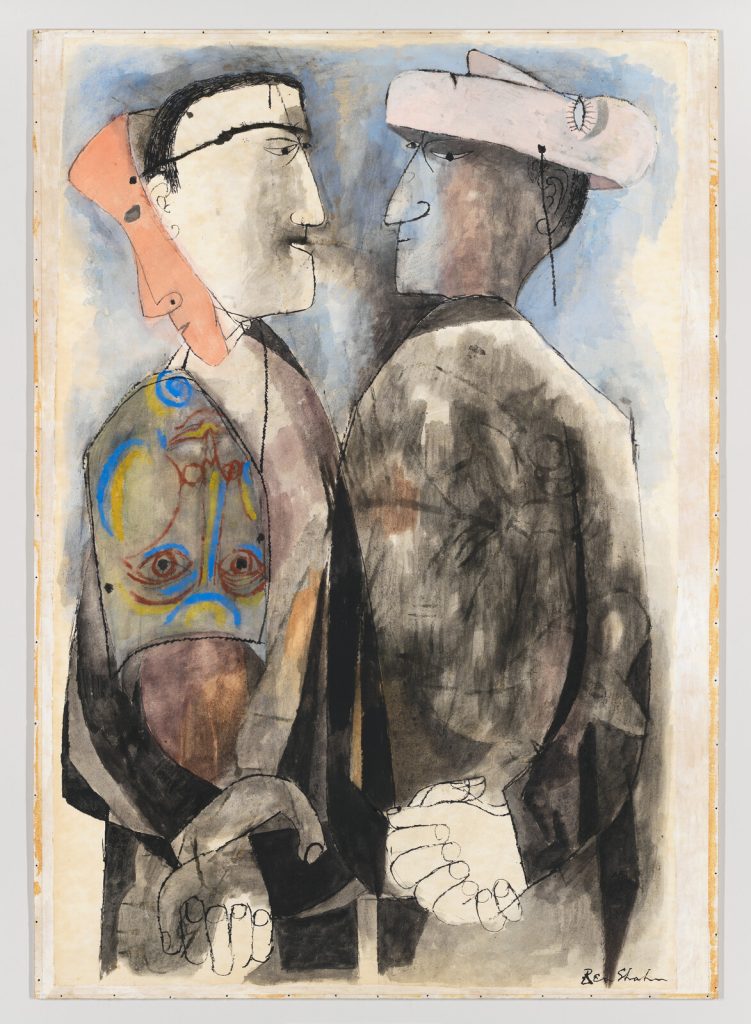
As Jews, we are instructed to operationalize this view for the strangers among us. Leviticus 19:33 spells out the obligation, loud and clear: “When a stranger resides with you in your land, you shall not wrong him. The stranger who resides with you shall be to you as the native among you, and you shall love him as yourself, for you were strangers in the land of Egypt.”
But other texts make the case that far more is required—that we must honor the equality not of just those who are proximate, but those who remain far away. We learn this in Sifra Kedoshim and Genesis Rabbah. There we see that when Rabbi Akiva says that “love your neighbor as yourself” (Lev. 19:18) is the great principle of the Torah, Ben Azzai answers that a greater principle is Genesis 5:1: “This is the book of the generations of Adam — in the likeness of God He made him.” All of us are equally holy.
It’s also the message of today’s Mincha haftarah reading, Jonah. One key to that story is to understand that Nineva was a goyische city. That’s part of the reason Jonah is so uninvested in its survival—part of his grave moral failing that God scolds him for.
Back to conversation—conversation is about sharing. Not necessarily agreeing, but sharing views and ideas and possibly growing closer. The only way that works is from a place of radical equality. This is a crucial and endless personal struggle for each of us to have with ourselves.
More broadly, unfortunately, it seems right now that there are many people—including many in the name of Judaism—who deny human equality, who deny that no one person or group matters more than another.
This time, right now, demands that we look at people of cities and villages and refugee camps—Ninevah and Gaza City, as much as Jerusalem and Tel Aviv and Detroit and Ann Arbor—and see all those humans as equal. Our community needs to stand against that, to learn from Jonah’s moral failure, stand with Ben Azzai, and commit to holy, equal conversation. Then perhaps we too can speak a world into being.
בָּרוּךְ שֶׁאָמַר וְהָיָה הָעוֹלָם, בָּרוּךְ הוּא
Baruch she’amar v’hayah ha’olam, Baruch hu.
Blessed be the one who spoke the world into being.

