• Skip to primary navigation
  • Skip to main content
  • Skip to primary sidebar
  • Skip to footer
Ann Arbor Reconstructionist Congregation

Ann Arbor Reconstructionist Congregation

  • Home
  • About
    • Overview
    • Rav Gavrielle Pescador
    • Our History
      • Photo Gallery
    • Our Values and Vision
    • LGBTQ Inclusive
    • Our Board
    • Our Sacred Objects
    • About Reconstructionist Judaism
    • Jewish Ann Arbor
  • Programs
    • Shabbat and Holidays
    • B’nei Mitzvah
    • Tikkun Olam
    • In the (Washtenaw Jewish) News
    • Health and Safety Expectations for In-Person Gatherings
    • Join our Mailing List
  • Religious School
    • About Beit Sefer
    • Teachers
    • Enrollment and Tuition
    • 2025-26 Beit Sefer Calendar
  • Blog
  • Calendar
  • Membership
    • Thinking about joining?
    • Member Area
  • Contact Us
  • Donate

Bar mitzvah

D’var on Eikev by bar mitzvah Aaron Belman-Wells

September 21, 2016 by Clare Kinberg

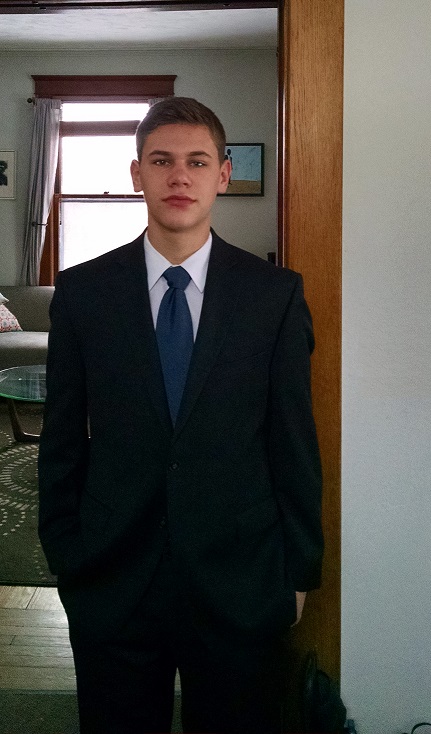
aaron-belman-wellsShabbat  shalom.

While I was working on my maftir [concluding section of the weekly Torah portion], Deuteronomy 11:22-25, there were several points where I noticed some differences in translations of the text. These differences could be as seemingly minor as “Red” or “Reed” Sea, or as major as “Sea of the Philistines” or “Western Sea,” or even which Wilderness. Differences in translations and/or text arise because of language, misunderstanding, human error, knowledge etc. My aliyah [segment of the Torah portion], however, concerns the Promised Land. So, as you can see, knowing which sea or wilderness the text is referring to marks a boundary and is significant. Despite how minor many of these changes may seem, they still can make incredible differences in what we are to take away from that section. Looking around [i][ii] to see if this was simply an anomaly, I noticed that there were other points in the Torah where this kind of change occurred. After thinking about why this might happen, I decided that there could only be one major possibility for a change as this: there is no definite word or phrase of text that must be placed there, so people simply wrote in what they assumed to be what was meant to be there. While this often works, the example with the Red and Reed Sea shows that often times there is little to no communication or standardization  between people attempting to translate the Torah.

Differences in translation may also be due to differences in agendas and purposes. Few of us read or speak the Hebrew of the Torah, so we depend on translators. Some translators wish their translations to reflect, to the degree possible, exactly what was written. Others, recognizing that a world of 5,000 or 6,000 years ago is very foreign to modern readers, try to make the text accessible to the reader, making changes to make the events and discussion straightforward. We can see similar, if less important, differences in translations of the Bard’s Hamlet, in which there are at least 3 different versions, despite the fact that only 1 is used[iii]. Equally important, there may be differences in the translator’s view of the Torah and Judaism that influence the translation. Is a given event a recitation of a real event, or is it to be interpreted and put in some context?  All of these result in differences of words and of meaning. [Read more…] about D’var on Eikev by bar mitzvah Aaron Belman-Wells

Filed Under: Divrei Torah, Posts by Members Tagged With: Bar mitzvah

Aden Angus D’var Torah, June 27, 2015 Parsha Chukkat

July 21, 2015 by Clare Kinberg

Aden Angus Bar Mitzvah picToday I read from chapter 20 in the book of Numbers. In the book of Numbers are stories about the 40 years in the desert and what happens there. The name of the parsha is Chukkat. The Hebrew word Chukkat means a ritual law. In the beginning of this parsha God gives the law of the red heifer. A perfect red heifer is sacrificed and its ashes are then mixed with water to purify anyone who has touched or been in the same room with a dead person. One commentary I read suggested that the word chukka is used for a law that does not make rational sense. In this case, I would agree with that!

The parsha ends with the story of the Israelites attempting to cross through the lands of Arad, Edom, and Bashan. The kings of these lands did not allow the Israelites to pass and there were wars, all of which were won by the Israelites. How was this possible for a group of slaves that fled Egypt with what they could carry and hardly had food to eat?

The portion of Chukkat that I read was when Moses strikes the rock and is punished by God for not following God’s instruction. Many don’t see why Moses was punished; it didn’t make sense. The story of Moses striking the rock is a pivotal and surprising story of the Torah. It is surprising because Moses is punished so severely after not obeying God’s instructions. To truly understand the emotions of the story we must understand the thought process of Moses in the situation. As we know, Moses was one of the great leaders of all time and led the Israelites back from Egypt. He had been a flawless messenger of God up to this point. [Read more…] about Aden Angus D’var Torah, June 27, 2015 Parsha Chukkat

Filed Under: Divrei Torah Tagged With: Bar mitzvah

Caleb’s drash

February 15, 2015 by Margo Schlanger

Mazel tov to Caleb on his becoming Bar Mitzvah! Here is his d’var torah, on Parashat Yitro

Caleb, on the day of his Bar Mitzvah

 Welcome, Shabbat shalom.

This week’s Torah portion is called Yitro, Exodus 18 through 20. The Israelites have just left Egypt, and crossed the Red Sea, and they are in the wilderness. In the first part of the portion, Moses meets up with his father-in-law Jethro (His Hebrew name is Yitro, thus the name of the portion). Jethro notices that Moses is carrying too much responsibility by solving everyone’s little arguments and disputes. Jethro suggests that Moses should have other people solve the Israelites’ minor disputes and bring only the big problems to Moses. Moses follows Jethro’s advice.

Meanwhile, God tells Moses to tell the Israelites to prepare for God to come down to Mount Sinai to talk to the people. The people follow God’s wishes and wait for God to come down. When God comes down in a theatrical show of thunder, lighting and the trembling of the mountain, God makes a set of rules that are now known as the ten commandments.

I will read the ten commandments in my Torah portion today. [Read more…] about Caleb’s drash

Filed Under: Divrei Torah, Posts by Members Tagged With: Bar mitzvah

  • « Go to Previous Page
  • Page 1
  • Page 2

Primary Sidebar

Search

Join Our Mailing List

Sign up for our twice a week newsletter to get details on upcoming events and catch up on our latest news.

This field is required.

Check your inbox or spam folder to confirm your subscription.

Upcoming Events

  • All day, May 9, 2026 – Wesley Jackson B'Nei Mitzvah
  • 10:30 am – 12:00 pm, May 9, 2026 – Second Saturday Shabbat Morning Service
  • All day, May 10, 2026 – Beit Sefer
  • All day, May 17, 2026 – Beit Sefer
  • 9:00 am – 10:00 am, May 17, 2026 – Rosh Chodesh Minyan Sivan [ZOOM]

Latest News

  • AARC Has a New Member Area April 30, 2026
  • RSVP to “Lesson of the Homeland” and the Stories We Tell: A Conversation with Anat Zeltser April 16, 2026
  • Climate Action Shabbat article in the April 2026 Washtenaw Jewish News April 3, 2026
  • Reimagining Torah Study: Moving from Zoom to In Person by Rabbi Gabrielle Pescador April 1, 2026
  • Creative Spirit at the AARC Beit Sefer March 27, 2026

Footer

Affiliated with

Copyright © 2026 Ann Arbor Reconstructionist Congregation