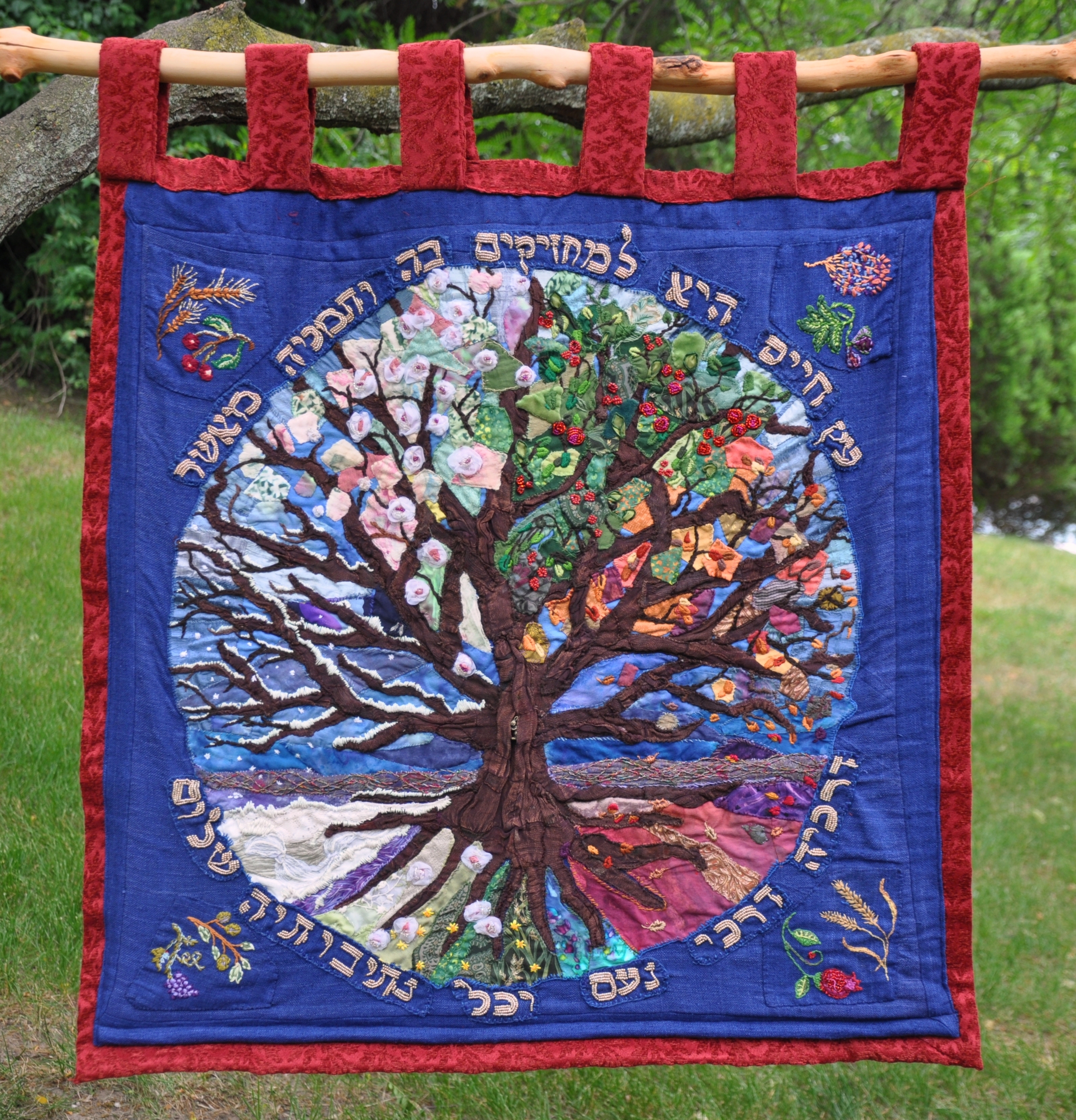
In the past, our Tu B’shevat seders have followed the kabbalistic tradition of the “four worlds.” Traditionally, these seders include nuts, though we found substitutes because the JCC is a Nut Free Building.
There is also a tradition of eating of the Seven Species on Tu B’Shevat. Since these don’t involve nuts, seems like a good tradition for those of us who potluck at the JCC! This Friday, January 26, 2018 is our Tu B’shevat themed Fourth Friday potluck. I’m looking forward to some new eats!
The Seven Species
Deuteronomy 8:8 tells us that Israel was “a land of wheat, barley, grapevines, figs, and pomegranates; a land of oil olives and date honey.” The seven species are:
- Wheat (chitah in Hebrew)
- Barley (se’orah in Hebrew)
- Grapes (gefen in Hebrew), usually consumed as wine
- Figs (te’enah in Hebrew)
- Pomegranates (rimon in Hebrew)
- Olives (zayit in Hebrew), usually consumed in oil form
- Dates (tamar or d’vash in Hebrew)
Here’s a collection of recipes to get you started:
- Seven Species Muffins
- Sacred Species Salad
- Mother Wolff Soup (barley soup, vegetarian version adapted from Leah Leonard (my great aunt!) Jewish Cookery.
- Tabbouleh with Pomegranate (can someone please make some version of this?)
 In anticipation of Richard Spencer’s likely speech on UMich campus during 2018 spring break, Jews in Ann Arbor are preparing. The visit raises an array of issues for the University and the community. On January 10, 2018 Spencer’s team

 This Saturday, December 9, is our Human Rights Shabbat, focusing on the light we bring through our activism. Rabbi Ora has invited our members to signup to speak for no more that 4 minutes each. Please read about it

 Human Rights Shabbat is organized to coincide with International Human Rights Day, which celebrates the December 10, 1948 signing of the Universal Declaration of Human Rights. This years marks its 70th year. You can participate with people from around the globe in marking this anniversary by recording your voice (with your kids!!) reading one of the articles.
 by Rabbi Ora Nitkin-Kaner